Paper Towns and Potemkin Villages
Visit the MIT Press shop

In 1787, so the story goes, Russian statesman Grigory Potemkin sought to impress his erstwhile lover Empress Catherine II. In an effort to achieve his goal, he set up false frontages of villages along the banks of the river Dnieper as the Empress travelled along its waters, a proud display of his success at rebuilding Crimea following its annexation by Russia. Potemkin’s men were even said to populate each false town as Catherine approached, adopting the guise of farmers and peasants to add to the illusion whenever her boat docked. Each village would be disassembled, and rebuilt further along the river, to be witnessed again. The story sounds pretty farcical, and is now widely thought to be an invention, or at the very least exaggerated. Nevertheless it has captured people’s imaginations for centuries – could such a plan really have worked? What if Catherine had asked to investigate the villages in closer detail? What if she wanted to strike up a long conversation with some of the townsfolk? At what point would she have noticed that something was amiss?
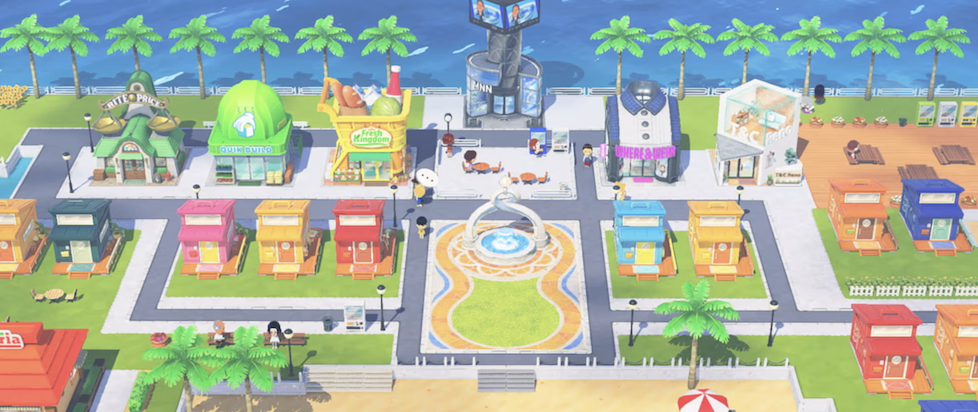
This feeling of uncanniness is often conjured when exploring the towns and villages which populate game worlds. Repeated building assets gradually pop into existence as the player moves through the space. Doors are often mere textures printed onto walls, and even if they can be entered, the building interiors are typically one or two familiar-looking rooms, with a handful of vacant inhabitants. No matter how many civilians are rendered, how responsive their AI, or how many lines of unique dialogue they have pre-programmed and ready to go, it never takes too long before you rub up against the limits of how well a piece of software can replicate a real society, full of real people. But is this problem solvable? And more importantly, does it need to be solved?
The term non-player character (NPC) became the favored insult of unscrupulous people online a few years back, and it’s easy to see why. For years, the characters which populated game worlds have been cursed with unmoving expressions, small repertoires of dialogue, endlessly repeated, and if they’re lucky, a patch of a few square meters in which to wander. Even in games like The Sims and Stardew Valley, which prioritize deeper character connections, it’s often hard to overlook the underlying clockwork of their set weekly routines and stock responses. Similarly, while Animal Crossing and Tomodachi Life let you select a desired group of residents in a fairly granular way, from their preferences and decor of their homes to nicknames and catchphrases, these games again show the limits and the predictability of these systems after a few hours of playing. So how can developers overcome these limitations, and make players feel like they’re really existing in a civilization, and interacting with its inhabitants?
You may have seen some news stories a few months ago about the hugely popular wuxia MMO Where Winds Meet – specifically regarding its use of AI chat models to allow for more naturalistic, free-flowing dialogue between characters and NPC quest-givers. Such models are enticing precisely because of their open-endedness, but as we know from their use in the real world, their unfettered nature can lead to all kinds of issues. Entirely predictably, this system was immediately exploited, with players tricking the NPCs into instantly solving quests and engaging in some, let’s say “questionable” chatter, which I don’t need to relay here. While the execution was clumsy at best, the goal of this system is, on its face, pretty admirable – who wouldn’t want a game world in which people and places actually felt like they were alive, and were responding to players in emergent, unscripted ways?
But clearly, these language models need substantial guard rails if they’re going to be implemented for NPC dialogue, which begs the question of how useful they really are, and whether this is an issue worth solving. Characters placed in game worlds exist as part of a broader effort to create a crafted experience for the player, and so having some focused limitations on what level of information one can glean from a conversation may better serve its pacing, even if the odd clumsy interaction does occasionally remind you that you’re playing a game. For a town to feel really alive, each individual within it would need their own intentions, desires, attitudes, even their own politics. Especially for narrative-focused games, it seems somewhat incompatible for the player character to have true agency in a world where everyone is a protagonist.
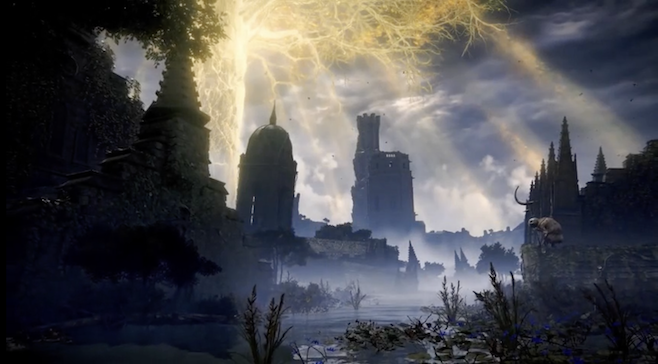
This issue can be skirted somewhat by the choice of setting. Some of the most well-loved open worlds – from Shadow of the Colossus’ Forbidden Lands to Elden Ring’s Lands Between – are memorable and impactful precisely because of their emptiness. Players can sink into these worlds without the distraction of inane chatter – for the polar opposite approach, take a walk through any of Final Fantasy VII Rebirth’s towns, and have everyone within 50 feet bark their one line of dialogue at you at full volume. This may well be why so many games are set in the ruins of a civilization, rather than during its bustling heyday.
The atmosphere and worlds of FromSoftware’s games, Elden Ring included, are so successful in part, because they embrace this incompatibility. There are no real towns or societies left in these crumbling worlds, and even in small settlements like Dark Souls 2’s Majula, any social connections between its inhabitants have been all but severed. It feels right that these characters are rotting away in their own corners of the apocalypse, mindlessly repeating their time-worn phrases as hollowness slowly takes over their minds. Any digital world, after enough exploration, will feel spent, barren and claustrophobic – FromSoftware understand this, and rather than trying to escape it, build this desolation into the very fabric of their worlds – including their inhabitants.
The best narratives all exist within some kind of limitations, some disciplined structure through which to guide the viewer. The possibility space of games faces an unavoidable friction with this narrative structure – an issue with which books and films don’t have to contend. But then, perhaps the linear, constrained nature of these other mediums is why they have typically succeeded in telling timeless stories far more often than games have – I doubt your favourite character from your favourite novel would stick in your imagination so strongly if you were able to follow them home and find out what they eat for breakfast each morning or watch them do their tax return. The verisimilitude of videogame towns and the NPCs within them can definitely be improved, but they should still ultimately serve the narrative thrust of the game. So how should developers and writers face the challenge of how to make players care about a world in which they can never truly be a part? I’m not sure – but my instinct is that these spaces should feel just real enough to fool a passing Empress.
———
Jonathan is a biological researcher by day, but spends much of the rest of his time obsessing over games, music and music in games. You can follow him on Bluesky and at Medium.