Prismatic Sound
Visit the MIT Press shop
This column is a reprint from Unwinnable Monthly #198. If you like what you see, grab the magazine for less than ten dollars, or subscribe and get all future magazines for half price.
———
Analyzing the digital and analog feedback loop.
———
Final Fantasy, in its creative spirit, has always been a pluralistic series for me. Especially with regards to its world-building via Uematsu’s genre-blending music and its multicultural mythological references. Sebastian Deken, in his entry to Boss Fight Books on Final Fantasy VI (hereafter FFVI), contrasts the series’ fantastical inspirations to the more strictly Arthurian fare of Dragon Quest. “Global cultural and mythological elements are blended together with such nonchalance that you might not even realize it’s happening.” At times you fight dinosaurs, summon Hindu goddesses and travel via steampunk-derived armor or airship. “This is the DNA of the FF series: fantasy in drag as science fiction, ancient cosplaying as contemporary, fantastic and familiar all at once.” Deken explains, adding that composer Nobuo Uematsu’s scores for the series are similar in their eclectic nature, mixing prog rock with orchestral and the occasional international music tradition as well. But Deken also goes further to describe the composer’s style as one that is not just a simple mashup but something liminal (that overused yet apt term). He exists “between musical borders rather than across them” as a self-taught musician who for a good chunk of his career has worked with electronic instruments and the strict limitations of embryonic game hardware. He’s also created in between the borders of commercialism and personal artistic vision.
I recognize that there are, superficially, many reasons one could refute this perception of this game series’ world-building. After all, it took several games for the principal cast of a Final Fantasy game to include characters that weren’t skewing towards Eurocentric backgrounds. And once characters of other ethnicities were included, they often were depicted as fairly reductive archetypes. Barrett, the gruff Mr.T-inspired leader of the AVALANCHE underground resistance group in FFVII, is an oft-cited example. Although as someone who grew up without many examples of a Black freedom fighter in Canadian media, particularly one that was fighting for their community and environment, I didn’t take his representation to be as one-dimensional as others have. I don’t deny that many of Barrett’s qualities are stereotypical, but he’s also (alongside Tifa and Aerith) the emotional foil to Cloud’s initial apathetic and stoic nature. Barrett was also an important representation of a parent raising a child who wasn’t the same background as him, something that meant a lot to me as a half-Jamaican girl who didn’t often see interracial families like mine in media as well.
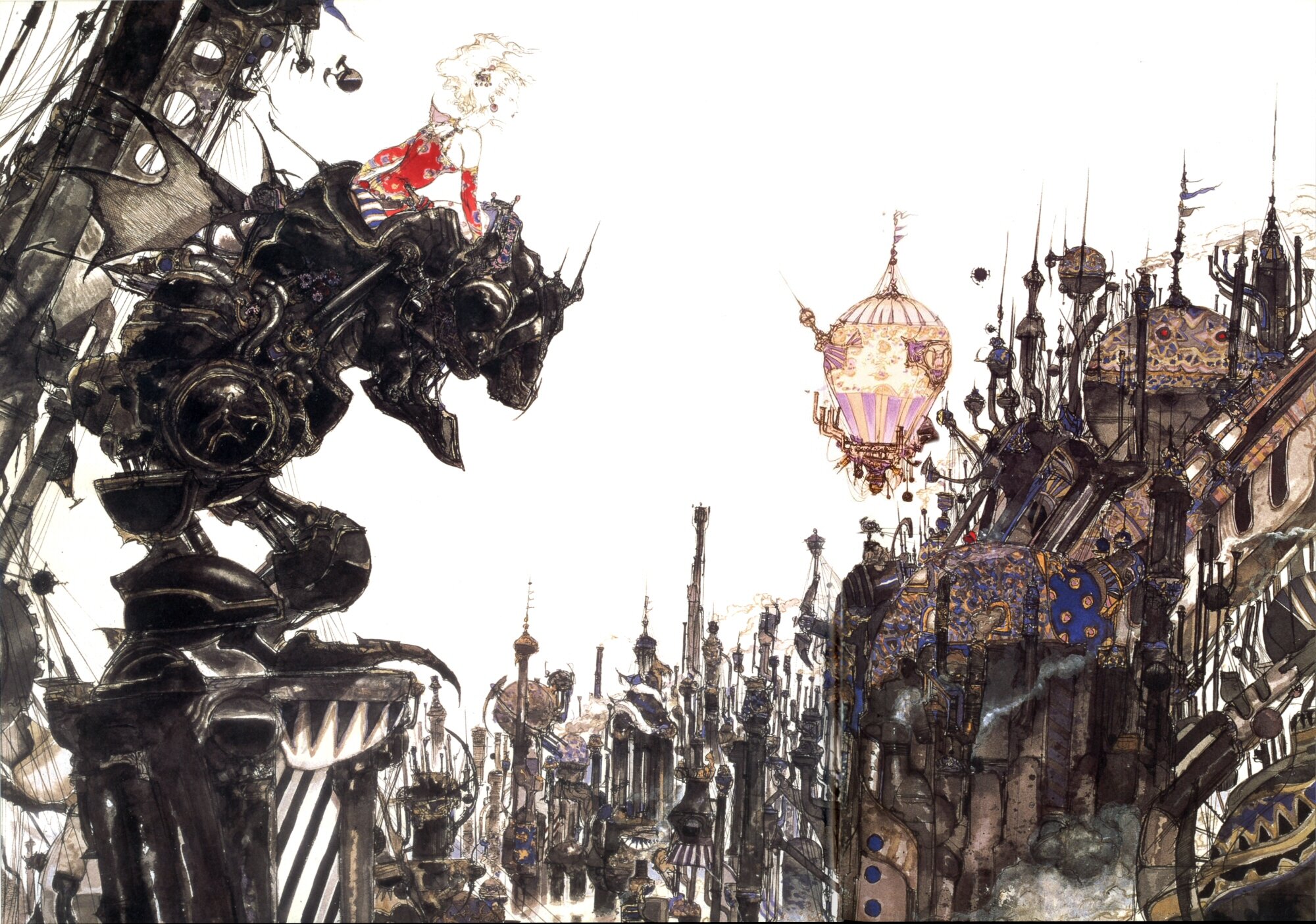
To return to the matter of Final Fantasy series’ pluralism, however, it’s no coincidence that the series is revisited most often via its eclectic music and its idiosyncratic art. The latter has become emblematic of a specific era of roleplaying games, while the former is responsible for elevating game music above its status as arcade soundscapes. The music of FFVI was noteworthy for producing operatic suites and a stunning medley for its ending sequence, music that worked elegantly within the constraints of the three tones available to Uematsu with the SNES. Since the first stateside concert of Dear Friends on May 10, 2004 at the Walt Disney Concert Hall, there have been symphonies and music collectives globally that have put on shows featuring Uematsu’s substantial body of work. Distant Worlds is perhaps the most well-known official touring concert of Final Fantasy music today, but there have been concerts of Uematsu’s music in Japan dating back to May 20, 1989, inspired by a show composed and arranged by Koichi Sugiyama of Dragon Quest fame. Deken posits that Uematsu’s 1989 show’s success is owed at least in part to Sugiyama’s Family Concert, which carved out a place for game music to be perceived as respectable and related to classical music symphony.
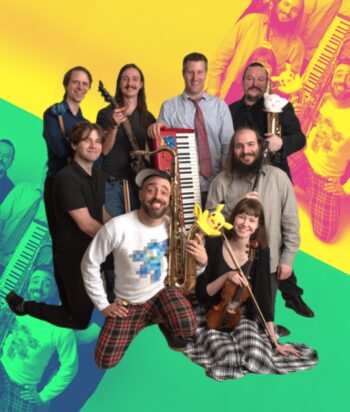
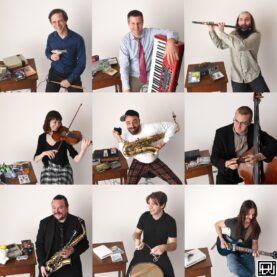
I had the privilege as of August of last year to attend the first show of an Atlantic Canadian game music ensemble called Pixel.wav. For their first tour, titled “Pixel.wav I: Echoes of the Crystal – An Epic Retrospective of the Music of Final Fantasy” featured four decades of the series’ music. Most of the scores were Uematsu’s, with the exception of some tunes from the Tactics series and Final Fantasy XIII trilogy and XIV. Considering that the ensemble (at the debut show at least) consisted of nine performers, tackling a mammoth back catalogue of music like this was akin to seeing a party of adventurers from one of the classic FF games take on a final boss.

Pixel.wav has done something I find comparatively rare with arrangements of FF music, however, which arguably was both its Ultima spell and one of its greatest challenges. The ensemble composed several medleys of mostly of Uematsu’s work, but also featured tracks from several other composers as well including: Hitoshi Sakimoto, Masaharu Iwata, Hayato Matsuo, Masashi Hamuzu and the FFXIV ensemble.
Before they set off to tour other venues in New Brunswick and PEI, I was able to reach out to and chat with two of the show runners, Joel Cormier, the music director who handled many of the arrangements, and Robby Robichaud, the orchestra manager who handled behind-the-scenes logistics and also the principle keyboardist for the ensemble. I was curious to learn how they individually interpreted the themes of the FF series and how as an ensemble they decided upon the medley as an organizing device and motif.
Both Cormier and Robichaud spoke on how the medley format was essential for curation. “We did [the] first rehearsal [and] we realized, like, we’ve got way too much…So we actually cut, like, twenty minutes,” Cormier explained. One of these cut segments was a FFVIII Ami/Balamb Garden medley, which the Pixel.wav has since posted a studio recording of on their YouTube channel, alongside other show highlights like the Boss Fight Medley and my personal favorite of the lineup, The Festival of the Hunt Medley which combines the tracks “Evil Forest”, “Black Waltz”, “Roses of May”, “Freya’s Theme” and the titular “Festival of the Hunt” to capture a distinct episode of FFIX’s narrative from multiple perspectives, which is something that this entry of the series capitalized on with the Active Time Event or ATE. ATEs could be optionally triggered at certain plot points where characters paths would diverge. They gave players an opportunity to see the plot from both playable secondary characters and NPCs points-of-view.
The Festival of the Hunt Medley, for me, evokes how steeped one can get at this point of the game. As a pre-teen, I’d spent at least twenty hours to reach the airship city of Lindblum, where the Festival of the Hunt sequence is experienced. Uematsu is a master of leitmotifs and so treating the audience to as many of these recurrent themes as possible is a smart move on Pixel.wav’s part. It’s also faithful to the composer’s MO of coming up with individual melodies first before building the rest of his scores around them. A lot of these songs were consciously designed by Uematsu to be heard on a loop during various gameplay sequences, so as the composer has said during his 1UP interview by James Mielke regarding the iconic victory fanfare, “it’s up to the user whether they want to hear it or not.”
Similar to the philosophy of Uematsu’s experimentation and following your melodic bliss in composition, the lineup for the show was curated also with regards to emotional resonance as a retrospective as well. Like other game music shows, Pixel.wav had curated a thematic series of video clips from various cutscenes and gameplay sequences timed to accompany each major section of the concert as well.
“[W]e know a lot of people that have played videogames and we had a lot of, obviously gamers at our shows, but we had a lot of people come that had no idea what this music is, but they wanted to see [a] classical ensemble or something, right? So, [to] give them kind of like a, you know, a starting point to [where] this comes from. [I] think that’s almost imperative.”
Robichaud isn’t wrong – several of the audience members sat behind me during the show were older classical music appreciators and I’d often hear them commenting throughout the performances on how the multimedia show was breaking from concert tradition. At once, these same traditionalists were taken aback by the breadth and variety of Final Fantasy’s music.
Cormier expressed some mixed feelings about reactions to the accompanying video, saying that “it becomes a point where it’s almost like watching a movie and like we’re just [providing the] background music whereas [with traditional concerts] you would watch the band” and this displacement of attention on the audience’s part is something that, being one of the Final Fantasy fans in the audience, didn’t realize could be disruptive to the concert experience from the standpoint of the musicians.
I was used to, as I’m sure any other fan present was, hearing this music in the context of multimedia gameplay. Despite how concert-worthy his scores are, most people who are familiar with his music aren’t classical concert attendees and are instead more akin to movie-goers during the silent era, when films like Nosferatu were accompanied by a live orchestra. But I understand Cormier’s concerns – players remember interacting with this music directly, and so some attending Pixel.wav’s show might easily get caught in a reverie watching the screen, their fingers getting twitches as they remember holding a SNES or PlayStation controller.
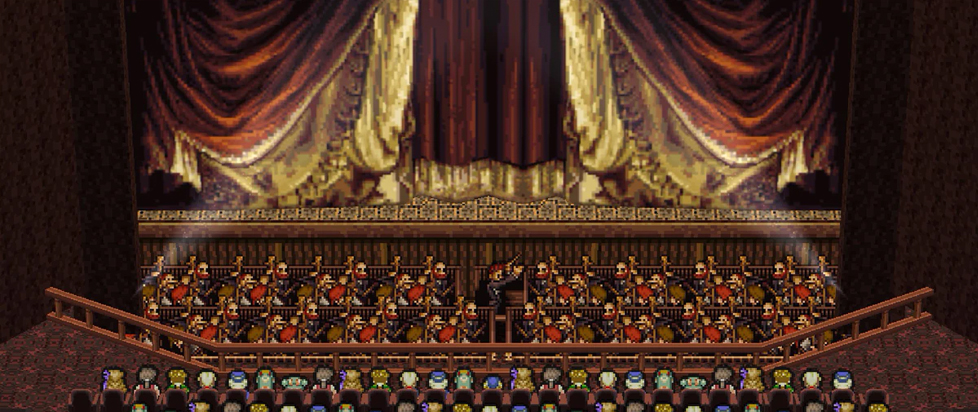
At times Uematsu’s work is practically a mechanic in itself, describing not just the story to the player, but working in tandem with specific events or mechanics in the story. The “Vamo’alla Flamenco” sequence during the first act of the play Zidane’s thief troupe puts on to distract Alexandrian citizens from their kidnapping of Princess Garnet for ransom. The music isn’t just diegetic, it recalls the FFVI opera scene in how it involves the player in the action (although with FFVI it was mostly choosing Celes’ lyrics) with a riveting mock-sword fight between Zidane and his friend Blank. The more accurately you hit the quick time events, the more in rhythm with the Zoro-like theme song Zidane and Blank’s stunt choreography seems.
Uematsu was quoted during one game music documentary, Beep, as saying that he sees it as problematic that game music (at least in Japan) would strive to sound like movie soundtracks. “I absolutely think that there is potential for game music. That goes for the producer and director as well, not only the composers. Stop copying films and make music that sounds like game music!” Or in other words, compose according to the unique constraints of games as an interactive medium. Like Stravinsky, he finds working within constraints liberating, and was quoting during the documentary preferred working with the Nintendo Famicom’s three sounds.
With those three sounds and eventually the additional sound channels offered by the SNES hardware, Uematsu created a smorgasbord of tunes ranging from rag time to spaghetti western ballads to opera. Multiple operas in fact, in the case FFVI. Pixel.wav was sure to perform a rendition of “Dancing Mad” and the ending sequence of FFVI, which is itself originally a medley of the large cast’s individual themes. This piece earned them an excited ovation from the audience and underscored the themes of change, grief and gray moralities interwoven throughout this classic series title.
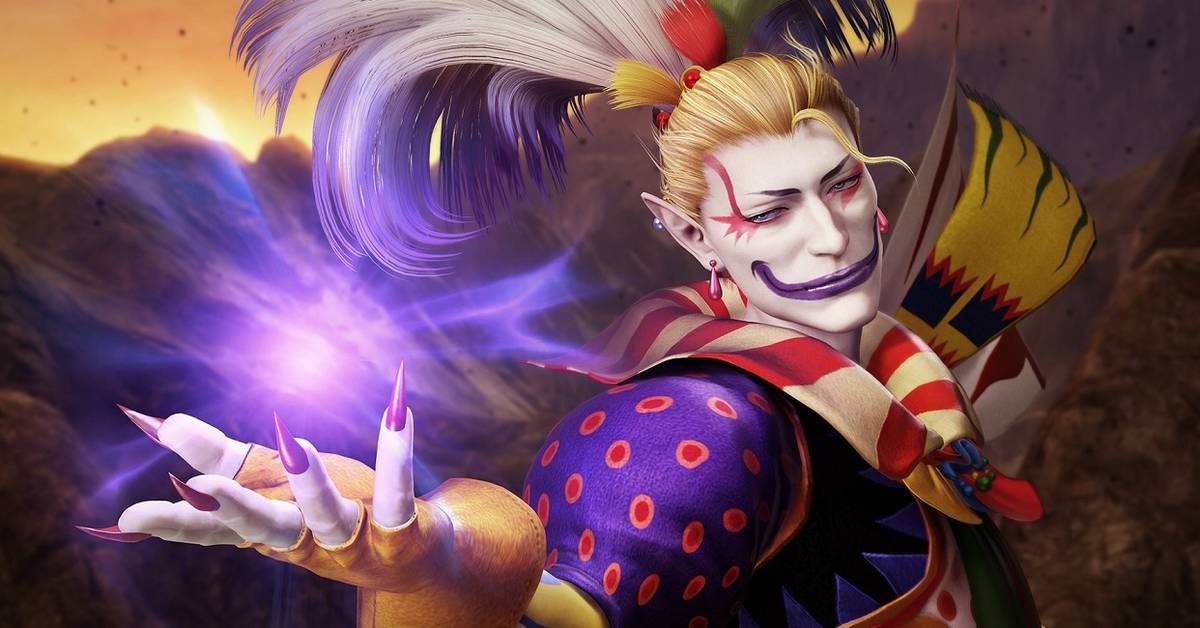
Speaking of gray moralities – one of the most revealing parts of my discussion with Pixel.wav’s show runners was when I broached the topic of the series villains. The master of ceremonies as well as the musician responsible for arranging the “Festival of the Hunt” medley, Andrè Bourgeois, made a comment during an interlude of the concert about how Final Fantasy villains have a unique amount of agency throughout the series. When I asked if, related to that reason, they each had a particular favorite of the series, Cormier started off with Kefka and how in spite of starting off rather archetypal, his Joker-like facade melts off to reveal a man who’s been driven mad by the Gestahl empire’s abuse of him via Magitek experiments. And most of his backstory is mostly insinuated to the player.
Robichaud didn’t necessarily state a singular villain figure, but instead noted that often the FF series hides an ultimate evil behind another antagonist who is initially presented as such. Robichaud’s answer caused a bit of a debate between the two of them, since he cited the religious leader Yu Yevon of FFX as one of these hidden malefactors. Cormier argued that Seymour, as the master manipulator behind Yu Yevon’s actions, was more of the main antagonist. Robichaud partially conceded that this was so but that the waters were particularly muddied for FFX, because like with FFIV, FFXIV, FFVII and even IX there are multiple antagonistic forces manipulating not just the innocents of the cast but each other as well. In other words, it’s usually a systemic evil that the cast must overcome.
These themes of systemic corruption are often characterized in games media as being reductively black and white. Even Uematsu has said in a G4Icons profile that the FF series isn’t trying to “say something complicated.” Cormier and Robichaud are on the same wavelength as the series composer in this regard as well. When I asked if the medleys were intentionally trying to weave together some of the more complex themes of Final Fantasy, such as FFVII‘s environmental activism, or the religious corruption in FFX, the answer was “not really” from Robichaud. Cormier chimed in to say that arranging the pieces was more about their “love of the score” and how it helps the audience visualize the game, especially those with nostalgia for the series.
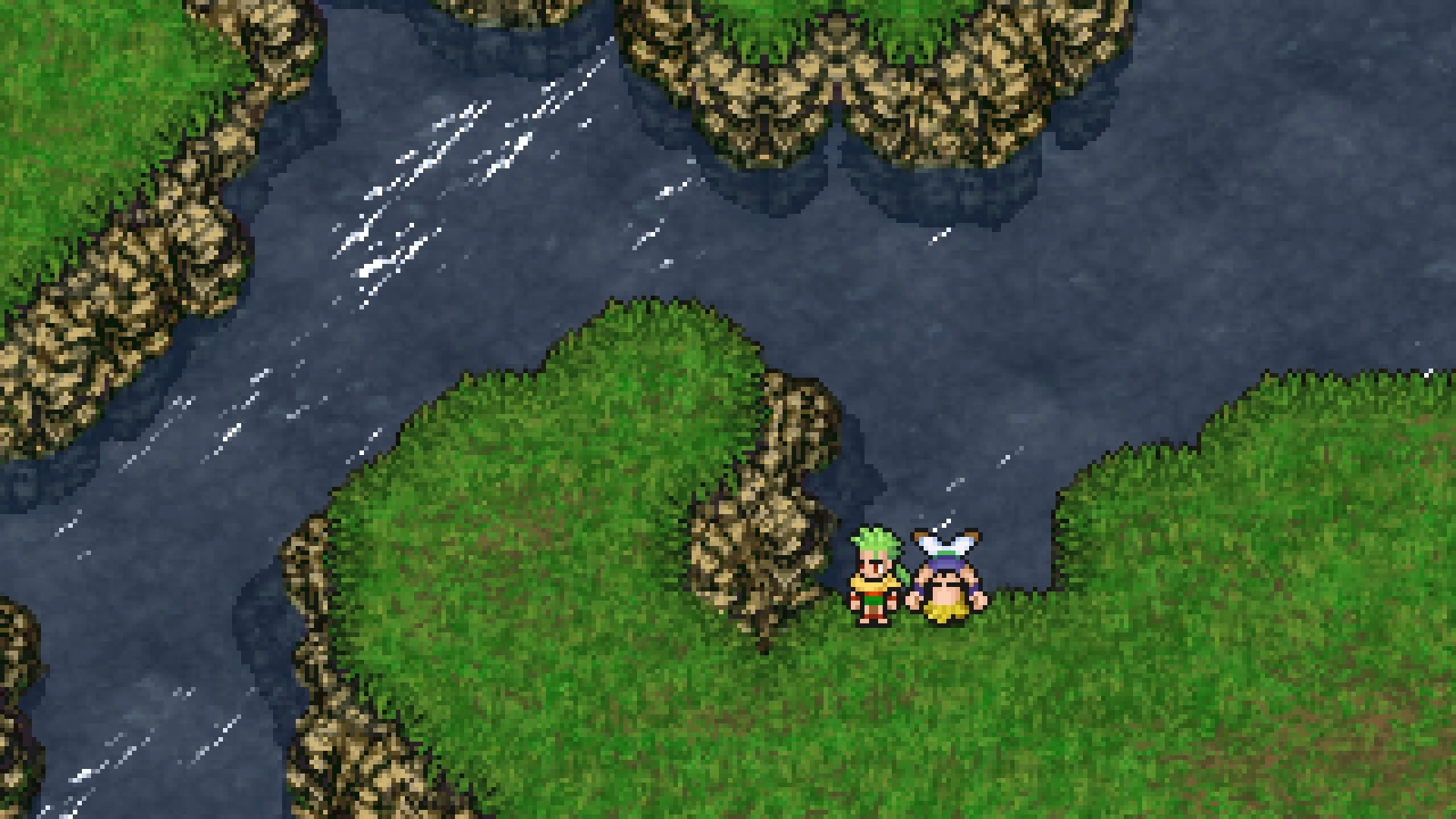
This isn’t to say that they were averse to recognizing there were some interesting ways to juxtapose these memorable scores. Each of Uematsu’s melodies on their own allows the listener to interpret various characters, landscapes, or plot developments according to their own individual experiences. Deken explores how leitmotifs are transformed throughout the soundtrack of FFVI and describe rich emotional arcs for even the most simplistic of characters in the plot, like Gau, the boy raised by monsters in the wild. But a key takeaway from Deken’s explorations of character leitmotifs is Uematsu’s admission in an interview with him that he didn’t compose with specific characters in mind. The player is the one who interprets the meanings of these character arcs, or if the music doesn’t resonate for them, then perhaps not at all.
And not to do an about face regarding my assertion that Uematsu’s style and the series by extension is pluralistic, but that’s my personal interpretation as well. I do agree with Deken that there’s a danger for Uematsu’s genre blending to come off as representing a cultural melting pot where appropriation flattens musical representation. Especially with regards to the West African-derived drum rhythms referenced in Gau’s secondary theme “Wild West.” His associated landscape of the Veldt as well is a problematic signifier for savagery. In recent years, there’s been a lot of talk about the racist implicit biases of music theory. Adam Neely’s video essay “Music Theory and White Supremacy” explores this systemic issue and contextualizes the controversy about Professor of Music at CUNY Philip Ewell’s “Music Theory and the White Racial Frame”. Most of the interviews Uematsu has done reveal that most of his musical influences are white and Eurocentric, with the exception of Jimi Hendrix being cited as one of the inspirations for the composition of “One Winged Angel.” Does this mean FF’s music is racist? No. But it does show how music of different cultures are interpreted with biases as well. Such biases can be present in other aspects of design, such as with historical “accuracy” as an excuse for lack of diversity in FFXVI or hiring no Black women to write the protagonist of Forspoken.
Not to mention how music of different genres are perceived. Nick Dwyer once asked if the nature of his childhood prefecture of K?chi in Japan inspired the fantastical elements of his music. Uematsu didn’t deny that the lush countryside and its spirituality influenced him, but he also characterized fantasy world-building as being synonymous with “The Lord of the Rings or Celtic culture” and that “Japanese RPGs end up being based on foreign ideas of fantasy too” though the verdant environments referenced also resemble the things he loved of his home prefecture.
One powerful through-line of Uematsu’s work is that he composes from a place of kindness and sees his composition style as a conversing with a friend. Considering the liminality of his style and his irreverence towards traditional composition, I’d say that he is speaking with friends across the world. He is equally passionate about how players and other composers receive and reproduce his work. What Pixel.wav’s medleys of a liminal game composer reminded me of is that art in a globalized world is about coexistence and the collective effort making meaning. Meaning is in constant flux; a cross-pollination of ideas and emotions.
———
Phoenix Simms is a half-Esper writer navigating the World of Ruin with a wonderful party of fellow adventurers. She is not, contrary to popular belief, a famous recovery item that can revive people, but she might sometimes be a mythical bird you can summon.