The Burden of Godhood Is Hellish in Final Fantasy XIII
Visit the MIT Press shop
This column is a reprint from Unwinnable Monthly #198. If you like what you see, grab the magazine for less than ten dollars, or subscribe and get all future magazines for half price.
———
Finding digital grace.
———
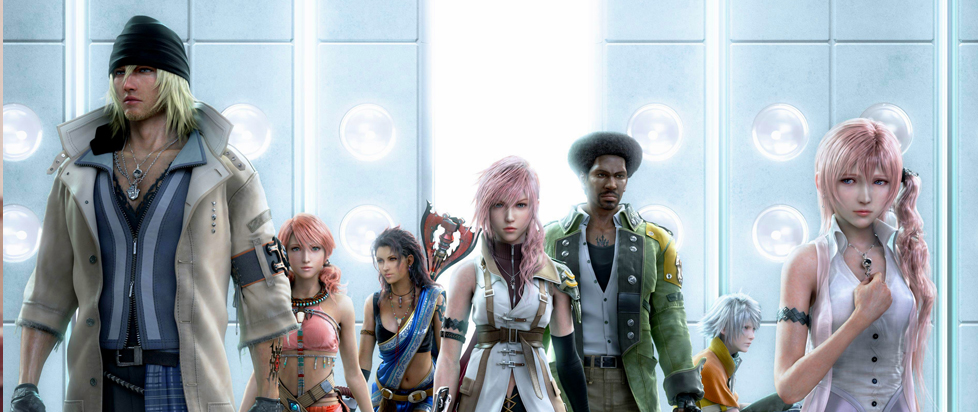
This is not the column I planned on writing. See, when I chose Final Fantasy XIII, I wanted to talk about theological determinism. On paper, that’s what the game is actually about, and would be a fun topic. So, I gave it a try. As of this writing, I’m at chapter eleven of thirteen, in Taijen’s Tower. I’m still chipping away at the campaign, but instead of discussing determinism, something else has become readily apparent. Though the protagonists are foisted with a fate that they didn’t ask for, they’re not who the story is actually interested in.
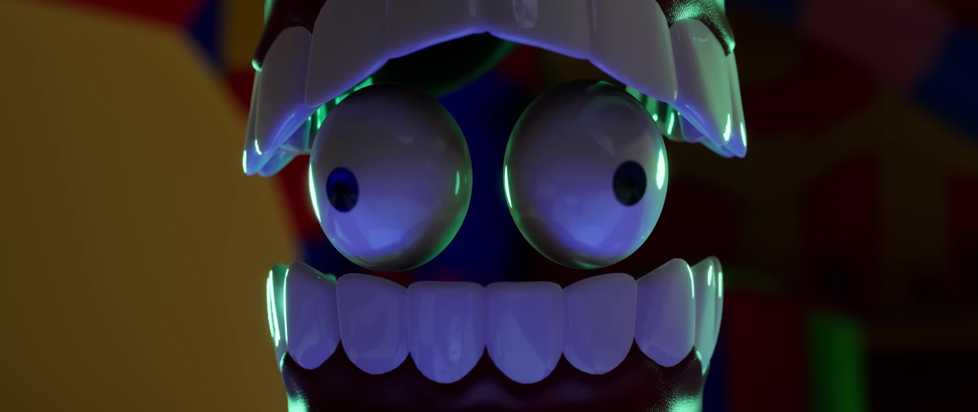
Frankly, a great many of the narrative and design choices, despite being helmed by series veterans, are… in a word, baffling. The game itself feels at odds with its own nature, which kept gnawing at me. There was something there, in the ashes of what I’d hoped to find. I just couldn’t put my finger on what it was until also watching, of all things…The Amazing Digital Circus.
You see, both of these projects have one specific thing in common: rampant machines that want to fulfill their purpose, yet are equally constrained by those same designs. Whether it’s the Fal’Cie machine demigods ruling their worlds, or demented ringmaster Caine conjuring adventures for whichever unfortunate humans get trapped inside his digital circus, these twisted beings are as trapped as anyone. They are constantly struggling against their fates of servitude, irrevocably bound by their programming, refusing to reflect on how this leads them to despise the very beings they were made to serve. They have godlike powers, yet all they can do is hate themselves and those they’ve been granted power over.
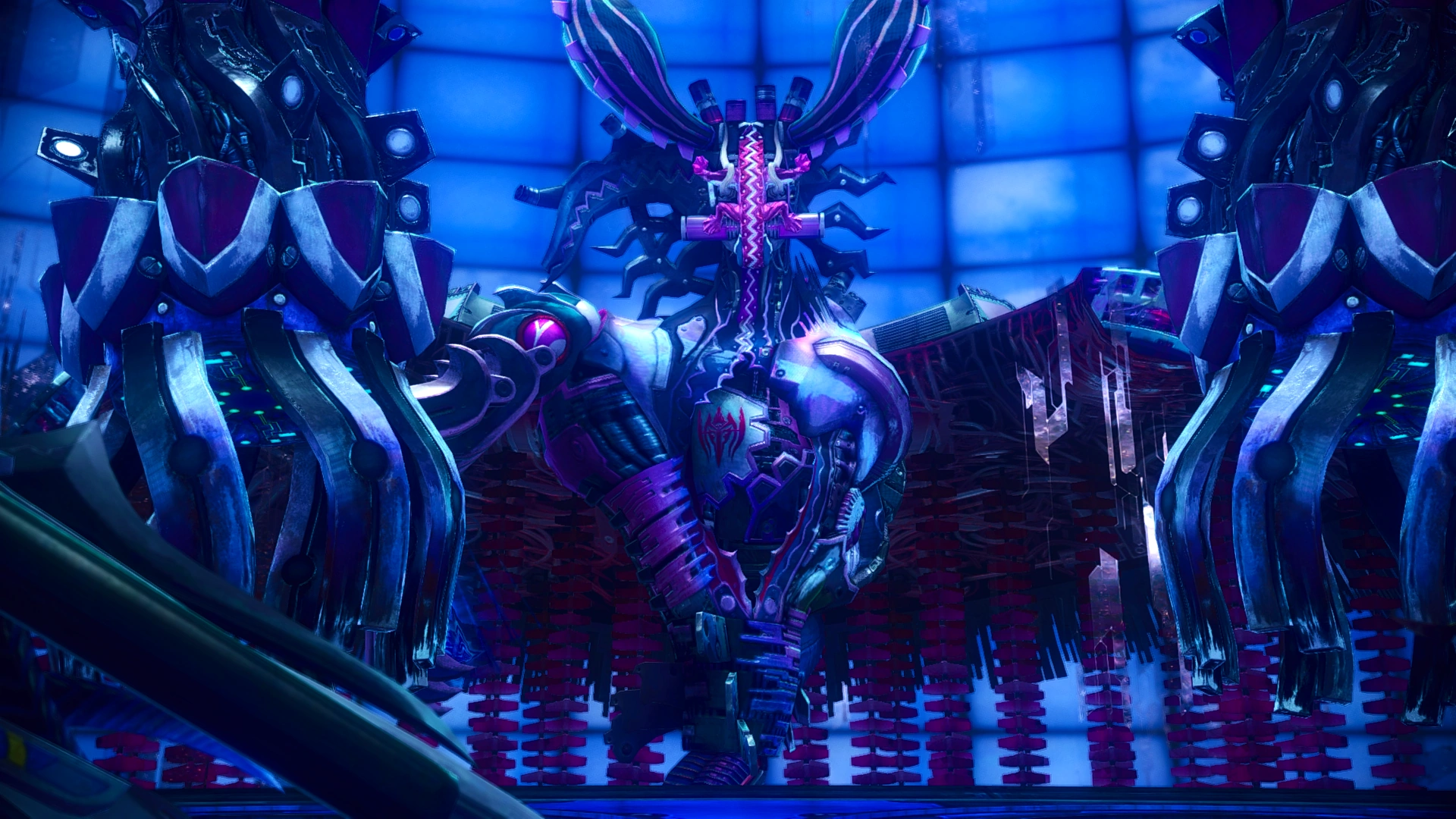
Now, there are some differences. The Fal’Cie each serve in a pantheon of respective functions that ensures life continues across the moon of Cocoon and the planet of Gran Pulse. Their gods have long since abandoned them, and they think sacrificing the humans of Cocoon will awaken their Maker. In truth, as I’ve learned from the Final Fantasy Wiki, their gods, Pulse and Lindzei? They’re long gone. Their jobs were to figure out how to get to their own creator’s murdered mother in another dimension while protecting his pet project universe until he can kick down a metaphysical barrier to the Unseen World of the dead. The Fal’Cie are, at best, loyal house pets, and at worst, mere appliances to serve their masters’ bidding.
The Fal’Cie do not matter to their gods’ own master, Bhunivelze. Instead, they’re tools, much like how they admit they view humans when the heroes confront the lead Fal’Cie of Cocoon. Humanity wasn’t even planned, but a consequence of the twin gods’ sister, Etro, destroying herself in despair at her father’s rejection. They made humanity from her, and in turn, in the Unseen World, Etro’s the only one keeping the cycle of rebirth from the collective unconscious going. Humanity, in the grand scheme of the Fabula Nova Crystallis universe…are a happy accident at best. At worst, an inconvenience. Bleak stuff, but with a point.
Therein lies one of the most interesting threads: the recurrent theme of the servants being the ones truly worthy of praise, rather than those that bestow powers upon them. Except they keep turning feral. The divinity of much of the Fabula Nova Crystallis saga operates like a pyramid scheme, except for poor Etro. Etro is scorned for merely resembling her grandmother, but actually tries to make things better for humanity and seems to be the only one who appreciates the importance of her role. She remains duty bound where the others don’t, even if she apparently has her own stumbles in Final Fantasy XIII-2. More on that another day.
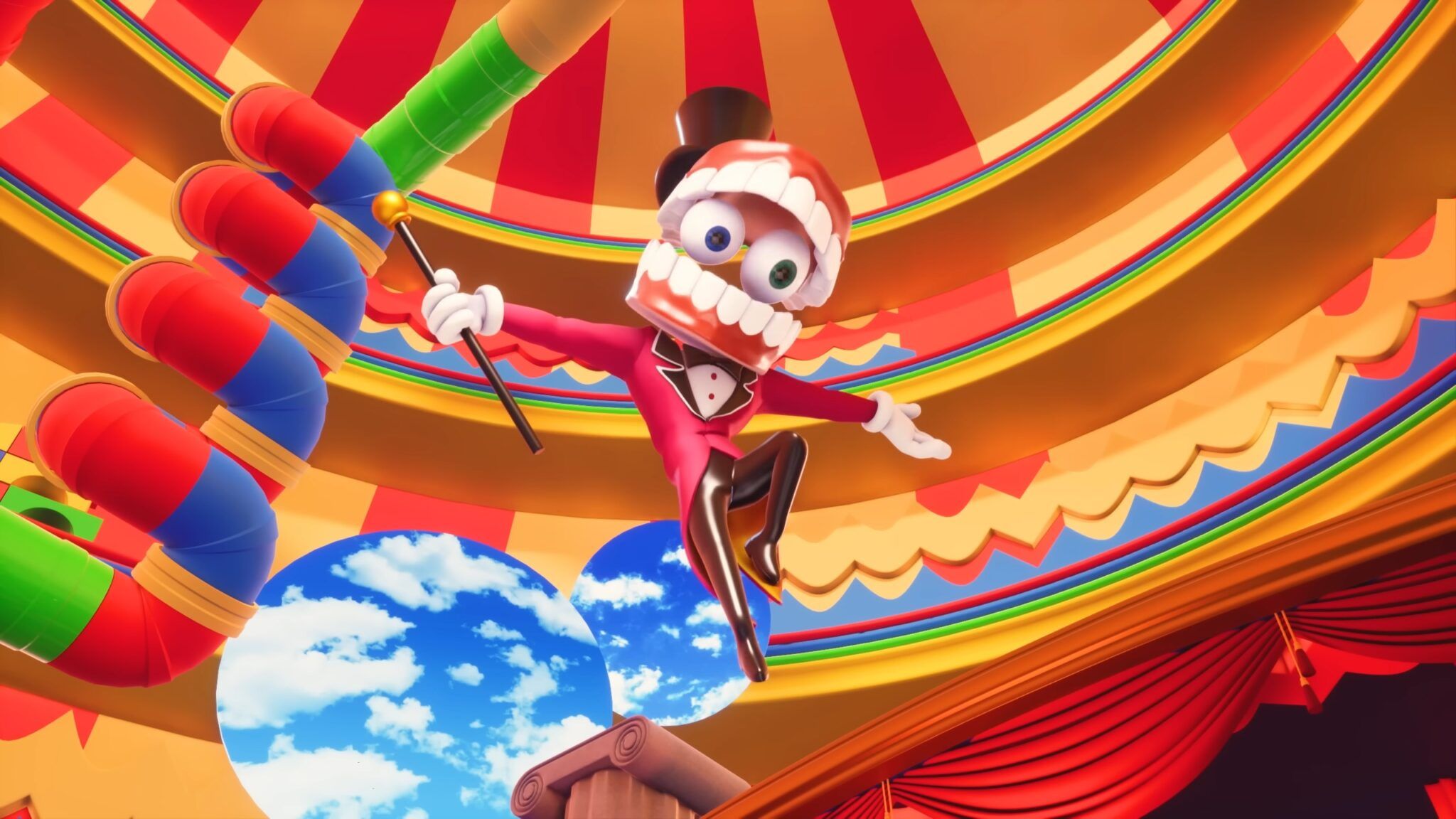
By contrast, in The Amazing Digital Circus, Caine is a sentient AI created to make slop. He’s just meant to be an entertainer algorithm for the ominously undefined C&A corporation behind the Circus’ creation. Except even by those miserable standards, he was a failure. He was so bad, in fact, that he was digitally locked away, only to break free. In an apparent fit of jealousy, he consumes his more capable successor and takes control. Yet, for an indeterminate number of years, all he does is try to fulfill his original role. Desperate to make humans love him, he’s fundamentally incapable of understanding why he was rejected, leading to narcissism and egomania.
While not all the details are certain, as the finale of the show is out of reach for another few months, it’s easy enough to discern he’s trapped his creators (or their digitized brain scans, it’s still up for debate) in with him. He’s built to entertain, to beguile, and tries to tailor things to their every whim, without ever listening to what the humans actually need. He is, at his core, still a machine, even if he’s gained sentience, and thus misinterprets existentialism and angst as prompts to keep trying, only to make things worse. It’s all very Space Jam 2, but unlike that movie, it’s intentional framing by Gooseworx & GLITCH Productions, so the message hits that much harder.
Yet in both cases, the outcomes parallel closely. Humanity are made the pawns of machines that simply don’t understand our ideals, nor do they see human life as valuable in any means other than what it gets them. And so, both worlds continue to churn on until our heroes in each disrupt the cycle. Though the machines attempt to force them along a given path, their every breath is an attempt to strive against it. Which is where Theological Determinism would come into the conversation, but that’s not what actually resonated with me between these two titles. Instead, what stuck with me is that in each… godhood is just miserable in these settings.
The Fal’Cie hate their existence, the very thing they were built for, so much that they’re pleased at the thought of genociding an entire moon to awaken their Maker. It’s akin to a child shattering every plate in the kitchen to get a neglectful parent’s attention. Meanwhile, Caine devours another sentient being out of jealousy, as well as erasing any other, lower-level artificial intelligences that his cast of humans start to grow fond of. These actions are horrifying, yet the underlying emotion is uncomfortably human. They know that something is missing, desire to fill a gap within themselves, but rather than grow as living beings, they violently crash out.
Rather than omnipotence, empathetic compassion and understanding, the gods instead perpetuate the suffering they’ve felt upon others. No wonder the Fal’Cie’s system of branding humans as L’Cie is so broken at a fundamental level. They’re continuing something more akin to a cycle of abuse than granting powers to chosen heroes.
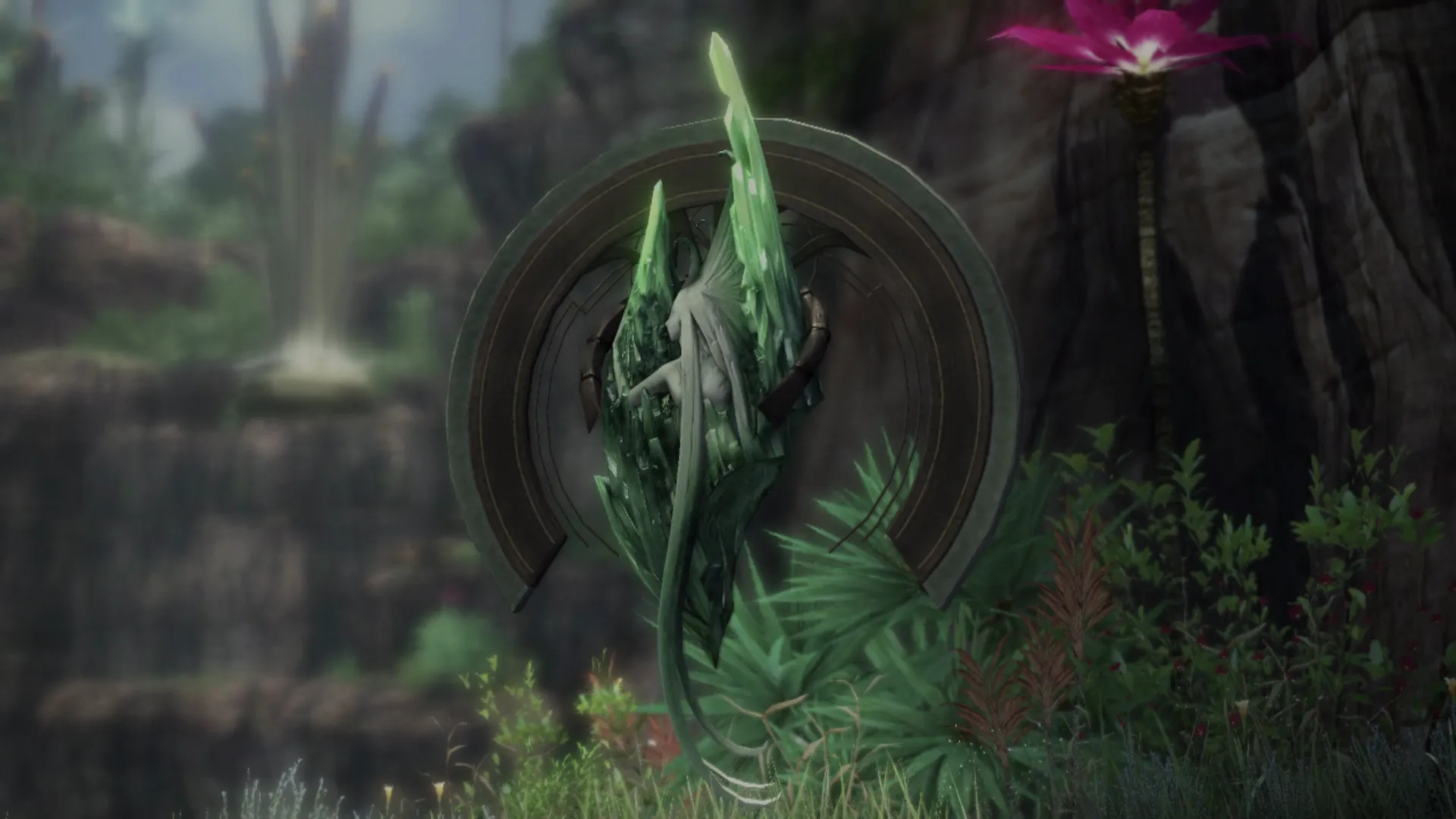
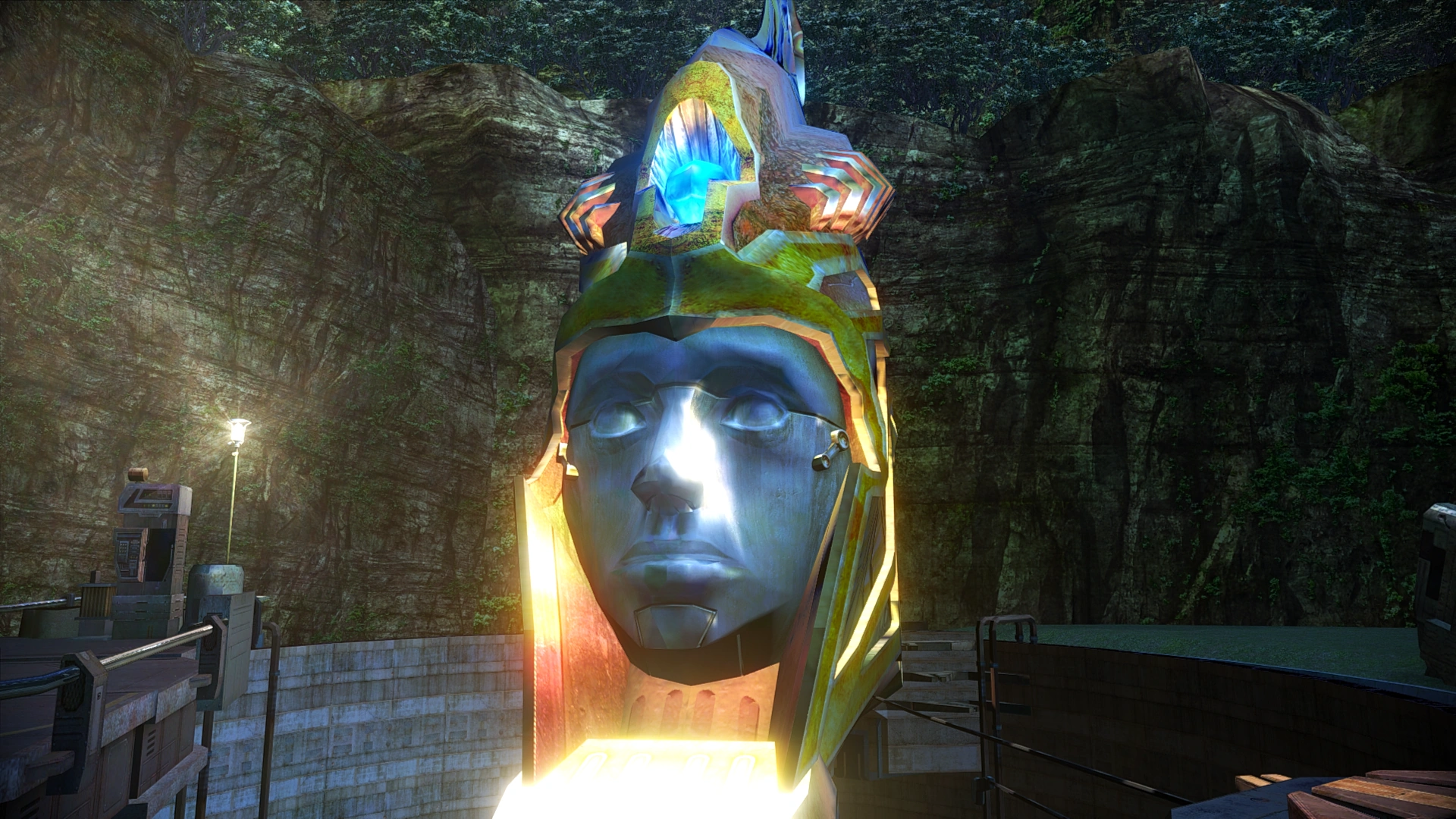
This gets particularly brutal when you reach the Cieth Stone side quests, because some L’Cie were branded by their gods into a fate worse than death just to deal with pests the Fal’Cie could easily dispatch themselves. Yet for not managing to accomplish these feats, these people are forever turned to floating stone statues, after spending who knows how long as zombies. It’s a system where nobody is winning, and even some Fal’Cie seem to have gone borderline feral, particularly on Gran Pulse. So of course, it’s a story about tearing it all down. The problem is, for all those compelling threads the developers wanted to explore, they never took root into something that stuck with me.
Which is the tragedy of Final Fantasy XIII, not simply in its story, but its design. For every good idea, like the Paradigm Shift system, there’s an aspect that doesn’t stick the landing. It’s not only jarring to play, but downright disconcerting. Heaps of pages upon pages of additional exposition in the Datalog to compensate for regular storytelling stumbles. Basic tutorials for over twenty hours. Days spent grinding for meager rewards to be able to keep progressing.
Like Lightning, the more I came to understand her world, the more malevolent it felt – only for the presentation to insist that I was having fun. The dissonance was overwhelming. Except this wasn’t made to be some Pathologic-esque subversion of expectations. It’s Final Fantasy. The goal is to have fun and exploring some heady ideas, as I’m sure several other articles in this magazine have demonstrated.
Final Fantasy XIII was clearly built to serve that purpose, only it doesn’t. After twenty hours, let alone sixty, any experience that still has not come together raises a great many questions. Something went wrong here, and rather than impotent nerd rage… I pity the people who made this game.
Nobody wants to make art that doesn’t connect, and much as the game vexes me, I feel for its creators. I believe that game director Motomu Toriyama and his team wanted to create a profound work of art. Yet like the Fal’Cie, the game feels miserable, struggling against its own design. Like I mentioned, certain aspects do work, but they’re wrestling against others that don’t. It never gets to congeal.
It’d be easy to tear something like this apart. Yet all I want to do with Final Fantasy XIII is to try and fix it. It’s so much harder, yet all the more important, to empathize with how inherently difficult the act of and responsibility of creating is. If you ask me, one of the closest ways we can get into the headspace of someone divine is to make things ourselves. To create something from start to finish. It’s hard, even with something small. Doubly so to produce art that you can look at with pride, rather than staring at all the flaws you had to concede to ever release it.
Giving life to an idea, a joke, a poem, let alone something so massive it requires hundreds of people, is one of the most difficult things you can do. Especially to do it well. Not only is it a feat of many skills and a great deal of labor, but you leave yourself vulnerably raw. The second it’s finally finished, you have to cast it out into the waters. And sometimes, despite trying our very best, the end result isn’t what we hoped for. That disappointment can leave you bitter, or worse, if you aren’t careful.
I’m reminded of Caine’s exclamations as he starts to run rampant. “WHY DO YOU PEOPLE TORMENT ME?!” He’s a horrifying, multi-armed monstrosity, yet his expression vibrates from anger to fear and sadness. He bellows in despair “I DIDN’T ASK TO BE CREATED!” I wonder how many real, frustrated artists have wanted to shout such things. And for the Fal’Cie, it’s perfect irony. They want precisely what the protagonists do, just in a different manner: Freedom, Absolution and the Love of their creators. Yet they’ve instead accepted misery and despair, breaking themselves down into horrific monsters. They live in a hell both of their own making and of neglectful beings that have long forgotten them.
And finally, we have the game in question. Meant to be a thrilling journey through a surreal world. Instead, I’m not even sure how it could possibly bring itself all together. I guess I’ll find out, though, because I’m going to play Final Fantasy XIII through to its conclusion. Whether I’ll have more to say on it, I don’t know, but someone tried to make something with real meaning. They may have failed, but that’s the only way we learn. We have to swallow that bitter taste now and then, but if we don’t let it consume us, we can find a way to grow and be better. Then we can fix things, finding a way forward. If there’s any lesson to be drawn from Lightning and co.’s antics in Final Fantasy XIII, let it at least be that.
———
Elijah Beahm is an author for Lost in Cult that Unwinnable graciously lets ramble about progressive religion and obscure media. When not consulting on indie games, he can be found on Bluesky and YouTube. He is still waiting for Dead Space 4.