Final Fantasy IX Embodies the Individual Responsibility Everyone Has to Stand Up to Tyranny
This is a feature story from Unwinnable Monthly #198. If you like what you see, grab the magazine for less than ten dollars, or subscribe and get all future magazines for half price.
———
Final Fantasy IX is about the meaning of life. Look at any conversation around the game, and the number one theme you’ll see discussed is existentialism. But what’s crucial about FFIX’s existentialist themes is that it doesn’t just posit the question; it seeks to answer it. The game takes a hard stance on the worth of life, of every life and everyone’s right to pursue happiness. But in pursuing that idea, there’s a deeper message that evolves throughout FFIX: the personal responsibility each and every person has to fight authoritarianism. The duty we all have to collectively fight back, and the power of collectivism and community. As far back as the days of Final Fantasy II, the series hasn’t shied away from pushing back on authoritarianism. With Final Fantasy IX embracing the series’ roots, it also became one of Final Fantasy’s strongest political statements to date.
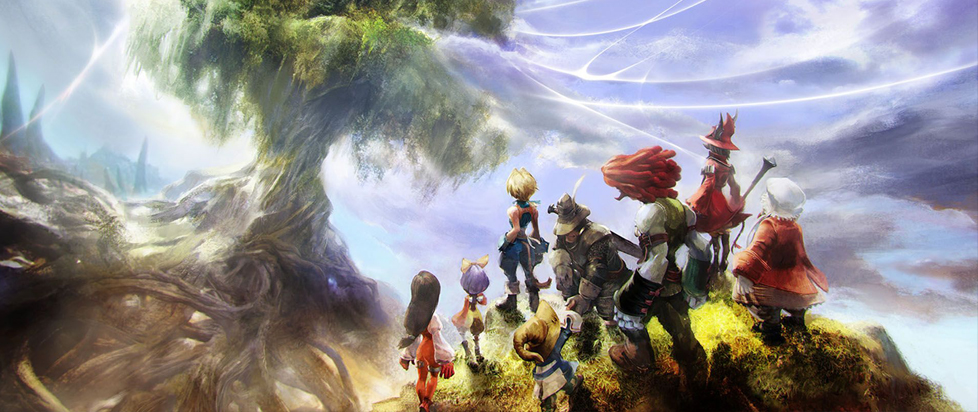
From the outside looking in, FFIX might seem like one of the most lighthearted entries. It has a colorful cartoon-y art style, the main character has a tail and it’s genuinely quite comedic right from the start. But that bright aesthetic intentionally masks one of the darkest, most complex stories Final Fantasy has ever told. A juxtaposition that’s necessary to really drive home its message on existentialism and authoritarianism, a way of illustrating a light to fight the darkness.
FFIX opens with a grand scheme to kidnap Princess Garnet Til Alexandros XVII, the rightful heir to the Kingdom of Alexandria. It’s a whimsical opening that you later find out is entirely politically motivated, a kidnapping orchestrated by Garnet’s uncle Cid Fabool IX, the king of the neighboring Lindblum. Fearing for Garnet’s life, Cid hired the group of bandits called Tantalus to spirit her away – the first in a long line of small actions that lead to meaningful change.
The core motivation behind Cid’s actions is how the once kind Queen Brahne of Alexandria has turned into a cold, cruel and power-hungry authoritarian. She now creates Black Mage dolls to wage war across the world, while also masking her true intent – harvesting the passed-down power of the summoners from Garnet, which essentially will give her access to weapons of mass destruction.
Throughout the first half of FFIX, we see the dire effects Alexandria’s military campaign has had, along with the ever-widening gap between the rich and poor.
In the village of Dali, the old woman tending the farm asks you if Brahne’s new policies seem “extreme,” as the crops die and the village’s adults are forced to create Black Mage puppets for war. In Treno, kids in the slums talk about how the nobles forced them out of waterfront property, quite literally saying power to the people at one point. The game meticulously builds up this picture of the entire world coming to a breaking point, with Alexandria being the match to light the fire. All of this, of course, comes to a head when the Kingdom of Alexandria invades Burmecia and subsequently Cleyra, quite literally genociding the Burmecian people.
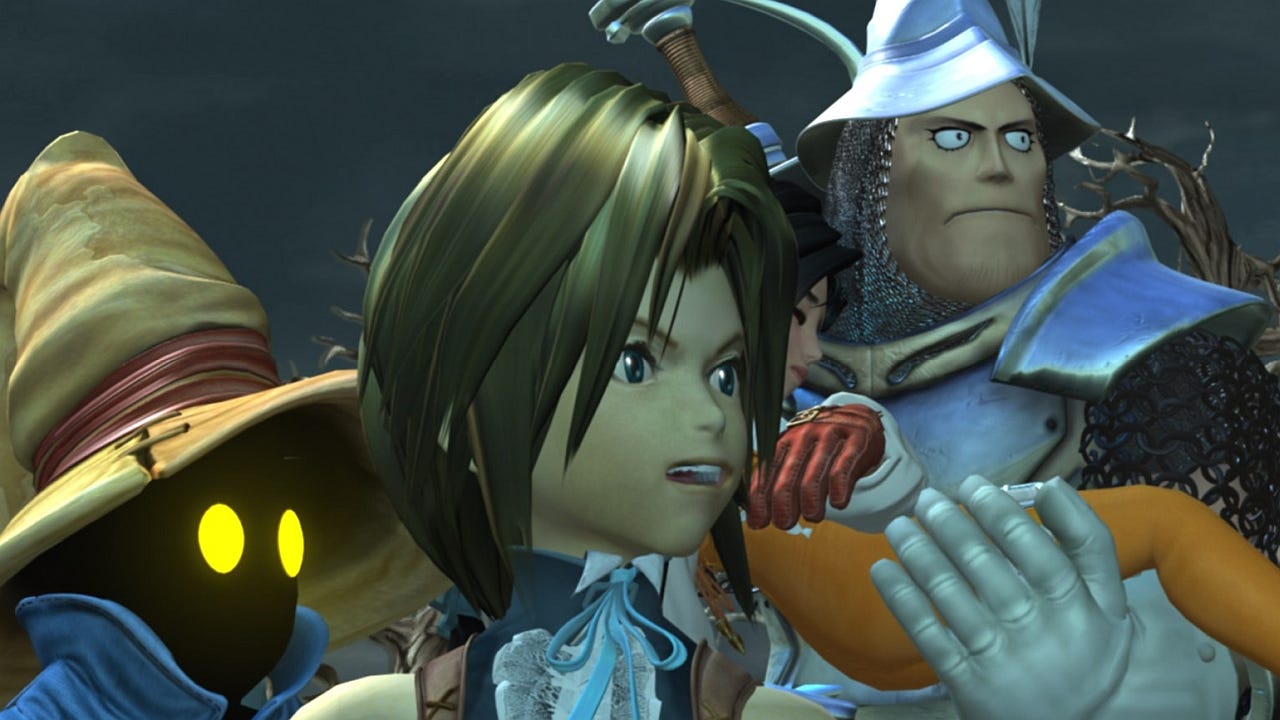
It’s at this point that we start to see each of the main party members’ stories tie into that overarching theme, see how they each find a personal responsibility in fighting Alexandria’s tyranny. This is most acutely felt by Freya, who tries, and fails, to stop the destruction of her people’s homes. Initially wracked by despair, Freya starts to take on the role of a protector for the main party, realizing the most direct route to her people’s salvation is to aid their endeavors. Instead of seeking vengeance, she seeks absolution. This drive is illustrated in one of the game’s big narrative turning points, where both Steiner and Beatrice turn on Queen Brahne to help the party. In the moment, Freya remarks that she can’t ever forgive Beatrice, but recognizes the potential she still has to save Garnet and Alexandria.
This moment similarly leads to Steiner finally coming to grips with his role in Alexandria’s war machine. Initially bull-headed on recognizing Queen Brahne’s crimes, Steiner tells himself that a knight like him isn’t supposed to question his ruler’s choices. But through interacting with people outside of his bubble, Steiner comes to recognize his mistakes. It’s crucially the amalgamation of little actions that starts to sway Steiner. The old man who runs the airship from Dali to Alexandria asks Steiner who decides what’s wrong and right. He sees the plight of the bartender in Dali when he assists her. He even gains newfound respect for the bandits of Tantalus when they fight to save Garnet from being executed. All of these minute moments help Steiner see the truth, and finally decide to take a stand against his country and station.
FFIX even has a mechanic to help accentuate that idea, with the Active Time Event system. Throughout the game, the player is presented with optional little scenes to watch, separate from the events of the main party. You might see how the Tantalus crew is faring after the party escapes the Evil Forest, or what a side character is up to on another side of the world. FFIX uses this system to emphasize that this is a world being influenced in a multitude of little ways, and how this tapestry of characters is finding its own way to make a difference. But equally, how the actions of the main party are also influencing others.
While the tyranny of Alexandria is ostensibly settled partway through the game when the story pivots to its sci-fi multiple worlds story, that core theme of authoritarianism doesn’t goes away. Alexandria’s actions were a microcosm of the colonialist actions of the planet Terra, whose people assimilate other planets to fuel their own. The second half of the game arguably leans even harder into examining how you can be a part of the machine and not even know it, through the lens of Zidane and Vivi’s stories, which intentionally overlap each other.
Both of these characters were manufactured as tools of war, assigned a purpose that disregarded their free will as living creatures – something that’s textbook for authoritarianism. And sometimes fighting back against those forces can be as simple as finding your resonance to exist alongside others. Vivi’s act of resistance is realizing the meaning of his life and what he can do for others, and it’s only through that lesson that he’s in turn able to help Zidane in the protagonist’s lowest moment.
That specific scene is where FFIX’s message can be felt most keenly. Zidane has spent the entire game selflessly helping people, because it’s the “right” thing to do. But when he learns the truth of his creation, he starts to question if anything was worth it, and one by one, every party member tells him the impact he’s had, how he helped them realize they needed to stand up and do the right thing. This moment is, fittingly, backed by a song simply titled “Not Alone.”
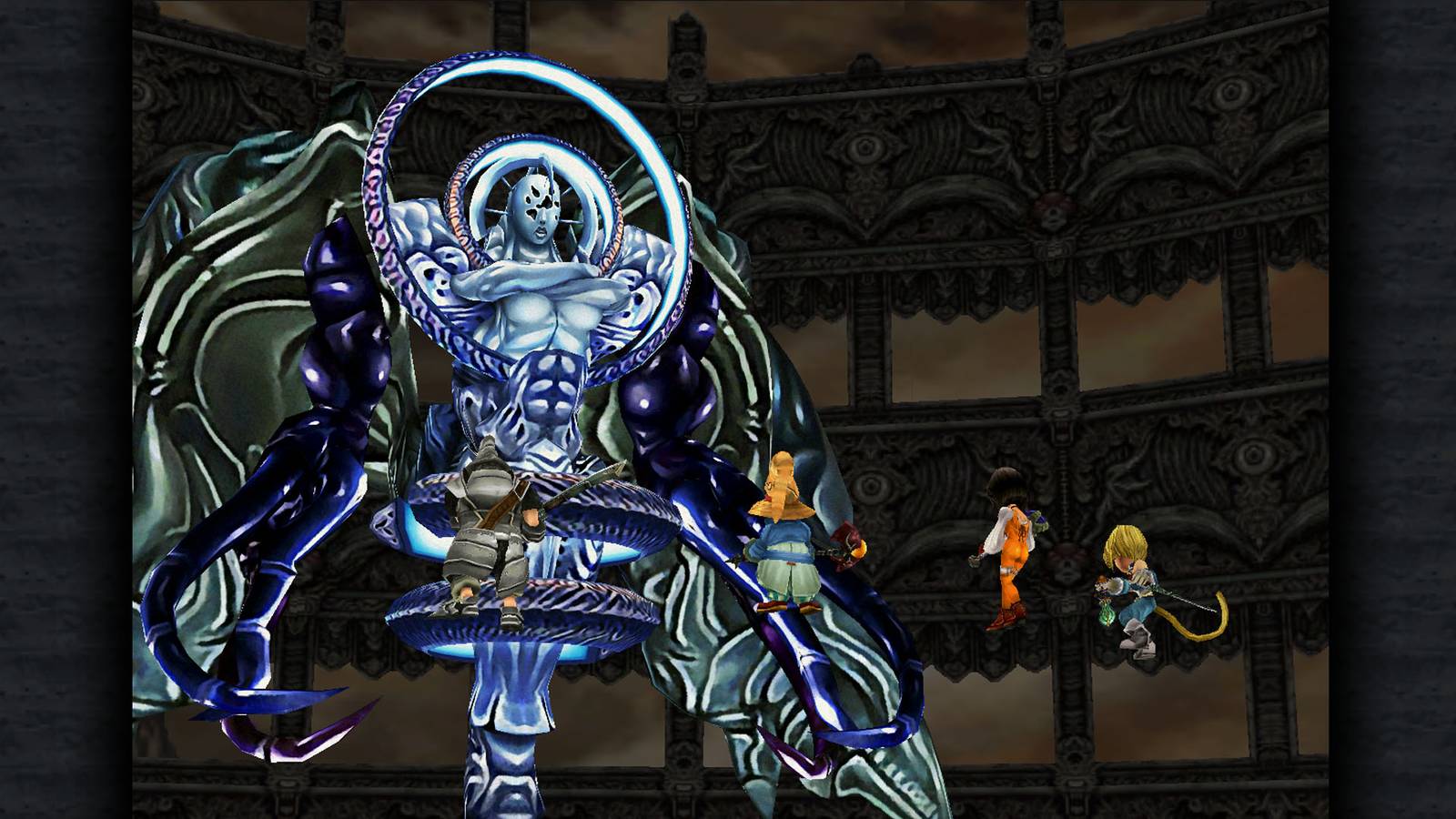
To drive it all home, FFIX then puts Zidane and the party idealistically up against the villain Kuja, who was also constructed artificially to specifically sow discord on the planet of Gaia. In his own way, Kuja also sought to break the cycle of violence inflicted by the people of Terra, but his view is twisted and warped by seclusion and desperation – he seeks to wipe everything out and start from a fresh slate. Meanwhile, Zidane and the party recognize the importance of saving and lifting up what’s there, seeing power in connection. It’s fitting, then, that the game’s final boss battle isn’t against some mustache-twirling foe, but quite literally the physical manifestation of death and existential dread. That’s ultimately the point of authoritarianism: squashing any sense of hope.
Hope is what powers people to keep forging on with their lives. Hope is what binds families and communities together and makes us want a better future for everyone. The most powerful thing you can do is find a way to make a difference, whether that’s large or small. The hand of authoritarianism wants you to feel weak, small and secluded. And you don’t have to simply accept things the way they are, you can believe in something better.
In the words of Zidane:
“In the end, it boils down to two simple choices. Either you do, or you don’t. You’d think with all the problems in this world, there’d be more answers. It’s not fair… but that’s the way things are. The choice is yours.”
———
Hayes Madsen has covered video games for over 15 years, with work appearing at Inverse, IGN, Rolling Stone, and more. Before writing about video games, he worked as a local reporter in Denver, Colorado. When not working, he’s most likely regretting the decision to play every single RPG ever released. Follow him on Bluesky or Linkedin.