Staying Aloft
Visit the MIT Press shop
This column is a reprint from Unwinnable Monthly #196. If you like what you see, grab the magazine for less than ten dollars, or subscribe and get all future magazines for half price.
———
Architecture and games.
———
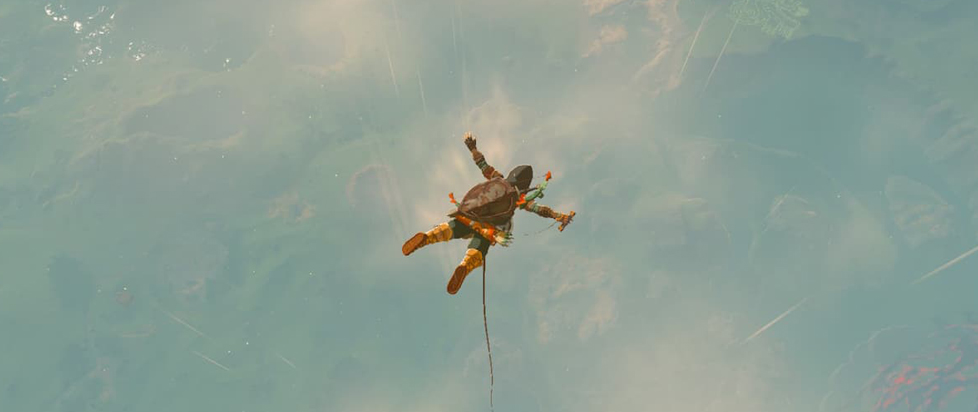
The Legend of Zelda: Tears of the Kingdom teaches you first and foremost that gliding is less about doing and more about feeling. You spring into the sky or step off a ledge and the world around you seems to open up. The wind slides along the screen. The music thins into a soulful melody. The ground below you fails to rush up as gravity loosens its grip.
Whether freefalling or paragliding, soaring in Tears of the Kingdom is much more than just a means of getting from one place to another. The mechanic is an open invitation to linger in the space between flight and falling, intention and surrender.
Spend some time in a sailplane and you’ll soon understand the sensation. Similar to gliding in Tears of the Kingdom, soaring as a sport is all about absence. There’s no engine on a sailplane, which means there’s no noise but also no thrust, only the negotiation between lift and loss. You’re always descending, at least technically. The trick is to fall slowly enough that it feels like flying, and hopefully could be.
Tears of the Kingdom does this deftly, framing the controlled fall as a form of flight. There are few points in the game where gliding is actually required, strictly speaking. You glide because the horizon temptingly calls. Perhaps a ruin catches your eye or a waterfall threads down the side of a cliff, something which is necessarily suspicious, inviting investigation. The verticality isn’t aggressive. The game simply seduces you into stepping off that ledge. The paraglider in particular is less of a tool at your disposal than a permission slip to use at your whim.
When it comes to aviation, glider pilots talk a lot about reading the air. Thermals are invisible shafts, but their effects are unmistakable. With a slight waggle of the wing or a momentary change in control pressure, you’ll have quiet confirmation of the sky offering you its agreement. The air is just about as legible in Tears of the Kingdom. You can feel this in the way that your descent seems to last a heartbeat longer than you expected. The game communicates lift without numbers or gauges, explaining itself through experience. You learn over time how the world expects you to stay aloft.

This would of course be in striking contrast to how movement is handled by most open world games, given that traversal typically feels like an obligation, something to abbreviate or skip through fast travel. Tears of the Kingdom gives you gliding to resist that impulse. Regardless of there being a form of teleportation, you still have the option to quite simply drift your way across the game world, and why would you do differently?
Gliding is horrendously inefficient, although in the best possible way. Sailplane pilots know this quite well. The flight is much less about reaching a destination than maintaining a conversation with the sky. While clinging to a constant sense of presence, you circle in the rising air not because it moves you forward but because it keeps you flying. Progress happens without power. The same logic applies in Tears of the Kingdom. You don’t glide to survive or even arrive but to experience what happens along the way. The route dissolves into a series of small decisions. You’ll need to angle, take a dip or commit to the valley instead of the ridge.
There’s definitely an element of risk. When it comes to gliders, misjudging your lift could spell an unplanned landing somewhere in a field. You might come up short of a ledge or tumble into a problem that you hadn’t anticipated, even in Tears of the Kingdom. The stakes may be different but the overall sense of danger is the same. Will there be enough range or endurance?
What makes gliding in the game so interesting is the reshaping of any potential relationship to scale. The world feels enormous not because of the difficulty to cross but the speed at which you move. When seen from the air, landmarks rearrange themselves. Distances compress and expand. The shrine that felt remote on foot becomes an obvious waypoint when seen from above. This mirrors the way that glider pilots understand the terrain below, not in terms of a series of obstacles but a map of potential energy.
There’s a quiet intimacy to this perspective. Powered flight can feel transactional. You start, go and arrive. Soaring on the other hand feels conversational, and the landscape speaks first and foremost. The sunbathed hillside hints at rising air. The broad plain suggests reprieve, perhaps even safety. The dialogue in Tears of the Kingdom at this level is aesthetic rather than meteorological but no less real. The game world signals where to go, and you decide whether to listen.
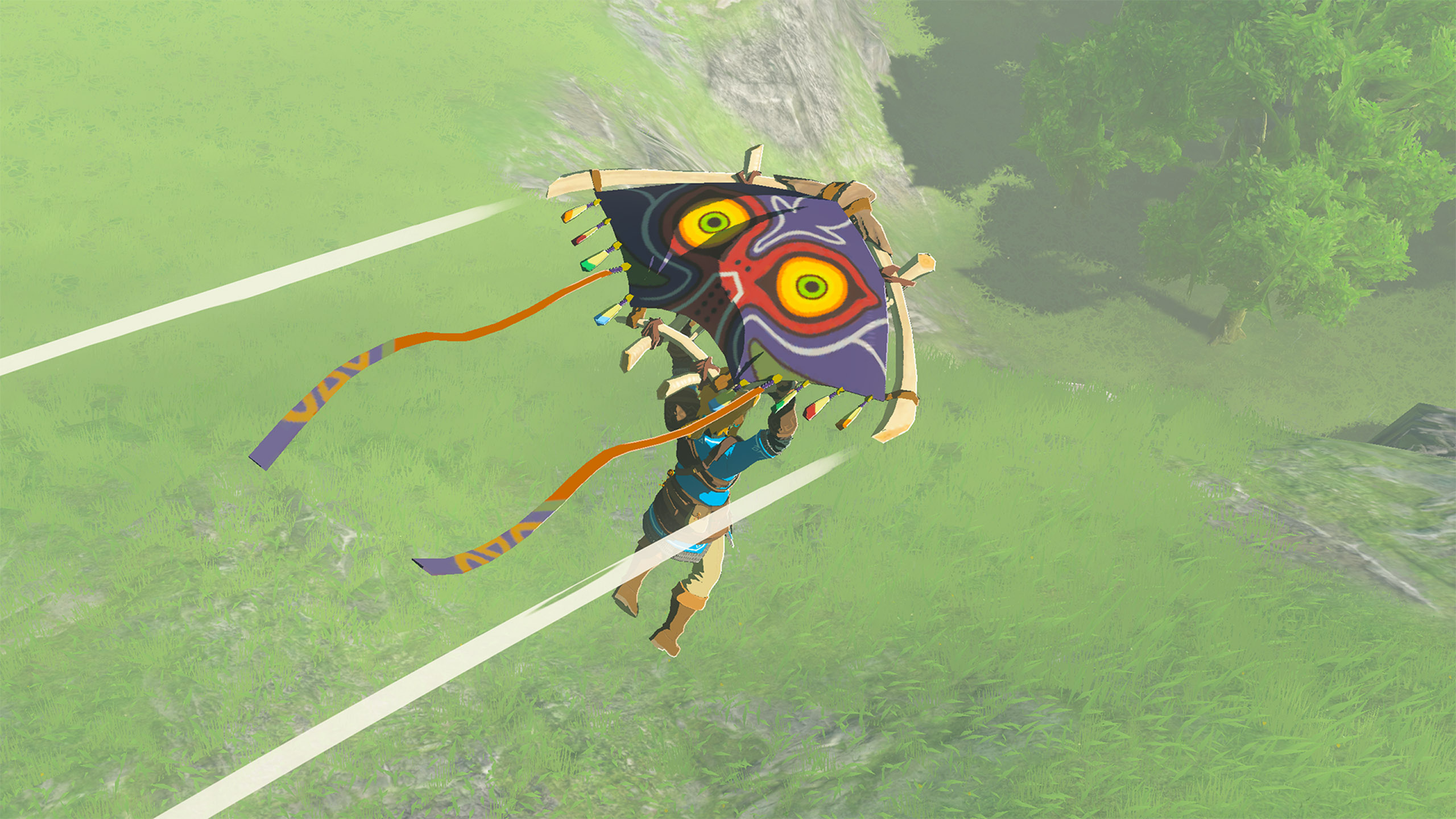
Tears of the Kingdom doesn’t rush the exchange. The soundtrack recedes during your glide, leaving space for ambient sounds like the soft rush of the wind. You can feel time stretching. This would be more absorption than adrenaline. Glider pilots describe something similar when they talk about being on task for hours at a time, suspended in a state where minutes lose their meaning, neither idle nor frantic but simply airborne.
The feeling of calm isn’t accidental. Gliding in the game is a counterweight to the chaos. Following each and every skirmish there’s an opportunity for you to leap into the open air and let the sky lead you onwards. The design of course provides a reminder that mastery isn’t always about your skill at speeding through the game. This time around it looks like choosing not to hurry, deliberately.
The most telling parallel with soaring may perhaps be how the experience reframes your sense of control. You’re never fully in charge. The paraglider won’t climb on its own. The sailplane can’t really produce lift. Your agency lies in your sense of responsiveness, in other words noticing, adjusting and committing when the moment feels right. This would be a lesson in life itself, and a generous one. The process implies that skill is less a matter of control than attunement.
When push comes to shove, gliding in Tears of the Kingdom is less about getting somewhere than agreeing to fall in a particularly coordinated manner. The game asks you for trust in the lack of space under your feet. You have to believe that descent can be gentle, perhaps even perfect. When it comes to those of us who chase thermals, the resonance with reality is immediate, and intimate. The game offers you a rare gift. We aren’t going for speed or even efficiency, although soaring could certainly be seen as efficient in a certain sense. We just glide for the simple yet profound pleasure of staying aloft a little bit longer.
———
Justin Reeve is an archaeologist specializing in architecture, urbanism and spatial theory, but he can frequently be found writing about videogames, too.