The Keen Edge of Legacy: An Interview with tonia laird
Visit the MIT Press shop
This column is a reprint from Unwinnable Monthly #196. If you like what you see, grab the magazine for less than ten dollars, or subscribe and get all future magazines for half price.
———
Analyzing the digital and analog feedback loop.
———
CW: Brief mention of terminal illness.
Seventhblade is a story that I’ve been aware of for almost two decades. tonia laird’s debut fantasy novel is about a grieving and vengeful warrior T’Rayles of an Indigenous people called the Ibinnas, who must return to the titular colonized city to find her adopted son’s murder. Along the way, T’Rayles becomes embroiled in the fractious politics of the Broken Fangs, an alliance of warriors founded by her late mother, and contends with the cunning exiled deity Elraiche who wants T’Rayles’ inherited sword. tonia laird’s debut has been a longtime coming and its narrative has been intertwined with her creative projects for as long as I’ve known her. I recently had the pleasure of catching up with tonia and congratulating her not just for her recent publication, but for her nomination for the 2026 Evergreen Award for the Ontario Library Association’s (OLA) Forest of Reading program. In the course of our conversation, I realized just how much has culminated for her with this milestone.
Not only has she achieved one of her storytelling dreams, tonia has made (in my biased opinion) a mark on Canadian science fiction and fantasy literature. She was mentored by Katherena Vermette, best known for her landmark novel The Break, one of the most influential novels for bringing First Nations contemporary literature into the mainstream of Canadian Literature (commonly referred to as CanLit). Both tonia and Vermette are expanding genres that previously were dominated by the hierarchical status quo of CanLit and are part of a wave of diverse authors like Patty Krawec, Alicia Elliott, Billy Ray-Belcourt, Esi Edugyan, Vivek Shraya, Kai Cheng Thom, Jinwoo Park, Terese Mason Pierre and many more who are refusing that status quo. To paraphrase the introduction of the anthology Refuse: CanLit in Ruins, writers like the aforementioned are not just refusing the refuse of CanLit’s social and racial hierarchies and prejudices, they are also re-fusing something new and improved from the remains of the previous apparatus of Canadian academia and publishing. Of her mentorship with Vermette, tonia said:
“She never [imposed] her way of working on me, and her style was more like asking questions about my approach, and why I would do it that way. It made me think deeper about my decisions and let me still keep my story and my style my own. The amount of support she has shown outside of my mentorship has been incredible as well. She’s a person who loves to see others succeed.”
Having the support of Vermette and her editor was vital in the current landscape of fantasy publishing as well, which favors pitches for BookTok’s favorite genre romantasy, and wanted tonia to amp up any possible romantic subplots. I have heard this happening with another author debuting this year, Christy Anne Jones, who wanted to write an atmospheric yet Gothic fantasy novel. While I can’t say this with certain proof, there’s a strong possibility that the push for romantasy isn’t just due to the easy marketing of the genre, but based on the gendered expectations for authors like tonia and Jones as well. I notice that another debut Indigenous author, Caskey Russell, has published what is being marketed as “the Tlingit indigenous response to The Lord of the Rings“ and is also something of a pandemic-trauma novel as well.
Backtracking a bit. tonia and I met when I was first out of high school, still painfully shy, despite having aspirations to break into the game industry as a character concept artist. On a whim, since I kept writing story outlines instead of sketching thumbnails for my fine arts courses, I took a second creative writing class as one of my free electives. There I met tonia, along with several other writer-creators, who not only helped me come out of my shell but realize that I didn’t have to choose between visual storytelling and prose. She pursued both of these skillsets unapologetically and landed a writing internship with Bioware shortly after graduating from BA program with a major in creative writing and journalism.
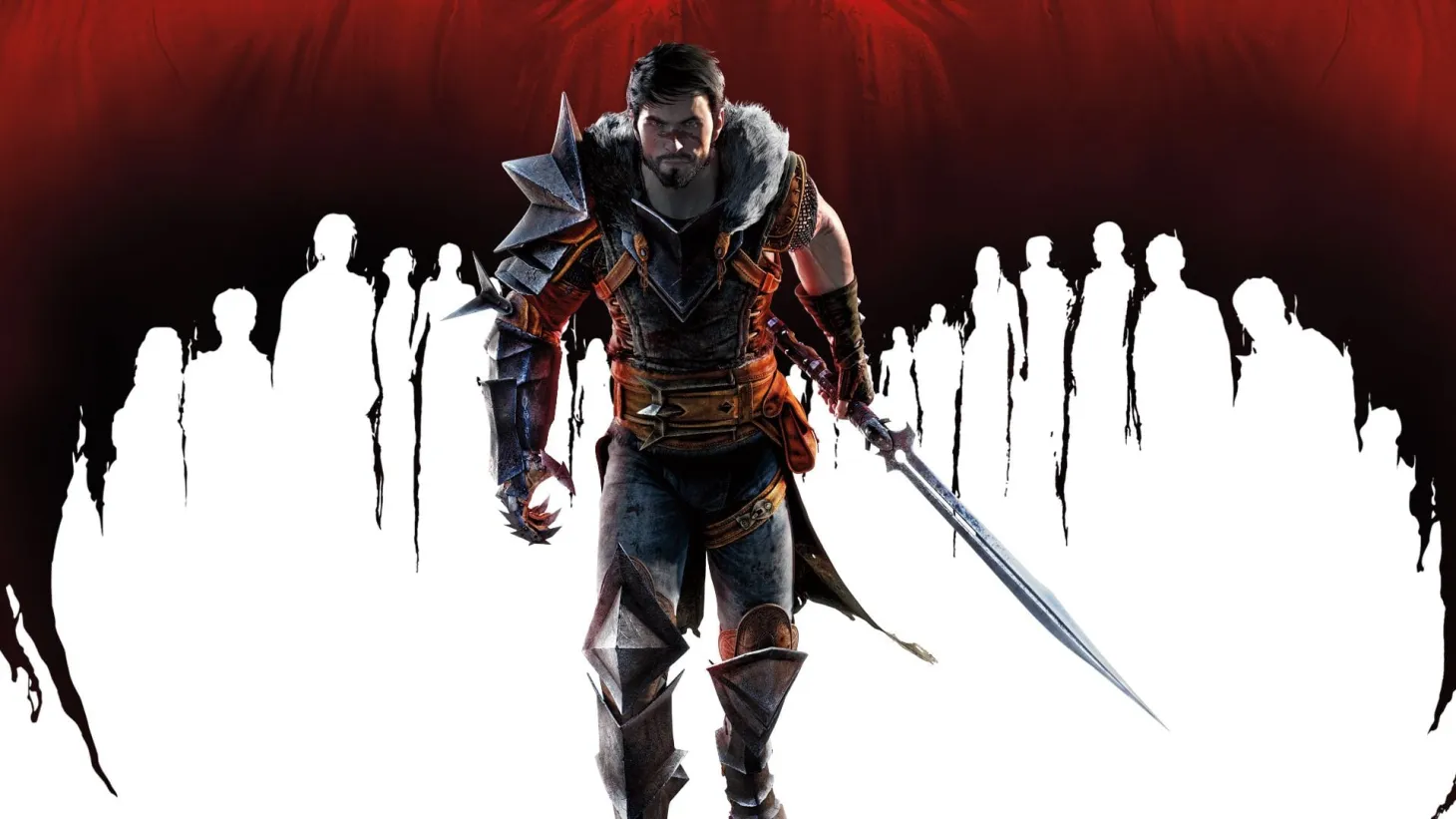
From there she’s gone on to write for Dragon Age II and Dragon Age: Inquisition as well as for interactive fiction projects like Poster Girl for FableLabs. She’s also known as Thought Pennies Entertainment‘s lorekeeper – a role involving researching real-world examples to strengthen a game’s world-building. When I asked what key challenges she faced switching between writing for a game studio and writing for traditional publication, she noted that “not getting the constant feedback from the team around me” would significantly change the pace of drafting. Sometimes you can turn out scripts for a game studio within a week or two, she explained, while writing a fantasy novel can take several months or years. “Having so many eyes on a plot or a script meant catching problems right away, so minor problems didn’t become gaping plotholes in time” she added of game development. But there’s a catch, regarding creative feelings of ownership and completion. When you work for an IP, usually that work belongs to the company. In the case of some of the work she did for Bioware, for instance, if any project was cancelled it often couldn’t be repurposed for another project at the company unless there were bigger plans creative leads were in charge of that allowed for such reincorporation. And certainly, the creative work couldn’t be repurposed outside of the company as well. When you are the sole creator of a project like a novel, you can “use the bones” of discarded drafts, as tonia put it, for some other plot or world-building down the line.
In all of her work there’s a deep sense of care and respect for how people, both individually and collectively, are impacted by society’s systems of power. Seventhblade, as a story about living under empire, legacies and who controls their narratives, and what defines a family, brings together the best of tonia’s storytelling experience. On the surface, the novel is about T’Rayles’ quest for revenge for her murdered son. But it’s also about how through her anger and grieving she reconnects with her broader communities after living an isolated and anonymous life as someone with mixed heritage. T’Rayles is Ibinnashae, essentially children of Ibinnas and non-Ibinnas people, and she has faced discrimination not just from those outside of Ibinnas society but within it as well. Even amongst the Daughters of Dralas, her mother’s sacred order, she is judged. The sword she inherited from her mother is part of this order’s legacy and throughout the novel the concept of legacy and the harm rigid constructions of it can do, intergenerationally.
tonia is also someone who is reconnecting with her heritage. She is of the Métis Nation in Saskatchewan and currently lives in Treaty 6 territory. She spoke to me of familiar feelings I’ve also held as someone with mixed Black diaspora heritage, that of locating your communities and at times feeling insecure about your differences from those who have been immersed in those communities and their cultures growing up. At once, there’s a lot of joy and pride in reconnection, and learning more about Michif language has been important for her. She worked with Northern Michif Language Keeper Vince Ahenakew and sourced examples of the language from the Gabriel Dumont Institute of Native Studies and Applied Research’s Northern Michif dictionary.
She selected Northern Michif out of the several dialects of the language which resulted from the mix of Cree verbs and French nouns, between “people and communities descended from fur trade fathers and Cree mothers.” Northern Michif “is very strongly influenced by nêhiyawak (Cree) and is considered by some to be a dialect of nêhiyawak, with a still noticeable, but obviously lesser French influence.” In some instances, tonia explained to me, the texts she studied of the language were written mostly in French. This is definitely a settler-colonialist legacy at work. As a related aside regarding text and culture, Michif language learning is how tonia came to present her name: the symbols of the language are all in one case, which is why despite her author name using romanized letters it is all in lower case.
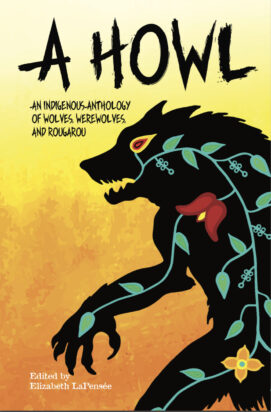
tonia has always told stories that defy not just genre expectations, but also medium expectations as well. She was influenced early on by the comic issues she’d pick up from a local gas station growing up in rural Saskatchewan. As a related aside, she would eventually become a contributor to comics anthologies like A Howl: An Indigenous Anthology of Wolves, Werewolves, and Rougarou, a project edited by Elizabeth LaPensée. Coincidentally, LaPensée is known not just for her editorial work, but her game writing as well (most notably with When Rivers Were Trails and Where the Water Tastes Like Wine). This is not entirely surprising though, as tonia is part of a resurgence of Indigenous speculative and multimedia storytelling in recent decades. She mentioned to me that what’s important to note of current Indigenous writers of speculative works like Stephen Graham Jones’ Buffalo Hunter Hunter is that there are more explicitly Indigenous themes and representation now, as opposed to works that feature some Indigenous culture but are not necessarily centering it in the narrative. In other words, there’s less Own Voices-style narratives, which have often been pushed by publishers to educate a white and privileged audience as Elaine Castillo has elucidated in her essential polemic How to Read Now: Essays.
Seventhblade was originally going to be a graphic novel series, in fact. I was curious about what caused the switch to prose and tonia explained:
“I actually was accepted into my MFA at USask to work on Seventhblade as a graphic novel, but when I wrote the first chapter for a prose assignment, I got such good feedback that I decided to change over to prose. Also, the amount of time it would take to do the same story as a graphic novel would mean I wouldn’t have had it finished for my defense. I’m really glad I switched over (or, honestly back to prose, again) because I think the medium really suits the story and I don’t think I’d have the patience in my illustration, or the skill, to tell it the same way.”
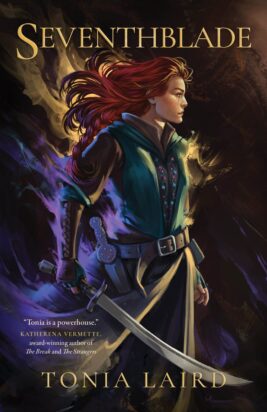
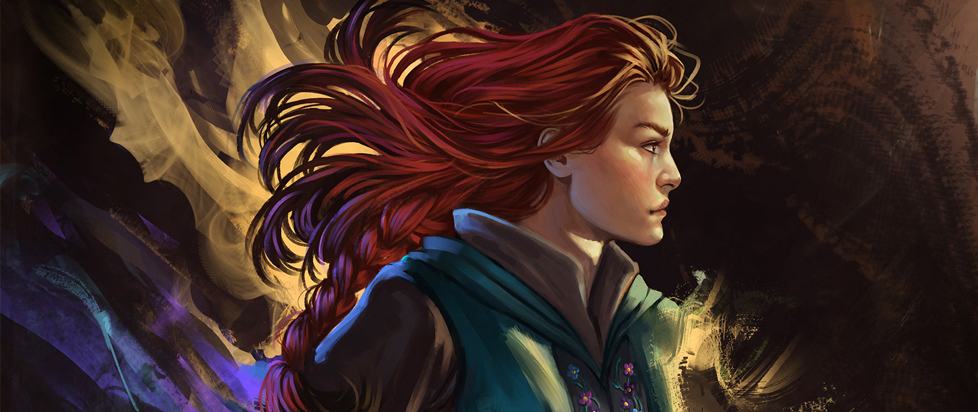
The visual element of the story is still very much present, however; T’Rayles’ design was instantly recognizable on the front cover (I remembered tonia’s early sketches of her). The protagonist’s signature red hair was actually something that tonia had to consult Vermette on, as it was part of the character’s Ibinnashae heritage, but she didn’t want the character to read as whitewashed either. tonia eventually decided that to illustrate the character’s background in a more nuanced way, that the tips of T’Rayles’ hair would always grow out dark brown. Another character, arguably T’Rayles’ foil and my favorite antagonist is Cedaros. Cedaros is definitively white-passing and is a case study in how racial hierarchy is oppressive as a social and imperial tool. Speaking of imperial tools, tonia worked closely with the illustrators Jaqueline Florencia and Tiffany Munro, on both the cover design and the maps depicting colony of Kaspine and Seventhblade. Like the best maps in fantasy prose and games (tabletop, CRPG, or otherwise), they showcase not just the world-building details but the themes of that world-building as well. tonia describes in one of several behind the scenes blogs on her website that she wanted the maps to give the impression of having been made by a colonial Ecrelian mapmaker for their king.
Not to leave on a bittersweet note, but Seventhblade was also a novel about reconciling with grief on your own terms. tonia was originally inspired to tell the story two decades ago to deal with the loss of a friend to a terminal illness a few days after she celebrated her 20th birthday. Eventually the novel that was released has become also a celebration of the many storytelling traditions tonia has become a part of. The novel has a memorial to Adam Palmer and an additional dedication to the “Davidson boys”, who together introduced tonia to TTRPGs, which has become wellspring for her storytelling. tonia recounted when I inquired: “Adam was such a great guy and he [played] TTRPGs with a group of friends at noon in the winter at school. He invited me to join them to play a short game, and from there I was hooked. He was unapologetically himself, and he didn’t shy away from embracing the joy ‘nerdiness’ at an age when we all thought image was the most important thing. His joy in it made me more comfortable embracing the things I loved as well, and I’ll always be thankful to him for that.” tonia has given me this gift as well with her friendship and acceptance of me at my most awkward, trying to find a voice for my writing and what it might become as well. For that (and all the above) I thank her endlessly and look forward to her future creative endeavors and how they will continue to transform fantasy and Indigenous speculative work.
———
Phoenix Simms is an Atlantic Canadian cryptid who is a freelance writer and the co-editor of The Imaginary Engine Review a.k.a. TIER. You can lure her out of hibernation during the winter with rare SFF novels, ergonomic stationery, or if all else fails, gourmet cupcakes. Or you can just geek out with her where skies are blue.