Feminine Panic: Who Gets to Own Masculine Narratives?
Visit the MIT Press shop
 This is a reprint of the feature essay from Issue #96 of Exploits, our collaborative cultural diary in magazine form. If you like what you see, buy it now for $2, or subscribe to never miss an issue (note: Exploits is always free for subscribers of Unwinnable Monthly).
———
When women and queer audiences claim narrative space in genres culturally coded as masculine – shonen anime, sports romance, action franchises – the backlash is swift and vicious. Accusations of “feminization” fly. Female fans are “ruining” everything. Queer readings are going too far. The resistance exposes a deeper anxiety: who gets to desire these stories, interpret them and control their cultural meaning.
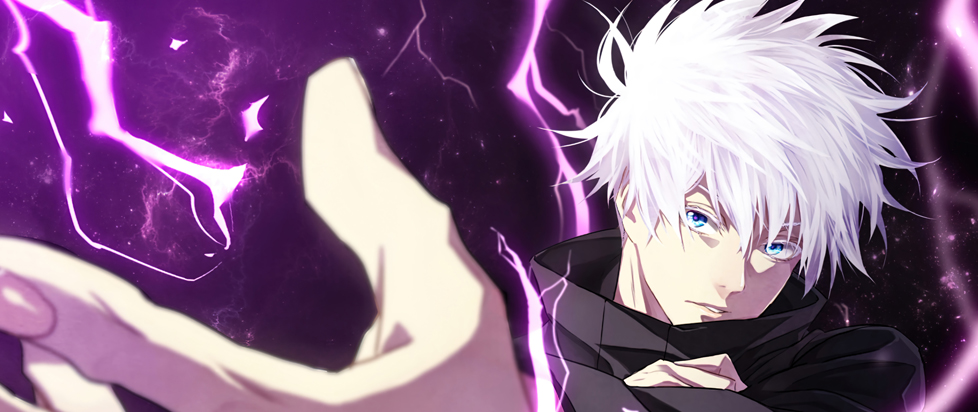
The pattern reveals itself brutally in shonen anime. Women have always consumed shonen, but Jujutsu Kaisen made the strategy explicit by designing Satoru Gojo as bishonen bait for female viewers. However, when that presence becomes undeniable – when women dominate online discourse, drive merchandise sales, center emotional dynamics over power scaling in shows like Jujutsu Kaisen (where the most vocal complaints about “feminization” come overwhelmingly from male fans) – suddenly it becomes an invasion. Male fans position themselves as gatekeepers of authentic consumption. Women’s interpretive practices get framed as distortion, not legitimate engagement.
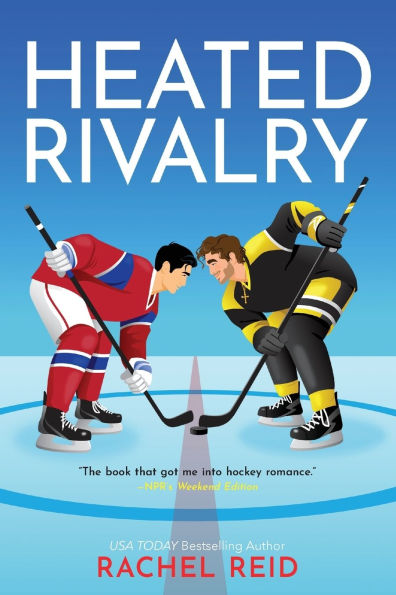
Sports romance triggers the same panic. Heated Rivalry by Rachel Reid centers two male hockey players in a relationship that spans over a decade. Shane and Ilya first meet as rivals on opposing NHL teams, hooking up secretly whenever their games bring them to the same city. For seven years, they maintain this pattern – antagonism on the ice, desperate sex in hotel rooms, no acknowledgment of what it means. When they finally start actually dating, they’ve already been orbiting each other for nearly a decade. The second book picks up years into their committed relationship, the third continues immediately after. The series (and subsequent TV adaptation) tracks a relationship measured not in romance novel months but in real, grinding years of denial, secrecy and slow transformation.
 Cue the accusations of fetishization and the moral interrogations about why women consume m/m narratives. The question itself operates as a disciplinary mechanism, especially when men consume f/f content without equivalent scrutiny. Women’s desire requires explanation, defense, apology.
“Feminization” functions as boundary maintenance. Masculinity remains so tethered to exclusivity that women’s visible enjoyment registers as contamination. The anxiety stems from volume, not presence. Women refuse to stay quiet, to consume passively. When women write meta analyzing emotional architecture in anime, create fan art foregrounding vulnerability, discuss character relationships outside canon – they claim interpretive authority. That claim threatens everything.
What gets coded as feminization often just means emotional literacy. Women attend to interiority, relational dynamics, unspoken tensions. They recognize homoerotic subtext as textual possibility, not projection. Male-dominated fandoms resist these readings because they redistribute power. Interpretive communities control how stories circulate, which elements get emphasized, which meanings dominate. When women control discourse, masculine fans lose definitional authority.
The panic intensifies when women’s consumption becomes economically visible. Merchandise sales. Streaming numbers. Convention attendance. Quantifiable proof that women constitute primary audiences for supposedly masculine genres. This visibility shatters the fiction that these narratives belong to men, that women merely occupy peripheral positions as tolerated guests.
Sports m/m romance crystallizes these tensions perfectly. The genre fuses masculine-coded athletics with feminine-coded emotional interiority. Women reading hockey romances claim narratives centered on men’s emotional lives, something traditional masculinity polices precisely because it threatens masculine performance. Men playing sports can be vulnerable in romance novels in ways they cannot in actual locker rooms. Women readers recognize and desire that permission.
The resistance to feminization reveals the fragility of gendered ownership. If women’s interpretations can ruin a genre, it never belonged to men as securely as claimed. Masculine cultural authority depends on women’s silence, their invisible consumption, their agreement not to speak too loudly about what they see. When women refuse that bargain – when they write, analyze, create, interpret without apology – they expose the violence required to maintain masculine exclusivity.
The panic serves control, not preservation. And women have stopped asking permission.