Secret Places of Pain
You feel compelled to support great writing…

This column is a reprint from Unwinnable Monthly #195. If you like what you see, grab the magazine for less than ten dollars, or subscribe and get all future magazines for half price.
———
What’s left when we’ve moved on.
———
“Feminist consciousness can be thought of as consciousness of the violence and power concealed under the languages of civility, happiness, and love. You can venture into the secret places of pain by recalling something.”
– Sara Ahmed, Living a Feminist Life
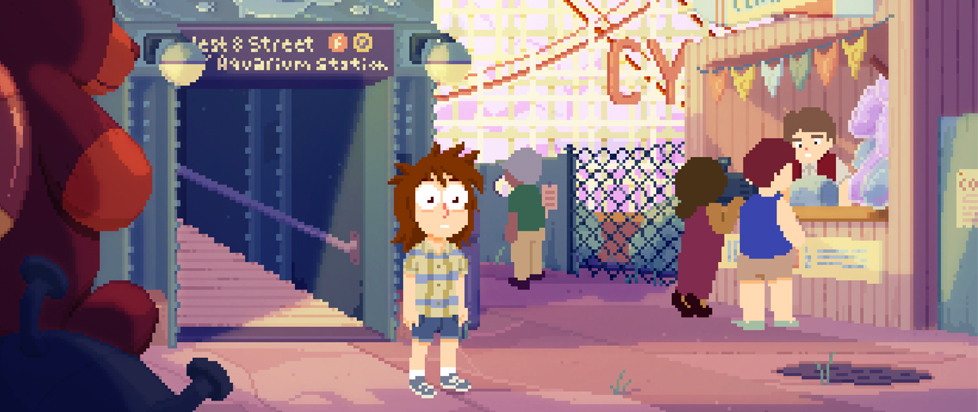
Station to Station, a new semi-autobiographical game by cartoonist Meredith Gran, follows college student Mara for one year of her life and her efforts to become a writer and fall in love. While she sees these as opposing desires, it turns out they feed into each other too, orbited by her grades, family emergencies and the other realities of growing up. Mara frequently finds love, gender and other constructs constricting; yet writing, her ultimate goal, is only possible when she experiences life to a wider degree, constructs included.
I came away from Station to Station having assigned it too much responsibility for one game to bear. It represented a shining star in the underpopulated sky of Games About Women, much like Consume Me did last year. The more I thought about it, though, the more Mara transcended this category I’d made up. More than honest, Mara becomes transparent with older-teen cringe, feelings and disclosure; she’s a raw character in a medium that, when it comes to depictions of women, is still playing catch up. I wanted to know more about how she’d come to be, and so I spoke with Gran about the development process of Station to Station.
Station to Station is a point and click game with light puzzle elements. Gran says that the written elements of the game were made first, then “the mechanical component bloomed somewhat naturally from that initial story.” As Mara attends college she will be inspired by her school readings as well as some activities and player choices. She earns points that can be used as fuel in your writing assignments. Mechanically, having new experiences inspires Mara to write and makes her writing better. Every day you have the chance to read one book and write one item.
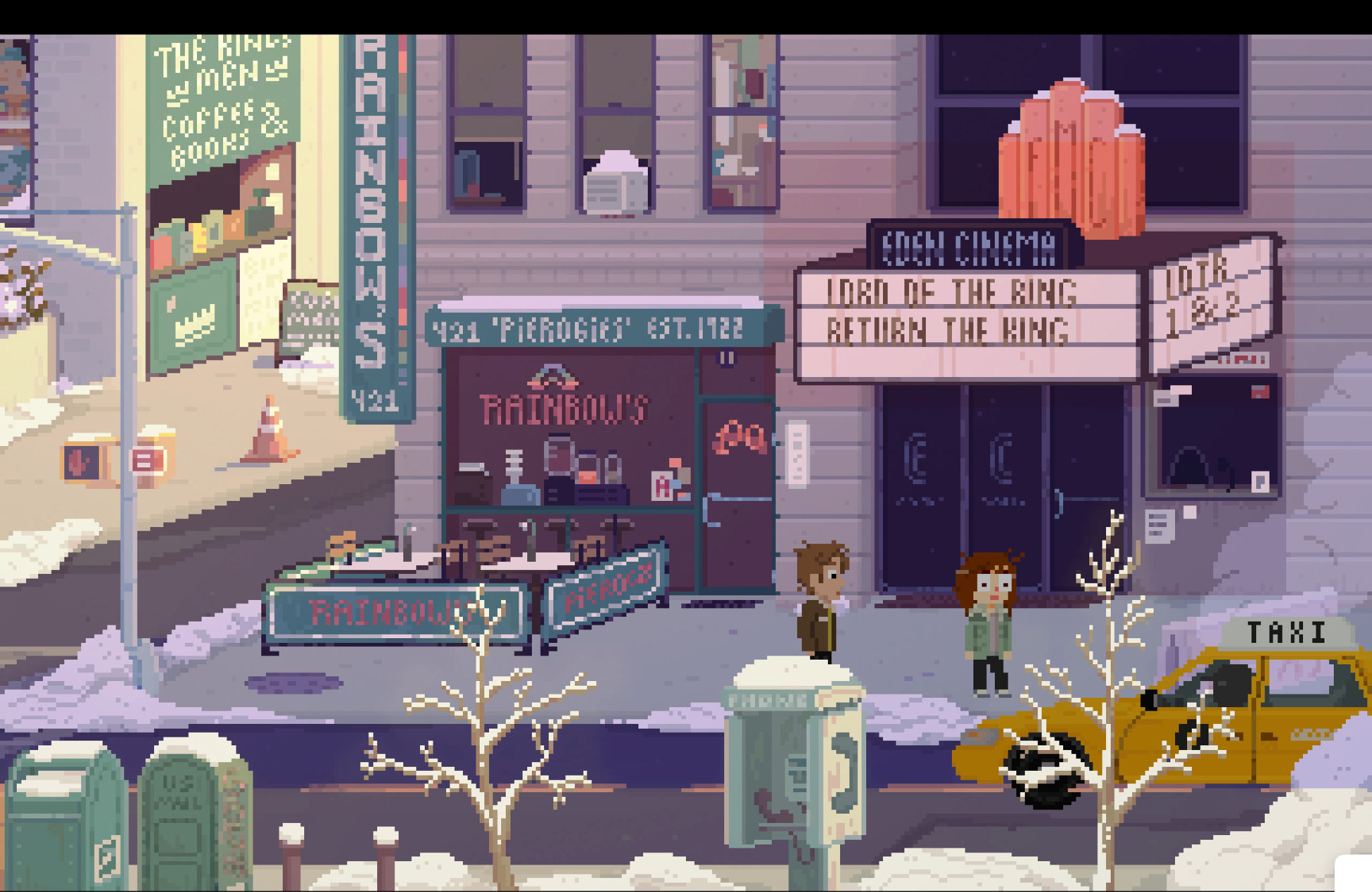
Depending on your choices you naturally become more expert in certain topics; my Mara focused on Movies. It was fitting that as I played I kept thinking about Laura Mulvey’s essay “Visual Pleasure and Narrative Cinema,” in which she develops the concept of scopophilia, or the pleasurable act of looking at another. Mulvey’s essay concentrates on how men look at women on screen and how women imagine themselves in anticipation of being looked at. Mulvey and later scholars built off of this to imagine how women view themselves on that screen, watching the men who watch the image of them – what’s called the male gaze. These commentators theorized that because of societal pressure, women have a self-critical image of ourselves in our heads whether we are public speaking or alone in a room by ourselves, one that means we are never really alone.
Speaking from experience, this can make you bitter about the need to constantly self-police – a bitterness that feels impossible to explain to anyone who hasn’t gone through it too. “At Mara’s age there’s some resentment that you’ve become a woman and you must perform femininity at all,” says Gran. Then again, while Mara struggles with policing herself, there are other times where her natural self comes through. As I played, I thought how rare this was: to see a female character neglecting her hygiene or being too online, or being preoccupied with ambition.
Gran suggested that these traits seeming “male” at first glance “may just be a symptom of where we’re at with stories about women. Men who play these games are quick to point out (sometimes with great surprise) that they empathize with Mara’s struggle despite being male. I think it’s possible that when we don’t see these perspectives across lines of difference, we start to believe they are not universal.” We limit female characters, in other words, even when we ourselves know that women can be bitter, misguided, and creatively ambitious – meaning our collective imagination isn’t prepared for women to feel those things, and we have no road map when we do.
I felt sympathetic to another problem Mara identifies but never spells out exactly – how being constantly examined might affect a writer whose job it is to examine the world around her, or to put it another way, how being someone else’s muse can feel insulting when you’re the writer, here. One sequence later in the game stopped my breath for a moment, when a character perfectly demonstrates how praising someone’s artistry can ultimately be a way to flatten them into your own image. In such a moment, whose identity as a writer wouldn’t be shaken? As Gran says of her own life experience at Mara’s age, “My identity was so tied up in my work, and the work itself lacked confidence. It was confusing to be loved.”
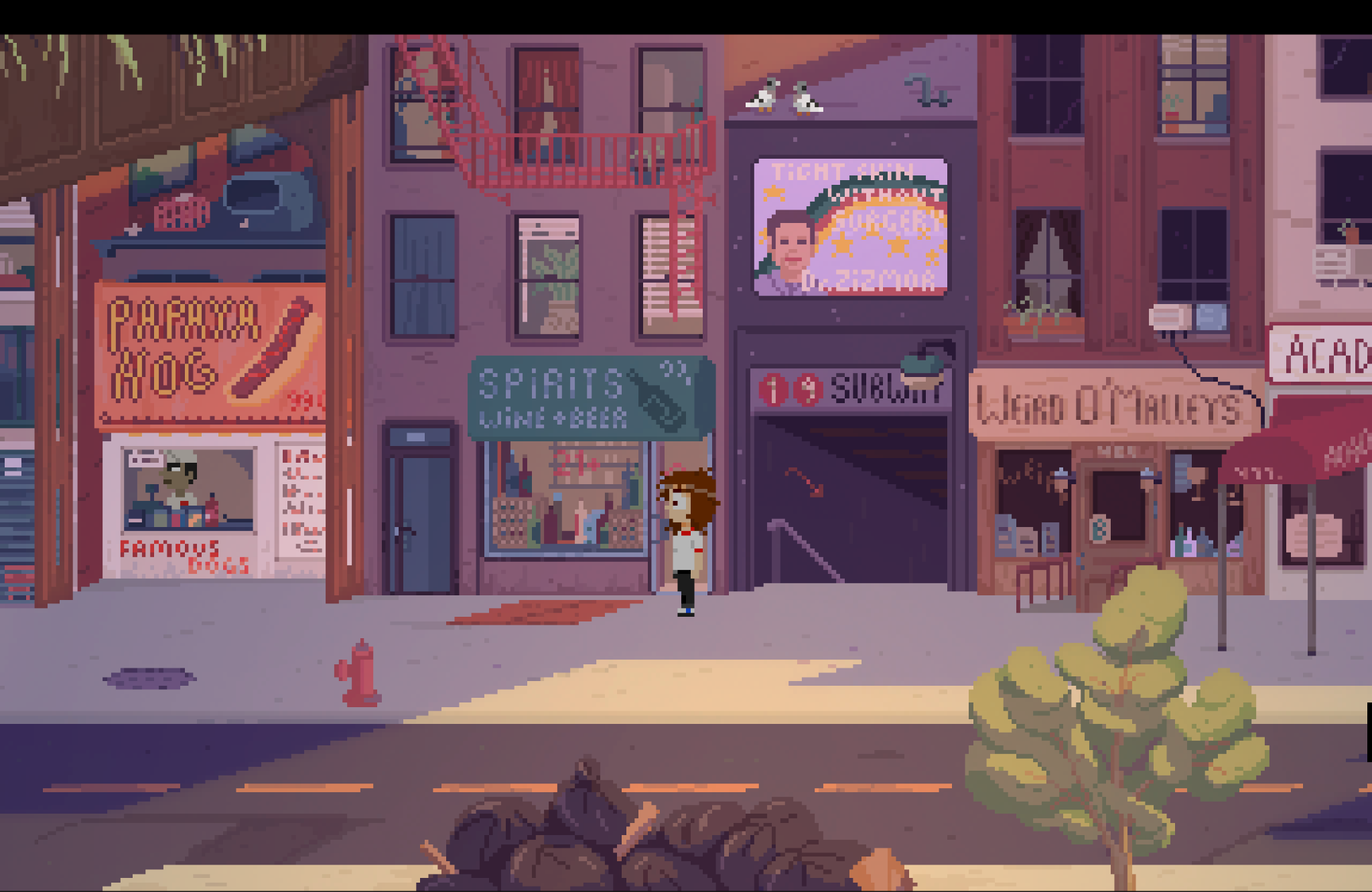
All the same, for Mara experiencing life and by extension these interactions are necessary to write in the first place – which the game’s system of earning points for experiences drives home. I was particularly impressed with the reading portions of the game, which tie into its themes in more ways than I expected. For example, the entry on Frankenstein mostly focuses on its introduction about Mary Shelley’s life; we learn Shelley was inspired by her mother, a writer who died in childbirth. While not all the books are fictional nor equally meaningful, Mara’s reading list places her in a creative lineage with plenty of women writers in it. More than homework, these books are the building blocks of Mara’s ability to write at all, and her motivation to develop underbaked ideas into something she can be proud of.
Station to Station is full of womens’ literary writing, but I wanted to ask Gran what she thought of the state of stories about women in games. Her view is that games largely fail to show protagonists with rich inner lives, though that problem isn’t exclusive to women characters. “More often women are characters or even playable protagonists, but their perspective, their inner life, does not come through… I think game developers are just barely scratching the surface of what is possible with narrative [and] pulling from a shallow pool for inspiration. ‘Other games’ is not a great place to find real stories about life, regardless of their quality.”
For her part, Station to Station and its predecessor came from Gran’s own experiences as well as a period of making games beginning when her son was born: “Being around him [triggered] potent memories of growing up.” The semi-autobiographical nature of Mara’s story means the development process goes slowly, both because of a small team and the necessity of processing so many memories. But the flow goes in both directions; putting those memories into a narrative, as Mara discovers, is part of the process, too. “The more I live in the mind of my past self,” Gran says, “the more forgiveness and understanding I’m able to find.”
———
Emily Price is a freelance writer and digital editor based in Brooklyn, New York, and holds a PhD in literature. You can find her on Bluesky.