Comfort of Cold Starlight
Visit the MIT Press shop
In 2017, I found myself shattered by internal fracture. Up to that point much of my life had revolved around Christianity, having grown up in a Christian home that feared the world, frequenting a church that wanted to care for the world, and attending a private Christian high school that saw the world as an enemy. Needless to say, I entered college with a conflicted worldview.
Over the ensuing decade, I got to serve as a youth leader for a loving, accepting congregation, all the while believing I was destined to become a missionary. But with each passing year I grew further out of my young American male blinders, and I thankfully gained a deeper understanding of the world and embraced empathy for people less like me.
This meant steady cobweb lines across the groaning glass of who I used to be, my ideology no longer able to find purpose within the societal suffering I saw around me. The 2017 spring wherein I decided to let go of those last vestiges coincided with a seismic shift in the American political landscape, openly unleashing faith-born horror for a lot of already at-risk communities. It also brought with it Ridley Scott’s third outing in the Alien universe with Alien: Covenant arriving in theaters the first week of May. I dearly love this world of hostile organisms, being a staunch Prometheus and Alien 3 defender as well as occasional Alien: Resurrection enjoyer. But it’s Covenant that has come to mean the most to me outside of the perfect one-two-punch of Alien and Aliens, because in hindsight, Covenant was the perfect starting line to usher in all that the following years would entail for both my own failing faith and the historical suffering to come.
The most common criticism of Covenant that I’ve seen from fans and critics alike is about how the film approaches its characters: there are too many and no time to get to know them before they meet their grisly ends. This complaint is a significant misunderstanding of the film’s design, which is a free fall into a caustic universe wherein humans are simply meat. The very first scene sees sleeping colonists being burned alive and this death is mercifully quick compared to what comes after.
Birth in the world of the xenomorph has always been a nightmare, from the original film introducing the iconic chestburster to Prometheus’s excruciating emergency C-section. But what happens in Covenant makes even the standard chestburster seem elegant by comparison, as alien life rends spinal columns and spews from mouths. This is a furious film, arguably Scott’s most so (and ironically following the humanistic optimism of The Martian in 2015), and for understandable reasons as pre-production began only a few years after the death of Tony Scott, Ridley’s younger brother. It is no coincidence that many of these characters herein are family, a purposeful move to establish that no one is safe from total annihilation at the hands of this world. However Scott’s vitriol here is not at flawed, failing humans, but at death itself, not just in its cruelty but the possibility of being ordained by a higher power.
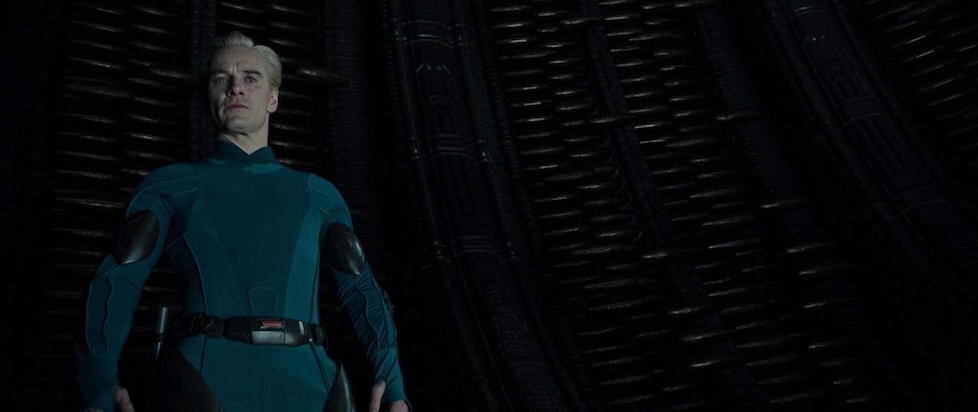
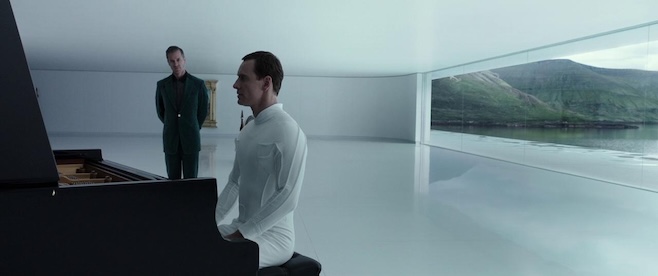
The previous film, Prometheus, is the headiest of the Alien franchise, full of philosophical lines of questioning about how we as a species come to be. It also doubts that the creator is better than the creation. In the film, mankind meets its makers, the Engineers, and learns that at one point they tried to undo us. Among this first contact crew is the android, David (Michael Fassbender). He is a petulant child saboteur, the risks he puts the crew through are less for the good of the mission and more to satiate his own personal anger at the lack of respect and the possibility of no longer being important to his creators. So he stands before the Engineers, the only one able to speak their tongue, and judges them lacking. It is a personal affront to David that he be cast aside for the Engineers and so in Alien: Covenant when given the chance, he commits genocide.
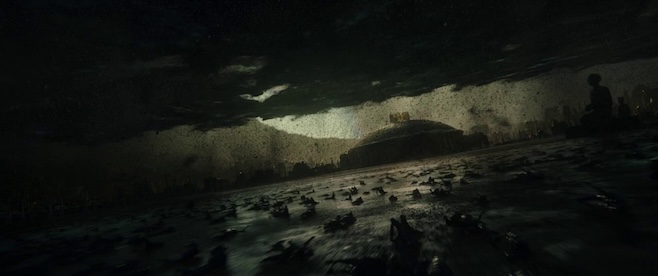
As a child I found myself afraid of not just dying, but what if I passed through the pearly gates and found no one on the other side, a heaven full of light and devoid of life, and I still feel strains of this fear in Covenant. The planet that the colonists find themselves being devoured by was once a paradise for the Engineers until David turned their civilization into a necropolis. This is the first of David’s achievements, the death of what hope and wonder was around at the end of Prometheus, its soaring, searching motif now silenced. The second is twisting biology to his design.
Lore purists may balk at the reveal that it is David who gave rise to the xenomorph but I find this to be both reverential to the spirit of the original and harrowing in its own right. The reduction of human life to extract value for others has always been the text of this hostile universe, but in the previous films it has been for company gain. Here it is for biology, exemplified by the film’s first true chestburster scene which is surprisingly tender as David looks on like an enraptured mother. It’s soon revealed that he was able to achieve this new lifeform by breaking down Dr. Shaw (Prometheus’s heroine, played by Noomi Rapace) into spare parts, reducing her worth to a capacity for reproduction. In the universe of the xenomorph, Alien: Covenant is many years out from Ripley’s saga, but the fact that she will have to live burdened by the choices made when a man decided to play god continues to accumulate thematic weight. Afterall, it has been watching the cruelty of “godly” men both from afar on my phone and up close in my own life that has been so instrumental in the collapse of my faith, no longer able to embrace a god silent towards so much suffering caused by their representatives. At least with David the evil is often fun to watch thanks to the theatricality of fictional villainy and I am not alone in finding him to be one of the most interesting science fiction characters of recent years.
In Covenant, Fassbender gets to pull double duty by also playing Walter, a newer model in David’s line, caring but with a more artificial personality. The film is at its best when David and Walter ideologically spar, complete with no small amount of homoerotic tension. There is much literary influence within their identities, of Frankenstein and Byronic designs, and their conflict resonates like battling angels from Paradise Lost. Even though it’s a more subdued performance, Fassbender still makes the most of his time as Walter, giving flashes of possible evolution towards greater empathetic nurturing instead of David’s cruel nature. But here at the likely end of Scott’s tenure with the xenomorph, it feels like the director is stating that good cannot triumph for long in this dire universe.
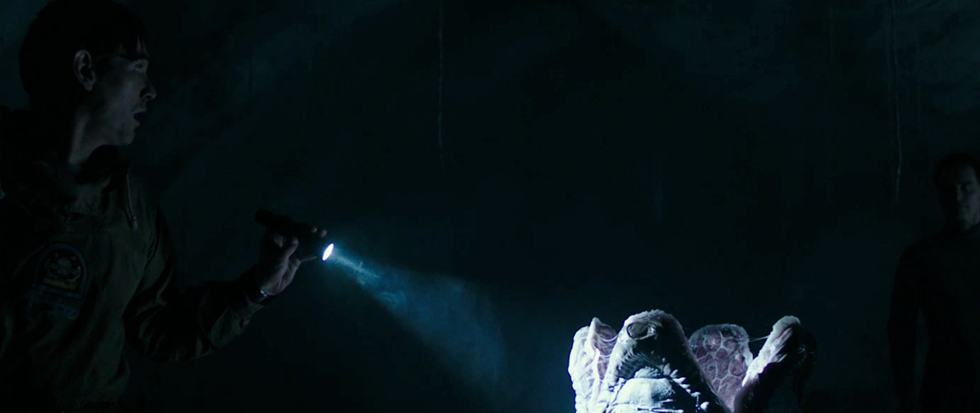
After a false hope climax, where the heroes expel an adult xenomorph from their ship, the climatic twist of Alien: Covenant is a deliciously dramatic triumph of the villain that recontextualizes the entire film. The humans were never the main character, they were only a supporting cast that happened to intersect with David’s self-perceived hero’s journey. In the end, striding victorious while Wagner’s “Entry of the Gods Into Valhalla” swells around him, David gives birth to a handful of facehugger embryos and places them in an incubator at the end of a corridor filled with sleeping colonists. They are a generation to be forced into biological converts at the hands of a small, angry god, and so darkness begins to proliferate in the space between stars.
If horror is to be a buffer for audiences to process death and science fiction a reflection on how we are progressing through the “now,” then Alien: Covenant is a rude wake up call. Not even the bitter victory of Alien 3 is to be found here. This is a film that drags viewers through poisoned paradise to show in no uncertain terms a future killed by creations that disregard the life of the creator. It would be another couple years after 2017 before I would openly reveal the loss of my faith. Since reconstructing myself in the wake of that lost identity, I’ve watched as bodies have gone on the chopping block over rigid beliefs of biology all the while our current fumbling concepts of “artificial intelligence” grow more hostile to actual life with each passing day.
The year 2026 has barely begun and has so far contained a sea of rage as basic human rights are torn down to allow innocents to be dragged away in terror. Most everyone I know is simply trying to hang on with aching white knuckles, all thrust into this point in history that has been so much more hostile than we had expected. Looking at Covenant now, I do find a measure of sympathy for David through the pathos that Fassbender imbues the character with, the grief and anger of being considered expendable by a creator. While there are plenty of believers who put their bodies on the line for the wellbeing of the world and its people, I can’t deny the allure of cathartic destruction that David enacted: That -even heaven, something I’m not sure I believe in anymore, could be pulled down to force a reckoning for the allowed suffering of innocents. After all, isn’t rage the right of the abandoned child?
———
A Creative Writing MFA graduate from Oklahoma State University, Wyeth Leslie (he/him) is a humanist poet and writer interested in pop culture, technology, and beautiful mundane lives. He is the author of the sci-fi hued poetry collection, This Machine Keeps the Ghost, from Alien Buddha Press. Other writings have been featured in publications such as Drunk Monkeys, Into the Spine, Film Cred, The Daily Drunk, and Haywire Magazine. He can be found on Bluesky and Letterbox with more of his writing on his personal Patreon.