I’m Here to Stomp Monsters

This column is a reprint from Unwinnable Monthly #195. If you like what you see, grab the magazine for less than ten dollars, or subscribe and get all future magazines for half price.
———
Wide but shallow.
———
I’ve been giving the business to a few titles lately for overestimating their capacity to chew story along with their roleplaying, often with a gaminess that leaves my jaw weak. Left wondering what flavor there was in these old days beyond delightful character art, non-stop jams and a fluidity of decision and execution, I went back to the era of my first texts, of a sort. A lie in two parts maybe, as Dragon Quest (then Warrior in the West) was something I played but never felt wrecked upon, but that’s likely more a matter of localization circumstance than anything. And the second part of the lie is that I didn’t go back, the current stewards did, with Dragon Quest III HD-2D Remake.
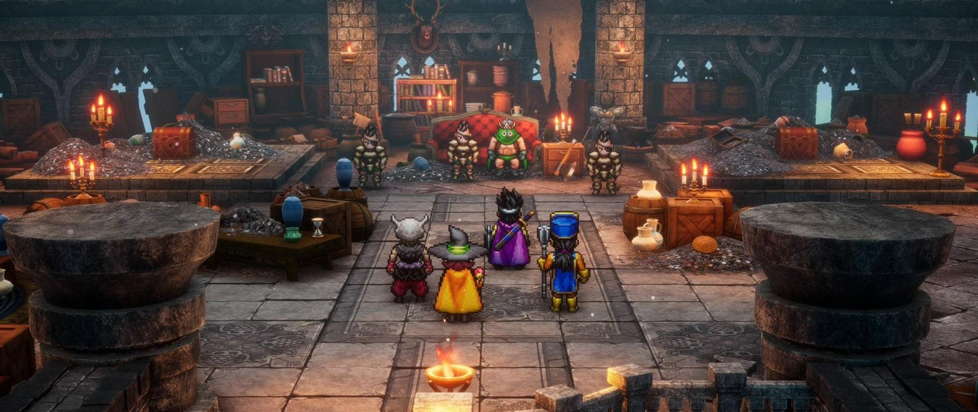
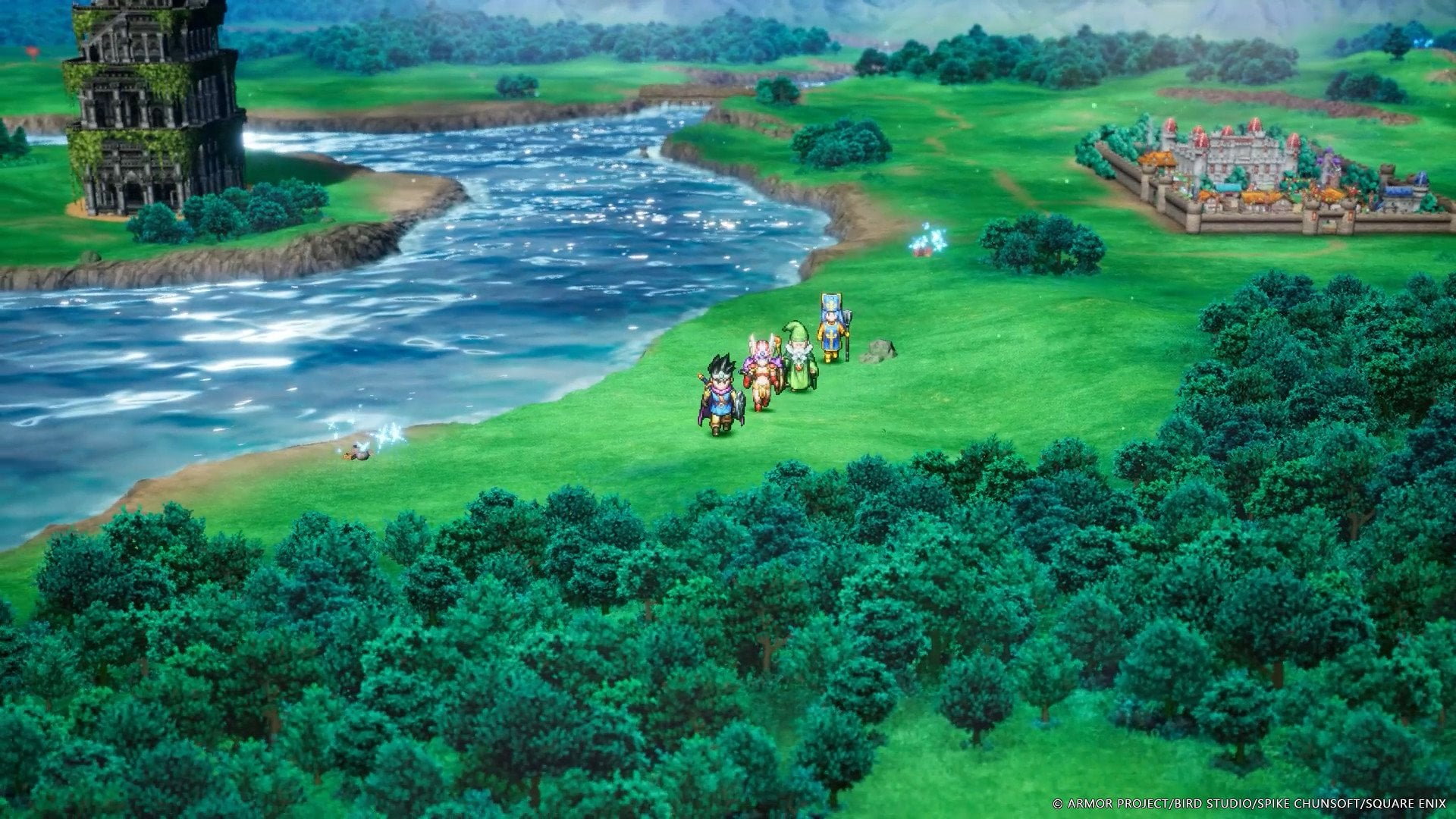
The latest in the endless cycle of karma, Dragon Quest III was recently remade in the style of the Octopath Traveler games, which is to say, painted in pixels and then arranged in various dioramas of edged focus. I might say that this alone would have been a vapid reason to remake a classic, enough to juice some quarterly earnings if executed with enough cynical meagerness. But the truth is that Dragon Quest III HD-2D Remake shines, sparkles and bubbles. The art is half the battle here and everything from the original Famicom and NES games has been more than just colored over, and thankfully there’s no hint of the nauseating blur of falsely bloomed pixels many remasters lean on.
The source material of Toriyama’s designs are recreated with devotion, slipping in pangs of animation to fill the gaps formerly adjusted by the player’s imagination. Each town is given a little flyover like the start of a Mario Kart race to highlight the details, but they don’t overstay their welcome. The overworld camera zooms in and out to dramatize the musical exploration. And the battles ring, rattle and shout, every enemy (palette-swapped or no) feels more alive than ever while maintaining a rhythm rooted in animation rather than an attempt to replicate reality that might otherwise leave things unsettlingly uncanny.
So, to be sure, Dragon Quest III HD-2D Remake is a stunner, which comes as no surprise. But the real magic is in what they didn’t change, the fact that the early Dragon Quest games are there to be played. Not watched, or read, not to be summarized or enjoyed for robust character development. This is a game-ass game, in the best way possible.
Your hero has a name and a mother and a father, the former raising you after the latter disappeared, a hero beloved around the world. You are following in his footsteps to defeat the Archfiend, who is evil, as implied. This is the story, in fact, the prequel to Dragon Quests I and II, themselves recently remade with minor embellishments. But all of that just serves to fill the gaps between gains and realization of your efforts in party improvement.
The point of the early Dragon Quest games is to move along, defeat enemies, improve stats, buy better equipment and eventually take down the biggest threat currently in your way without dying (or in my case, with as much ease as possible). This is the game, this is what you’re here for. Dragon Quest III spiced up the soup by adding more classes, multi-classing and the opportunity to swap allies around. There’s also monster-finding and battling mini-games with a class meant to learn those creature’s abilities, plenty of items with a variety of uses and multiple bosses to try everything out on.
You are here to grind slimes, build the ideal random battle attack pattern (or trust the computer, god willing), but know which knife slices the bread best when it comes to the offbeat bosses. Battles, random and otherwise, are the game. And this is good, it is honest. In many ways it reminds me of Final Fantasy V, which I only recently fully got around to mostly completing despite many days with translated files. The point of that game is the job system, and certainly not the story, which somehow jumped from IV’s light examination of friendship and duty towards no-bad-ideas hallucinatory ravings. What’s the point of all these jobs, or the classes in Dragon Quest III, if the player isn’t going to savor the sauces.
Because it certainly isn’t the narrative, and Dragon Quest III knows this, relishes in it, refuses to apologize. We need a strong scaffolding to build a great structure, but it should not lie about letting the tarps get tattered in the wind. Dragon Quest III HD-2D Remake is a cathedral, finished and gleaming, with nothing extraneous to interrupt.
———
Levi Rubeck is a critic and poet currently living in the Boston area. Check his links at levirubeck.com.