Puberty is Hell: Growing up in Silent Hill f

This column is a reprint from Unwinnable Monthly #195. If you like what you see, grab the magazine for less than ten dollars, or subscribe and get all future magazines for half price.
———
We are what we’re afraid of.
———
Being a teenager is really, really hard – this is the fundamental truth we must accept if the rest of this column is to make sense. The reason I’m starting there is, despite our current cultural fascination with youth and teens as the primary drivers of popular culture, we as adults can tend to scoff at the psychosocial drama of high school as inherently petty and only good for shallow amusement and derision. I’ve certainly found myself internally rolling my eyes at the things my adolescent family members perceive as utterly crucial, even as I can vividly recall how painful it was to hear my relatives tell me to “wait until I had real problems” when I tried to approach them with large emotions. As we get older and we have to more directly reckon with the financial and medical consequences of being an adult inside late-stage capitalism, it’s easy for us to yearn for the days when our problems tended towards the interpersonal, because now, to us, the stakes feel much lower. But in doing so, we forget that we weren’t engaged solely in petty drama in our teen years – we were doing the incredibly difficult work of figuring out what sort of person we wanted to be, all the while trying to navigate a world we did not yet fully understand, and which sometimes seemed scary and alien to us.
With that framework for adolescence in mind, it makes perfect sense that the Silent Hill franchise is a perfect place to explore the traumas and anxieties unique to growing up. The world of Silent Hill has always been known to alter itself to suit the neuroses of whoever finds themselves there, so it’s particularly interesting to see it through the eyes of a teenager, navigating deeply adult concerns for the first time without fully adult faculties or (it would seem) adult supervision. The series has done it twice so far – first with Heather in Silent Hill 3, and most recently with Hinako in Silent Hill f. In both cases, the modus operandi of the otherworld is slightly altered – instead of a world where the monsters feed the guilt and shame of the participant (paging James Sunderland), the monsters reflect how other people treat the teen protagonist. Thus, in these games Silent Hill is not acting as a reproach to the sins of the player, but the sins of a society failing teenage girls.
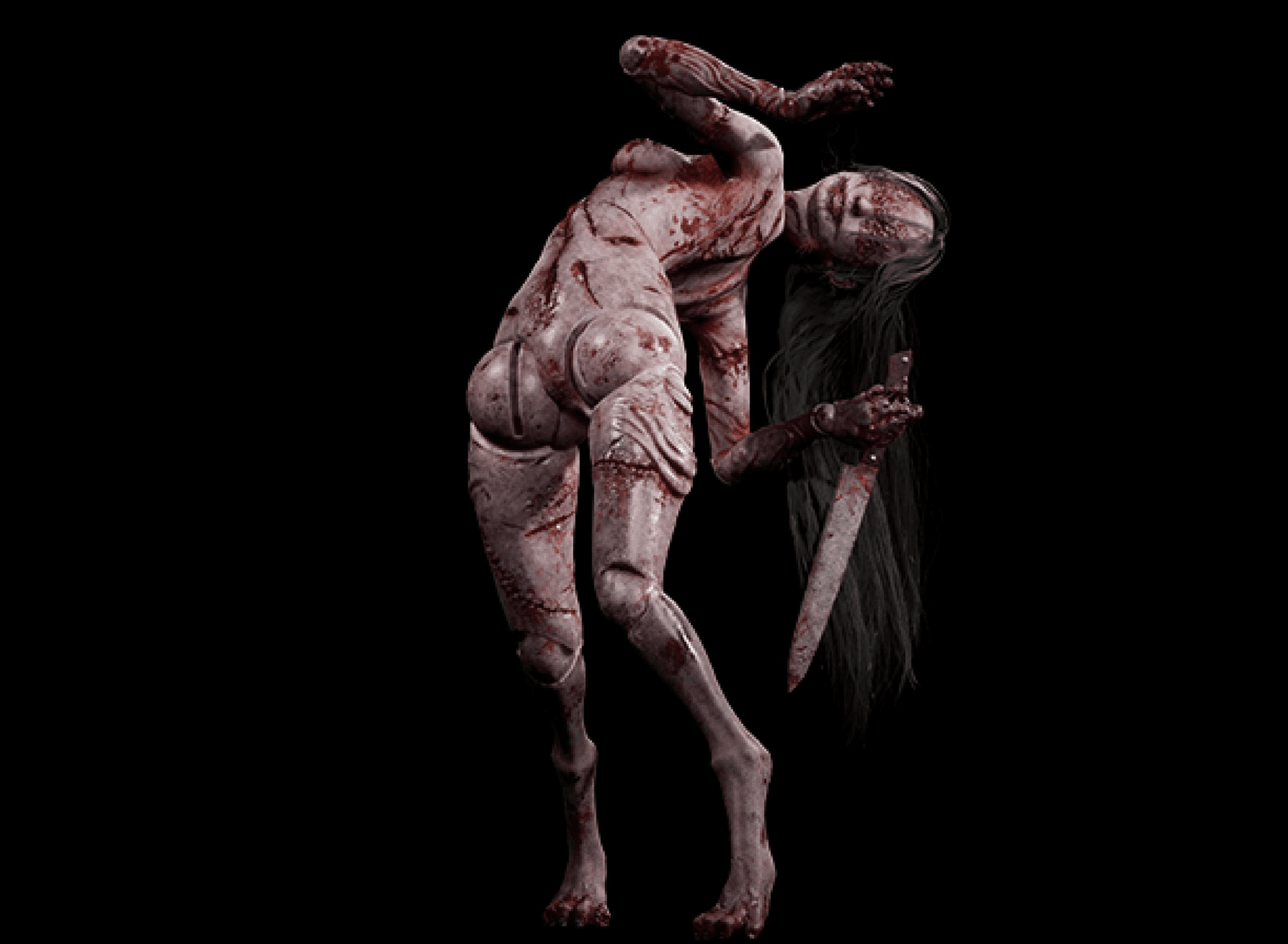
As an example, let’s take the Kashimashi and Ayakakashi monster types from Silent Hill f. Both monsters look, on some level, like dolls – puppet joints leading to stiff movement and frozen, painted-on expressions. The Kashimashi are nude, badly mutilated women who appear to have been sewn back together (perhaps from multiple original bodies). The monster is very sensitive to sound, and will attack if it hears Hinako nearby. Their name means “clamorous” or “noisy” in Japanese, and many fan sites say it references a proverb[1] that goes something to the effect of “when many women gather, it is noisy.” The theory that the monster references a grotesque punishment for teenage girls (often in groups, often thought of as chattering and noisy) gives us rich insight into how Hinako feels tormented by the strict expectations for her behavior. In her journal entry on the monster, she muses “I wonder if it wants to hurt me the same way that it was hurt,” showing a burgeoning awareness of the idea that it is often older women, not solely men, who perpetuate harmful attitudes and police gendered behavior in the next generation. It is also possible that the monster’s nudity and mutilation speak to the damage sexualization and impossible expectations for physical appearance can do to women.
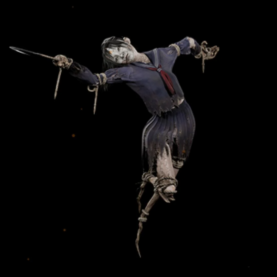
The Ayakakashi are similar in their doll-like construction, but instead of appearing as adult women, they wear ripped versions of the same school uniform Hinako and her friends wear, and appear in both male and female forms. In one of the long-form puzzles in the game, Hinako must navigate several tableaus of frozen Ayakakashi, where she must select the appropriate creature based on a cryptic note and the monster’s pose. If she selects incorrectly, she is attacked by the creatures. The symbolism feels more on the nose here – it’s easy to read this puzzle as a high-stakes dramatization of clique dynamics and the social minefield of being a teenager. The clues frequently reference betrayal of friendship and deceit, common refrains in teenage drama. These same accusations get lobbied at Hinako herself throughout the game by her classmates Sakuko and Rinko, indicating that Hinako does not simply feel that the adults in her life are threatening her – so are her friends.
Silent Hill f did nothing else so much as remind me just how badly being a teenager sucked. While I was emphatically not a schoolgirl in 1960s Japan, the intensity of the interpersonal dramas and the struggles to conform to conflicting peer and adult expectations are timelessly hellish. Hinako may be in Silent Hill because she’s done something wrong (it sort of depends on what ending you get), but she doesn’t need to have sinned to be here. The guilt of her experience comes simply from being alive, and not feeling secure enough in herself and her relationships to have autonomy, which makes her a perfect victim in the world of Silent Hill.
[1] Unverified info from multiple fan sources, such as https://www.silenthillmemories.net/shf/monsters_en.htm
———
Emma Kostopolus loves all things that go bump in the night. When not playing scary games, you can find her in the kitchen, scientifically perfecting the recipe for fudge brownies. She has an Instagram where she logs the food and art she makes, along with her many cats.