Revisiting the Madhouse
You feel compelled to support great writing…

The saddest concession of the horror game is that you can only truly play it once.
I say this as someone who loves to replay and speedrun horror games. Fear dwindles with exposure and preparedness. Once I know that a monster is going to burst through the window, I cannot forget. My weapon will be aimed on reflex alone. Once I know where the shotgun is, I have a way to fight back. I won’t have to double-back on myself to solve a puzzle because I know the solution at baseline.
The old Silent Hill games were onto something by separating the combat difficulty from the puzzle difficulty, but even then some of the additional puzzles were too esoteric to enjoy. The needle has to be threaded between scares and breathing room, and too much of one pulls away from the other.
Horror games often end up being so wonderful to speedrun because they demand efficiency: One must manage risks and scarce resources to minimize downtime. They also tend to be of an ideal length for speedrunning – long enough for interesting tech to be developed while being short enough to avoid fatigue. The Resident Evil games are the platonic ideal – each one can be polished within a couple of hours once you have the know-how and chutzpah.
My favorite has been Resident Evil VII for a long time because it most wholly embodies my desire to feel overwhelmed by my circumstances. Each of the other games features a protagonist with some experience fighting and surviving: Jill and Chris are STARS, Leon’s a rookie-cop-turned-special-agent, and even Claire was trained by her brother just in case something hit the fan. Ethan Winters is a sopping wet cat of a protagonist who has to learn how to survive on the fly. He doesn’t always do the best job of it. He’s not particularly savvy when we meet him.
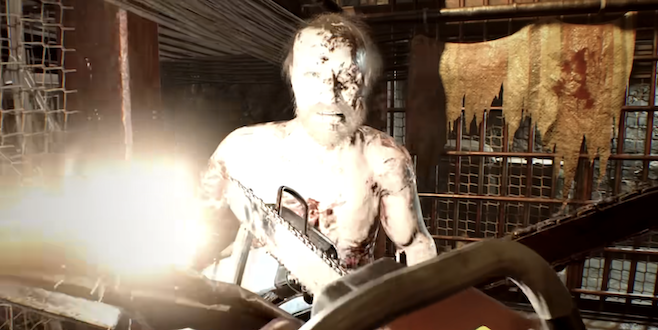
The smaller scale of VII allows it to feel as tight as it does. Those first hours in the Main House, being pursued by Jack, trying to find the keys to get out, are unmatched by anything in the series. Jack’s campiness as a stalker only makes him more intimidating. It’s his house, and we’re intruding, and it feels like it. He’s toying with us because he underestimates Ethan’s will to survive and in doing so makes us as the player feel more helpless than we truly are.
As Ethan’s confidence and frustration with the horror-movie he’s experiencing both grow in tandem, we gain confidence. We get a shotgun and a grenade launcher and the game eases a bit of its tension. It’s inescapable when a player is given some power and resources, of course – but even in loving it I can admit the game loses something in its second half because it stops feeling so weighted against us.
I want my horror games to feel a little bit rigged against me. Every fight should leave my hands sweaty and my ammo count too low for comfort. I should always feel like I could have done a little bit better, saved two bullets here, saved a heal there.
What I really want, then, is a Madhouse.
REVII’s unlockable difficulty seems to anticipate my complaint that you can only truly experience a horror game once. Madhouse mode is introduced with the promise that “we’ll hit you with everything we’ve got.” In a sense, it almost feels like the developers are having a laugh at the player’s expense. The game doesn’t just up the health of enemies and bolster their damage. It does that, sure, but it also remixes the game to make some of my most long-standing memories of REVII.
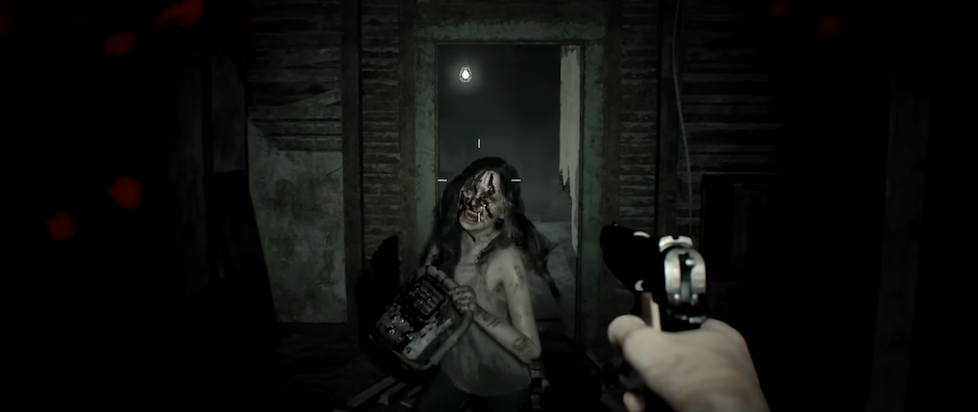
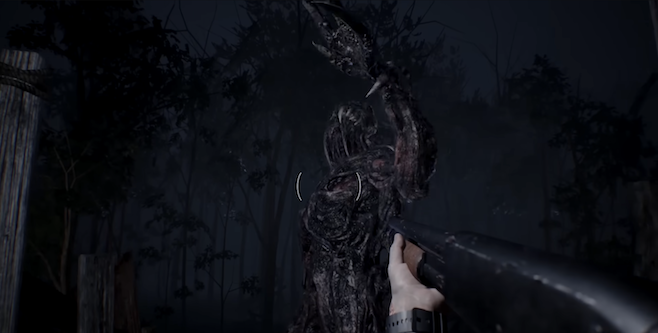
The guest house allows for the illusion of merely-upped difficulty, but once Ethan finds himself trapped in the Main House, the game starts to toy with us. An important key is now locked behind three antique coins, and the moment we grab it, Jack bursts through the door to begin his hunt. During my first Madhouse run, I panicked, and sprinted through the scorpion door towards a safe room… only to be killed by a crawling molded that hadn’t been there before.
The difficulty exploits the expectations that come with playing a horror game through a second time. Some things are the same, merely more difficult, but those become the breathers that allow for new, sharper scares. Both Jack and Marguerite are faster and more aggressive. Molded bloom from new spots and ensure that we have to be on our toes. Ammo is scarcer, which means you have to pick your battles even more astutely. You have to inhabit Ethan more fully, as a scared little guy who might run around monsters and double back instead of standing his ground every last time. To stand a chance, you have to get savvy quick.
These differences help to fully realize the threat each of the infected Bakers is promised by the narrative. Lucas is a would-be Saw, a goon of a serial killer who doesn’t play fair? I want his section, then, to be filled with more bomb-traps than I know what to do with. I want the crates in his areas to be explosive, to play with my expectations. I want to feel like I’m navigating the mind-palace of a self-obsessed, toxic dude-bro asshole who thinks he’s infinitely smarter than anyone else. The game can’t quite fulfill the horror if it pulls its punches. The increase in bomb traps makes an otherwise weaker-chunk of the game into something that matches the other family’s segments.
It’s strange and perhaps a bit cliché to say, but it feels to me like Madhouse is the intended difficulty. I don’t mean to contradict myself in saying this – many of its unique moments are so effective because they twist my expectations of a second playthough – but the lack of wiggle room and increased difficulty become a trial by fire. Ethan scrapes by but only by the skin of his teeth, and so do we. Even when it seemed its most unfair, dying in Madhouse always felt like I’d missed something essential and I always came back feeling like I’d learned something important.
The bomb traps never got me twice.
The experience being improved by additional intensity is not in the base game alone, either: Both story expansions feature additional hard/remix modes as a completion reward, Professional difficulty for Not A Hero and “Joe Must Die” for End of Zoe. Both of these campaigns are more action-oriented than Ethan’s story, but the complications added in both hard modes allow them to ratchet the tension to something close. Professional Mode lets Lucas rig the game just a bit more in his favor, and necessitates that the player lean into the aggressive, close-quarters-combat-focused style of the boulder-punching Chris Redfield. “Joe Must Die” similarly expands the dangers of the bayou with more alligators, more booby traps, and longer, more brutal beatdowns against the Swamp Man.
Both take characters who are otherwise narratively experienced and fearless when dealing with danger, but force them into a role more akin to Ethan’s terrified, scrappy everyman. As the player, I end up regressed in each iteration to a first-time player, scrounging every corner for just a few bullets or a stray bug to eat, weighing every heal as a potential waste, treating every opportunity to save as the bastion of forward progress that it is.
Replaying each of these difficulties recently has made me yearn for more horror games to indulge remixes and complications to reward a player who has seen the game through at least once. I’m not afraid of stronger monsters or less bullets, not really. What I am scared of is the slow, budding realization that I do not understand the world I am inhabiting anywhere near as well as I thought – and that somewhere, the game developers are cackling at me as I succumb to my own hubris.
———
J.M. Henson is a freelance critic/author who haunts the Blue Ridge Mountains and is in turn haunted by most things out of their control. Follow on Bluesky.