Bad Good Ideas

This column is a reprint from Unwinnable Monthly #194. If you like what you see, grab the magazine for less than ten dollars, or subscribe and get all future magazines for half price.
———
Interfacing in the millennium.
———
If you are ever considering watching the movie Adaptation (2002) directly after going to see a talk with Susan Orlean, the author upon whose work the movie is based, I would recommend not doing that. I defend my own logic in that finally watching the film felt like closing a circuit – between Orlean, her book The Orchid Thief and Adaptation, which audience members would not stop bring up during the Q&A – but unfortunately all closing that circuit does is light up a neon sign that says A LOT OF STUPID THINGS WERE HAPPENING IN THE EARLY 2000s.
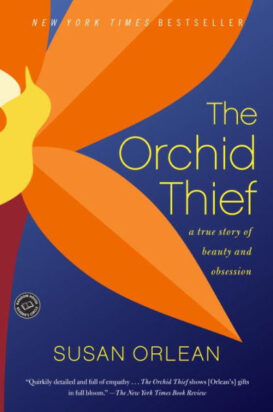
If you’re not familiar with the source material, The Orchid Thief is book-length narrative nonfiction about an eccentric orchid poacher named John Laroche whose hunt for the elusive ghost orchid Orlean wrote about while traveling with him through Florida. Adaptation is a metatextual film about a fictionalized version of the screenwriter (Charlie Kaufman, of Being John Malkovich fame) struggling to adapt Orlean’s book into something viable for the screen. This is a concept I approve of. The Orchid Thief spends quite a while interrogating itself about its purpose and the purpose of its author, and Adaptation attempts something similar with the role of screenwriter. There’s a layer of authorial removal from the subject that lets both the book and the movie ask franker questions, and lends each a bit of structural anarchy. The Orchid Thief does this fascinatingly and elegantly. Adaptation does this with the grace of a hyperactive child in a bumper car.
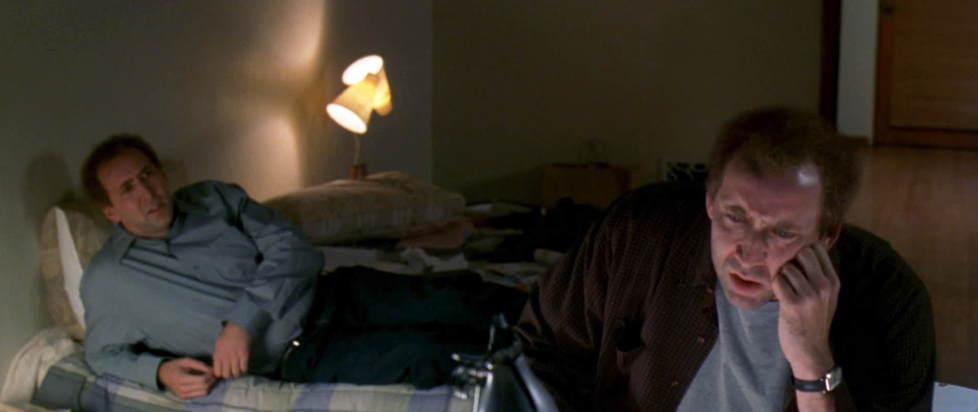
To get past the early-aughts comedy disclaimer: Adaptation is pretty juvenile. It spends an extended amount of time on sexual hangups, insecurity and personal dissatisfaction and very little time on the book or the screenplay. Nick Cage, in a dual role as the screenwriter and the screenwriter’s twin brother, is about as compelling to watch as a cake burning in the oven, and Meryl Streep’s admittedly highly fictionalized Susan Orlean would be more fun to watch were the hijinks she gets into not so patently idiotic. I could probably have given it more grace were I not a fan of Orlean’s book, but as I am (and as I’d just watched her wince at every mention of the film in her talk) my generosity toward the film was limited.
I’ve written about adaptations before. I find them interesting! I am on board, conceptually, with Adaptation‘s ambition. A movie about a screenwriter wondering what he’s doing writing a film about an author wondering what she’s doing writing a book is a tasty little piece of artistic reverberation. But idea is just a fraction of the battle, as Adaptation confronts over and over. In fact, within Adaptation the idea itself becomes the prison the fictionalized Kaufman finds himself trapped in – he knows what he wants to do, adapt The Orchid Thief, but is so paralyzed by insecurity, indecision and internal turmoil that instead of acting upon that idea, he stalks Orlean (in this version, in the midst of a dramatic and vaguely offensive affair with Laroche) out of a blind hope that she’ll provide the inspiration she needs to help him finish his screenplay (she tries to shoot him in a swamp.)
In Orlean’s talk, she told a cutting but significant story about a former student who, upon being told to reach out to a stranger for a story, asked in dismay, “But where do I find their number?” Her thought upon hearing this – oh, kid, I don’t think you have what it takes – speaks to a blunt frankness about the practicalities of her job, about the stubbornness and commitment it takes to be a writer. She also spoke, repeatedly, about the importance of curiosity to her work. That’s how she ended up writing a book about orchid poaching, about library arson, about Rin Tin Tin (yes, the dog.) For her, curiosity is not borne out of personal passion or flighty inspiration – a huge part of the fascinating dynamic between her and Laroche – but the trained muscle of someone for whom curiosity is a job, an ability to be curious in the same way that other people have the ability to lift heavy boxes or to bake dozens of bagels at 4am.
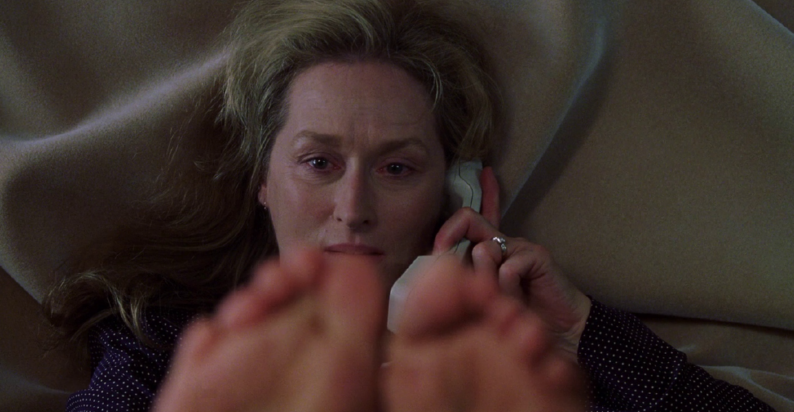
Adaptation, meanwhile, is a tortured monument to incuriosity. It is frustratingly true that there is a level of absolute internal incompetence to the fictional Kaufman’s inability to write that does strike true with the most creatively blocked self-flagellants. He does not have what it takes, as Orlean so politely said when recounting her student’s troubles. He has no personal desire to write this movie, no curiosity about the text, no interest in exploring what Orlean was doing or how she did it for any reason other than to get words on the page to give to his commissioner. His self-hating narcissism drowns out the idea he’d had, the goal he’d set for himself. There is no internal curiosity, just the sense of superiority that motivates anyone that wants to do something truly new (as is repeatedly brought up with his brother, who writes schlocky action flicks) and serves only to paralyze while simultaneously stroking the ego (see: I think you all are thinking about yourselves too much) (see: you’re petrified by your own fucking standards).
But as I work through this, I am confronted with the fact that… maybe Adaptation is a good adaptation. Read: maybe this painful, childish, self-absorbed film, so dismissive of the text at its center, is in fact an accurate and engaged portrait of artistic conflict, of Kaufman’s journey paralleling Orlean’s journey through works of creative endeavor. That portrait is just of a person who is less interesting than Orlean, and who makes art of a lesser quality. How frustrating.
———
Maddi Chilton is an internet artifact from St. Louis, Missouri. Follow her on Bluesky.