Dinosaurs On the Run in Clever Girls

This column is a reprint from Unwinnable Monthly #191. If you like what you see, grab the magazine for less than ten dollars, or subscribe and get all future magazines for half price.
———
Thoughts about being something else.
———
All that matters to you, personally, is that the humans have confined you. What do you know of cloning and genetic engineering, of sparking a sense of wonder, of having an eye toward capitalistic exploitation, of abusing scientific might? And why would you care about such things? How can you think of anything else while you’re trapped? The most pressing matter is your own confinement.
What were the velociraptors and T-Rex really thinking on the opposite side of the fence from humans? Ossifrage Games explores this question and facilitates this POV flip while developing Clever Girls, where players will take control of an RPG party of dinosaurs freed from human machinations. A demo is currently out on Steam, while the full release is in production.
Of course, the conception of the game starts with the classic Jurassic Park, but there’s more to it than that.
“So around 2022, there was a while where I was reading a lot of yuri – girls’ love manga. It’s a genre with a focus on relationships between female characters,” creative director Connor Goglin shares. “At one point, my partner and I had watched Jurassic Park because they hadn’t seen it, and in that movie there’s a plot point that the scientists created all the dinosaurs as female. I had joked that Jurassic Park is like an all-girls school, because girls’ schools feature prominently in those [girls’ love] manga. But then it kind of made me think of what a girls’ school for dinosaurs would be like, and I started imagining like a Hatoful Boyfriend-style VN game but with dinosaurs.”
Then Goglin considered what would actually be taught at a dinosaur school. He eventually thought it would probably be tactics and pack hunting, and that led to envisioning a turn-based game about positioning and stealth.
“The kind of game where you can literally enact the cool ‘Clever girl’ moment in Jurassic Park where the Australian guy is ambushed,” Goglin explains. “But I still wanted to preserve the relationship angle. So, I thought perhaps the tactics will connect really deeply with the relationships between the characters, which is really the root of the game. But then, in order to have all this complex relationship drama, the raptors had to be a lot smarter than an animal-level intelligence for it to be compelling.”
Fortunately for Goglin, he had previously become a fan of the sci-fi concept “uplifting” after encountering it in the tabletop RPG setting Eclipse Phase. He described uplifting as a scenario where a more “advanced” species somehow increases the cognitive capabilities of another species. In Eclipse Phase, people can play as uplifted octopuses, apes, ravens and more. Goglin had also read all of the books in David Brin’s Uplift series, named after the concept it focuses on. And so uplifting was integrated into the story of Clever Girls to enable a certain level of complexity for complicated relationships among the central cast.
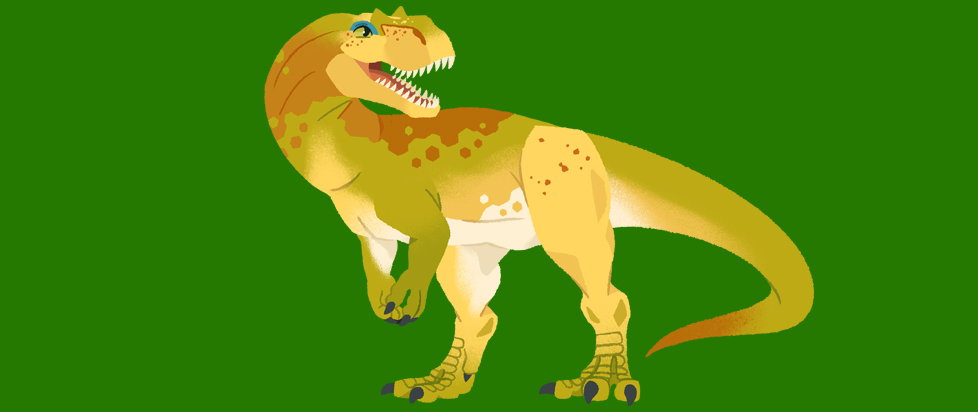
Like the titular ensemble of The Golden Girls, the main characters in Clever Girls are a four-woman team: Sawyer’s the leader and a quick striker; Shade favors patience and has the edge in watery terrain; Daisy’s the gentle giant with the role of a tank; Prati’s the smallest and causes chaos on the battlefield for any enemies.
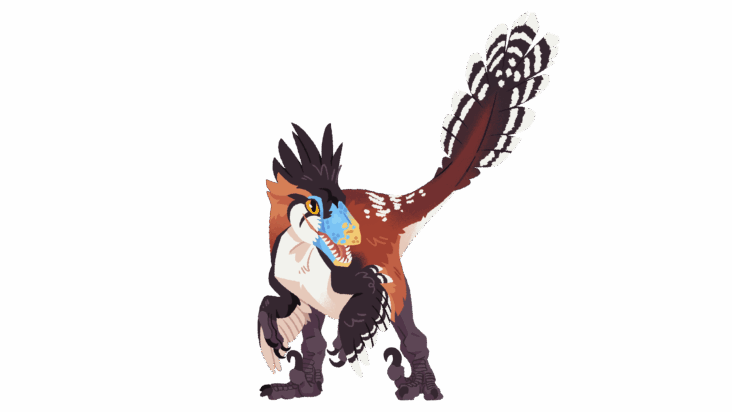
Decisive but inexperienced, Sawyer’s as inspiring as she is dependent on external validation.
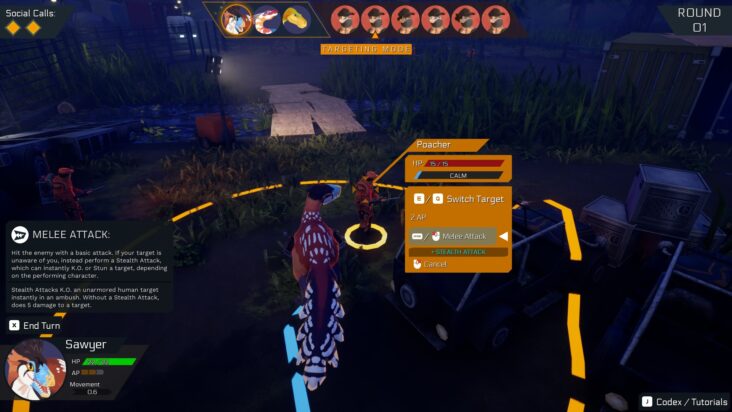
Players will be able to control this entire squad, which includes guiding their interpersonal dynamics with each other toward different relationship types: friends, lovers or rivals. The promise of rivalry is interesting – the closest to that I can recall from previous digital RPGs is just the possibility of driving party members away, such as Alistair in Dragon Age: Origins and Karlach in Baldur’s Gate 3. Depending on your actions, comrade-in-arms Mission Vao will even fight you in Knights of the Old Republic. But a rivalry sounds different for a digital RPG, providing more nuanced options beyond a “with-me-or-against-me” ethos or an increasingly blunt “good vs. evil” scenario, paying attention to another way relationships can shake out, and promising a continued play experience instead of an end state where you basically lose a character. It also delightfully has some shonen vibes.
“Some games have party members leave or become immediately hostile once you take a certain path or degrade their ‘affection’ stat,” Goglin observes. “It all seemed arbitrarily binary to me, so I wanted to see if we could make a system that allowed for a lot of movement between different kinds of relationships, or strange in-between states.”
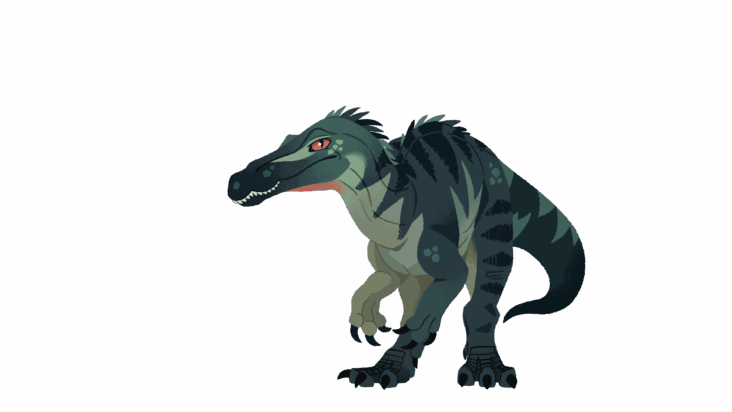
Shade is most used to survival outside the enclosures.
Goglin’s determined to avoid having one “affection” stat that just goes up or down, saying that it turns interaction as a player with a character into something that feels very transactional, often hampering emotional connection. Instead, he wanted to try implementing many different kinds of “relationship statuses” between characters. But to also avoid overcomplicating things for the game, the design of Clever Girls has boiled it down to friendships, romances and rivalries as the broad types of possible relationships. The team also wanted to spotlight the bonds between the main characters, not between a “player insert” character and various NPCs.
It was also important to Goglin that no value judgements were made on the relationship types. Having rivalries between characters won’t necessarily make the party less effective. Being rivals won’t automatically feel like a “bad” thing. Similarly, paths for friendship or romance might not always feel “nice” or be completely conflict-free. While the team continues to define the game’s story routes and remains in development, that’s the concept they’re aiming for.
“We want the players to explore what they’re interested in, not ‘punish’ them for not taking a certain route. [And] it’s just interesting to have character conflict! If the game was all about characters getting along all the time, it might not feel as emotionally believable. Sometimes people don’t get along,” Goglin notes. “A careful player might be able to avoid any rivalry relationship states if they want, but we want to make a system where it’s not so simple as just picking a single route and following it through – maybe some of the stronger friendships or romances will go through rivalries at some point.”
XCOM games also influenced the relationship dynamics in Clever Girls. Goglin used to watch several “Let’s Play” videos of them. He described how XCOM games featured long campaigns where characters gradually grew stronger, and players tended to settle on an “A-Team” of characters that handled nearly every mission.
“You’d get to know the characters, and sometimes various things would happen, like characters would damage each other with AoE abilities, or one character would rescue another, that kind of thing. This would sometimes cause the player to ‘act out’ what the characters were saying, or fans who were watching the Let’s Plays would make fanart and comics of moments like that. Kind of constructing a ‘headcanon’ relationship between the two,” Goglin shares. “So, it made me think that we should just build that sort of system into the game – instead of having the relationship-defining events as something that the game doesn’t acknowledge that’s left for the players to interpret. So that way, apart from just VN-style choices, your actual minute ground-level decisions about what actions you take will drive the relationships as much as dialogue choices.”
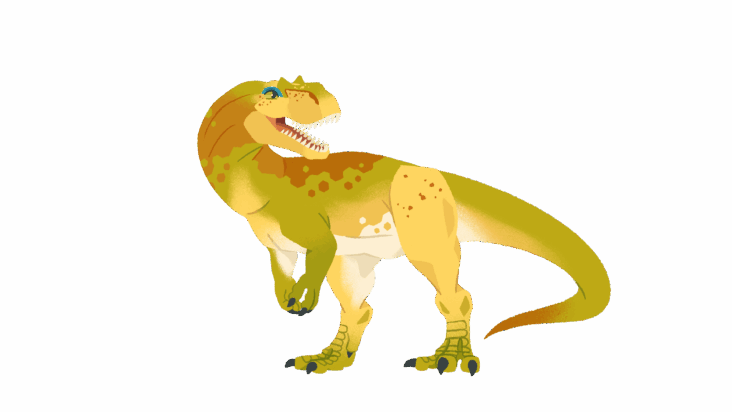
While Daisy harbors strong feelings, she frequently represses them.
For this, Goglin shares that the team’s designing a system called “battle relationship events,” teased in the game’s reveal trailer and with very basic groundwork for it in the demo. Goglin explains that the game will keep track of several conditions that might trigger an event between two characters during the normal flow of battle. Development is geared toward cultivating scenarios where dramatic moments that naturally occur in battle will also drive relationship arcs.
While the main party was originally conceived as a full raptor squad, Goglin diverged a bit before reaching out to an artist for character designs. He instead made them all different kinds of theropods, the broader category of dinosaurs that includes raptors as well as T-Rex. Theropods are generally identified by traits like walking on two legs with three-toed feet, a carnivorous diet and hollow bones. Science generally agrees that modern birds evolved specifically from theropods.
“I thought it would be neat if the dinos were all different species instead of raptors, so that their species can have an interesting interplay between their combat roles, personalities, character arcs and stuff,” Goglin says. “The reason they all ended up as theropods is so that they’re still kind of a ‘raptor pack’ even if only one of the species would traditionally be called raptors.”
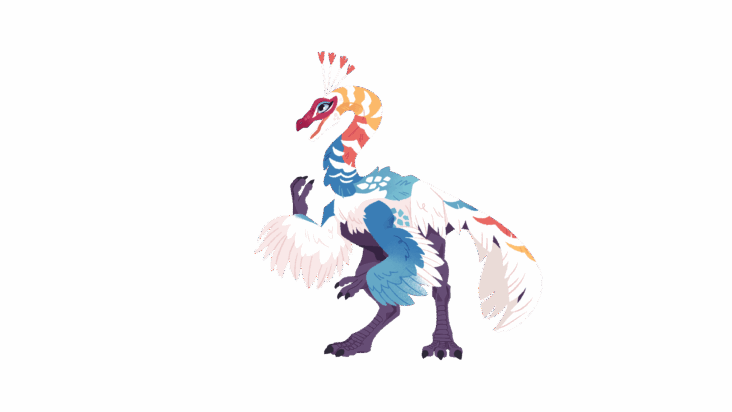
Prati’s determined to keep things fun, but sometimes the others are just annoyed with her antics.
Goglin also adds that theropods are just cool – though they’ve also led to unexpected logistical thorns during development.
“[It] has been pretty difficult trying to deal with game characters that are longer horizontally than they are tall,” Goglin elaborates. “A lot of typical game engine features for characters are based around collision shaped like vertical capsules, so we had to do a lot of custom code to try and get the long characters working well. Things like pushing them backwards if their noses would clip into stuff, and making sure they don’t get caught on things but also don’t clip into ’em. It’s been a whole process and there’s still a lot of improvement to do on it.”
As for character design, Goglin had a specific art direction in mind.
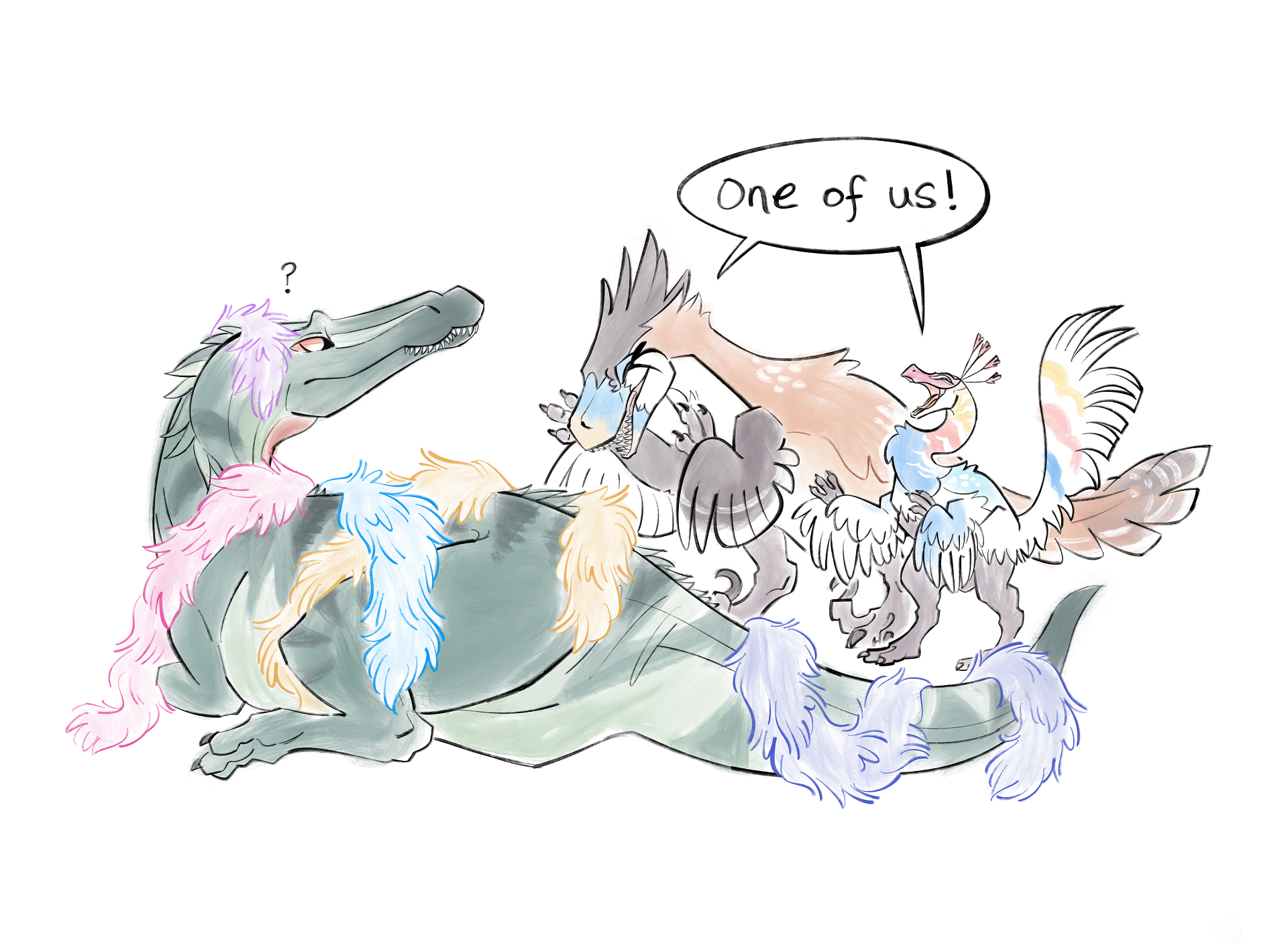
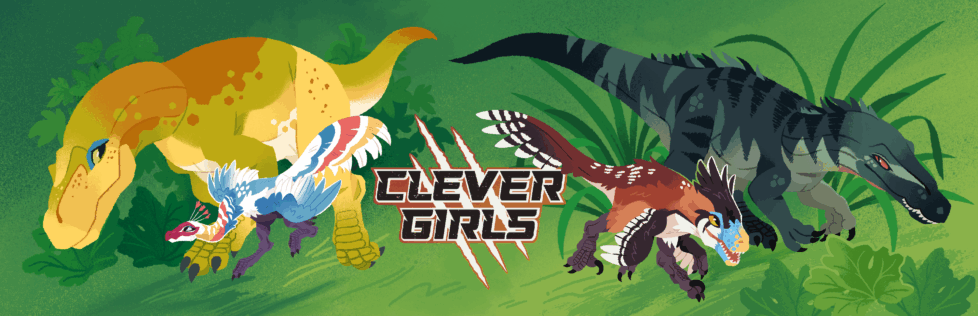
Concept art of Shade, Sawyer and Prati hanging out.
“I decided to pursue a cartoony art style because I was looking at every dinosaur game and was noticing that in a huge majority of them, you play as a human, which is lame, and that even if you don’t, the dinosaurs are usually these photorealistic ‘monster’ creatures – in contrast to a lot of art and media I had been seeing about dinosaurs where they were being drawn in very cutesy, colorful or cartoony ways,” Goglin explains. “I figured there’s probably a big interest in dinosaurs that extends beyond having them be these big murder creatures.”
A mutual connection got him in touch with Sheyenne Smith, a freelance artist from Canada with an affinity for drawing animals and nature. Initially, Goglin sent basic character profiles with information on species, personalities, combat roles and loose ideas about their appearance to Smith. They went back and forth on iterating and finalizing the character designs. Smith’s work pulled inspiration from various modern-day animal species, like iguanas, pheasants and birds of prey. The pieces of paleoart Smith favors the most tend to use this tactic to make designs more “believable,” so she tried to follow their lead. And while science has made strides in actually identifying the colors of some dinosaurs, Smith says there still wasn’t enough to work with, especially regarding the species chosen for the game. Creative license could step in here and elsewhere. For example, Smith used a lot of colorful, pattern-rich performing arts references to match Prati’s larger-than-life persona, with Goglin directing her to look at the bright and gaudy outfits of jesters, clowns, vaudeville and burlesque shows. Despite some scientific limits, paleontological research has still gone into making the art in Clever Girls.
“I’m continually trying to learn more anatomical details so I can try to bend and stylize them in not-too-unbelievable ways! And in the initial designing of the characters, I definitely found myself reading a few articles just to try to determine some things – like, how flexible are their tails, or what’s the range of motion on their joints!” Smith shares. “And also, I have to try not to get too in the weeds with getting things 100 percent accurate or I don’t think I’d ever get anything done.”
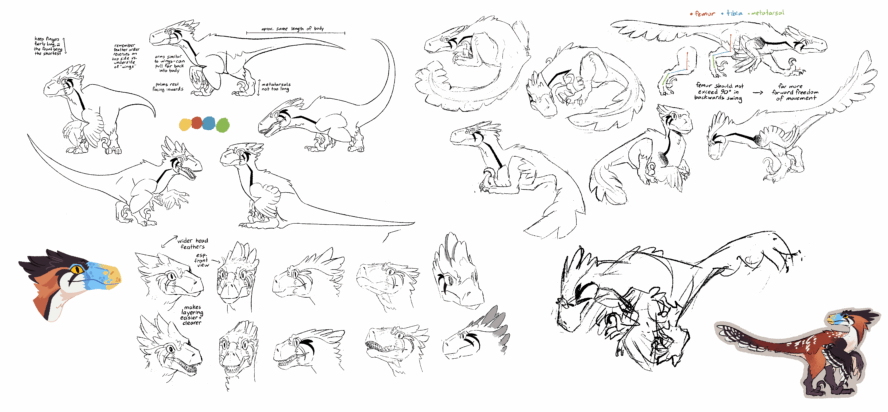
Character studies of Sawyer.
But this scientific detail is present in even how the dinosaurs carry their arms in Clever Girls. According to Goglin, the game avoids the stereotypical “raptor arms” since theropods probably couldn’t pronate their wrists — that is, make their palms face down. Instead, their palms face each other, looking like they’re ready to clap.
“But you often see raptors doing the pronated pose in a bunch of media and it’s one of those things that dino fans always spot,” Goglin says. “We tried to put in details like that to show we care about little species details. The dino nerds appreciate the little details!”
For the game’s writer, Futura Nguyen, it’s been “very fun to latch onto different facts and discoveries about [dinosaurs] and develop scenes based on those aspects.” She’s collaborated heavily with *Smith and Goglin on any paleontological research, as they’re more familiar with that topic. (*Smith is also Nguyen’s wife.)
“I find that it’s very easy to come up with fish-out-of-water jokes involving the girls learning about human stuff, just working with the fact that they’re not humanoid! But the more specific I can get with that humor – and potentially the drama – the better,” Nguyen says. “I definitely don’t want the fact that they’re dinosaurs to be lost in how I write them, but I do like the idea of them being taught to think like people. Makes them more relatable, of course, but with that base I do want to keep cataloguing all of the various xenofiction ideas that Sheyenne [Smith] and Connor [Goglin] run by me. If we can make them truly dinosaurs that we humans can relate to, then I’ll be happy.”
———
Alyssa Wejebe is a writer and editor specializing in the wide world of arts and entertainment. Her work has included proofreading manga, editing light novels, and writing pop culture journalism. You can find her on Bluesky and Mastodon under @alyssawejebe.