How Darksiders Turns Apocalyptic Mythology into a Hollow Spectacle
You feel compelled to support great writing…

The Darksiders series entered the market with an ambitious premise: a world-ending war between Heaven, Hell, and the last Horsemen standing in the ashes of humanity’s collapse. The franchise promised an epic blend of Biblical apocalypse, comic-book grit, and mythic grandeur. The concept was strong enough to catch attention — riding the wave of late-2000s action-adventure games — much like how non GamStop casinos drew players through bold themes and alternative experiences — yet, over time, the execution slid from gripping myth-making to an empty visual parade.
What began as a bold reimagining of apocalyptic legends gradually became a cycle of set pieces, boss fights, and exaggerated spectacle that often overshadowed any deeper narrative meaning.
The Core Idea Had Immense Potential
The original Darksiders built itself on a simple but effective hook: play as one of the Four Horsemen of the Apocalypse in a devastated Earth caught between divine and demonic armies. The premise taps into some of the most vivid and terrifying parts of Biblical prophecy — a war that erases humanity, angels clashing with demons, and cosmic judgement handed down by mysterious forces. It had the potential for the game-changing impact that could redefine how apocalyptic mythology is adapted in action-adventure games.
On paper, this was fertile ground for deep storytelling. Apocalyptic mythology carries themes of betrayal, redemption, and inevitability. It gives writers a chance to blend moral ambiguity with over-the-top fantasy. In theory, Darksiders could have explored the psyche of its protagonists, the cost of divine politics, or the meaning of justice when the world is already dead.
The first game showed flashes of this. War, the first playable Horseman, is framed as a wronged soldier, accused of triggering the apocalypse ahead of schedule. That setup gives the player a motive grounded in personal vindication rather than simple heroics. It should have been a springboard for emotional depth, but the franchise rarely lets that depth breathe.
Spectacle Overshadows Substance
From the very start, Darksiders leans heavily on visual bombast. Cities crumble, massive creatures roar across the screen, and the camera sweeps dramatically as you face bosses the size of skyscrapers. These moments are undeniably impressive in scale, but they often serve as distractions rather than narrative anchors.
Instead of giving the apocalypse a sense of irreversible tragedy, it becomes a playground of oversized weapons and cartoonish violence. Entire levels are designed as arenas for combat sequences rather than as spaces where the weight of the world’s destruction is felt. Buildings are crumbled not as symbols of loss, but as backdrops for stylish kills.
The result is a strange disconnect. The mythology demands gravity, but the tone keeps pulling toward comic-book absurdity. It’s not that humour or exaggeration can’t work in apocalyptic fiction — Hellboy does it brilliantly — but in Darksiders, the scale and flash frequently drown out opportunities for quiet, character-driven moments.
Mythology Is Used as Decoration, Not Foundation
The Biblical apocalypse is one of the most enduring mythic frameworks in Western culture. It has structure, stakes, and a moral core that has been reinterpreted countless times. In Darksiders, this material is present but underutilised.
The Charred Council, the central authority in the series’ universe, could have been a fascinating moral grey zone. Their manipulation of events could mirror the political machinations of both Heaven and Hell in various religious texts, much like the nuanced world-building discussed by the Fallout creators on adaptation. Yet, most of their appearances are reduced to exposition dumps or stern lectures that move the plot forward without adding complexity.
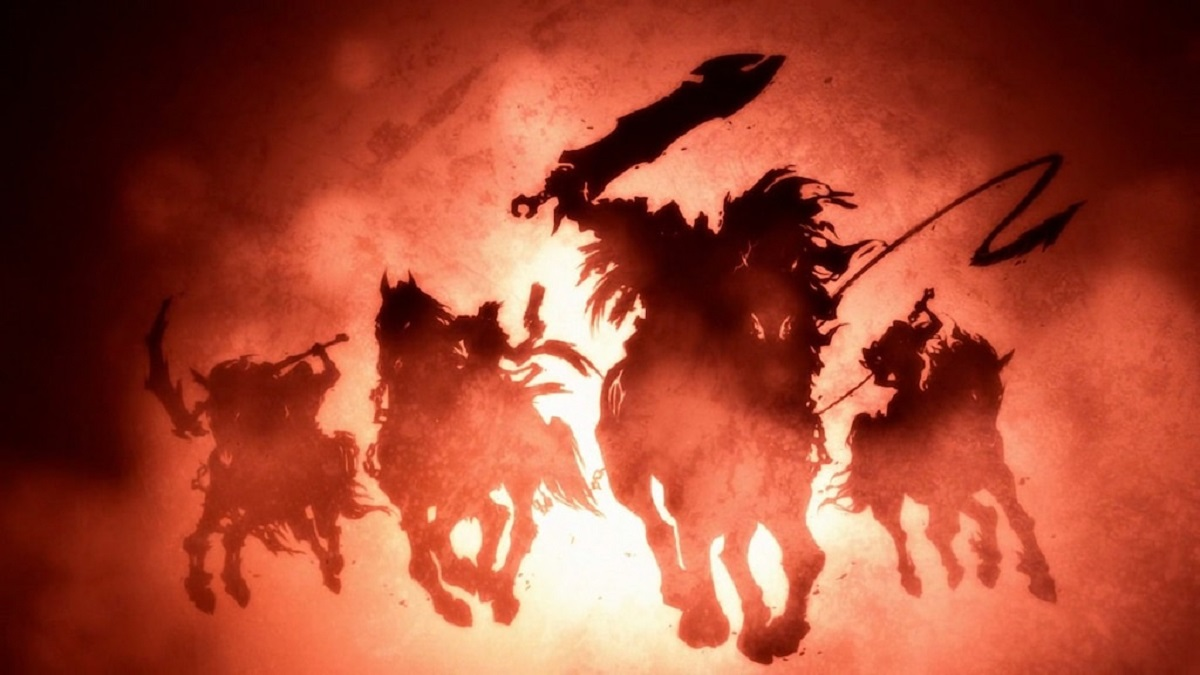
Similarly, the Horsemen themselves — War, Death, Fury, and Strife — are ripe for layered portrayals. In myth, they are not heroes but forces of inevitable change, each tied to a distinct form of catastrophe. The games, however, dilute this into a straightforward “powerful warrior takes on enemies” structure. The Horsemen’s symbolic weight gets lost under layers of flashy combat animations and boss fight gimmicks.
A World That Feels Like a Stage Set
One of the biggest pitfalls of the series is environmental storytelling — or rather, the lack of it. Post-apocalyptic settings thrive on small details: the burnt-out playground, the makeshift shrine to lost loved ones, the ordinary objects frozen in a moment of catastrophe. These details make the world feel lived-in before it was destroyed, and they make its loss feel real.
In Darksiders, environments are vast and visually distinct, but they rarely give the impression of a world that once belonged to humans. Streets are wide empty corridors, ruins feel designed for platforming puzzles, and the only signs of humanity are generic corpses or abandoned vehicles.
Instead of feeling like a world shattered by divine war, it feels like a stage set designed for players to navigate efficiently. This reinforces the idea that the apocalypse is just background dressing, rather than a lived reality for the story’s characters.
Characters Lack Human Weight
A recurring problem across the series is that characters speak in grandiose proclamations but rarely feel like people — even supernatural ones — with real emotions or contradictions. Dialogue often falls into a pattern of clipped threats, ominous warnings, and cryptic remarks.
War’s quest for vindication in the first game could have been layered with doubt, anger, and guilt. Death’s journey in the second game could have wrestled with the futility of defying fate. Fury could have explored the nature of wrath itself. Instead, most arcs are delivered in broad strokes, skipping the chance to create a big focus on narrative that could give these characters emotional weight and lasting impact.
The absence of vulnerability is a key reason why the grand scale of the series feels empty. When characters are all-powerful and rarely waver, their victories and defeats lack tension. There’s little sense that anything is truly at stake beyond the next big battle.
The Combat Focus Narrows the Story
The developers clearly put enormous effort into refining combat systems, introducing new weapons, and creating elaborate boss encounters. However, this focus often sidelines other storytelling tools, preventing the series from embracing the potential of video games as the most exciting medium for delivering complex, emotionally rich narratives. The mythos could have been explored through branching dialogue, moral choices, or slow-burn mysteries — but most narrative beats are delivered between combat sequences, almost as if they’re filler before the next fight.
Even the pacing mirrors this priority. Emotional beats rarely have time to land before another action sequence interrupts them. The story is constantly sprinting toward the next big moment, never lingering long enough for the weight of the apocalypse to settle in.
A Hollowing Out Over Time
The problem isn’t that Darksiders uses apocalyptic mythology — it’s that it treats it mainly as a backdrop rather than the engine driving the story. The lore is rich, but it’s too often reduced to decorative scenery instead of shaping characters, environments, and themes.
To give the apocalypse real weight, the series could have:
- Humanised the Horsemen – The Four Horsemen are presented as almost mythic forces, but they rarely show vulnerability or inner conflict. Allowing players to see moments of doubt, personal loss, or moral hesitation would make them more relatable and compelling. For instance, War’s fight for vindication could have included flashbacks to the events before the apocalypse, showing what he stands to lose. Death could have been forced to face the consequences of his own choices rather than just fighting to change fate.
- Deepened the Moral Complexity – The world of Darksiders is painted in broad strokes: Heaven is good, Hell is evil, and the Horsemen operate somewhere in between. But the source myths — and the best adaptations of them — thrive in moral ambiguity. Imagine if Heaven’s actions were shown to be as self-serving and destructive as Hell’s, or if Hell had factions genuinely seeking balance.
- Used the Environment as a Storytelling Tool – The post-apocalyptic setting should feel lived-in before it was ruined. That means embedding details in the world that tell silent stories: children’s toys scattered in the rubble, faded posters announcing events that never happened, or improvised barricades that hint at desperate last stands.
- Balanced Spectacle with Quiet Moments – There’s nothing wrong with giant bosses, collapsing skyscrapers, and cinematic battles. The problem comes when these dominate the pacing. Inserting quieter moments — a conversation with a reluctant ally, a solitary walk through a ruined city, or a moment of reflection at a battlefield grave — would give the big scenes contrast and meaning.
- Explored the Nature of the Apocalypse Itself – Every culture interprets the apocalypse differently: as divine punishment, as a necessary cleansing, or as an inevitable end to the cycle of existence. Each Darksiders game could have tackled one of these interpretations, gradually building a multi-faceted view of the end times.
These shifts wouldn’t remove Darksiders’ love for bombastic action — they’d give that action purpose, grounding the spectacle in a story that resonates long after the last boss falls.
The Lesson of Hollow Spectacle
At its heart, Darksiders is a cautionary tale about adaptation. Mythology, especially apocalyptic mythology, has survived for centuries because it speaks to deep human fears and hopes. Strip it of that human core, and it becomes a set of cool-looking props without meaning.
The series proves that world-ending stakes aren’t enough to carry a story. Without grounded characters, lived-in settings, and thematic clarity, even the most striking visual design can feel weightless.
In the end, Darksiders delivers the apocalypse as a hollow spectacle — big, loud, and technically impressive, but ultimately unfulfilling. The myths it draws from still have untapped potential, but it would take a different creative approach to turn them from background dressing into the beating heart of the story.