This Summer Reminded Me Why I Loved Playing Soccer
You feel compelled to support great writing…

Who I am today is inseparable from soccer. Between soccer practice, soccer scrimmages, soccer games, soccer classes, soccer film, soccer dreams, and a litany of smaller duties that worked in service of soccer, it dominated my life before college.
This chokehold had its drawbacks, but I loved soccer. The fire that ignited during a good game burned away anything irrelevant to winning. Hang-ups and anxiety melted in the sprints from halfway line to goal, which was a particularly enticing exercise to a chronic overthinker. In addition to this sobering adrenaline, the sport left me with invaluable insights into myself, teamwork, and how those two things meld together. In all seriousness, if aliens were to come down to Earth tomorrow and telepathically ask me what language to learn first, I might consider saying soccer.
But, in the almost seven years since I last heard the whistle that defines winners and losers, I realized I was burnt out. Badly. While this isn’t the language I used when I decided to not play in college, it’s the conclusion I’ve come to. Routine had drained me. Expectations had soured most games. Plus, I missed many things because of soccer, things I love doing now, since commitment cannot be detached from sacrifice. I don’t regret the investment and its benefits, but this conclusion was reached after countless hours of wondering if I should. I’ve had many arguments in favor of it, but my time this summer playing Rematch and Despelote has reminded me why I’ll never regret the time I spent kicking the ball around.
I’ve written about Rematch before but, in the time since then, Slocap’s latest game has only proven more that it captures the chemistry of soccer like no other. Watching players ingrain the need to pass has been nothing short of addictive, as this often harsh lesson has led to more fist-pumping plays that end in a goal and many “Good jobs!”. The game has entered that stage where the fundamentals are now common ground, and victory comes the way of learning other phrases like “Mark them,” “Pass it up the field,” “I’ve got it,” and the like. Essentially, all the things you learn you need to say when playing the actual game. You wouldn’t believe the wave of memories that hit me the first time I heard a stranger over voice chat start shouting player numbers with the intention of man-marking them.
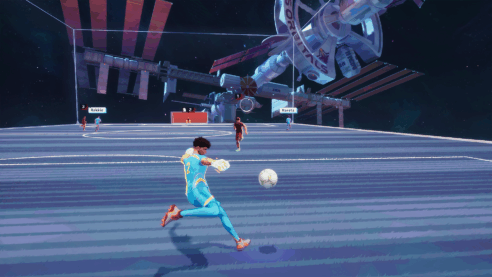
Even outside of passing, merely observing off-the-ball feels similar to playing on a real field. Games become quick meet-and-greets where I learn the movements and quirks of the other 4 players, hoping we can all find the path which translates that knowledge into a goal. It cannot be understated how important it is to know your teammate’s habits. It’s what lets you build the confidence to go not just where the ball is, but where it may be going. This aspect becomes particularly amusing when you constantly run into the same players in ranked matches, as the communication learned from previous matches gets picked up in an instant. No words can be shared, and yet the first pass of a match can feel like saying hi to a developing friend.
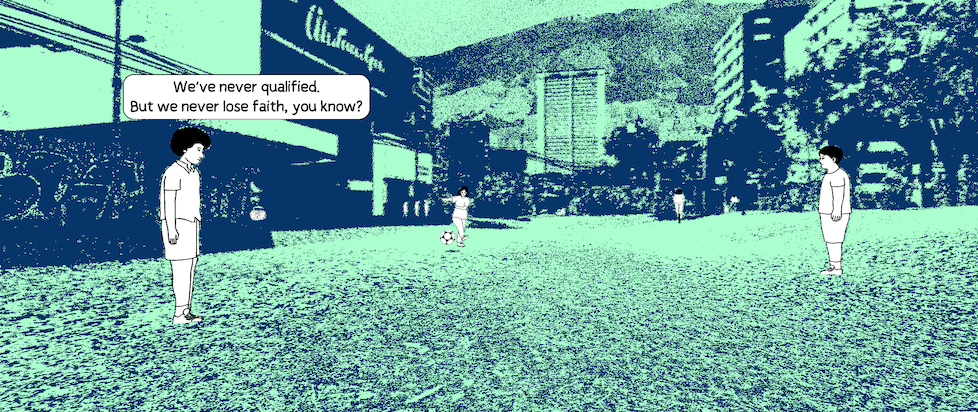
Whereas Rematch captures so much of why playing soccer is fun, Despelote manages to translate the joy of it permeating everywhere off the field. Set in 2001 Quito, Ecuador, players become eight-year old Julián as he watches his country hold its breath in anticipation of its soccer team coming closer than ever to qualifying for the World Cup. While passing the ball around with friends and playing the in-game soccer videogame showcases how much of a cultural staple the sport is, it’s the game’s treatment of the player in relation to the sport that captures its all-encompassing magic.
As I kicked my way through the park and streets of Quito, I couldn’t help but notice how much the game decentralizes the player. This can be felt by the relationship with time, in that you’re working on everyone else’s clock: the countdown until your mom returns from an errand, the countdown until it’s time to drive to a family event, the countdown until another whistle blows somewhere else and Ecuador’s team is one step closer to becoming national heroes.
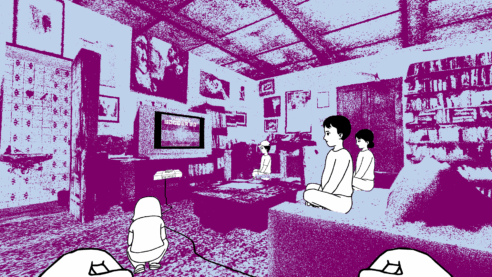
This is on top of all the most natural-sounding side conversations occurring during your play, which give little glimpses into passing lives that often mention the thing on everyone’s mind – soccer. It affects everyone’s lives. Despite all the mischief players can get up to that interrupts random passerbys, Despelote makes you feel like a drop in the sea of change washing over an entire country. It translates the fact that no matter how deeply one may feel about soccer, as Julián is undoubtedly head over heels for it, the sport is so much bigger than one person. And there’s a deep comfort in that, knowing wherever you go you can find someone who understands, if not matches, your love. An assurance only found when a known language is spoken, one I’ve found joy speaking myself when I run into people who also spent their childhoods pounding cleats into dirt and turf.
A year or so ago, I found a forgotten volleyball in a closet. It had been previously used for a Haikyu!! Halloween costume. For months after, I would juggle the ball in my apartment every so often, breakable furniture no doubt sweating as I aimed for arbitrary goals of 10,15, 20 touches without dropping the ball. I eventually threw it out due to deterioration and forgot it again, but Despelote and Rematch are reminding me of many things lately. It’s a testament to the various ways games can capture the essence of a sport, that there are different angles to appreciate it from. So I might find time to buy a new ball – one meant for indoor soccer, at that – to continue remembering why I love it.
———
Wallace Truesdale is a writer who loves games and the many things they come into contact with. When he’s not ruining himself with sweets, you can find him blogging at Exalclaw, or hanging out on Bluesky and Twitch.