Octavia’s Brood
Visit the MIT Press shop
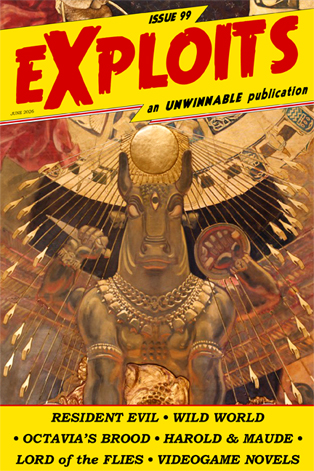 This is a reprint of the Books essay from Issue #99 of Exploits, our collaborative cultural diary in magazine form. If you like what you see, buy it now for $2, or subscribe to never miss an issue (note: Exploits is always free for subscribers of Unwinnable Monthly).
———
“All that you touch / You Change / All that you Change / Changes you”
– Excerpt, Octavia E. Butler
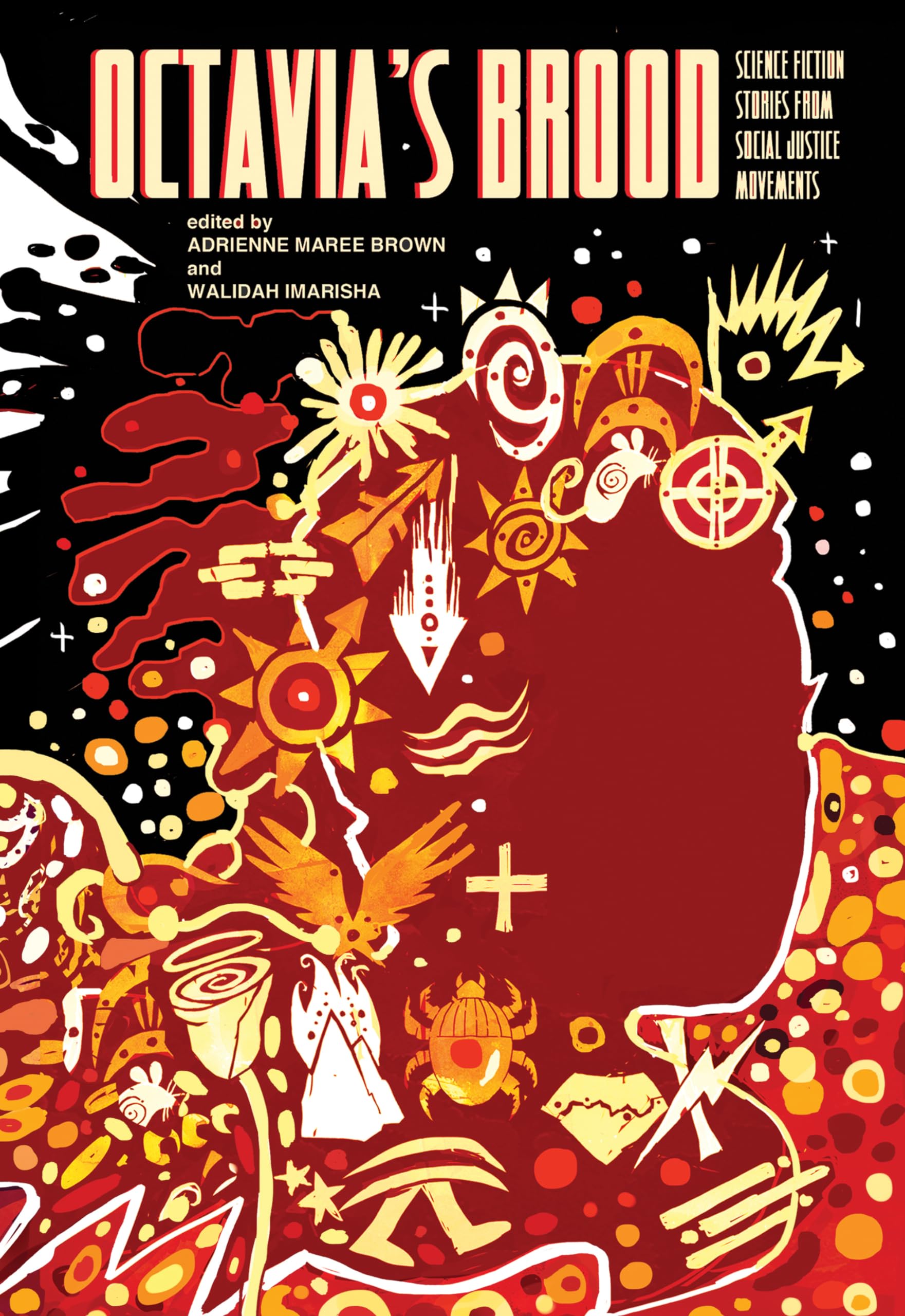
Visionary fiction is a political necessity. Octavia’s Brood’s anthology asks what it means to dream alternative futures rooted in collective liberation while living inside systems designed to make people disposable. Reading these stories in Minnesota feels terrifyingly current, as communities continue to face immigration surveillance, detention and murder under the language of “security.” Since finishing the anthology, I kept returning to its insistence that organizing itself is a form of visionary fiction. To organize is to believe another world can – and must – exist.
The collection is an anthology of short stories written by activists and organizers who are actively building a more just world. The anthology distinguishes between traditional science fiction, which often reproduces colonialism and inequality, and “visionary fiction,” which dreams freedom through the experiences of people most harmed by the present world. The editors argue that “all organizing [is visionary] fiction” because organizers are constantly practicing futures that have not yet arrived. In Minneapolis now, the idea feels urgent. During the height of immigration and customs enforcement (ICE) abductions and assaults, communities nearly immediately formed mutual aid networks and immigrant defense coalitions that required people to imagine survival beyond the violence of the state. These are acts of collective care grounded in accountability and dignity.
Stories in the collection like “Revolution Shuffle” by Bao Phi expose how quickly fear produces racial scapegoats. In the story’s zombie apocalypse, Arabs, Asians and dissenters are forced into prison labor camps next to loud machinery to lure the zombies away from the remaining outside population. The story follows two freedom fighters working together to liberate the camps and build another world. One devastating scene follows an Indian man trying to save himself by insisting “I’m not Arab,” only to be murdered by law enforcement. The parallels to today’s militarization are impossible to ignore; systems of policing and surveillance coerce people to distance themselves from other minoritized groups to survive, making banding together for resistance even more important.
Despite its seriousness, the anthology refuses hopelessness. Alexis Pauline Gumb’s “Evidence” uses letters between generations to show readers in the past that a liberated future has been actualized, creating intimacy across struggle. The future speaks back to the present, insisting that another world was built through queer survival and the abolition of scarcity. The line “we rewrote the meaning of life with our living” reframes liberation not as a distant utopia, but as something created through daily acts of loving and remembering. The emphasis on memory also appears in “The Long Memory” by Morrigan Phillips, where libraries are attacked because the historical consciousness they contain threatens exploitation: “A people who remember will not be exploited again.” These lines lingered with me because they reframe organizing as world-building. Today, the people resisting deportations, working for the abolition of cages, ending genocide, cooking meals for neighbors, and documenting ICE activity (among the many other acts of community care) are already creating a blueprint for another future.
The anthology’s visionary fiction beautifully relies on imagination and transformation. It is a part of an emergent strategy to envision how we can work together to be intentional, interdependent and relational with our care for one another. As Tananarive Due writes in the anthology’s short story “The Only Lasting Truth,” the revolutionary work of visionary fiction is that it not only overthrows a way of thinking, it also “puts pressure on you to figure out, what are you going to do now that you’re here?” The stories in Octavia’s Brood remind us that collective organizing is about expanding what’s possible every day by refusing to let the present define the limits of liberation.