Empty Worlds of Wonder
Visit the MIT Press shop
This column is a reprint from Unwinnable Monthly #199. If you like what you see, grab the magazine for less than ten dollars, or subscribe and get all future magazines for half price.
———
Interfacing in the millennium.
———
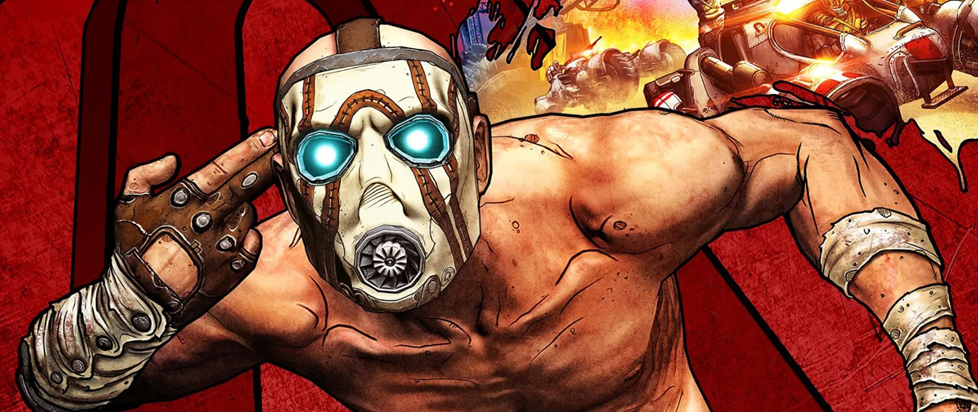
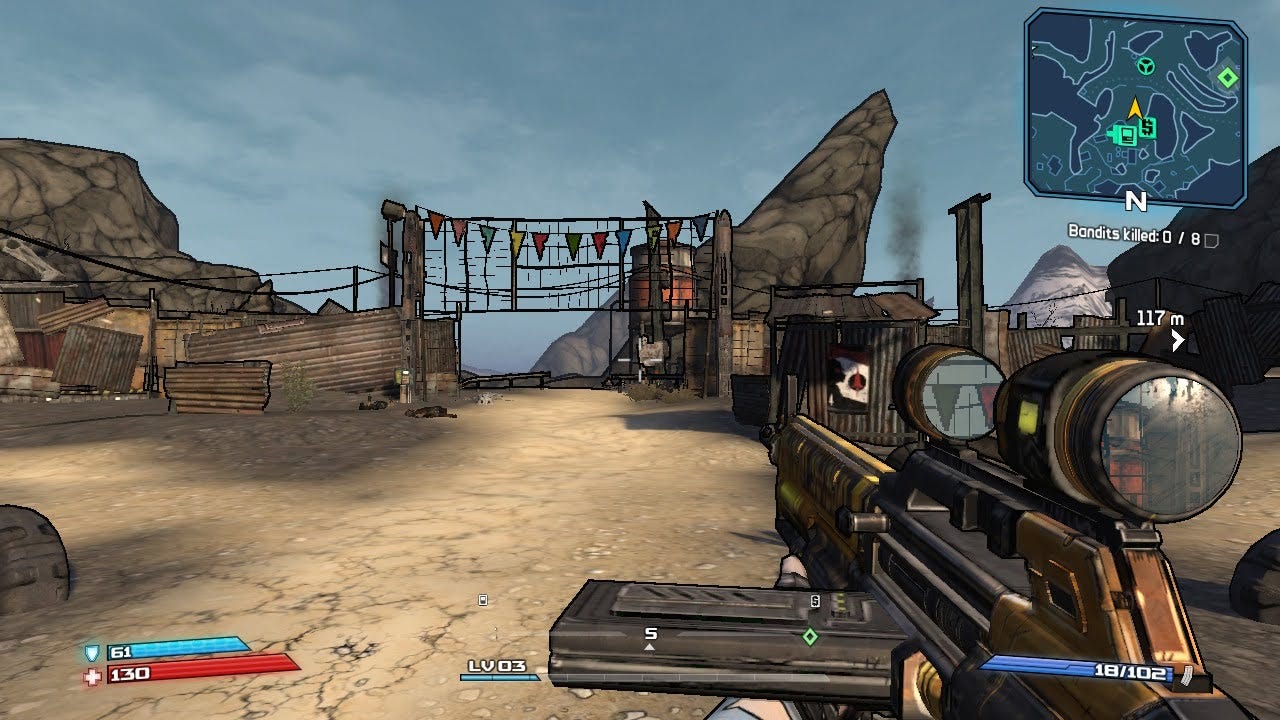
I’ve been replaying the first Borderlands with my cousin. Old-school, like we played it as kids, sitting on the couch and fighting over vertical vs. horizontal split screen. It was a memorable landscape for us as teenagers, and it’s nostalgic to return to now. It still looks good. It still plays well. I still suck ass at sniping and he still sucks ass at driving. We turned it on because I walked in on him playing Borderlands 4, doing gymnastics routines across Moebius-style planetary landscapes while shooting six guns at once, and went “Dude, you remember when all this was brown?”
It is a very brown game. It’s a very empty game, as well. I never noticed this as a kid but I notice it a lot now. There’s that implied mournful whistle in the background of most of the landscapes. Wind rustling fabric. The stench of stagnant water. Distant gunshots, skags rooting in the ground. There are fewer friendly characters and they’re further apart. The protagonists aren’t chatty, and when they are, they’re greedy and mean. Lillith and Mordecai are always bitching at each other (he phasewalks halfway across the map for shits and giggles; I kill steal ruthlessly with Bloodwing). After the great heights the series has reached, the explosive comedic glamour, the first game feels understated to the point of bareness. It has different interests and a different emphasis. This really came into focus with a comment my cousin made when we were a few hours in, still wandering around Fyrestone, whining about inventory upgrades and preemptively mourning TK Ba ha.
“It’s interesting,” he said, “how in the later games Vault Hunter is a title, but in this one it’s just a job.”
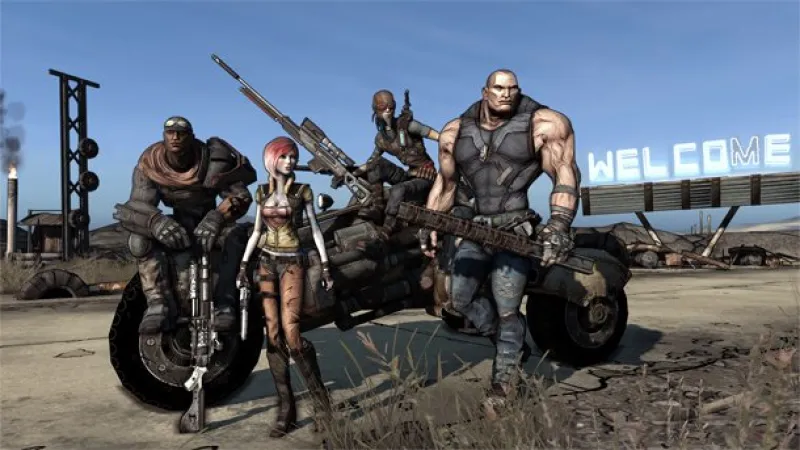
I had never thought about it that way before, but he was right. That feels key to understanding the development of the Borderlands series and the evolution of its stories. Vault hunter, in this first game, is just like a bounty hunter or a treasure hunter in similar narratives: a small-time wanderer trading in violence and invoking either diplomacy or disdain depending on where they end up. Roland, Lilith, Brick and Mordecai are unimportant additions to Pandora’s pile of corpses until proven otherwise. The development of the series does exactly that: it’s their transformation into NPCs in the second game, in its dense and politically complex overhaul of Pandora, that gives their role in the first game greater meaning. They do, eventually, end up being important.
I can tell that this is why Borderlands 2 hit like a bomb. After how much time my cousins and I sunk into the first game’s deserts, Borderlands 2 was like candy. Sweet, colorful and held in constant contrast to its predecessor’s muteness. It felt richer and deeper than the first game, and it was. But now, as games get larger, mechanically denser and infinitely longer, I have a renewed appreciation for Borderlands‘ thinness.
I think this is the part where it would be traditional for me to talk about how a shallow media property leaves space for imagination, and how the game’s emptiness let my cousins and I dream and invent and create lovely stories in our minds that we carried with us far past the hours we spent exploring its world. This is not true. The text as given to us is exactly what we engaged with. It was a lot of guns, violence, drama queen Claptrap rescue missions and quoting “I am legally obligated to tell you I’m not a real doctor” back at the recording of Zed. It was a lot of shooting and driving and trekking through landscapes that couldn’t be bothered to be anything more than what they were.
What were they, then? An extractive landscape. Pandora’s history is the aftermath of heavy-handed, exploitative resource mining. The enemies of the game are bandit gangs composed of mutated remnants of abandoned workers. The player characters are mercenary treasure hunters trying to keep their skulls intact as the military arms of interstellar corporations scorch earth to find the same Vault they’re hunting. The subtext of Pandora’s emptiness is this destructive competition, an avaricious intertwining of science and business, and a numbers game taking place far away. The game tells you this, if you’re paying attention, but it doesn’t much care if you are. As the players preoccupy themselves with loadout and ammo count, so do the player characters preoccupy themselves with their search for fruitless treasure, a one in a bazillion chance. The fate of the world is not on their radar.
This is why Borderlands is such a good western. (Surprise, bitch.) Rootless gangs of unsympathetic hostiles pursue the antihero, who catches, with that protagonist shine, his fistful of dollars. This is why Borderlands is such a good Mad Max riff. (Bet you thought you’d seen the last of me.) Vehicular violence and dirty glamour dictate the laws of the world after the resource wars, where hope happens to others. There’s a certain sense of smallness, pointlessness, that’s even stronger after the Vault makes its appearance and dreams become real. Treasure and magic and the glory of lost civilizations, unearthed by self-interested company military and grimy, armed nobodies from the smoldering remnants of a corporate afterthought.
It’s so unglamorous. When compared with its follow-up, and especially the swagger of Handsome Jack’s Hyperion, it looks like very little. A first level. Browns and grays. Cars and rakk and bandits. Funny in a mean way, like it doesn’t care if you laugh. And the star of the show, as I play it now, though I barely registered it as a kid: those vending-machine NPCs, dripping with character and utterly motionless, memorable and disinterested. It’s not the rich, kinetic world they built in Borderlands 2, far from it. It’s a transit town, a place for passing through.
I love it. It feels confident and careless. Unambitious. It left me with a permanent weakness for space westerns and vehicular dystopias, and though Borderlands 2 is unambiguously the superior game, it’s still the one that I cut my teeth on. Its sparseness is alluring, in this era of everything all of the time. I envy how vivid it managed to make characters you barely ever interact with and who don’t seem to give much of a shit about you. I like that it was a prologue that didn’t know it was a prologue. I like that there were a hundred different claptraps, all equally and dramatically useless. I like that vault hunter was just a job.
———
Maddi Chilton is an internet artifact from St. Louis, Missouri. Follow her on Bluesky.