THAT’S WHAT THE BLOG IS FOR! Mad Men S2E1–S2E3
Visit the MIT Press shop

S2E1 For Those Who Think Young
Mad Men is almost always slow, and it tends towards a seasonal rhythm that starts very slow and picks up towards the end. This season begins with a montage of my gurlz getting ready (Joan, Peggy, and Pete Campbell) and then mostly continues on in this fashion, getting us caught up to where everyone stands but not moving things along too much. And where people are standing is mostly… still, quiet. Things have changed in the past year but they’ve settled, and even the most dramatic movements feel like we’re picking up with these people just where we left them.
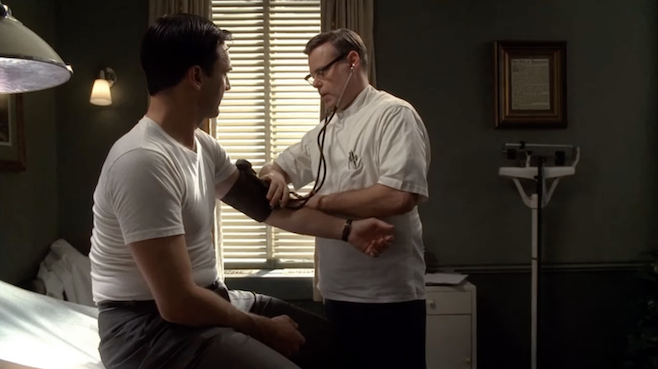
Don is still Don, but he’s “being good” as he tells his doctor, by which we assume he’s not cheating on Betty anymore. Peggy is still annoying and kind of harsh but she’s a copywriter now, and mysteriously skinny (fuck blue lives). Joan is still running shit and looking good doing it, but she’s dating a doctor and it’s serious. Roger is still working at the office, but Duck is there too. Pete is still not a daddy, but his wife is getting more upset about it. Betty and Francine and Harry are all still married, but Harry is going to have a baby. Sal is still gay, but he’s married to a woman. Did I miss anyone?
If so, you’ll be fine, because really, really nothing much happens here. Don goes to work, he gets a physical, he can’t get it up on Valentine’s day for his hot wife, he reads a book of New York School poetry and then mails it to someone. Another small mystery, but a pen pal is nothing compared to the season one reveal of a whole-ass family in the suburbs.
Instead of something happening, this whole episode is marked by the feeling of something coming. This point is hit on the head over and over in that slightly too obvious way that the show could get in its early seasons. Don’s doctor tells him he needs to take care of himself, and then can’t fuck, and then he is forced to hire young copywriters just for the sake of having a young face in the room (Peggy doesn’t count), and then he is quietly waiting for the catastrophe of his personality to seem beautiful again,and interesting, and modern. And where is Peggy’s fucking baby? Something is coming for these people and it might be themselves, or death, or change, or the 1960’s, but they do not want it.
More Thoughts
Interestingly, the one who feels the most different is Betty, although the material realities of her life have changed less than anyone else. Her activities are mostly the same, save for riding around in her impeccable horsey clothing, but she’s less timid, more steely. Compare her rather dangerous flirtation to get out of having to pay for a new fan belt with her panic over a completely innocuous conversation with the air conditioning sales man last season. We saw a bit of this side of her when Don got a little too rough after Roger sexually harassed her, or when she shot a bunch of pigeons, and it might be that this is what emerged after admitting to herself that Don was not faithful.
This show gets the most thematically heavy handed when it gets into the existential territory of aging and dying (See: Season 1’s “Long Weekend”).
Don lets Peggy have it in the best scene of the episode when she tries to be what she thinks he wants from a man by tossing off a “sex sells”. He reminds her that they have creative work to do other than sticking tits and leg behind a product. His speech to her would be a great pitch against AI by the way:
“Just so you know, the people who talk that way think that monkeys can do this. They take all this monkey crap and just stick it in a briefcase completely unaware that their success depends on something more than their shoeshine. You are the product. You, feeling something. That’s what sells. Not them. Not sex. They can’t do what we do, and they hate us for it.”
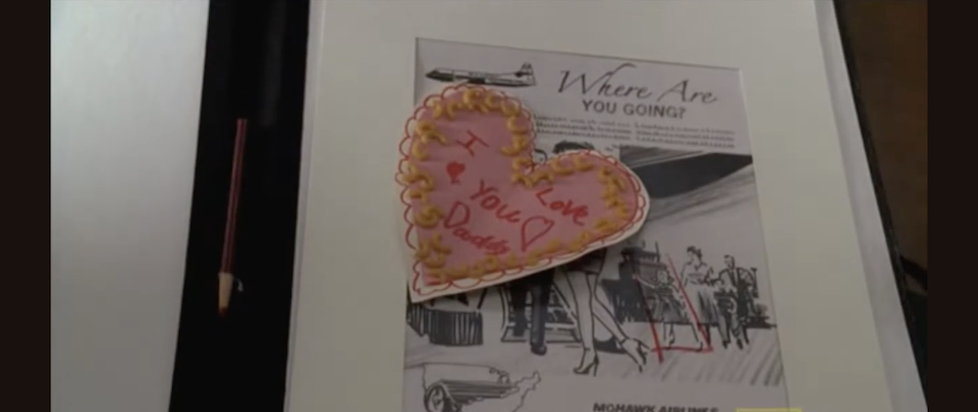
I’m surprised Peggy saying “What did you bring me Daddy?” Isn’t a GIF in wide usage. I don’t know how to make GIFs or I’d be on that.
Scratch that, the best scene is Pete asking Peggy if she ever wants to have kids. AAAAAHHHHHHH!
Poor Lois gets tortured by Peggy because the boys persist in treating Peggy like “a girl” and the “girls” are the only ones left that she has any power over. Except Joan, who puts the Xerox in her office. No one has power over Joan.
Betty’s disgust that Sally’s classmates have to give valentines to everyone is so funny.
Speaking of valentines, Sal’s beard is dressed up just like one for the holiday. Of course he would marry someone that kitsch.
S2E2 Flight 1
While the first episode of the season to hit up the big Mad Men theme, fuck I’m going to die, this one takes up another of the show’s consistent concerns, what is work/life balance? Broadly, I think this is the more interesting of the two, in part because everyone is going to die some day, but the commerce/art hybridity of advertising is particularly ripe for thinking through the trickiness of separating work and life when both demand so much from the other. I find this episode a lot juicier than the premiere, a lot of fun, and harmonious without hitting you over the head too much about it.
The episode starts with a slightly uncomfortable but mostly companionable blending of work and life when Kinsey throws a party in his Montclair apartment and invites his co-workers, in part to make sure they know he has other friends. Unlike Don, who loves being at work because it is segmented off from his real life in a way that is helpful for his professional life, Kinsey feels on some level that his career stagnation is because he is not known, unseen. If they only knew how hip he was, how many friends he has, how Black his girlfriend is.
But while everyone has a good time, no one is particularly impressed, and Joan’s refusal to buy into his narrative, (and willingness to insult his girlfriend, Sheila, in the process) causes him to retaliate by posting her real age for everyone to see. “Is it so hard to just leave everything at the door and just do your job?” Joan says, regally throwing the copy of her license in the garbage. “I look forward to it” replies Peggy, who made out with a cute stranger at Kinsey’s but didn’t go home with him, achieving the perfect amount of sloppiness for a work party away from the office.
But really this is Pete’s episode. Unsure what to do when he finds out that his father died in the (very real) American Airlines Flight 1 crash, he looks around the office for someone to talk to and finds Don. Maybe it’s because he craves his approval or maybe it’s because he’s seen first hand how cool a head Don is in a real crisis (that Pete caused), but he is naked asking for help.
“I don’t know what to do.” He says. “What does one do? Make arrangements I guess. What am I supposed to do?” And then “What do people do?” Everything he’s asking is in that small shift. He’s not asking Don what will be good for him, he just wants to know how to behave from the keenest observer of human behavior that he knows. Unfortunately, Don either doesn’t hear what he’s really asking, or he does but he misdiagnoses the issue. When Pete resists going home, which is what Don tells him to do, he thinks Pete is afraid of looking bad in front of the boss, or of falling short around the office. With all of Pete’s family wealth and class status he cannot imagine that the two of them have something in common, that what Pete is really asking is what to do when you’re happy that your father is dead. “There’s life, and there’s work.” Don says, but we know he doesn’t really believe that, and on some level Pete does too, which is why he keeps pushing Don not only on whether he should go home, but whether Don would in the same situation.
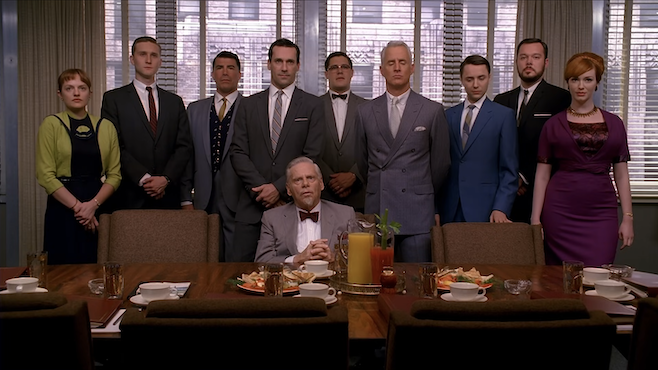
And Duck comes into his office and offers him another way to be, and Pete finds himself down one father and torn between two work daddies, one of whom tells him to be human, to be with family, to grieve, and the other of whom tells him he can use this if he wants to to get in with a client. At the end of the episode Pete once again scans the office. He calls his wife and then changes his mind. He meets Peggy’s eyes but she looks away. So he goes to Don again, but this time catches Don the bully instead of Don the empathetic and stammers out of the room, only to very confidently leverage the death of the man he hated in service of his job later that evening. Daddy Duck wins this round.
More Thoughts
Part of the reason Don struggles so much with his home life is that he doesn’t know how to find pleasure and satisfaction there in the way he can at work. He is so much more torn up over disloyalty to a client than he is to his wife. Some of this is not his fault, I wouldn’t want to be friends with the odious Carlton either, but it’s not fair to leave his entire home life to Betty and then grump when it’s not what he wants.
That being said, I remember a lot of chatter when this came out about Don being a bad father for teaching his young daughter to mix cocktails and respectfully, I have to disagree. That’s a life skill.
Alison Brie doing extraordinary comedic work holding onto the pink elephant statue Pete’s mom forces on her.
Peggy is much more suave and easy with men than she was last season, but I do wonder if she’s avoiding sex out of a (reasonable!) fear of getting pregnant again. Speaking of which… her sister hints at some dark shit that went down in between seasons….
Pete really is a tragic figure when he goes looking for help. My heart hurts for him.
S2E3 The Benefactor
This episode feels like an extension of the season premiere – lots of setup, not much to say about it – which is a wild thing to assert about an episode where Don fingerpops a comedian’s wife in the hallway of Lutéce so that she’ll get her hothead husband to apologize to Sterling Cooper’s big clients. One of my favorite things in television is when network or basic cable sneaks by a graphic sexual moment simply by having everyone clothed (The Good Wife was very, very good at this). It shocks, even post-Euphoria, in part because the cable setting forces a physicality that speaks more than nudity can. In this case Bobbie’s face has to tell you what is happening under her skirt, and you can almost feel the moment Don’s hand breaks containment.
What I mean by not having much to say about it, is that this episode is not thematic in a way that many of the show’s best are, and while the character work is wonderful as always, it is mostly building towards the rest of the season. After flirting with her own powers of seduction in the premiere, Betty keeps a cool distance even when being boldly propositioned by Arthur, the young man who rides at her stable, but we don’t know what that means yet other than that she’s Betty and that’s how she was brought up. Don does not keep a cool distance from Bobbie Barret, but we don’t know what it means yet other than that he’s Don.
What the episode takes a lot of time to do is make sure that we get to know Jimmy Barrett, the comedian, and his wife/manager Bobbie. And that’s nothing to complain about. Jimmy, played by Patrick Fischler who you know from everything, is such a boor for most of the episode that it’s easy to miss that his initial introduction highlights what a pro he is. Not because the Utz commercial is particularly funny, but because he knows where the camera should be, and that the stage needs to be neat in case he wants to make a comic mess on it later. The rest of the episode he’s performing for someone, and it’s easy to write him off as a child whose wife is in charge, but at least some of the time he knows what he’s doing.
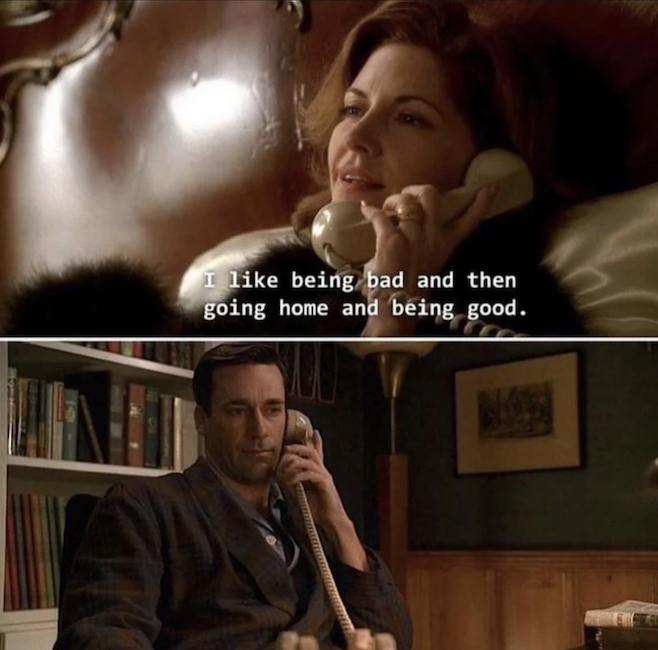
Bobbie, on the other hand, always knows what she’s doing, and from the moment she casually mentions that she used to pretend to be Jimmy’s sister I want to know her entire biography, but I’m not going to get it from this show. Bobbie holds things close to the chest by being strategically open. In this early episode she’s an interesting counterpoint to Rachel Menken, the admirable bad girl to Rachel’s admirable good girl. Both of them are impressive, can go toe-to-toe with him, but while Rachel needed to be pursued and persuaded, Bobbie is the one coming after him. It’s not a position he normally likes to be in, but there he is anyway, fucking in a car during a hailstorm.
More Thoughts
The most significant B-plot is Harry Crane finding out that Ken Cosgrove makes a hundred bucks more a week than him and spinning out about it until he comes up with a way to prove his worth. This feels flown in from the other version of the show where there is an advertising problem of the week to solve, although it’s interesting that Don is not involved. I like it mostly because of the very funny two scenes that bookend the plot: First when Harry ruins a second envelope trying to fix his first mistake and then considers opening a third one, and then when Roger serenely declares him the head of television.
Don has intermittent BDSM instincts throughout the show but the hallway scene with Bobbie is the first time they really come up. I wondered if engaging in consensual BDSM play would be healing for him, but he’d probably just be a nightmare for the rest of the community.
It occurred to me, watching this, that a robe over pajamas is basically a comfy suit.
———