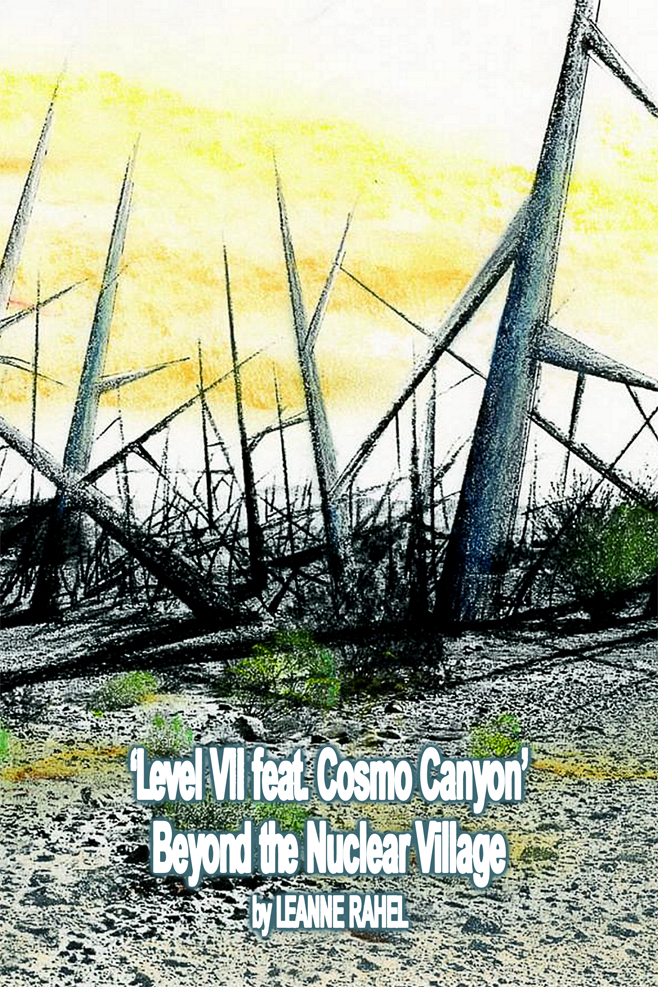
‘Level VII feat. Cosmo Canyon’ Beyond the Nuclear Village
This is a feature excerpt from Unwinnable Monthly #199. If you like what you see, grab the magazine for less than ten dollars, or subscribe and get all future magazines for half price.
———
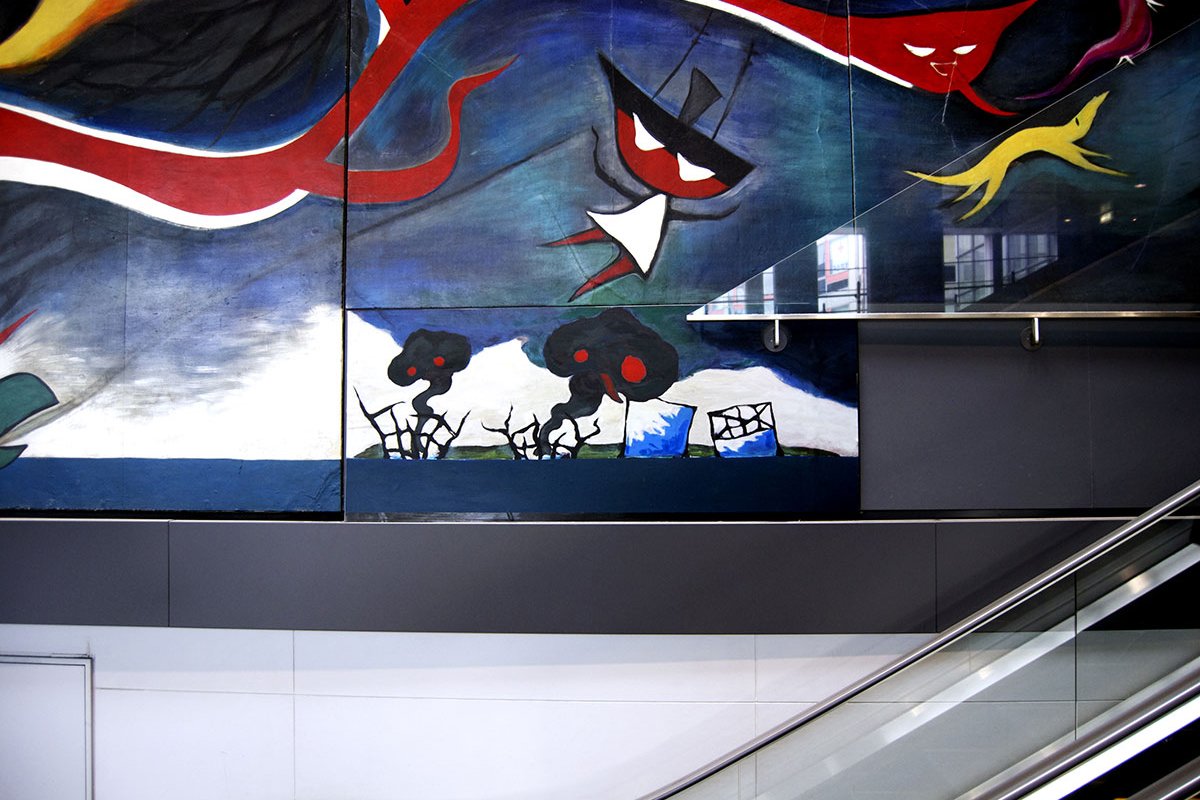
A mercenary of sorts passing through neon-lit concrete jungle. A clandestine operation mediated by arterial railways heading to the urban core. A mythic symbol destroyed in a first act of terror. New meanings inscribed on the old narratives. Cloud Strife and AVALANCHE find themselves destroying Mako Reactor 1 – once again. Yet echoed in this image is the work of art collective Chim?Pom who, in May 2011, would produce Level 7 feat. Myth of Tomorrow through the unauthorized installation of a panel depicting the meltdown at the Fukushima Daiichi nuclear power plant as an extension of Okamoto Taro’s Myth of Tomorrow. Okamoto’s mural, enshrined at Shibuya Station overlooking the Scramble Crossing – at the very heart of the Japanese industrial-consumer society – depicts a burning skeleton, representing the bombings of Hiroshima and Nagasaki, and the Lucky Dragon No. 5, irradiated by American nuclear testing in Bikini Atoll. Where these prior encounters with nuclear power were resultant of the nation being victimized by exterior forces, and in its enshrinement at this sociocultural core naturalizing in its narrative of victimhood, Chim?Pom’s intervention disturbs and alienates it. The Triple Disasters of March 2011 – and most significantly Fukushima, the nuclear element – emerged in discourse as a cleavage in history allowing for a return to the post-war national mythologies to take stock, critique and write over assumptions once held as natural, to examine the nuclear politics of Japan beyond the prior held notion of sole victimhood.
Chim?Pom were not the first nor last to write upon an existing text in response to Fukushima. In the disasters’ wake, such responses spanned mediums and genres from poetry and prose fiction to popular music. Saito Kazuyoshi would livestream himself rewriting his romantic ballad “Zutto Suki Datta” (“I loved you all along”) as the anti-nuclear polemic “Zutto Uso Datta” (“It was always a lie”). Kawakami Hiromi’s magical realist short story “Kamisama,” about a mundane picnic shared with a bear and often read to and by children, re-emerged as “Kamisama 2011,” tinged with a post-apocalyptic melancholy and the utter absence of children from its futuristic imaginary. Kraftwerk, performing “Radioactivity” at No Nukes 2012, received raucous applause as they, with Japanese lyrics penned by Sakamoto Ryuichi, replaced “Hiroshima” with “Fukushima.”
The aesthetic mode so representative of the post-March 2011 moment was therefore a palimpsestic one – older texts written over and written into in service of reframing the quietly naturalized narratives of post-war Japan into highly timely polemics. The Final Fantasy VII Remake Trilogy, announced in 2015 and as yet unfinished, with its dialectic desire to be both a faithful rendition of the 1997 original and self-described both in text and in marketing copy as an ‘Unknown Journey’ allows for it to be read in this tradition of a post-Fukushima palimpsest – where ruptures disturb and alienate the naturalized narrative held within a historically significant work of both the video game medium and Japanese popular culture.
Curiously however, Final Fantasy VII could be argued to have already had an advanced critique of Japanese political nuclearity with the Shinra Electric Power Company, its mako reactors, and their subsequent social organization resembling not the nuclear dominance of Japan by an external (often suggestively American) power but rather a corpo-political configuration that resembles the total fulfilment of the nuclear village, what Jeff Kingston describes as the “institutional and individual pro-nuclear advocates who comprise the utilities, nuclear vendors, bureaucracy, Diet (Japan’s parliament), financial sector, media and academia.” Shinra operates as a total institution with its own military, media and administrative institutions – entrenched into and partly the source of the planet’s dominant culture rather than an outsider or invader force. Its name, the “Shinra Electric Power Company,” even calls to mind the private government-granted energy monopolies of post-war Japan – including the Tokyo Electric Power Company responsible for the Fukushima Daiichi and Daini power plants.
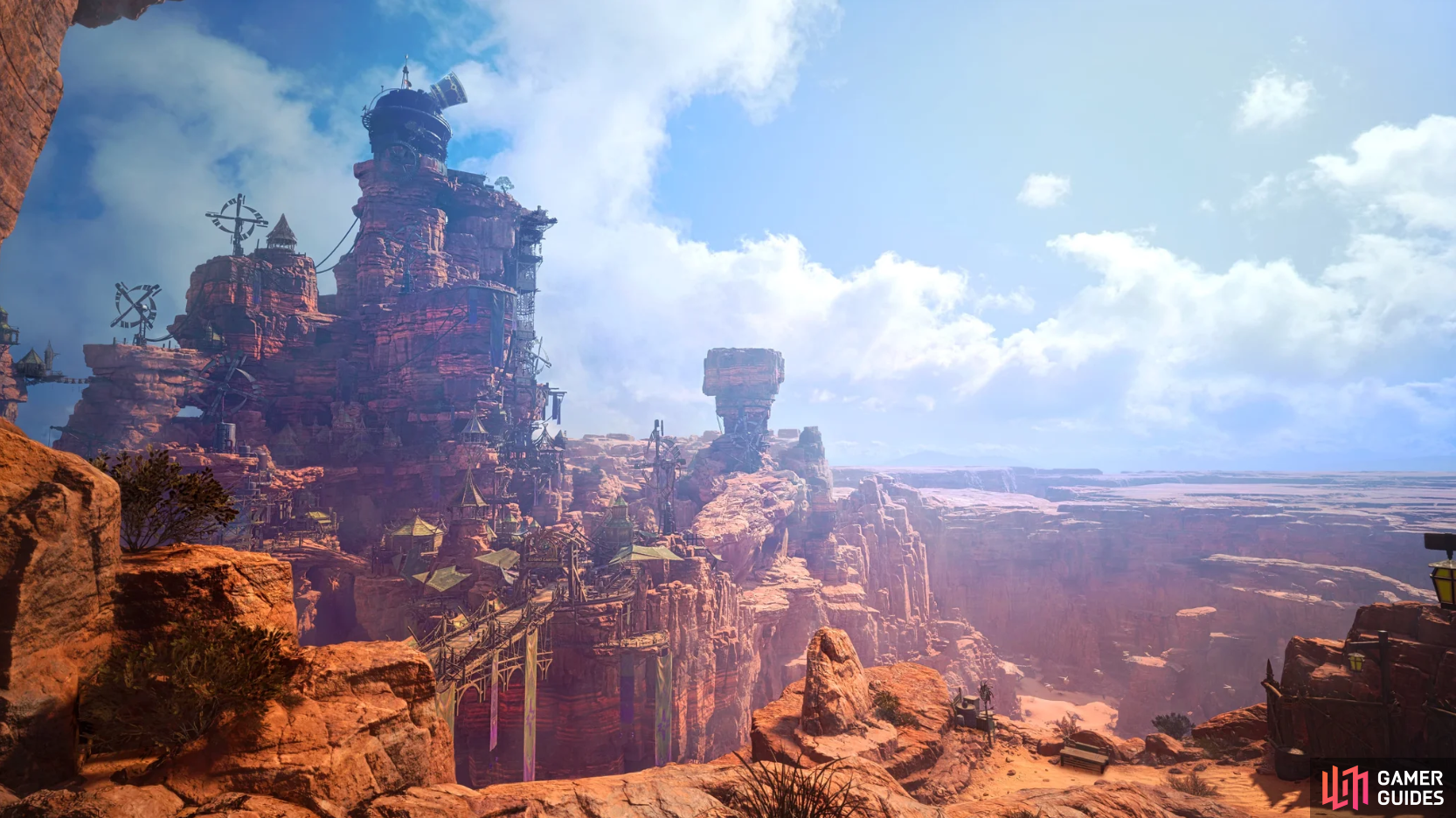
By the introduction of the Republic of Junon in Final Fantasy VII Rebirth (2024), the predecessor polity that was supplanted by the nuclear village based in Midgar historically contextualizing Shinra’s emergence, it becomes undeniable that Shinra is meant to be read as a critique of the post-war Japanese state and its entanglement with corporate interests, of which nuclear interests emerge prominent. Of course, Wutai – the other major polity within the game’s world, deliberately and intensely coded with traditional Japanese signifiers – complicates this reading. There is perhaps a reactionary sense of ‘tradition’ against ‘modernity’ embedded within the Shinra-Wutai war, the cosmopolitan and syncretic Midgar with its Anglo-Japanese bilingual street signs dominating a monocultural land of pagodas and ninjutsu. At least within the nuclear allegory, however, Shinra’s domination of the planet resembles a distinctly Japanese status quo rather than victimization by an external political force.
If the game in its 1997 incarnation was already able to make nuanced critiques of Japanese political nuclearity, then, what contribution can this decade-long attempt at writing over it make? Of course there is further contextualization, the full historicization of the planet as a site of struggle of ideology where republics fall and corporations rise, as referenced in Rebirth’s depiction of the past. But where does it disturb and alienate, like when one sees the vandalism of Myth of Tomorrow in Level 7? In one sense it is impossible for it to do so – Chim?Pom are engaging in something that violates, that pierces a veil that Myth of Tomorrow’s enshrinement in Shibuya once produced.
———
Leanne Rahel is a writer interested in the crossroads of écriture feminine and otaku culture. Their essays, poetry, and ephemera can be found on their note, and stray thoughts on Bluesky.
You’ve been reading an excerpt from Unwinnable Monthly Issue 199.
To read the article in its entirety, please purchase the issue from the shop or sign up for a subscription to Unwinnable Monthly!