Kena the Grave Cleaner
Visit the MIT Press shop

Cleaning a gravestone is usually tricky because of how fragile a stone is, despite the material’s reputation. Specifically, a stone’s ability to hold memories is easily compromised if the cleaner is not gentle with their scrubbing and rinsing, nor intentional with their water usage or chemical concoction for the tough stains. Carelessness threatens to erase the last meaningful traces a person might have on Earth. In Kena: Bridge of Spirits, cleaning the mountain that doubles as an entire village’s headstone is tricky because carelessness can cost Kena her life, as well as all but ensure an entire people are forgotten to nature.
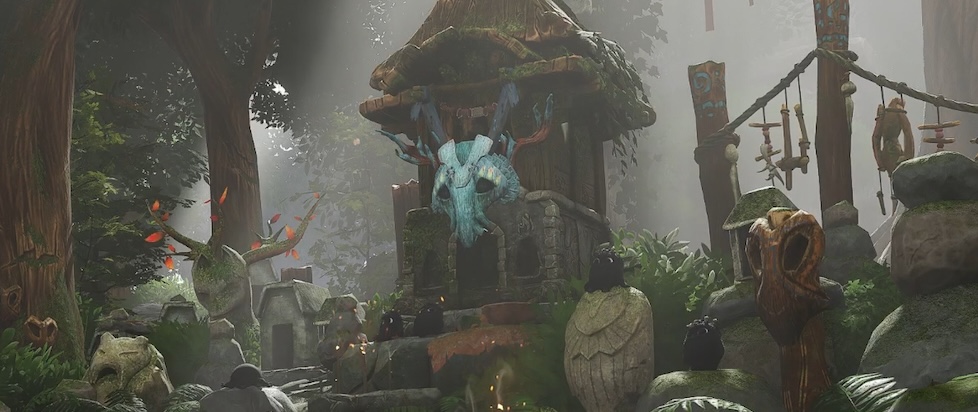
Playing as the young spirit guide Kena, most time in Ember Lab’s gorgeous action game is spent fighting corrupt spirits that have plagued the mountain with the help of small black Rot spirits. A village that has been forgotten by the world acts as a hub of sorts. If you’re sensing hesitation in that label, it’s because most places I call a hub pass a certain threshold of vibrance. There’s a liveliness created by NPCs walking and chatting, animals scurrying and flying, or even screens flicking and doors opening on their own. When Kena first arrives at the village, led by the spirits of two children called Beni and Saiya, it is devoid of any movement save for the sway of leaves, creaks of old wooden houses, an elder spirit who hands out lor and main quests, and the kids teleporting around. By most definitions, this place is dead.
However, this status quo can slowly change as Kena brings back Spirit Mail from her excursions to help the game’s most regret-filled spirits outside the village center. The mail itself doesn’t contain anything but the promise of a fight with more enemies. These battles aren’t easier than anything else you might run into during Kena’s journey. I got rocked, literally, more times in a random backyard than I did the Corrupt Woodsmith or Corrupt Taro boss fights. But, when the mail’s delivered and the fight is won, the abode goes through a cleansing. The red and black puss that had covered the home and made it look hostile dissipates. The spirits then appear before Kena and give a small bow to her and the collection of Rot spirits at her feet.
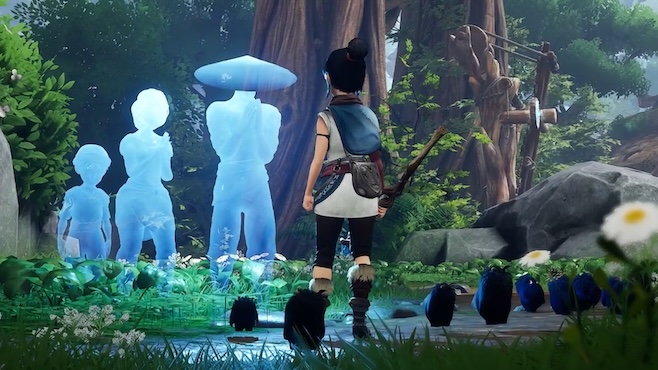
After performing this ritual enough times, another job label starts to fit Kena that feels equally important to her role as spirit guide: gravestone cleaner. Given the appearance of these spirits at their home, and the lack of structures that attribute spirits to specific headstones, these houses feel like an appropriate substitute. A small but effective detail about this ritual is that it removes the rot but doesn’t actually clean the houses. A quick venture inside these homes reveals clutter climbing walls, tools both put away and strewn about, and other signs of a life lived. They are not excessive messes, but the rejection of complete tidiness comes across as respectful.
After the blue spirits reveal themselves, they begin to re-populate the village as Kena walks around. These ghosts aren’t affecting the environment in any tangible way, but they are taking up space and bringing a new sense of movement to the village. With this in mind, the small bows they give after cleaning their specific homes takes on a new meaning. It’s not just gratefulness born from losing a spiritual plague upon their homes. It’s as if these spirits are saying thank you for making space for them again, thank you for making it easier to remember them.
At first, it might seem contradictory for a game where the main progression explicitly involves helping spirits move on to do something like helping them remain. However, these actions still make sense together when providing context. Despite its main missions, Kena isn’t strictly about guiding spirits to the afterlife. It’s the final destination, but the journey is just as important. The young spirit guide’s mission and its handful of detours are more accurately about making peace with one’s death. For every boss fight in Kena that ends with a spirit losing its hostile armor and moving onto the afterlife with its loved ones, there’s a spirit or three that apparates into the village following a dangerous mail delivery. Maybe the latter will eventually move on, but some of their peace undeniably includes taking their time to leave home.
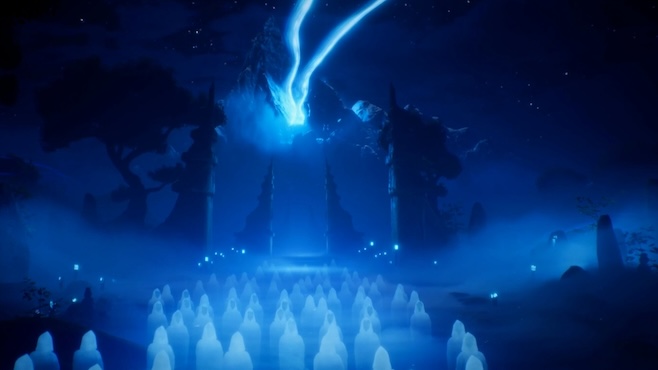
There’s also the mountain itself to consider. The detail in which trees and bushes rustle, water flows, and wind rushes makes nature feel like its own character. As such, doing small actions like putting statues in the right place, washing structures with objects called Tears of the Forest, and clearing paths of muck is akin to cleaning the mountain too. It’s as if you’re not only cleaning the homes acting as gravestones for the village residents, but also clearing out the graveyard holding them. Through your intervention, it becomes a place that one can more easily imagine as capable of holding life.
And it’s this imagination that feels like the point of these excursions. The main quests in Kena are ultimately vignettes of individual lives. The tragedies that befell the village are a major factor in how these souls lost their sense of self, but the focus largely falls on the individual spirits Kena helps find peace. These detours that start with Spirit Mail and end with a clean backyard help flesh out the village itself and turn it from a backdrop to a real setting.
As such, the importance of cleaning these houses parallels the significance in cleaning grave stones: It stops the lives they represent from fading into obscurity before they need to. It gives them respect while giving the living an opportunity to grieve properly, even learn. Their maintenance allows us to imagine how these intermingled lives existed and collided, thus giving people the chance to better understand both the past and the present.
———
Wallace Truesdale is a journalist and critic who loves games and soft cookies. He’s written for Stop Caring, Gamers with Glasses, Mothership, and more. You can usually find him writing at his site Exalclaw, or hanging out on Bluesky and Twitch.