The Museum of Human History
This is a feature excerpt from Unwinnable Monthly #198. If you like what you see, grab the magazine for less than ten dollars, or subscribe and get all future magazines for half price.
———
The events of Final Fantasy (1987) never happened. The knight Garland, some backwater tyrant the four Warriors of Light slay early in the game, transforms into Chaos, an incarnation of disharmony which seeks only to perpetuate itself. He has immortality not through elixir or stone, but merely of recurrence. He turns time over itself, making it repeat from the moment of Chaos’s creation up to Garland’s slaying. Up until this revelation, the four heroes of light wander the ruins of history itself. Final Fantasy has always had a science fictional bent. The heroes wander through airship graveyards and empty robotic palaces. The world used to be very different. Chaos will make it only ever repeat.
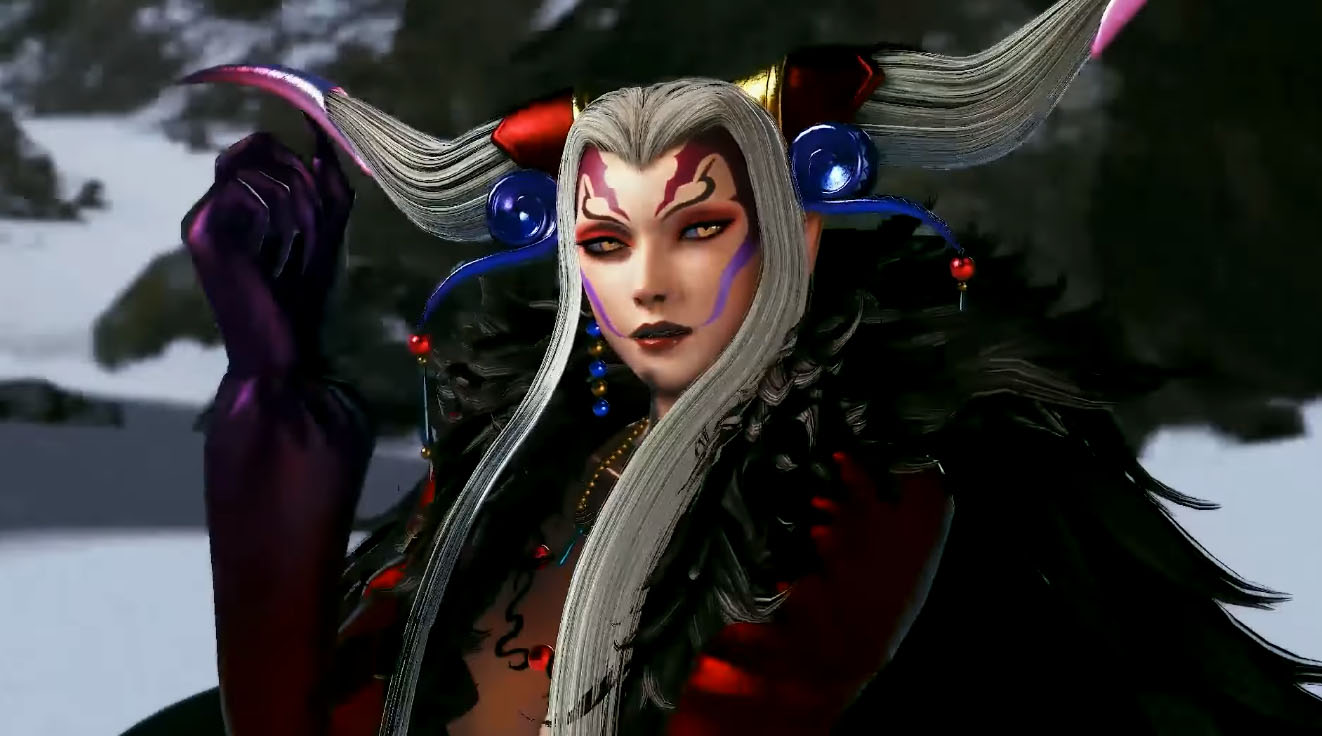
Although Final Fantasy IX most explicitly calls back to the NES games with its cutesy medieval aesthetics that eventually wander into sci-fi scale and its penultimate bosses of four elemental guardians, Final Fantasy VIII is the original game’s immediate thematic successor. Like Garland and Chaos, its villain Ultimecia seeks to dam the flow of time, but rather than Garland’s wheel, Ultimecia will turn it to a spoke. Time will be one moment forever, a wreckage which can never be repaired, or even moved away from. These two relationships to time take opposite sides: one loops and the other pinpoints. Yet, they share stagnation. In both these formulations, there is no future, only a past and present.
At the end of the cold war, political theorist Francis Fukuyama wrote a book called The End of History and The Last Man, an elaboration of his similarly-titled essay. The basic thesis is that liberal democracy/capitalism represent a final stage of socio-political development. While there will be upheavals, wars, and catastrophes, there will never be a global order different than the one that is now. This is because, to quote the book’s introduction, “while earlier forms of government were characterized by grave defects and irrationalities that led to their eventual collapse, liberal democracy was arguably free from such fundamental contradictions.” Fukuyama tries to reclaim Hegel’s theory of history from Marx, but overrides Marx’s class analysis. The dialectic of history, wherein opposing forces clash to result in new societies, is over. The promise of a global revolution, or really any mass reordering of the world, is over. Events will continue, but History (capital H) is done with.
His final resolution to this fact is strangely melancholic. “The end of history will be a very sad time,” he wrote in his original essay, “The struggle for recognition, the willingness to risk one’s life for a purely abstract goal, the worldwide ideological struggle that called forth daring, courage, imagination, and idealism, will be replaced by economic calculation, the endless solving of technical problems, environmental concerns, and the satisfaction of sophisticated consumer demands. In the post-historical period there will be neither art nor philosophy, just the perpetual caretaking of the museum of human history.”
In this formulation, both these Final Fantasies resemble that sad future. Garland stretches the world towards a total selfish aim: The preservation of his life without growth. What history can there be when it only serves to prop up one life? Final Fantasy VIII‘s final section is within Ultimecia’s future, and it is similarly empty of change. In the fullness of Ultimecia’s “time compression,” there are structures, monsters and fragments. But there are no people, save our time travelling protagonists and Ultimecia herself.
Fukuyama’s theory is the source of endless disdain, both from scholars familiar with it and online pundits who only know it from posts. It is easy to see why. In an interview with the National Post in February 2017, Fukuyama said that, “Twenty-five years ago, I didn’t have a sense or a theory about how democracies can go backward.” What about the Weimar Republic or Red Vienna? Both were shades of democracy which fascists either beat down or leveraged in their own bids for power. What about how the United States’s liberal democracy has assassinated leaders and armed right-wing militants to secure its interests? These coups are absent from Fukuyama’s own recounting of the various defeats of dictatorships across Latin America in The End of History. Fukuyama seems to deliberately omit that the maintaining of the world liberal order has meant, for decades, the maintenance of fascism elsewhere.
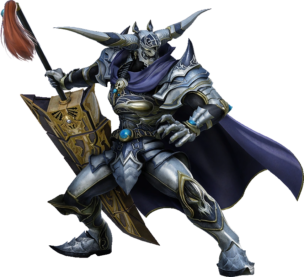
In a strange way, the structure of Final Fantasy mimics those dynamics. It starts with Garland, a foreign lord working at the behest of unseen powers with a grip on History, seizing power in a small kingdom. In a broad way, the heroes of light defend that kingdom from an imperial power. Final Fantasy VIII is also about all-too-human conflicts, petty wars over contested territory, which turn into existential battles over the nature of time itself. The protagonist, Squall Leonhart, and his friends and classmates are members of SeeD: teenage paramilitary officers, who defend nations from invasion and aid revolutionaries. Both these games approach metaphysical, almost divine formulations of time. But they start at a much more mundane place.
In that binary lies both the obvious problems with Fukuyama’s theory and its remaining allure. Fukuyama’s claim relies on such a broad definition of both human nature and liberal democracy that it is easy to pick apart. Yet, liberal democracy has proven itself resilient. However much it was based on sham pretense and rights for few and not for all, it has remained and it still convinces people. Fukuyama’s melancholic accounting of the end of history could, under more pessimistic hands, describe the continued atrophy of the social safety net during the Clinton administration or the cocky, visionless political campaigns of Joe Biden and Kamala Harris.
The forces which the heroes of Final Fantasy face are existential, even eternal. Garland transforms into Chaos as opposed to Order, an elemental thing which forms the fabric of existence. The name Ultimecia implies an ending. This is what everything else has built toward. Yet, they both rely on a narrow lens. Fighting them requires some thinking beyond the modes of history they present.
Yet this is difficult for Squall because his military training has overwritten his past. The Guardian Forces, elemental beings which allow the members of SeeD to cast spells, take up the memory space that childhood usually holds. Most of the principal characters grew up together, a fact which they only remember after one character, who has not cultivated the Guardian Forces, reminds them. To fight the end of time, the protagonists of Final Fantasy VIII are themselves without context. War is fueled through the ignorance of what came before.
———
Grace is a freelance writer based in Chicago. She is the author of Killing Our Gods: Essays On Religion, Christianity, And Video Games. She co-edits the criticism journal The Imaginary Engine Review and co-hosts the survival horror podcast The Safe Room. In her spare time, she writes horror fiction about bad Mormons and organizes with the Freelance Solidarity Project. Her work can be found at The A.V. Club, The Wand Report, Edge Magazine, and on her website.
You’ve been reading an excerpt from Unwinnable Monthly Issue 198.
To read the article in its entirety, please purchase the issue from the shop or sign up for a subscription to Unwinnable Monthly!