Those That Play Your Clowns: Hamnet
Visit the MIT Press shop
I would describe my expertise in Shakespeare’s plays at the level of fond familiarity, give or take a Romeo & Juliet or Midsummer Night’s Dream. Hamlet is certainly not one I would claim to know awfully well, although I have read it one or two times and once acted in a child’s production at summer camp (I was twelve-ish, I played Claudius, I had a terrible memory for lines and Hamlet was so much taller than me I had to stand on tip-toe to pat him condescendingly on the head).
What I feel more confident in is my knowledge of the specific niche of fake-Shakespere productions that take place entirely inside other productions. I have strong feelings about these, almost completely disconnected from their source material, to the point where they have begun to form their own micro-cannon of play-within-a-film (and in the case of Hamlet sometimes, play-within-a-play-within-a-film turducken) that I’m interested to critique to its own standards. To that end I have wrangled my friend Stefanie Wess into a series of conversations on fake Hamlets. Stefanie knows the play much, much, better than I do. She teaches it every semester to first-year composition students at CUNY, and has a Hamlet tattoo. If she has any other credentials she’d like to list I’ll let her do it below.
Stefanie, have I missed any aspects of your expertise?
The only other element of my expertise is that when I was a senior in high school, my AP English teacher, Mr. Sully, was obsessed with Hamlet and basically pushed aside months of the curriculum so that we could read it and watch multiple productions of it. When I started teaching it a lot I tried to e-mail Mr. Sully to thank him for inspiring my own apparently life-long obsession with Hamlet, but emails aren’t public at the school he teaches at now and the contact I e-mailed for his contact information did not get back to me so, hi Mr. Sully if you’re reading this, I am obsessed with Hamlet because of you, thank you. I’m not a Shakespearean scholar or anything; I’ve taught it on and off for 15 years (and every semester for the past six) because every English major has to teach Shakespeare and Hamlet is the only one I think I know well enough to teach.
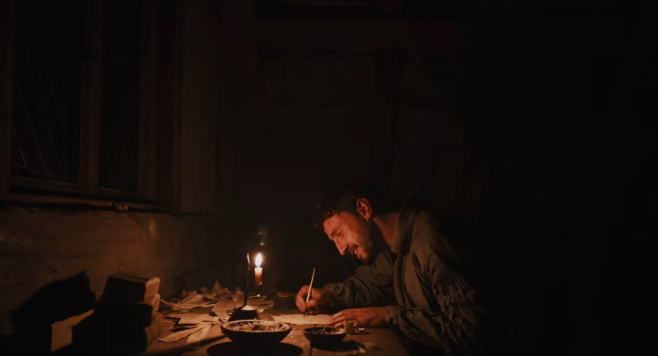
We are starting this series with Hamnet since we both watched it recently. Neither of us liked it very much, which might not be the most interesting way to start these conversations, but I still think we might bring different perspectives to why we didn’t love it, and yours might be rooted more in the original text. Hamnet is a 2025 film by Chloé Zhao based on (and co-written by) a 2020 novel by Maggie O’Farrell about Shakespeare writing Hamlet after the death of his son Hamnet, and how that repairs the relationship with his wife Agnes (I have read the novel, Stefanie has not). The film ends with an extended sequence of Shakespeare and his company performing the play, starting with the opening scene and including the famous “to be, or not to be” soliloquy (Stefanie, tell me if any other bits are included that you remember). You did not think this interpretation was well-done. Can you briefly tell me why?
Well, I was excited to see the movie because of Hamlet reasons, and for Hamlet reasons it failed miserably for me. Briefly, I don’t think the movie contained any real thought about Hamlet, had no working interpretation of it, made no meaningful connections to anything thematically in Hamlet. I sometimes tell my students that you cannot just say that a text explores a topic and expect that assertion to mean anything by itself. While it’s not the angle I often take, yeah, sure, you can say broadly that a theme in Hamlet is “grief.” But what exactly does Hamlet say about grief? This movie sure hasn’t thought about it. I keep using the word “cheap” to describe this film’s use of Hamlet.
I feel like there has been a lot of film and TV recently that is “about” grief in this broad kind of way where really what they are doing is depicting grief, which is a different thing (The Leftovers and Midsommer are two things I can think of off the cap that actually felt like they had something to say about grief). With Hamlet I feel like the feelings I, as audience, take away from Hamlet the character’s feelings around his father’s death is less about grief than it is about regret, or anger, which are feelings that have maybe more to do with his position and responsibilities as a Prince than as a son. The grief I feel in the play comes later, after Ophelia kills herself, but she is not a factor in Hamnet. Where do you feel grief is a relevant part of Hamlet?
I don’t really think about grief when I read Hamlet except for, you’re right, with Ophelia. Most of what Hamlet expresses is rage and disgust. But the idea of grief is definitely there; we meet Hamlet when Claudius and Gertrude are telling Hamlet he needs to stop moping about his father’s death, arguing that it’s inappropriate in the context of his role in the kingdom and also calling it “unmanly.” One of the most extraordinary productions of Hamlet I’ve ever seen, at Hunter College directed by Gregory Mosher, took the grief angle. It was set in contemporary times, and had a rotating cast of Hamlets. Since “Hamlet” was not one person, the play asked the audience to experience the way that unprocessed grief produces an increasing, frenzied societal madness. It was an extraordinary production for a number of reasons, and it was the only production of Hamlet I’ve seen that felt truly unsettling, and also really appropriate given that it was staged in the months after COVID quarantine. Interestingly, that production took “to be or not to be” away from Hamlet, and was recited almost sarcastically by a group of zoomer teenagers. So to answer the question more directly, even if I don’t think a production of Hamlet has to read Hamlet’s issue as “grief,” I think if one is taking the grief angle in Hamlet, if not focused on Ophelia, needs to have something to do with the prohibition of grief.
Which is absolutely not what happens in Hamnet. Agnes is, if anything, insistent on grief. And what was very clear to me in the novel is that the play allows her to see that her husband grieves too, outside the miasma of her own feelings. And this feels much more important than that he resurrects her son temporarily. And then in the film it felt to me more like the main point of the staging was the resurrection, to allow them to say goodbye, or ask for closure, or share their grief with the audience, or something that I found less interesting. How did you see the purpose of the staging in the movie, and do you think it was successful at what it was attempting?
You know, after realizing I didn’t feel anything at the end of the movie, I worked hard to intellectualize it into something I could feel and yeah, what I came up with was that Hamnet was being resurrected and collectively grieved. But Hamnet has no similarities with Hamlet except they have the same name and both die. And, as Hamlet famously learns in Hamlet, everyone dies! So the connection was too shallow for me to work if that was the point. You keep telling me of all these beautiful things the novel does that, to me, were nowhere in the movie. I think the first half of the movie is this stunningly gorgeous portrayal of love and loss and then the second half is a random staging of Hamlet, and for me there are weird emotional gaps between these sections.
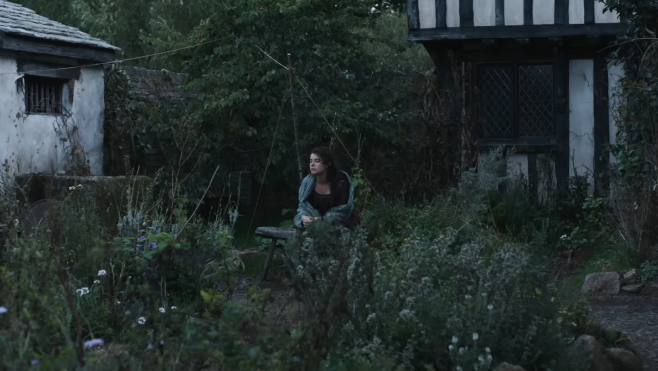
A lot of people make fun of how Agnes “doesn’t seem to know what a play is.” And just to be clear: you were absolutely allowed to be rowdy in the pit of the Globe, so her behavior wasn’t a problem for any propriety reasons. But for me the way that scene was portrayed felt really untrue to the characters. I really liked their relationship. It seemed equal and passionate and loving to the extent that I didn’t even need the random reassurance that Shakespeare didn’t beat her! So it feels absurd that they didn’t have deep conversations about the theatre. And it seems absurd that someone who was a powerful, intelligent, forest sorceress type in the first half transformed into some meek bumpkin terrified of theatre’s sorcery in the second. Again, it felt cheap.
Similar to depicting “grief” in some generalized way that neglects to say anything about grief, it felt like the end of the movie was vaguely about “the power of art.” And, you know, Hamlet is also about the “power of art,” specifically the power of acting to reveal and conceal. The insertion of “to be or not to be” in Hamnet was probably the film’s most egregious moment, but the “Oh what a rogue and peasant slave am I” soliloquy, where Hamlet expresses loathing at himself for not being able to muster up any emotion about anything, in contrast to actors whose faces “melt” over nothing – Zhao could have worked with that!
Yes, I agree with all of this. They did a cute casting thing in the film, where the actor playing Hamlet is the IRL older brother of the boy who played Hamnet, but I agree the transmutation they want isn’t happening. Was there anything you liked about the fake-Hamlet? Not to go full Liz Lemon “and another cool part was the trees,” but I did think the fake set was beautiful. Although again, it did not feel very Hamlet to me! A Hamlet set should, to me, feel stony and cold. Danish Austere. Except for when Ophelia dies.
I loved the way the ghost looked! I thought it was one of the most rad King Hamlet ghosts I’ve ever seen. I’m still considering dressing up for it on Halloween, in fact; it would let me use one of those clay face masks I used to wear in high school.
I think that’s a great note to end on! Next up in fake Hamlet (hopefully): the first season of Slings and Arrows with Canada’s finest Rachel McAdams and Luke Kirby.
———
Stefanie is a teacher who lives in Queens.
Natasha Ochshorn is a PhD Candidate in English at CUNY, writing on fantasy texts and environmental grief. She’s lived in Brooklyn her whole life and makes music as Bunny Petite. Follow her on Instagram and Bluesky.