Maslow’s Power Fantasy: Sometimes You Need A Win
You feel compelled to support great writing…
I remember seeing an Animal Crossing meme about how the game series is so successful because it fulfills the fantasy of owning a house with a yard and having friends. I’ve been (over)thinking about this meme lately, and how the allure of a videogame could come from how it fulfills a fantasy that reality cannot. I’m not talking about the traditional power fantasy of killing hordes of monsters, though that has its place. I’m talking about the seemingly mundane things, like owning your home, that could conceivably fit somewhere on Maslow’s hierarchy. They become fantasies because they’ve become so improbable in real life. Sure, they’re not real, but in this cursed year of 2026, sometimes you just need a win. Or at least the fantasy of one.
For the purposes of this article, I’ll refer to this lens as Maslow’s Power Fantasy. The rubric is a little loose, but I’ve got it boiled down to this: A videogame offers a Maslow’s Power Fantasy when it is simulating what life could be when basic needs are met. This can include supernatural or unreal elements, but must ultimately be about meeting a basic need that’s improbable or nearly impossible to find in your environment.
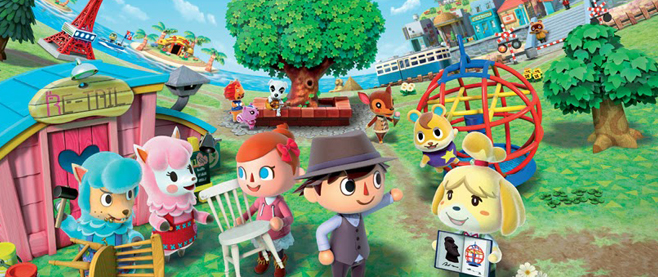
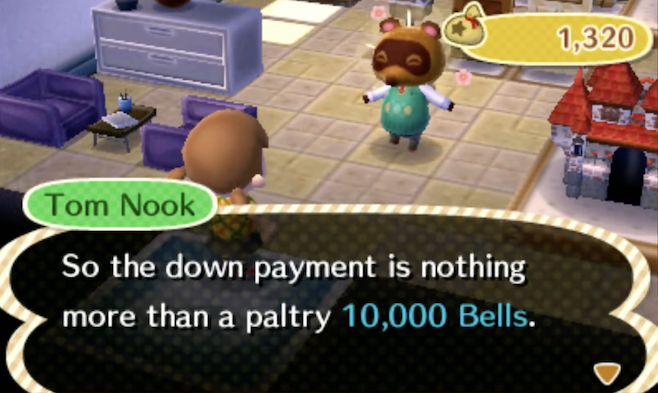
Let’s start with the meme that kicked off this train of thought and apply Maslow’s Power Fantasy to Animal Crossing: New Leaf, a game I retreated into during the early months of Covid lockdown. It’s true that it’s a power fantasy about home ownership, but it’s also a fantasy about repayable debt. Tom Nook is a rapacious capitalist, but even he doesn’t run a racket so rigged that the islanders’ descendants will still be paying down the interest on a loan. The game is also a fantasy about building a community and living a life that revolves around one’s own interests instead of endless toil. Whatever work is done is done in service of the community and one’s self.
Or take Suzerain. By dint of being a political sim, this is already a fantasy about realizing a political world that reflects one’s personal values. When I played, I rewrote Sordland’s constitution to create a true multi-party system and apply accountability to the corrupt Supreme Court. I made medicine, housing, and education free to the populace and invested in mass transit. I steered my political party so far to the left that I was kicked out, and then managed to still win a second term with my newly founded party. In my experience of it, Suzerain is a fantasy about a state that can and will change to better support its people. It’s a fantasy of what a country could be without plutocratic fascism.
What about Chants of Senaar? The power to so easily parse unfamiliar languages is on its own type of fantasy. It reminds me of the New Mutants character Cypher and how it would be wonderfully useful to understand any language you encounter. Chants of Senaar becomes a broader fantasy about building community despite the forces that divide them. The game imagines how much better people could understand each other if they could break through the social barriers placed between them. It’s ultimately a fantasy about creating peace and mutualism between communities that had been otherwise set against each other.
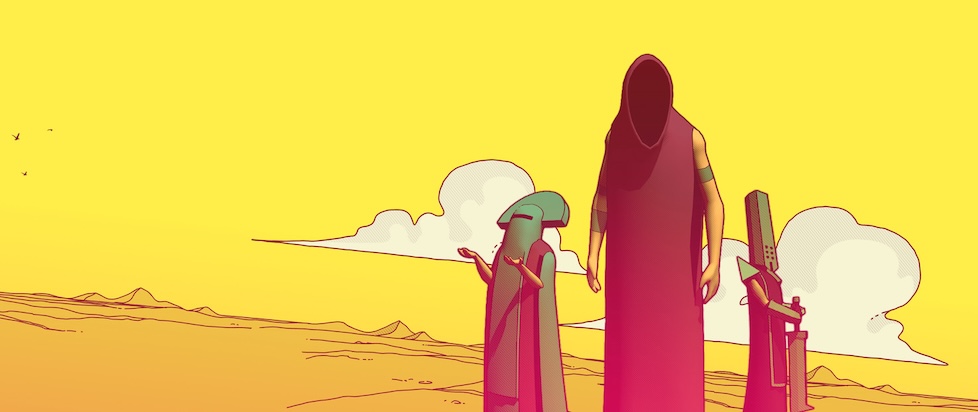
The list could go on: The Cosmic Wheel Sisterhood asks what reality might look like if you could shape it, Mutazione is a fantasy about the power to heal your loved ones with gardening, Sable explores a strange planet to simulate self-actualization, Coral Island dreams of pursuing your own interests in a community of hotties. These power fantasies are not replacements for real experiences, but in those moments where you feel trapped, isolated, or overwhelmed by the real world, they can bring a little comfort. Maslow’s Power Fantasy can’t make the real world any kinder, but it can give you a taste of it, however illusory.
———
Chris Revelle is an educator and freelance writer based in Boston, MA. You can hear him screech about movies on the podcast Why Did We Watch This and see his TV takes over on Pajiba.