Hamnet
You feel compelled to support great writing…

This column is a reprint from Unwinnable Monthly #197. If you like what you see, grab the magazine for less than ten dollars, or subscribe and get all future magazines for half price.
———
Elsewhere, here.
———
When one begins to read Hamnet, the 2020 novel by Maggie O’Farrell, it is probable that you begin knowing that Hamnet is going to die. If not, book opens with a historical note telling you as much. There is no trick here, no twist of plot. The boy will die.
His mother, Agnes, should know this as well as we do. She is gifted with some kind of prophecy and the death of one of her children is the only way to reconcile her vision (two children at her deathbed) with her current reality (three children). Still, she pushes off that vision because once the children are there it is evil to peacefully comply with a fate that wants to murder your child. And yet, this is no different than what anyone who has a child must do. “She fears her foresight; she does,” the book notes after her twins are born, but then it adds: “She now knows that it’s possible, more than possible, that one of her children will die, because children do, all the time.” She does not need prophecy to know this, everyone knows this, and it’s not only children who die all the time, it is anyone you might love.
Entering into any kind of relationship that you don’t intend to break is accepting death as a third. Barring the rare horrific tragedy, one of you will watch the other die. There are better and worse versions of this, but nothing had ever made me feel so mortal as loving someone. As a girl Agnes watches her mother die in childbirth, a loss that does not seem lesser than Hamnet’s for the fact that she is the child in this configuration. Did her mother see her death, and imagine what it might do to her child? Could she have avoided it, or did she push that knowledge aside for the hope of a third baby like we all must push aside certain truths in order to be brave enough to have more babies?
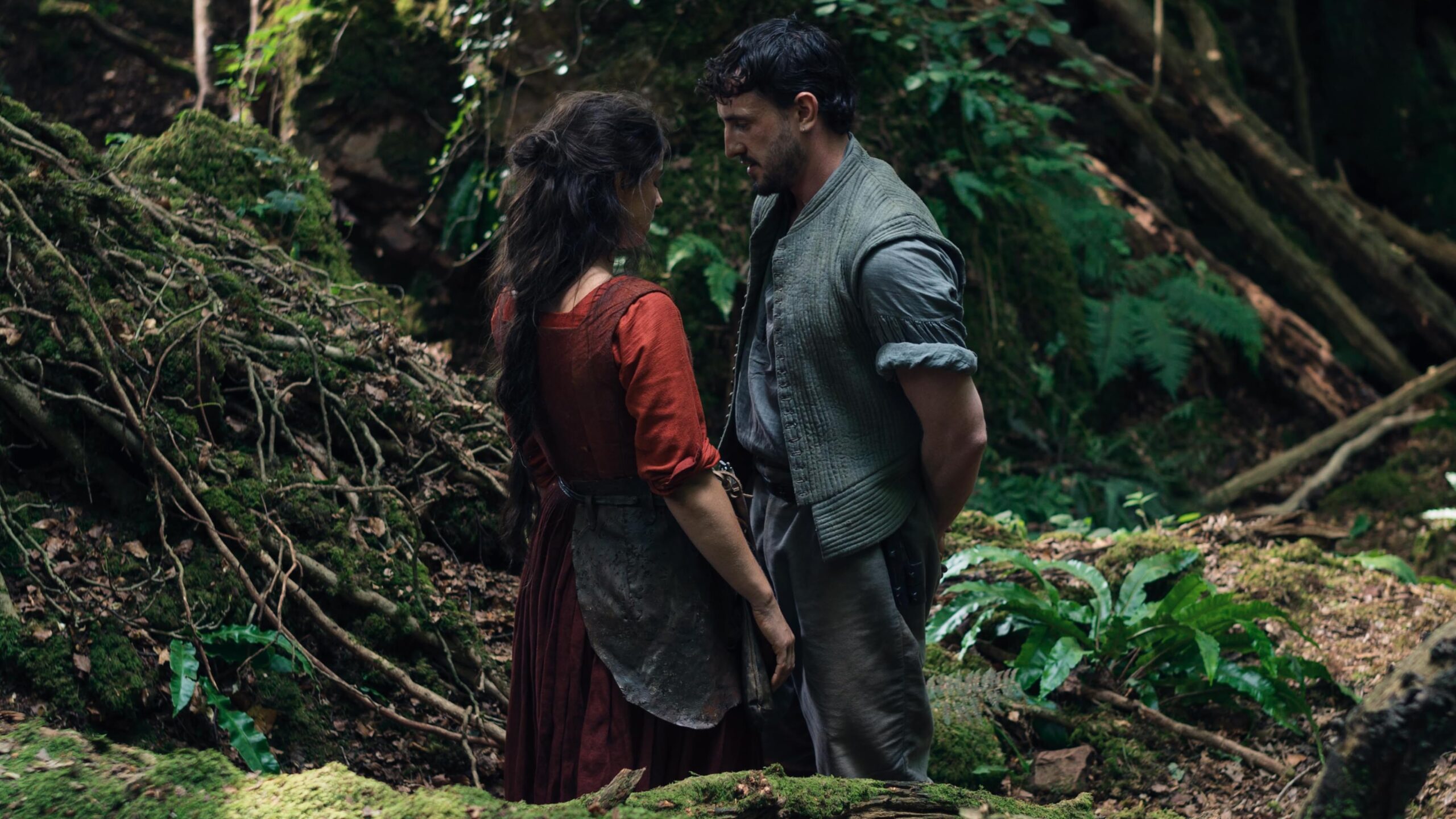
When I watched Hamnet, the 2025 film from Chloé Zhao, I did not feel any of this. The film felt like a movie “about grief” in the increasingly uninteresting way that many projects have been “about grief” recently: visceral but not particularly edifying. I was not left cold by the movie, far from it, that little boy looks too much like my own for any reasonable attempt at distance, but I didn’t feel my perspective altered and neither did I feel it sympathized with. It felt familiar, like a primetime weepy where you know the beats the story will take but they work on you anyway and are – to some extent – the reason you are watching. Grief is annihilating. Art is redeeming, as we learn in the dragging final sequence at a performance of Hamlet. All good and true, all known.
The novel has more surprise to it, and much of that comes from the way that the supernatural is not limited to one wild woman but is instead a truth of how this world is. In both versions, Hamnet dies when he forces his very ill twin sister Judith to trade places with him, tricking death in the way that they trade places in life to trick their parents. In the movie this scene is preceded with another that tells us that their swaps are not as effective as they believe, that they fool no one and are indulged by a loving family. Hamnet does not trick death, he is just a sick boy trying to be brave as he senses that he is dying. In the book the swap feels more literal; magical, and shocking. Its reality is confirmed by Judith, who knows what he is doing before he tells her. He does not do it because, as is implied by the movie, his father tells him to be brave, but because, as his mother saw, one of them must die, and he doesn’t want to live without her.
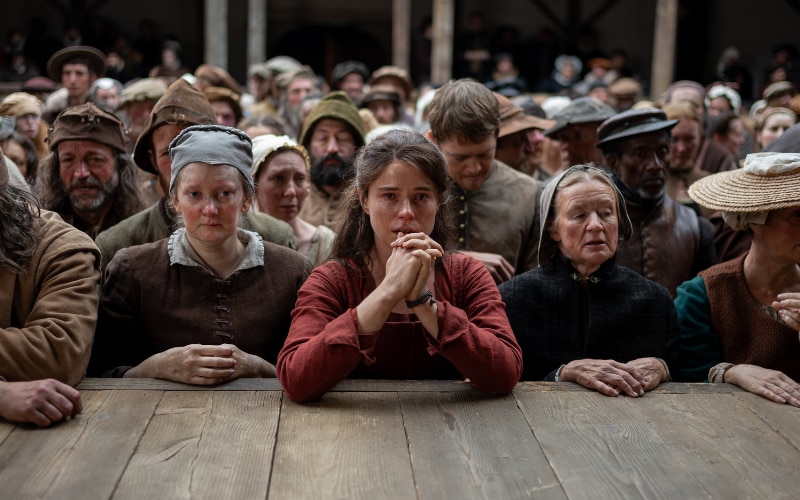
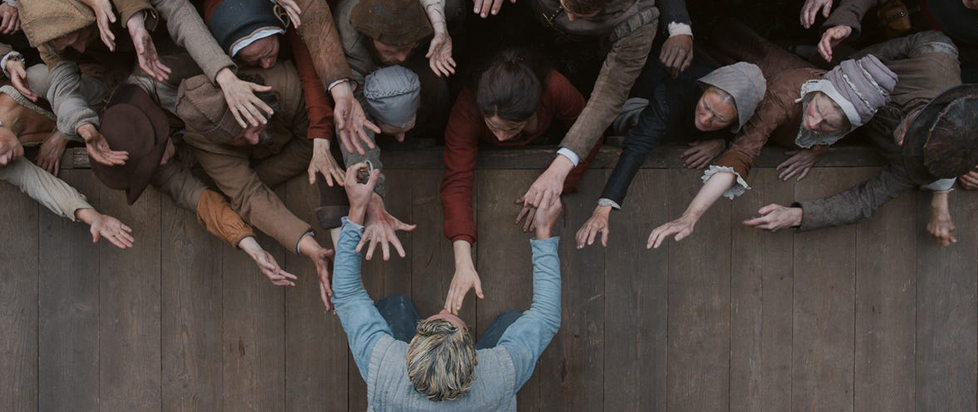
There is another switch at the end of the story – book and film both – when the child Hamnet is replaced by the character Hamlet, and Hamnet’s father becomes Hamlet’s, and a ghost. The film ends with the boy, now a prince. He gives “to be or not to be” and Agnes reaches out an arm to him, and the rest of the audience follows. It’s lovely and powerful staging, and a beautiful way to show how an audience communes with live theater, but it was so out of sync with that particular moment of the play which is about death but not really about dying that it felt less like an honest expression and more of a forced articulation of ART. Like a moment they wanted to happen but realized too late wasn’t really supported by this text within the text, or at least by this character. Okay, I thought. Okay.
In the novel, Hamnet is still replaced by Hamlet, uncanny enough to stun his mother, but the story does not end with him, but with the father-ghost. “He has taken his son’s death and made it his own; he has put himself in death’s clutches, resurrecting the boy in his place. ‘O horrible! O horrible! Most horrible!’ murmurs her husband’s ghoulish voice, recalling the agony of his death.” Hamlet is Hamnet as he was alive, but the ghost is Hamnet as he died. It is as if his father must die also for a little while, to remind his wife who sees everything that he sees too, he hurts too, that he also entered into this contract of love and life with her already knowing that it might topple into death and no one ever knows in which direction. As good as his trick is, it is not as good as Hamnet’s and the boy cannot be resurrected. It is the ghost, then, that she reaches towards who is love and death together: “who has her husband’s hands, her husband’s beard, who speaks in her husband’s voice.”
———
Natasha Ochshorn is a PhD Candidate in English at CUNY, writing on fantasy texts and environmental grief. She’s lived in Brooklyn her whole life and makes music as Bunny Petite. Follow her on Instagram and Bluesky.