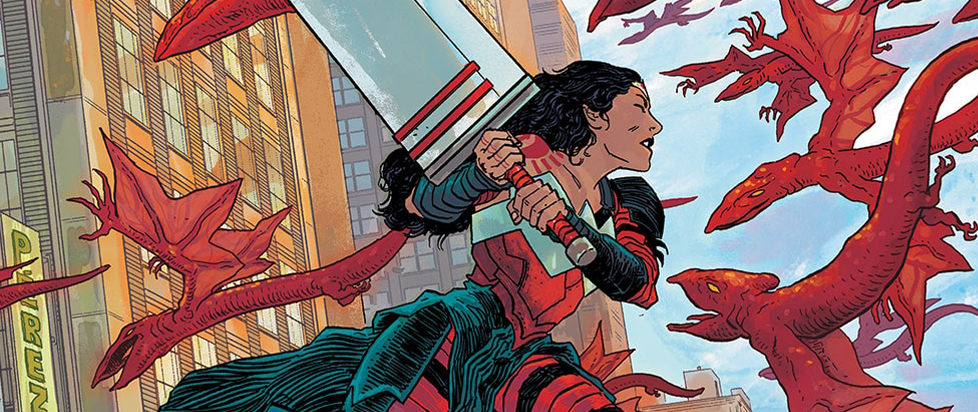
Absolute Wonder Woman Embraces Its Wild Religious Heritage Beautifully
You feel compelled to support great writing…

This column is a reprint from Unwinnable Monthly #197. If you like what you see, grab the magazine for less than ten dollars, or subscribe and get all future magazines for half price.
———
Finding digital grace.
———
Plot twist – we’re trading comic book inspired visuals for an actual comic book this month. Specifically, Absolute Wonder Woman Volume One – The Last Amazon, and its incredibly persistent dedication to its spiritual themes. We’ll get back to games next month, but for today, it’s time to turn the page to DC’s latest Elseworld universe.
Now it’s not really news to say Absolute Wonder Woman has taken the comics sphere by storm. It’s been a landmark success for DC, helping usher in a whole expanding Absolute universe of experimental titles. Its first volume, The Last Amazon is, in my humble opinion, one of the most impressive opening acts for a reinvented heroine. I’ve not been this impressed since the launch of Kamala Khan as the new Ms. Marvel.
Much like Ms. Marvel, Absolute Wonder Woman is a comic that dares to think much harder and fully about its subject matter. You see, Wonder Woman is a tricky character to just pick up and run with. Diana was originally the creation of a teacher and his two spouses to convey some really radical ideas for their day. The result was equal parts scandalous rebellion and morality play draped in Greek myth. Which is to say, things got weird.
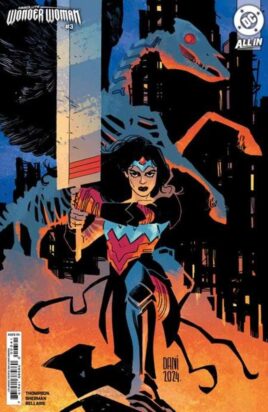
Over the years, DC’s various creators have struggled to recapture that energy. As Brian Azzarello, one of the many writers to reinterpret the character, put it in an interview with USA Today: “These myths have to be really, really quickly relatable to people. And I don’t think that Wonder Woman is one, not like Batman or Superman. Those origins, people know them and they understand them right away, and it gets to the core of that character.” This is beautifully ironic, because Absolute Wonder Woman’s Kelly Thompson runs completely in the opposite direction. She leans so hard into a high concept reinvention that gets spiritual and otherworldly in fantastic ways.
Bolstered with art by Hayden Sherman and Mattia De Lulis, colors by Jordie Bellaire, and lettering by Becca Carey, The Last Amazon boldly insists upon getting weird with it. By not running from Diana’s strangest facets, their efforts rebirthed DC’s maid of might into a princess straight from Hades. All the while, Thompson writes Diana’s relation to divinity not like the MCU approach of waving gods off as aliens with a similar appearance, but instead, a faithful young woman who thanks her gods for every breath she takes. That they’ve had such a resonant response from readers while doing so is incredible.
A brief bit of context – the Absolute universe is one where Darkseid, the biggest evil that there is, gets to contort things in his favor. Bruce Wayne is a 20-something construction worker living with his mother while Joker reigns supreme from a mansion overlooking Gotham as twisted CEO. The Green Lanterns are caught up in existential cosmic horror. Oliver Queen is dead before the Green Arrow miniseries even begins. Everything has gone wrong. Yet unlike everyone else, Diana is remarkably immovable.
As an infant, Diana is deposited in Hades by Apollo, left to be raised by Circe, who typically is one of Diana’s rogues gallery. It’d be like if Bruce was raised by Poison Ivy. Obviously, Circe doesn’t want to be a mother, prepares to let a demonic serpent poison the infant, only for a wee babe Diana to casually be amused by, then yeet (that’s literally the sound effect used) the beast away. This impresses Circe enough to see where this might go, unwittingly learning how to soften her heart by raising her daughter. With time, Diana starts befriending the strange creatures of the underworld, warming them to a happier way of life, much like Circe.
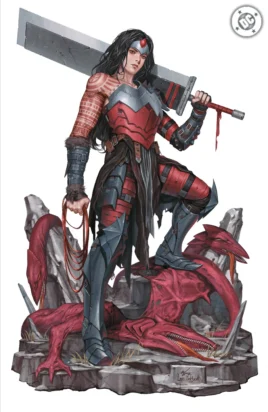
The mother and daughter build a life together, transforming Circe’s miserable rock into a real haven. And since Circe is well-versed in magic, she trains Diana just as thoroughly. It’s not Diana’s Amazonian strength that defines her like in the mainline comics. If anything, it’s the most superficial part of her. It’s her heart and soul that you identify with. Her every step is an attempt to embody an aspirational level of competence, empathy and grace. She gladly sacrifices one of her arms to save Steve Trevor’s soul from Hades, earning herself a magical, mechanical one forged by Hephaestus, which requires a ritual to be restored if dispelled.
This is a Diana who understands how hard won everything she has truly is. She doesn’t take anything for granted, whether it’s her undead steed Pegasus, the kindness of a stranger or victory in the face of impossible odds. Which is what brings us full circle to why I knew I needed to write about Absolute Wonder Woman – Diana prays. She prays often, and when I say she prays, I don’t mean like in a cliche Hollywood way. She doesn’t just shout “By Hera!” every now and then to remind you that she’s got mythological ties. This is a person of faith on a level rarely seen.
Diana fully rolls with the intricacies of her origins, navigating the complex web of intrigue and drama sewn by the Greek gods. She prays to and interacts with gods relevant to her situation. She gives thanks in more than just a few vague words. She treats even towering mythological enemies like the ancient Hydra with respect.
And unlike the gods she worships, she shows hesitance. Deference. When confronting Harbinger Prime on the beaches of Gateway City, her first directive is to offer a chance for Harbinger Prime to walk away. In the end, when she has the beast on the ropes, she does so again, and lets it flee. When what comes next is inclined to destruction, she is unrelenting in her drive to protect Gateway City by any means.
She’s living in such a heightened reality, yet in the same breath, she’s intensely relatable. When Circe grants her a whip that she can use to transform herself, she’s conflicted over its power. She ends up praying to Hecate about it, with the pair discussing the matter at length. They simultaneously delve into ethics, conflicting points of view between a child and her mother, and the realities of being a caring person in an often cruel, uncaring world.
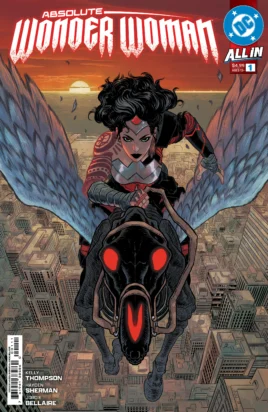
Yet she’s not heedless in her worship. Like any real person, her beliefs are challenged, and there are aspects of her divinity’s past (and present) that she frowns upon. She calls out the injustices inflicted on Medusa, using it as a lesson from Athena’s lack of humility and wisdom. It guides Diana when wielding her own immense power. Upon meeting Prometheus, she grants him a reprieve, defying Zeus’ decrees against the man. When Hades tries to fool her into sacrificing ever seeing Circe or being forever trapped in his domain, she works together with Persephone to con him into letting her return one month a year. She actively thinks for herself, no doubt spurred on by her adoptive mother’s skepticism.
It’s fantastic to see Wonder Woman be written in such an inspiring way. Her presence and methodology are the core pillars of everything from the tone to the way every challenge is surmounted. A particularly low-action but great moment arises when a general is screaming in Diana’s face. Instead of knocking him out or walking away, she talks to him like an upset child. She gives him a calm verbal dressing down, then remains level-headed and redirects him to the real problems at hand. Then she proceeds to go back to the actual task needing sorting.
Diana is patient and precise with mortals who panic at her actions, while her hope unites everyone else together. They’re each wildly different people, yet whether it’s the Candy sisters with their herbalist shop, Steve Trevor coordinating Diana’s efforts alongside the national guard, or just everyday people scared out of their minds… there’s a gentle yet potent empathy. The longer everyone’s around Diana, the more they act like her too, in their own ways.
Diana’s unearthly yet inspiring nature is emphasized all the more by how she’s literally drawn, in particular by Hayden Sherman. Sherman’s take has a distinctive rendering that, while stylistically consistent with everyone else around her, pops all the more vibrantly. She looks like she’s more than anyone else. She’s like a beacon, towering over all, yet kind and soft beneath it all. To have her be so significant, only to then humble herself time and again? That’s what brings it all home.
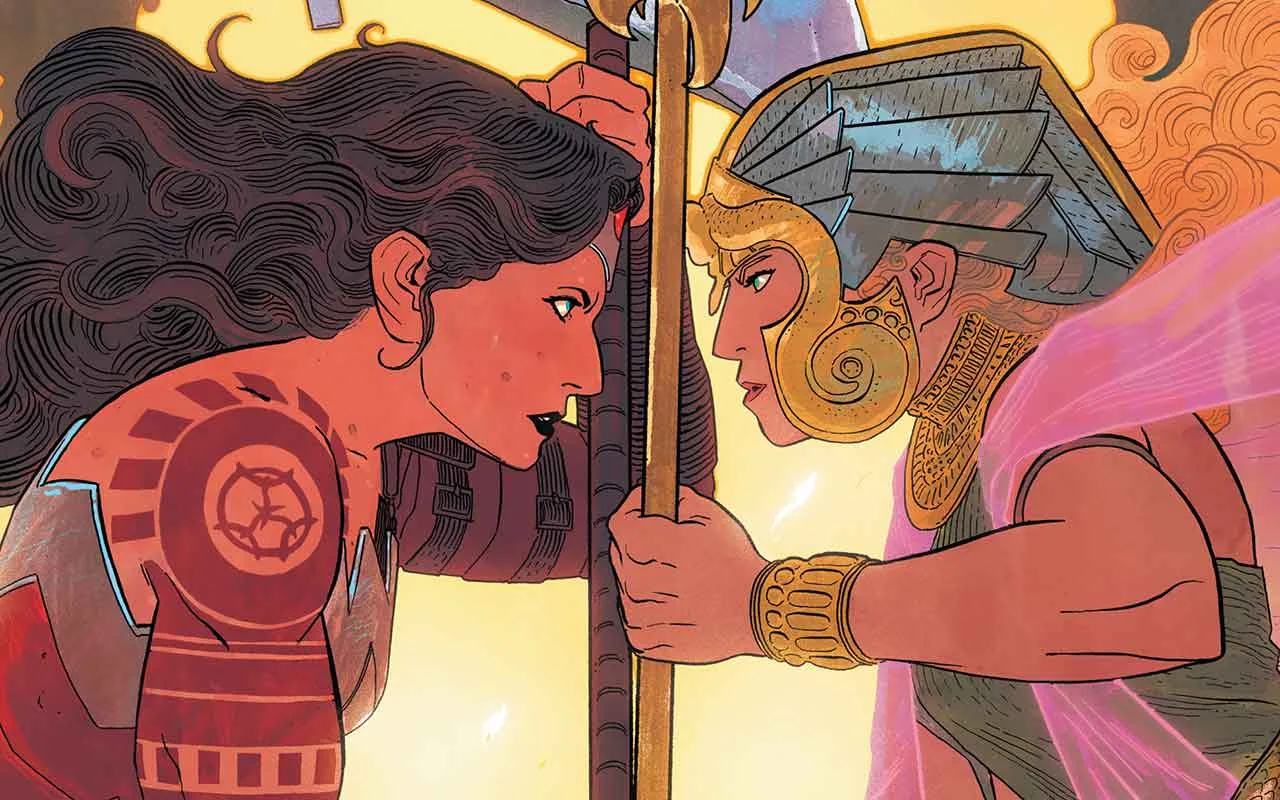
Often, when it comes to religion and prayer in fiction, it’s something a character only does on Sunday, or when they’re at their absolute (no pun intended) lowest. Except that’s not really how I or most other religious folks I know go about prayer. We do it throughout our day, sometimes during times of despair, others during joy, and sometimes even simply wishing well for those we care about. There’s been many jokes made about passive aggressive “I’ll be praying for you”, but there’s another side to that coin – when people ask what they can pray for you. I’ve had friends reach out both for me to pray for them, and for them to pray on my behalf.
That’s what makes The Last Amazon’s depiction so impactful. It doesn’t try to wiggle its way out of the parts of religion that some readers simply won’t understand. It would’ve been exceptionally easy to just not bother with these aspects at all. Yet by embracing them, it’s vastly stronger for it.
All of this is wrapped up neatly in some of the most expressive, creative paneling possible. The script uses thought bubbles – in this case, framed like little pages – sparingly, to great effect. The lettering is just as wonderfully creative, conveying tone and voice so clearly, it’s like you can hear the characters speaking aloud without imagining it. There’s so much done right, and given what all is being juggled here, that’s incredible.
I don’t pretend to know how the entire series will play out. I’m sure the team behind it are simply relieved and overjoyed at the success. Wonder Woman’s been long overdue a win like this. I hope DC’s editorial team are paying attention, recognizing the gem that’s fallen into their lap. It’s a wonder worth nurturing. I look forward to reading further, and hope the team’s ambitions only grow with time.
———
Elijah Beahm is an author for Lost in Cult that Unwinnable graciously lets ramble about progressive religion and obscure media. When not consulting on indie games, he can be found on Bluesky and YouTube. He is still waiting for Dead Space 4.