Princess Academy
You feel compelled to support great writing…

This column is a reprint from Unwinnable Monthly #196. If you like what you see, grab the magazine for less than ten dollars, or subscribe and get all future magazines for half price.
———
Elsewhere, here.
———
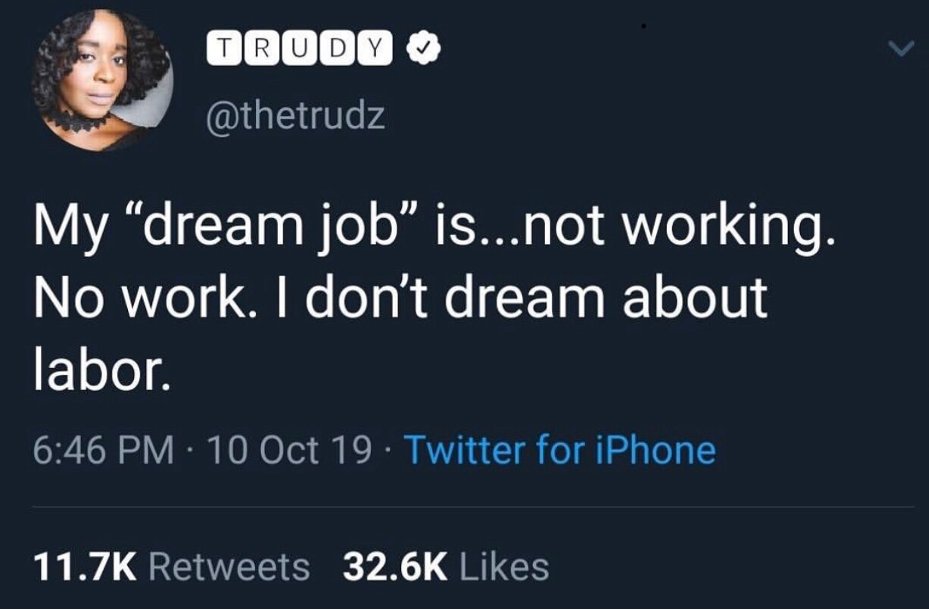
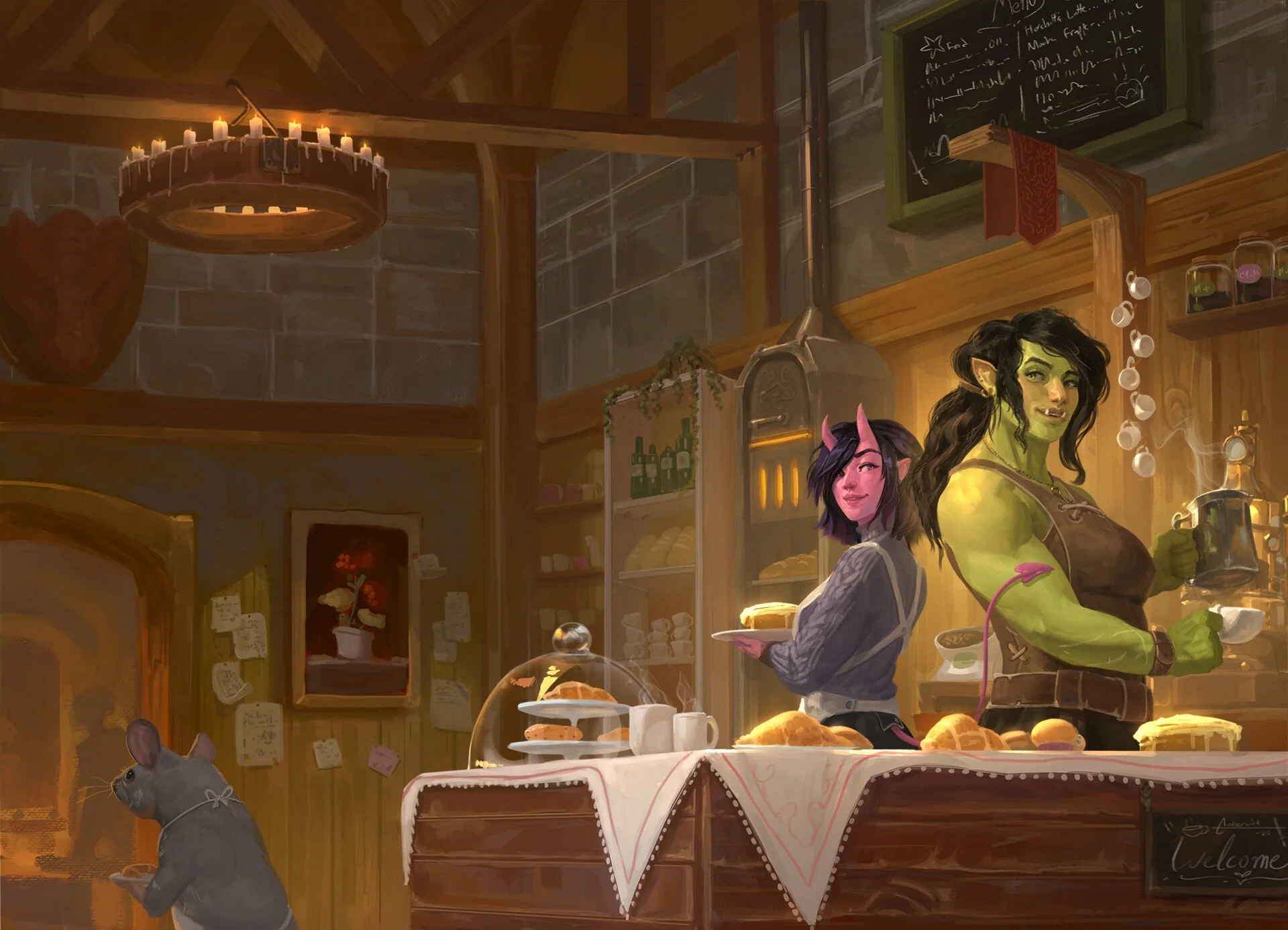
I don’t want to get into Legends and Lattes too much because others have already done it pretty well, but suffice it to say I found it to be the shop local of novels. Not to be the “I don’t dream about labor” tweet, but the idealized retail space is never going to be that moving to me; I am not a pre-teen watching Empire Records (High Fidelity on the other hand…). I like locality, it’s important to me, but the more friends you have working in the small local businesses of your area the harder it is to take seriously as a politic. My issue with Amazon isn’t that it’s vibeless (although it is), it’s that it is an environmentally disastrous business model that sells you scam items by exploiting precarious workers. I do not care if a business is small if there are no worker protections. I do not care if a business is local if they use a pandemic as coverage to lay off unionizing employees. Local can mean years of institutional knowledge and community, but at least where I live in Brooklyn, it frequently means former financiers chasing a feeling at the expense of the workers they don’t know how to manage.
Like shop local, novels like Legends and Lattes are cruising on empty vibes that recall community as a false memory more than they create it. The mash up of the retail family fantasy with magical fantasy draws attention to all that could be happening and isn’t. Universes of impossibility and the main point of deviation is a magical friendship stone? My pop always griped re: Star Wars that he wasn’t interested in a fantasy world that still functioned under capitalism, and, lol, but there is a point where if you have nothing to say about work, and no real magic to present, what’s the point of writing a fantasy novel about going to work?
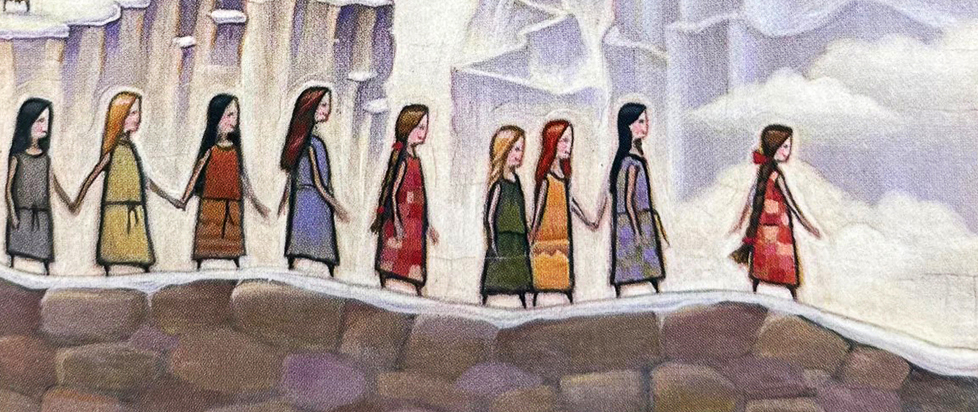
If Legends and Lattes is shop local then Princess Academy is the resurgence of union politics. It’s not a new book, but if we want a kindly and comforting labor fantasy it’s a sweet one. Princess Academy is a 2006 middle-grade novel by Shannon Hale about a group of girls from a small mountain town who are given the kind of education normally reserved for the upper-classes of their country, and although the title is no less embarrassing than Legends and Lattes it offers a vision of community that is ultimately as warm as any cozy fantasy while still daring to imagine pleasures outside of little treats and good vibes.
The magic in Princess Academy is minimal – as a school novel this is less Harry Potter than The Princess Diaries (another beloved Middle Grade series that takes on more depth and humor than its cover would suggest) – and it mostly takes place out of the academy itself in a small mountain village where nearly everyone works in a quarry mining luxury stone. They use “quarry-speech” to communicate telepathically when the work is too noisy to hear otherwise. This power is unique to the mountain people, and it comes from their close connection to each other and the stone they work. It is not an interjection into the world, not a McGuffin but an integration, a gentle fantastic speculation into the kinds of intimacy that locality might provide to a working community.
Trying to write about this I keep getting caught in the trap of left-culture criticism where I want to tell you that the book is good because its politics are good, and really, it’s a children’s novel and not even my favorite by Hale (The Goose Girl), but I have been struck by the way in which so much of the magic in recent popular fantasy fails to imagine anything beyond replicating consumerism, offering no opportunities for community outside of wage-slavery or monarchy. Legends and Lattes isn’t bad because its politics are bad, it is bad because it’s a fantasy novel without imagination, and Princess Academy isn’t good because it replaces the frigidity of rugged individualism with the warmth of collectivism, but because the mundane and fantastic parts of the book are thoughtfully constructed as a whole world to reflect on that movement, and not a pastiche in which any part could easily be replaced. It does what fantasy is supposed to do, which is to take us somewhere new that reminds us a little of home, while so many stories are just taking us to the places we already use to escape.
———
Natasha Ochshorn is a PhD Candidate in English at CUNY, writing on fantasy texts and environmental grief. She’s lived in Brooklyn her whole life and makes music as Bunny Petite. Follow her on Instagram and Bluesky.