Mountain of False Metaphor
You feel compelled to support great writing…

This column is a reprint from Unwinnable Monthly #196. If you like what you see, grab the magazine for less than ten dollars, or subscribe and get all future magazines for half price.
———
What does digital grass feel like?
———
This piece contains spoilers for Cairn.
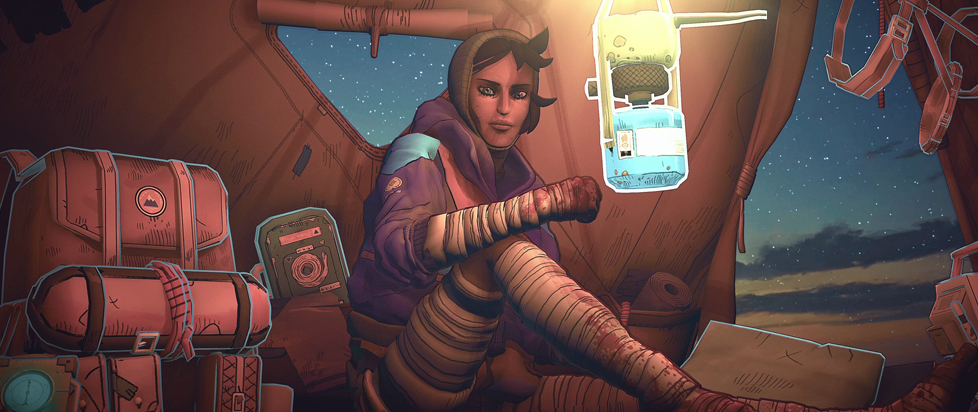
Throughout Cairn, climber Aava is pushed to express why she risks her life trying to summit the fictional, deadly, never-climbed Mount Kami. At one point she gives another climber an answer and he brushes her off: that was too rehearsed, he says. Later, he wakes her and she crawls from her tent to see the aurora. “See,” Aava says, genuine now. “This is exactly why.”
But the aurora are visible at extreme latitudes, not altitudes. Aava could have had the same view at sea level.
Alone, this may feel like a nitpick, but Cairn constantly uses imagery that doesn’t signify what it claims to. And so, Kami as a space ultimately fails to support the narrative that’s pasted over it.
Parallel to Aava’s story is the story of the people who used to live on the mountain. Called only “troglodytes” (literally “cave dwellers” but with an unfortunate association of ignorance and backwardness, at least in British English) these people are now absent, leaving behind only their abandoned caves and a few notes. (Another thing that could be a nitpick but ultimately builds to Cairn’s hollowness: It’s not clear how Aava, who says she knows nothing about the former residents, is reading these notes, which are demonstrably not in English.) No “troglodyte” is seen in-game, and it’s implied that the culture is extinct and completely unrecorded. But then Aava lights a signal fire and is answered; there are plenty of people living on other, nearby mountains that are at least similar enough to understand the custom and immediately return it.
Will Borger’s review at IGN, one of the few that even mentions this aspect of the game, says “civilization came for [the “troglodytes”], encroached on them, eventually forced them down… I am walking through the graveyard of a culture people like Aava helped kill.” I didn’t find enough notes to form this reading myself; the relegation of this subplot to optional lore hardly helps it land. But even if they deeply express what Borger summarizes, what is actually foregrounded is once again shallow.
The surface-level visual cues for the “troglodytes” pull from Himalayan cultures: colorful prayer flags and carved petroglyphs decorate their homes. An early newspaper headline about Aava’s ascent says there have been over 150 deaths on the mountain. (Actually, it confusingly says her climb, though still upcoming, is “bringing us to 159 reported deaths on the mountain,” as if she’s already died. The moment to moment writing in Cairn is simply not good.) This is almost half as many as on Everest in real life, and even if the percentage death toll is much higher, would suggest a widespread fervor for the ascent.
And yet Kami suffers none of the crowding issues of Everest or other popular mountains. Aava sees only one other climber. There are no queues, no helicopters dropping in tourists high on the slopes, no exploited local guides. There are, conveniently, no locals at all. Saying that they’ve already left, even if due to encroachment, only exculpates Aava – their presence is now harmless because there is nobody left to harm.
Although the narrative wants to explore Aava’s selfishness and does so via her ignoring calls from her girlfriend and agent, it actually carefully avoids suggesting there’s any inherent selfishness in being on Kami itself. Where Everest is called “the world’s highest garbage dump,” littered with empty oxygen bottles, battered gear, and human waste, Aava neatly recycles any empty food packages she creates or occasionally finds into chalk for easier climbing. What we are told is a damaging obsession is actually shown improving the mountain.
Meanwhile, her interpersonal selfishness is in and of itself an odd way to demonstrate said obsession. Cairn claims its central question is why climb the mountain, but the question it actually raises is why Aava would reject so much help being offered to her to achieve her goal. I’m currently following Jost Kobusch, a climber training to summit Everest alone in winter, something that’s never been done. While his ascent might be a lonely one, nothing else about his life is: in every video there are people helping him out: physiotherapists, doctors, coaches, sponsorship partners, his family.
When people climb Everest or other Himalayan peaks, they are almost always massively supported by Sherpa guides, who carry the vast majority of the heavy equipment. Kami, of course, has no locals, so Aava conveniently doesn’t need that. Primarily, she doesn’t need it because she can live off cartons of milk stored in bear-proof caches and dandelions foraged off the slopes. Again, I’d be willing to wave this away as videogamey abstraction even though the game’s marketing pushes so hard that it’s “ultra-realistic,” were it not yet another undermining of Cairn’s attempts at telling the story of a treacherous, difficult ascent.
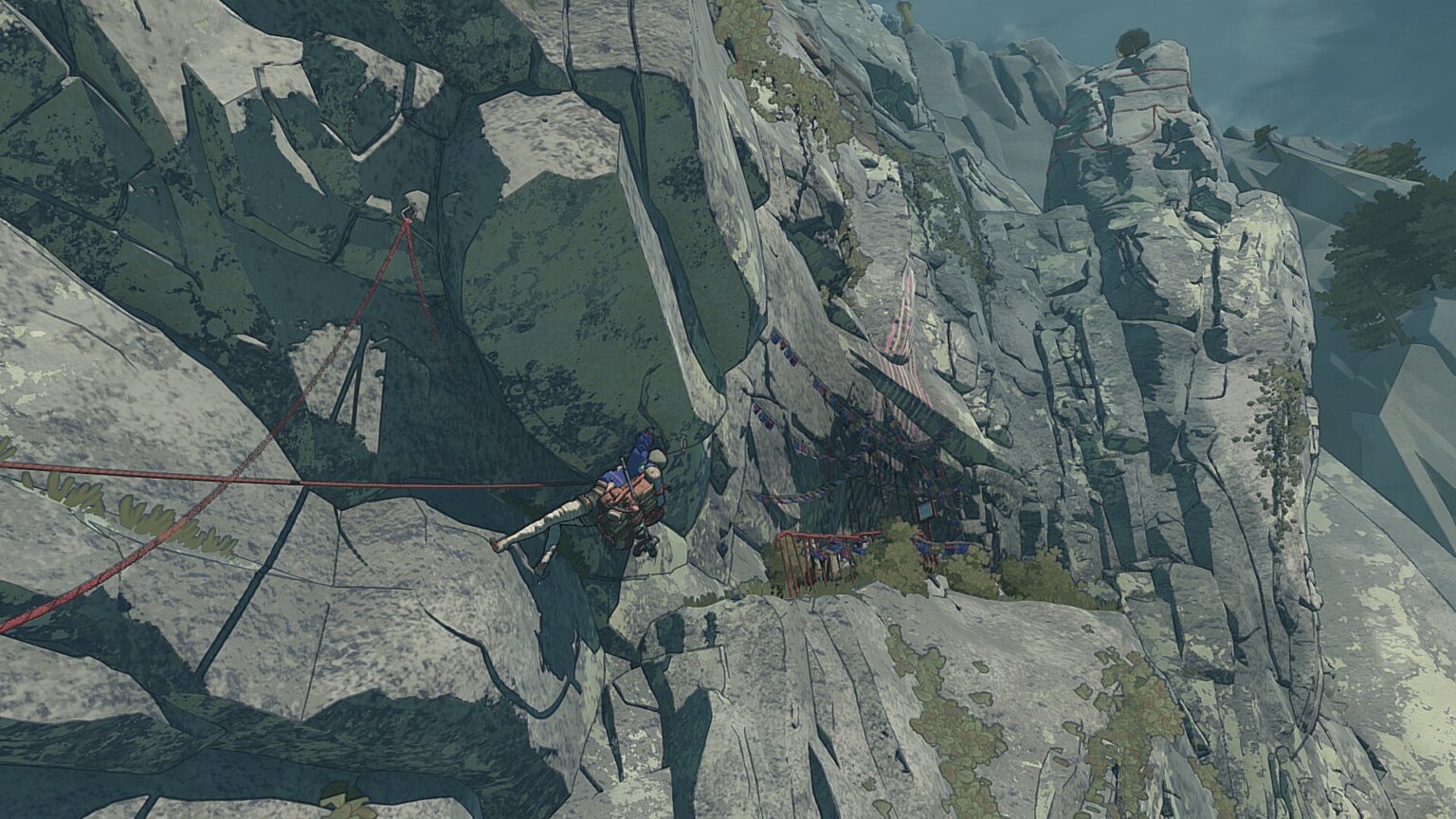
Another key role of local mountaineers is to be familiar with the routes up the mountain. Overcrowding on Everest is primarily seen on a bottleneck on the ridge called Hillary Step, where climbers must wait for the main safe route to be free to pass. Kami has no such need for guidance, and no such bottleneck; Aava can climb absolutely anywhere. We’re told that this is a measure of her skill, but the other climber on the mountain, Marco, who we are told is worse than she is, is shown having no trouble finding alternate routes.
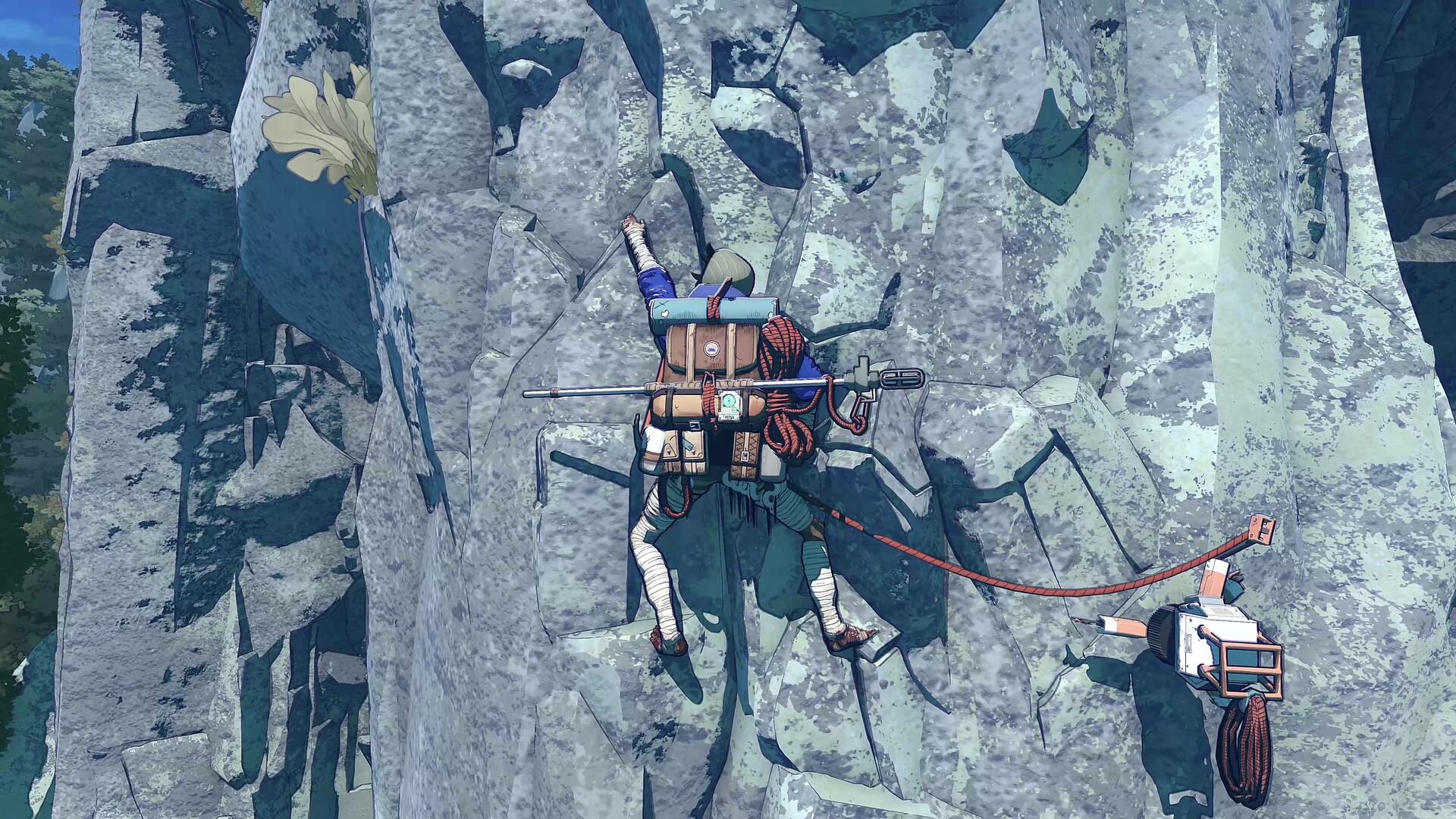
At the end of the day, summiting Kami really isn’t that difficult. Yes, placing individual limbs approximates real climbing in a somewhat interesting way, but not a realistic one. Often the best move is to contort Aava in a way that would break bones and snap tendons on a real person. Because any cliff face is carefully designed to be climbable, even if some are tricker than others, I am expending absolutely no effort in real life beyond choosing where my hand goes next. There’s none of the physical exertion, obviously, but there’s also very little mental work; I’m just playing pattern recognition with grabbable ledges and cracks. Yes, sometimes falling was frustrating, but that is not a mappable equivalent to potentially dying.
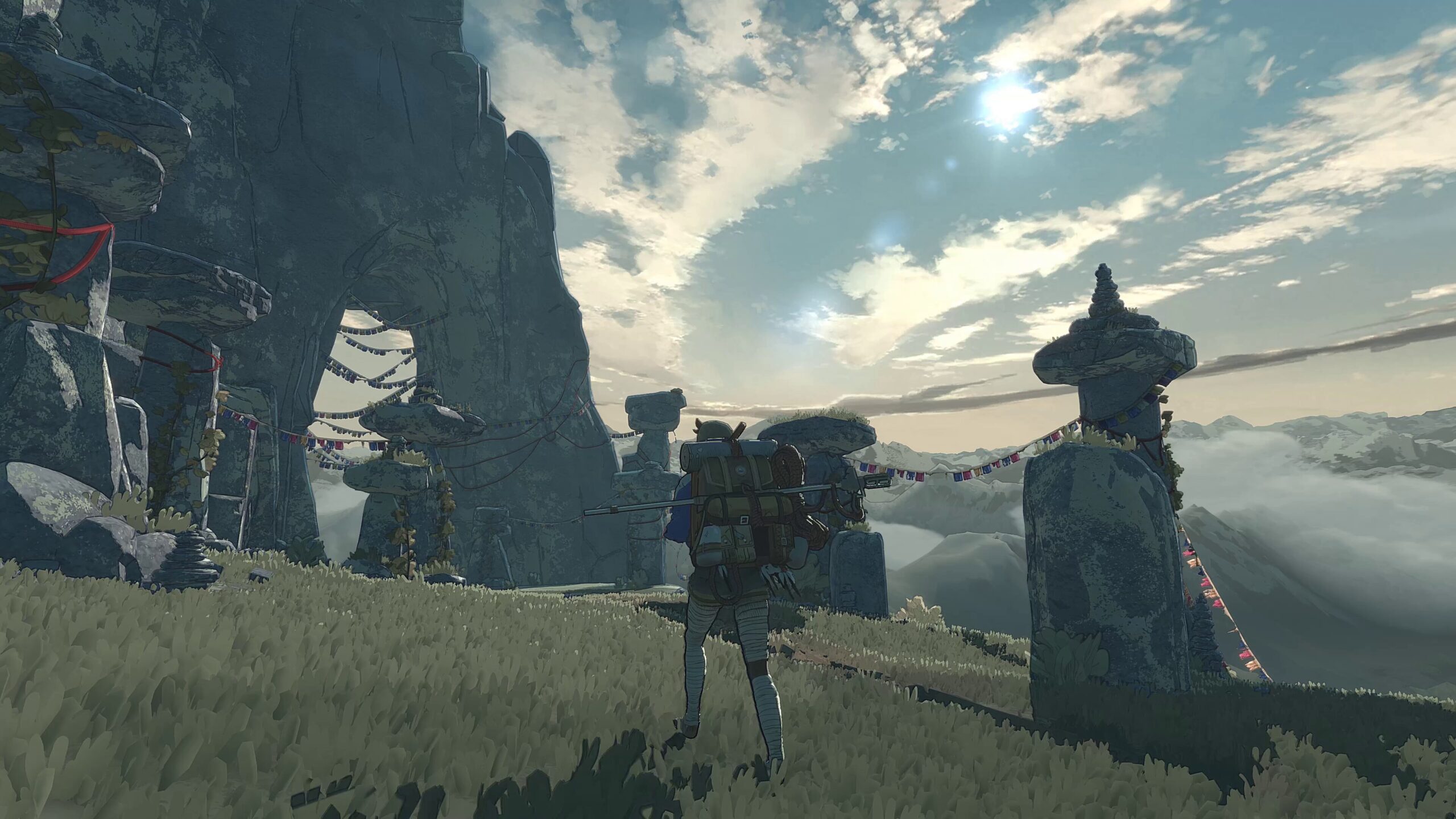
And, perhaps Cairn’s most fundamental problem of all: I’m simply not going very far. I beat Cairn in about 13 hours, and while I absolutely did not want to be playing for any longer, it meant Kami felt small and unremarkable. Nothing implied the weeks-long, exhausting challenge it was said to be. Much of that time was spent not actually climbing but exploring “troglodyte” ruins, resting in camp, or talking to other characters. In just a few dozen actual minutes, I was able to shimmy from a former tourist-trap on the lower slopes to an allegedly killer peak. Even the final ascent, which I was warned multiple times by in-game dialogue was impossible, didn’t really cause me any trouble at all. Much of it was just trudging in the snow, and the rest didn’t seem any harder than climbing the early cliffs down by the cable car. At times it was actually easier, because Aava can sink pickaxes and crampons into the ice which only exists in these higher reaches, while she has to pick her footing more carefully on solid stone.
Cairn asks why you would climb the mountain. And the answer is because it really isn’t a big deal. Because I’m given no reason to care about Aava’s relationships, because her impact on the mountain and its people is negligible or even positive, and because it was no sweat to me sitting at my computer holding a controller.
When Aava collapses to her knees and screams on the peak, I feel nothing because I’ve worked so little for it myself and because the game has done so little to back up its assertion that this was something complicated and worthy of obsession. When she climbs into the stars to “be part of the whole,” I think only that the whole was made of hollow gesture; in setting, in mechanic, and in narrative.
———
Jay Castello is a freelance writer covering games and internet culture. If they’re not down a research rabbit hole you’ll probably find them taking bad photographs in the woods.