Illuminating the Unknown
This column is a reprint from Unwinnable Monthly #195. If you like what you see, grab the magazine for less than ten dollars, or subscribe and get all future magazines for half price.
———
Architecture and games.
———
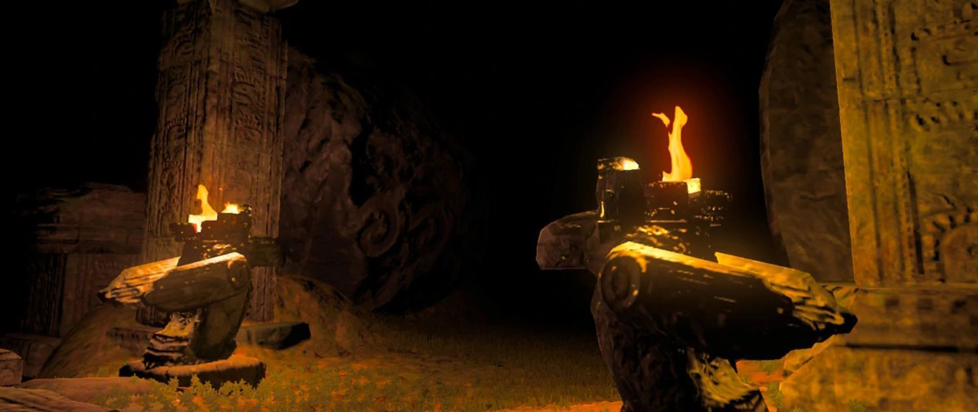
The often overlooked Thyphlo Ruins in The Legend of Zelda: Breath of the Wild are an exercise in frustration, at least at first blush. Surrounded by darkness and stripped of all comprehension, they resist the normal means of reading or understanding space. The structure stands in sharp contrast to the floating islands of the Zonai or the stone monuments of the Hylians which appear in Tears of the Kingdom, something which suspends your sense of perception regarding their place in the landscape.
The ruins aren’t just a place for you to explore. They’re one of the most interesting areas of the game world, when seen from an archaeological perspective. This isn’t because of what they communicate regarding that which definitely once was but on account of how many potential stories they can sustain at the same time, similar to the majority of sites in the real world.
The ambiguity in this case would be less a failure than a success of the overall game design. The ruins hold no clear narrative to be understood, but similar to many archaeological sites, the tale to be told is fragmentary, indeterminate and especially open to interpretation. Their meaning depends entirely on the perceiver, and more particularly on the biases which they bring into the conversation, along with whatever assumptions they’re willing to make about the world around them.
When considered at the most literal level, the Thyphlo Ruins are a ceremonial complex in Breath of the Wild and its immediate successor, Tears of the Kingdom. The architecture definitely appears deliberate, monumental and spatially controlled, resembling the Hylian as opposed to the Zonai style, given the many structures like Hyrule Castle. The arrangement of its passages, corridors and of course the structures themselves would suggest a form of processional movement, as opposed to ordinary habitation.
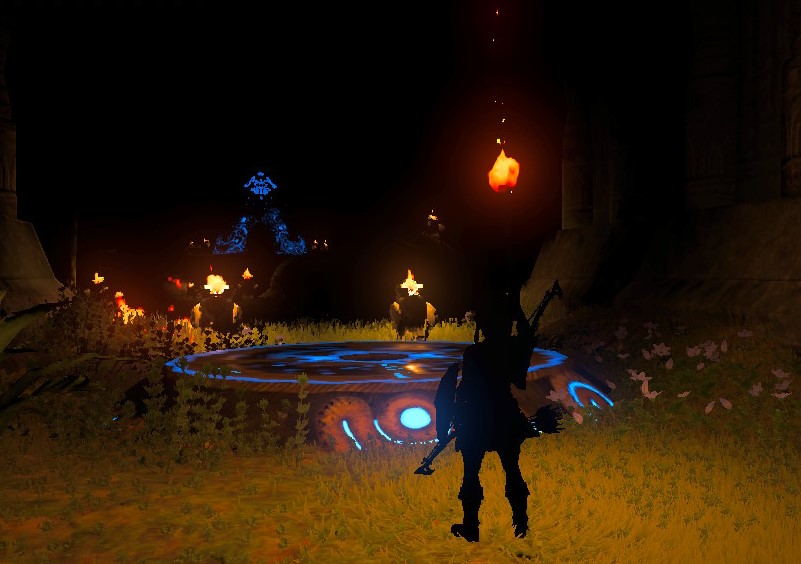
There’s no domestic clutter to be found, regardless of whether we’re talking about furniture, kitchenware or workshop materials. There is, however, a sense of austere, serene and relatively charged space. The darkness in Breath of the Wild is a material component of the structure, shaping how you move through the space, quietly redirecting your attention. This alone tends to suggest a ritual reading. The fact that darkness has never been quite neutral would invite an association with initiation, concealment, death and restricted knowledge. This particular aspect of the ruins could only have been curated.
When considered from perhaps the most apparent perspective, the structures could be seen as representing a sacred landscape designed to regulate access to power. The gradual restoration of light and life throughout both games could be seen as reflecting a familiar fantasy, in other words knowledge dispelling darkness or interpretation inviting illumination. The space then becomes a metaphor about epistemology, resisting clear understanding until the right skills, tools or whatever else have been acquired.
The other sensible interpretation would point to the ruins not as a temple but as an exclusionary space. This would be a place that was never meant to be understood, at least by outsiders. The difficulty of navigation, the lack of clear meaning and the presence of disorienting darkness could potentially indicate a deliberately closed system. The ruins don’t invite interpretation. The structure in fact frustrates them. Whether designed for the purposes of strange rituals or hidden practices, the overall opacity is apparently there on purpose.
This tension of course lies at the heart of archaeology. The material record only metaphorically speaks for itself, being given voice by a specific social circle bounded by clear qualifications. When this context however collapses, anyone can reconstruct meaning from the available evidence. The danger is on the other hand projection, mistaking our access for entitlement and our interpretation for truth.
Tears of the Kingdom subtly invokes this type of discomfort. The means of overcoming the darkness relies less on rediscovering rituals than imposing interventions through technology. The devices in question flood the site with artificial light, reconfiguring the space into something more legible. These technologies erase the conditions under which the space once functioned, making the ruins readable at the cost of turning them into something else. This would be archaeology as transformation, not preservation.
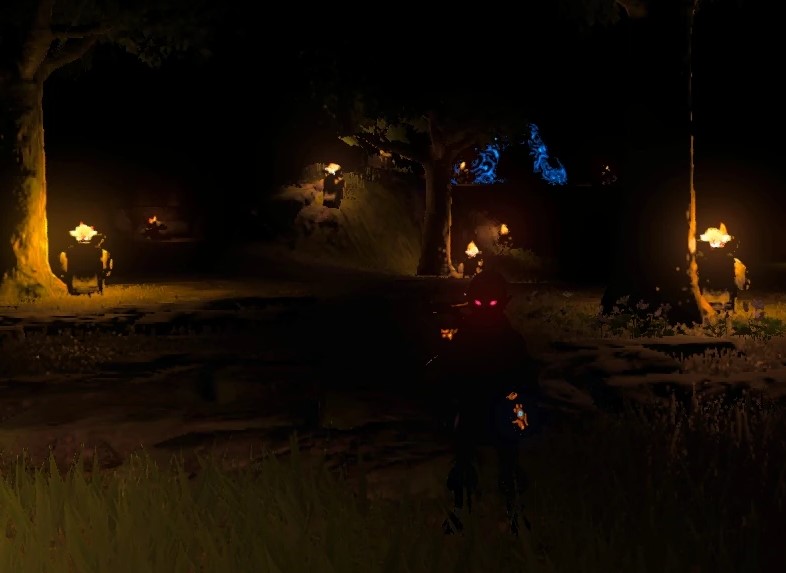
There’s a third reading which further complicates the space. This would be a reading in which the ruins are more about fear than reverence. The darkness could be understood as something sacred but also as something oppressive. The isolation of the site and the emphasis on disorientation could suggest coercion, representing a space where people were disciplined, punished or otherwise tested. Such practices were perhaps not about communion but submission. The architecture would in this case be more carceral than ceremonial. The platforms are no longer stages for performance but surveillance towers. The corridors are no longer processional routes but control points.
There’s rarely anything in the material record that could either confirm or deny these types of reading. The fact of the matter is that archaeology very much operates in the space of productive uncertainty. The same wall could be seen as having once been a sanctuary or a fortification, representing of course worship or defense. The meaning isn’t set in stone but negotiated through evidence and imagination.
What makes the ruins particularly effective would have to be how they foreground such instability. The games never provide a clear explanation for their function. There’s no lore tablet that neatly ties everything together. There’s no canonical interpretation. You’re left with nothing but your own understanding, based primarily on your point of access and your passage through the space.
When push comes to shove, you can only consider the Thyphlo Ruins to be a quiet provocation. They ask what we can expect from the past, and what we’re willing to accept when the past refuses our understanding. They remind us that material culture isn’t a static space but a field of constant negotiation between presence and absence, intention and accident, reverence and violation.
Breath of the Wild and Tears of the Kingdom don’t present archaeology as a triumphant recovery of lost truth from the past. The games reveal archaeology to be a dialogue with history. The ruins in all their darkness insist on such humility. They don’t offer certainty, but they do reward attention, which is truly the cornerstone of archaeology.
———
Justin Reeve is an archaeologist specializing in architecture, urbanism and spatial theory, but he can frequently be found writing about videogames, too.