Where is the Weird?
This column is a reprint from Unwinnable Monthly #195. If you like what you see, grab the magazine for less than ten dollars, or subscribe and get all future magazines for half price.
———
Analyzing the digital and analog feedback loop.
———
Some light spoilers for Telling Lies and a major spoiler or two for Her Story.
Alright. I’ve been overdue for this for about a year now, so here’s my state of play. By extension, this is a state of my column, because I’ve had some realizations that need to be properly aired out.
Since stepping back into the role of editor for a games criticism website after roughly a decade or more, I’ve had the chance again to focus on some more obscure games. Games that often fit that rhetoric of shorter and with “worse graphics” than the hyperrealism fixations of AAA. Games criticism is often concerned with the games that have captured the most attention and while I do my best to keep up at least somewhat with these titles, I don’t connect emotionally with them as much as I used to. There are exceptions, like Blue Prince, South of Midnight, Tales of Kenzera: Zau and Star Wars: Jedi Survivor, but I struggle to think of more memorable experiences I’ve had in the past couple of years even. Even Prince of Persia: The Lost Crown, which I have enjoyed in some nostalgic and mechanical regards, is often a little too much of a grindstone for my current tastes.
I miss game experiences feeling deliberately and explicitly weird. Part of why I often end up writing about older games isn’t because weird games don’t exist anymore. Working for The Imaginary Engine Review (hereafter TIER), I’m constantly sussing out and recommending weird games. What I mean is I miss AA and AAA being unabashedly bizarro in their design, whether they’re story-driven or not. And I don’t mean that games should always aim for a previous generation’s design philosophy, per se; I think it’s taking the wrong tack to be overly sentimental.
When I say weird, I don’t necessarily mean that the vibes and mechanics should be esoteric as hell. I mean weird in the same sense as the literary world views Weirdness or The Weird in not just fiction but in cultural construction as well. Part of why I keep using Eco- and recently Ethno- Gothic lenses for analyzing games is because it helps me figure out which games possess this elusive quality of experimental, stream-of-conscious Weirdness.
Play for me has always been fraught and Weird. Play often creates mirrored, alternate versions of worlds that exclude various aspects of my identity. Play is often paywalled, especially in AAA realms, and sometimes technically inaccessible as well. Even before we engage with play in digital worlds, we often first learn about who we are as a playful subject in games of speculation and socialization as kids. Who accepts you in a playful circle? Who doesn’t? What is considered valid play? What isn’t? What kind of play do you need to expand your mind and learn more about your physical limits? What kind of play helps you thrive, helps your close ones thrive too? You find ways to play as you grow up that keep you regulated throughout your various transformations into the adult you, through hobbies that are analog, digital, or sometimes both.
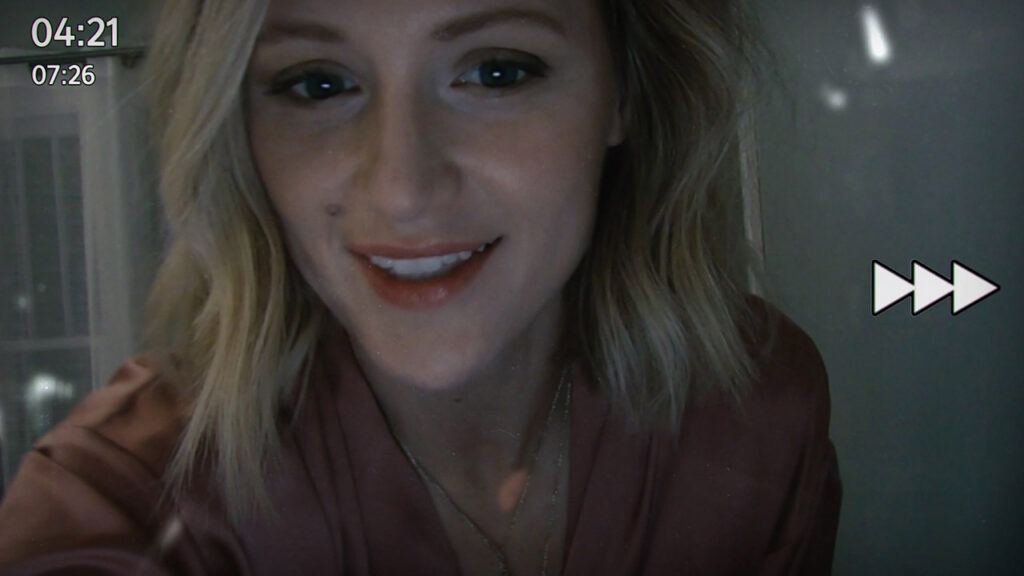
There are a couple moments that stick with me from Sam Barlow’s games that I think might help me clarify what I want to analyze more often, regarding Weird and subversive play. The first is from Telling Lies, when Emma, the nurse and single mother trying to detach herself from a cycle of abuse, plays with a dollhouse to explain to her latest partner David why she must leave him. She uses the various dolls to simplify her complex pain and trauma and while her tone is deeply remorseful, anxious and somewhat patronizing as well you get the feeling she’s retaliating after having been condescended to and cornered for a long time. Here she’s using a form of play to defamiliarize the abusive dynamics of her relationship so that David can understand how deeply he’s wounded her and how she struggles with the love and fear she feels for him. Depending on which clips you find first in your database searches in the game, the context for this scene can offer any number of interconnected revelations, but it can stand on its own. It’s a microcosm of the central themes of deception and (re)invention each of the major characters (save maybe Emma’s daughter) are involved with. Emma is telling a story from her perspective; we cannot hear any interjections David may be making (if he is making any; she seems fairly uninterrupted). You sense she’s hoping by telling it that there will be a forced conclusion to it that leaves her and her daughter safer.
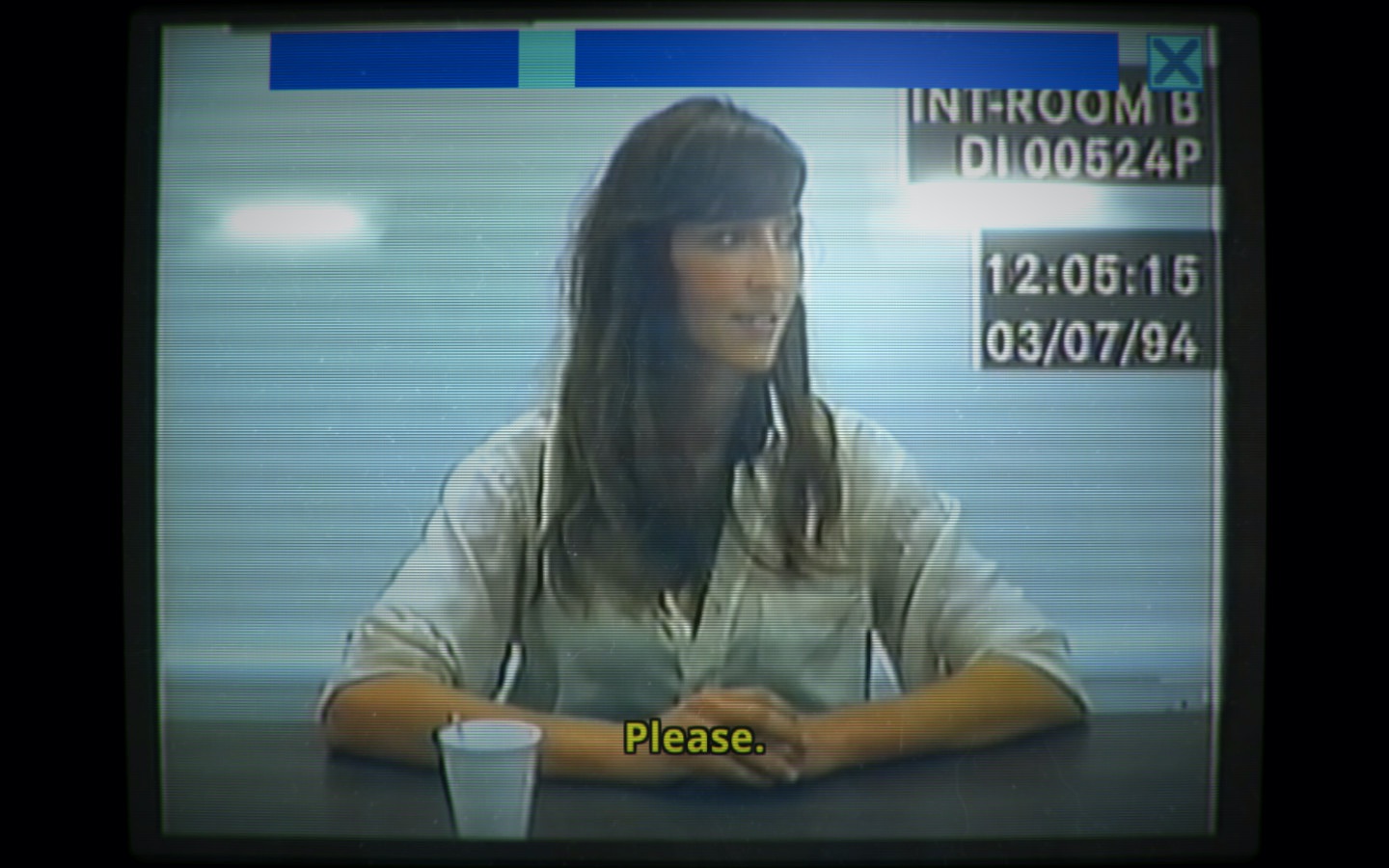
The protagonists of Her Story engage in similar defamiliarizing techniques during the interview clips where one of the twins explains how she views her existence with her sister like a fairy tale. This motif of fairy tales and the roles of prince and princess are intertwined with the story of Simon’s murder as well. Sort of a way to play up the moral grayness of the situation by tackling the events that led to the murder sideways. Of course, this fairy tale motif could be taken in a manipulative sense as well. A way for the twins to gain control of their narrative and absolve themselves of any guilt. There is abuse involved with Simon as well, but as the game is very open-ended, it’s left to the individual players to interpret the clips and the story they found.
In both of the above titles, I’m left feeling like the concept of play is bizarre and complex, and something that cannot be fully defined. A lot of the time when AAA games include thematic weirdness in their experiences, they still mostly confine play to satisfying or at least interesting mechanics. Control, for instance, lost me pretty early on for this reason – the game felt Weird in a detached sort of way. Perhaps I’ll revisit this one someday, but something about the deadpan tone of its opening levels repelled me, alongside the fairly standard action-adventure gameplay (excepting the Bureau of Control’s funky physics).
I’ll end this before I get too tangled up in trying to explain what I’m looking for. But I don’t think a lot of AAA games have it anymore. From past year’s tumultuous trends of mass layoffs, gen-AI adoption, and more it’s clear that big studios are only concerned with making projects that are risk-averse and only superficially innovative. Ironically, despite its whole industry being about play, there’s less and less playfulness in big studio design work.
Moving forward in 2026, I’ll be looking even less at AAA games than I have been, though I won’t be sticking my head in the sand about them. Some of my forthcoming pieces will probably be looking into untangling more about what missing links are keeping me from connecting emotionally with AAA games, or perhaps analyzing what game narrative mechanics have never really quite worked for me in them.
Thanks in advance for your patience as I puzzle things out.
———
Phoenix Simms is an Atlantic Canadian cryptid who is a freelance writer and the co-editor of The Imaginary Engine Review a.k.a. TIER. You can lure her out of hibernation during the winter with rare SFF novels, ergonomic stationery, or if all else fails, gourmet cupcakes. Or you can just geek out with her where skies are blue.