Grief and the Importance of Letting Go

This column is a reprint from Unwinnable Monthly #194. If you like what you see, grab the magazine for less than ten dollars, or subscribe and get all future magazines for half price.
———
Here’s the Thing is where Rob dumps his random thoughts and strong opinions on all manner of nerdy subjects – from videogames and movies to board games and toys.
———
So, so many pieces of media we cram into our brains on the regular embody the idea of a hero or heroes on a quest to save the world. Or themselves. Or both. But here’s the thing: While Hollywood and similar entities in other media formats tend to make this the objectively correct outcome, several games I’ve played recently (and not so recently) make a very strong case for… not… doing that. Let me explain, in the order I’ve experienced these particular titles.
Spoilers ahead, just in case that wasn’t clear.
Dark Souls has been analyzed to undeath and back so I’m not going to dwell on it too much, but if you’re familiar with it you probably know what I’m about to say. The entire point of that first game (the whole series, really) is to adventure through an unforgiving world that’s been dying/dead for a very, very long time. And upon reaching the end, to literally rekindle that world.
But when you really think about it, keeping the world going for another who knows how long is almost akin to torture. Everything sucks, everyone is miserable, the dead can’t die and eventually lose their minds – preventing the onset of “The Darkness” or nothingness or whatever is just drawing it out even more than it already has been. Isn’t it kinder – better, even – to finally let the cycle of perpetual agony end?
Then we have Clair Obscur: Expedition 33. A game with a somewhat complex buzz that surrounded it for months up to and after its release (ex: the “made by 30-ish people” myth, and it is a myth). Thematically, though, it centers largely on a desperate fight for survival – beyond simply living or dying – in a beautiful, surreal and incredibly dangerous environment. Then things get complicated.
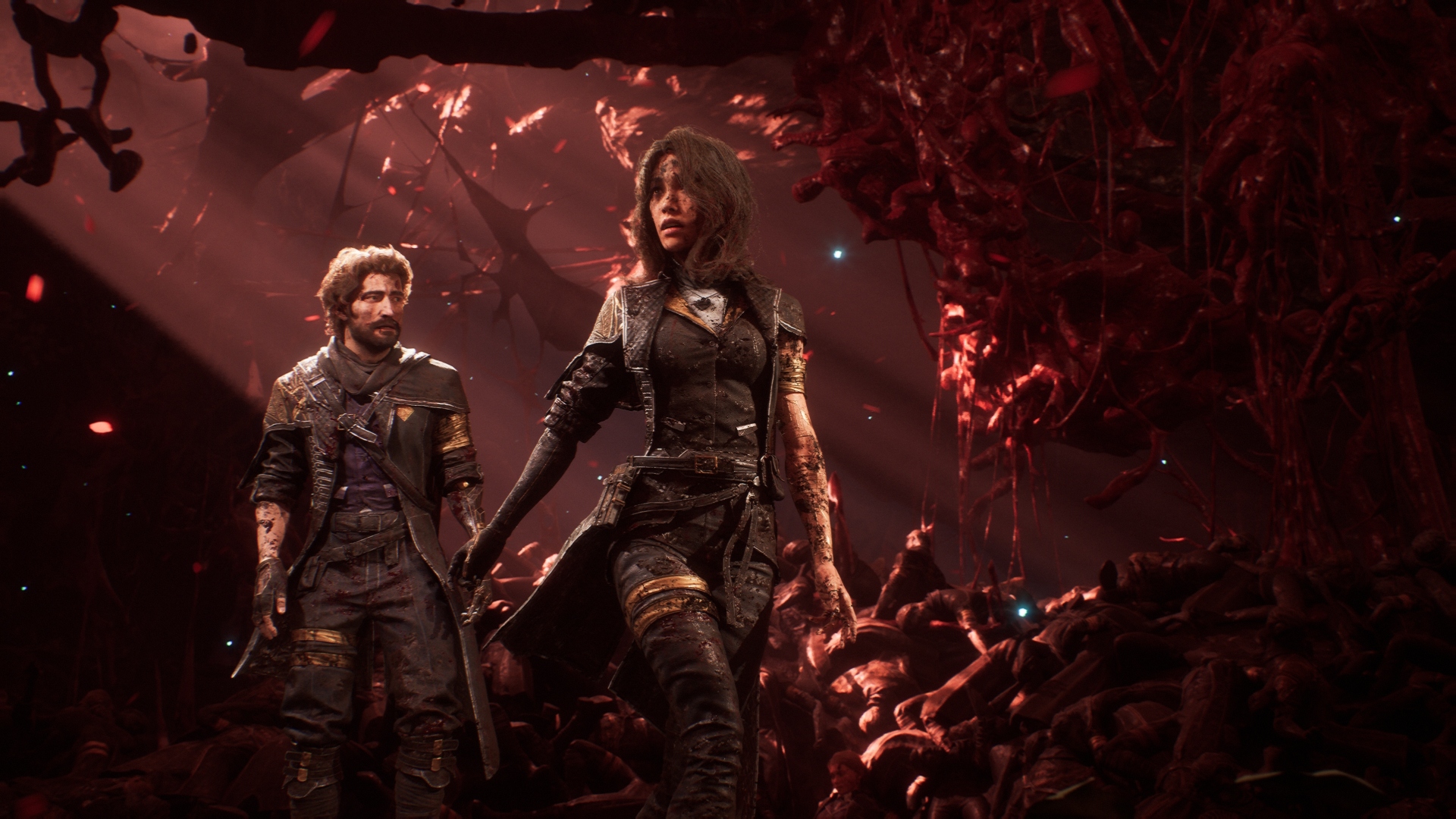
Eventually it’s revealed that there’s way more to this world and the main cast’s entire existence is shed in a new light. By the endgame it’s entirely understandable if you start to second guess your whole reason for being where you are and doing what you’re doing. And after all of that existential pondering, with more than a healthy sprinkling of sorrow, you’re left with a simple but profound choice: Keep the world alive or destroy everything.
What makes this such a difficult decision is the knowledge of what the world truly is and what it means to two of your party members. Choosing to preserve everything leads to what feels like a completely hollow, somewhat unnatural and decidedly unnerving ending. Letting the entire world crumble into nothing, despite how blatantly tragic it all is, provides something way more akin to resolution and closure with just a little bit of hope mixed in. You’re metaphorically choosing to face grief head-on and begin the difficult but necessary process of healing.
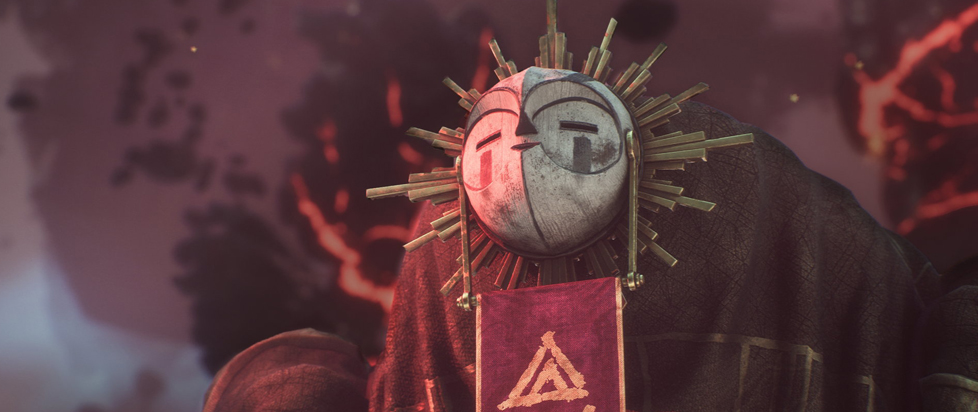
Lastly there’s The Midnight Walk. A game that I expected to wow me with its claymation-style visuals (3D scans of actual, physical models!) and spook me with its unnerving monsters. What I didn’t expect was a beautiful and melancholic metaphor about grief and how we deal with it.
This crafted world, with many of its environments very obviously constructed out of books, paper, clay and other odds and ends, has been veiled in a perpetual night for an amount of time that nobody seems to be able to quantify. And it’s your job, as “The Burnt One” to reignite the sun (with the help of your anthropomorphic kiln buddy, Pot Boy).
At first this is a very straightforward proposition. The ever-present Dark, which in this world is an actual entity that appears every so often, feels like this ominous and oppressive force that’s always watching you. Many of this world’s denizens have had a very rough time of it since the sun went out. Multiple tragedies pile up in one particular town, all centered around the lack of celestial light.
And yet, the closer Moon Mountain and that ultimate goal gets, the more perceptions start to change. The Dark is intimidating and scary, for sure, but it’s not actually aggressive. In fact, it helps you on at least one particular occasion. And all of those (very depressing) events that happened well before The Burnt One first started wandering down the road are in the past – turning the sun back on won’t magically fix any of them.
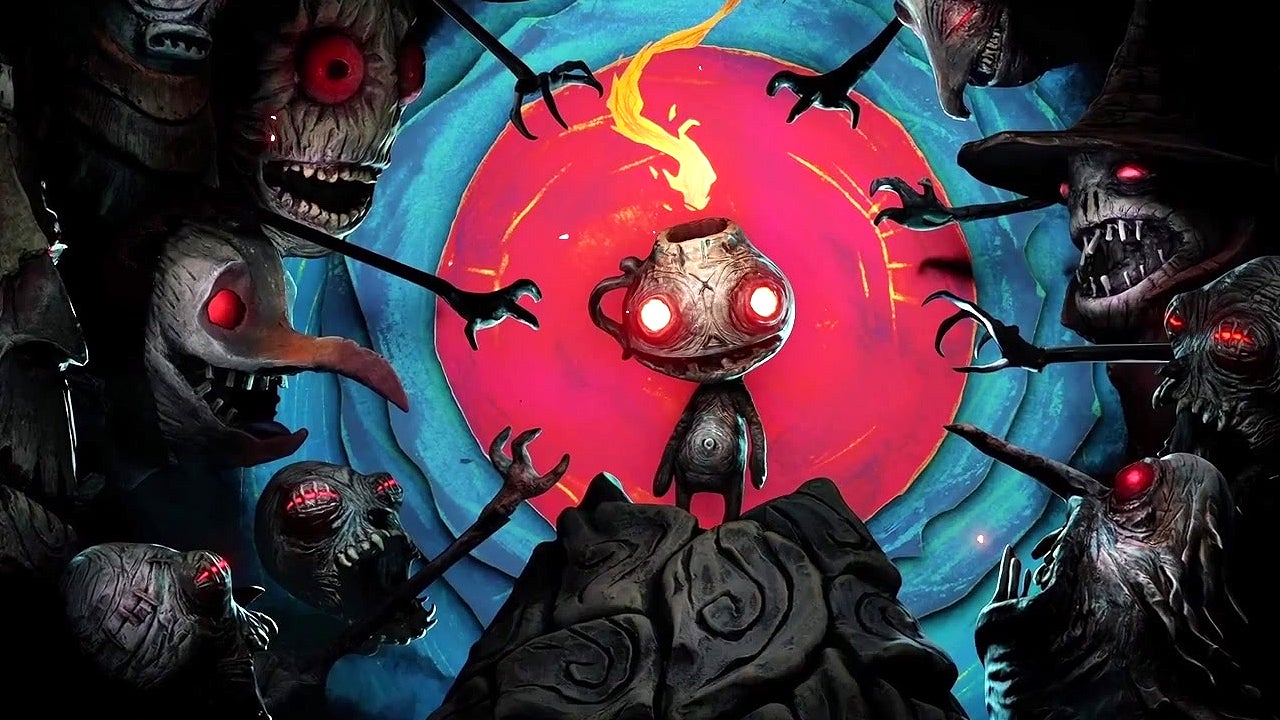
Ultimately, the ending presents yet another binary choice: Reignite the sun to bring daylight back to the world (at the cost of both you and your sweet and adorable traveling companion), or stop Pot Boy from completing the task. Yeah, sure, there’s the surface level good/bad outcome of “you and Pot Boy live” versus “you both die” but there’s more to it than that.
All along this walk you’ve encountered others who have made significant mistakes and are burdened with regrets, but none of the solutions to their problems involve fixing anything. Because there are some things in life you can’t fix – some things you can never take back no matter how hard you wish for it. Avoiding it, ignoring it or suppressing it only allows that regret to fester. Something that can, as the game points out on multiple occasions, make you bitter and miserable to the point that you hurt yourself or those around you. Often both.
Turning the sun back on isn’t a bad ending, but it does feel somewhat at odds with my interpretation of the game up to that point. You’ve done the thing at great personal cost, but it’s kind of implied that the sun will burn out again in the future and the cycle will continue. Your actions throughout might have helped some to come to terms with their past, but the return of the sun may have also given others an excuse to push those necessary feelings back down.
And the thing about stopping Pot Boy from quite literally burning himself out is that you’re not actually preventing the return of light to the world – you’re altering its source.
Pot Boy still gets a fire going inside the big sphere hanging in the sky, but it becomes the moon instead. A moon that casts a gentle and almost ethereal glow over the landscape. You didn’t force the day to come back – you let it go, and usher in a beautiful moonlit night instead. Yes, it’s dark, but it’s also light. Yes, the events of the past haven’t been undone (they would’ve have been regardless) but now the world can have a proper rest. The healing can begin.
Which brings me back around to Dark Souls and Clair Obscur. With the former, the absence of light is intended to be part of a natural cycle – dark, then light, then dark, then light again and so on – and by rekindling the world you’re disrupting that cycle to likely do more harm than good. With the latter, the choice to “save” the world is more about denial and delusion as a means of avoiding grief rather than allowing it to run its course.
Everyone grieves differently, and there’s no wrong or right way to do it (outside of intentionally hurting people). What’s important is that we let ourselves feel that grief, because that’s the only way we can hope to start healing. Loss is a natural and tragic necessity in life, but as these games (and many others, I’m sure) can teach us, refusing to let go isn’t the answer.
———
Rob Rich is a guy who’s loved nerdy stuff since the 80s, from videogames to Anime to Godzilla to Power Rangers toys to Transformers, and has had the good fortune of being able to write about them all. He’s also editor for the Games section of Exploits! You can still find him on Bluesky and Mastodon.