Fragile Traditions

This column is a reprint from Unwinnable Monthly #194. If you like what you see, grab the magazine for less than ten dollars, or subscribe and get all future magazines for half price.
———
Analyzing the digital and analog feedback loop.
———
Major spoilers throughout for Silent Hill: Homecoming. Although you have had 17 years to overcome your misgivings about this underdog of the Silent Hill series. Also, content warnings for mentions of child abuse, death of a child, and self-harm.
It’s been 17 years since the first time I played Silent Hill: Homecoming. The first time I played it was in 2008 with several of my high school friends. Back then, the game was more of a titillating autumnal treat for us than it was a social commentary. Despite us living in the aftermath of the Twin Towers crisis, we were a bunch of isolated, Pacific Northwest Canadian kids. Some of this tale of intergenerational trauma and the dismantling of traditionalist settler narratives did resonate with me, however, even if on a more subconscious level. I have American relatives on both sides of my family and living on an artsy gulf island constantly impressed upon me that settler colonialism was much more fraught than heritage moment commercials let on. Even if most of the knowledge I gleaned of that came from reading between the lines in history classes. Not to mention the racist encounters my sibling and I had that underscored the sense of entitlement some individuals held over what events of history were valid. I cannot count the number of times I heard variations of the phrase “we won the war” growing up. But I digress.
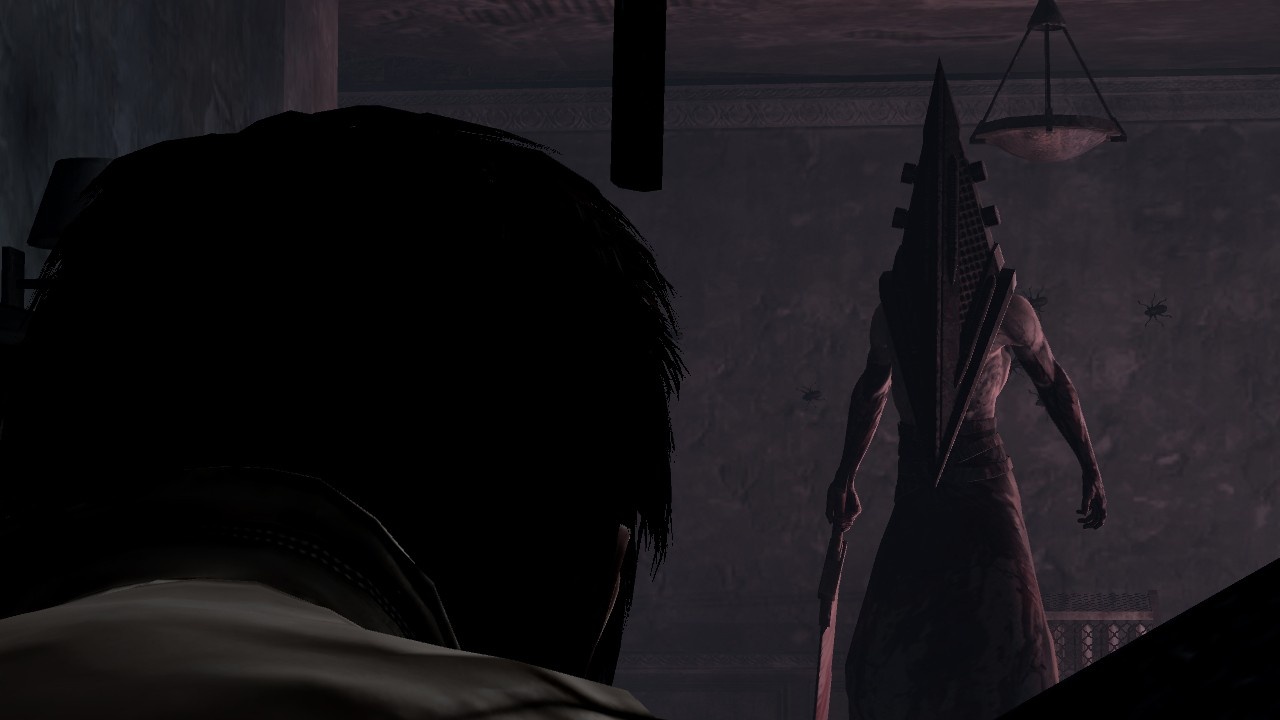
Homecoming is in some ways an anomaly in the Silent Hill series. The game took heavy inspiration from the middling success of the 2006 film adaptation and its strange mélange of several Silent Hill storylines. The sequences where the protagonist Alex crosses over into the Otherworld resemble similar scenes in the film, with references to the underground fires and ash of the film’s fixation with Centralia, Pennsylvania. There’s also cameos from The Silent Hill Nurse Dance Troupe of the films and obligatory encounters with Pyramid Head. This last callback is perhaps the most egregious, since previous to the 2006 film, Pyramid Head is strongly associated with James’ story arc in Silent Hill 2. While the antagonist still acts as an executioner and stalker of those who feel a deep sense of guilt, Homecoming’s inclusion of this figure was likely part of how he became more of a series mascot over time. This fast and loose handling of the characterization of the Otherworld is likely what led to misgivings towards the American developer of the title, Double Helix Games (now integrated into Amazon Game Studios). Well, that and toxic fan culture.
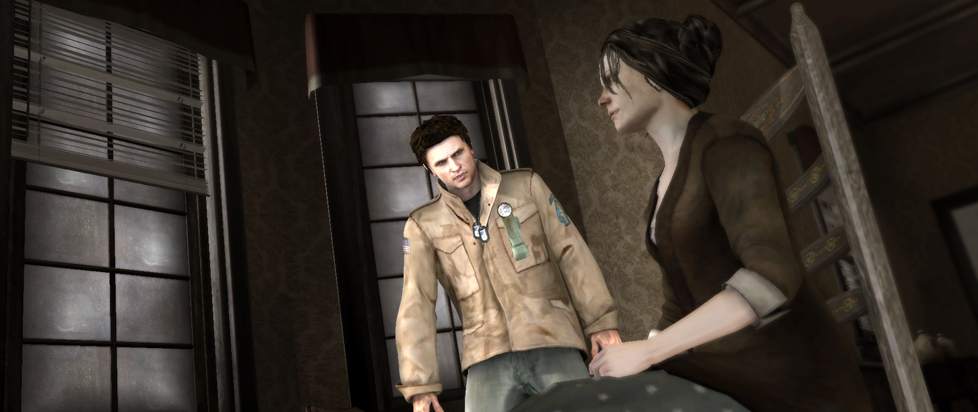
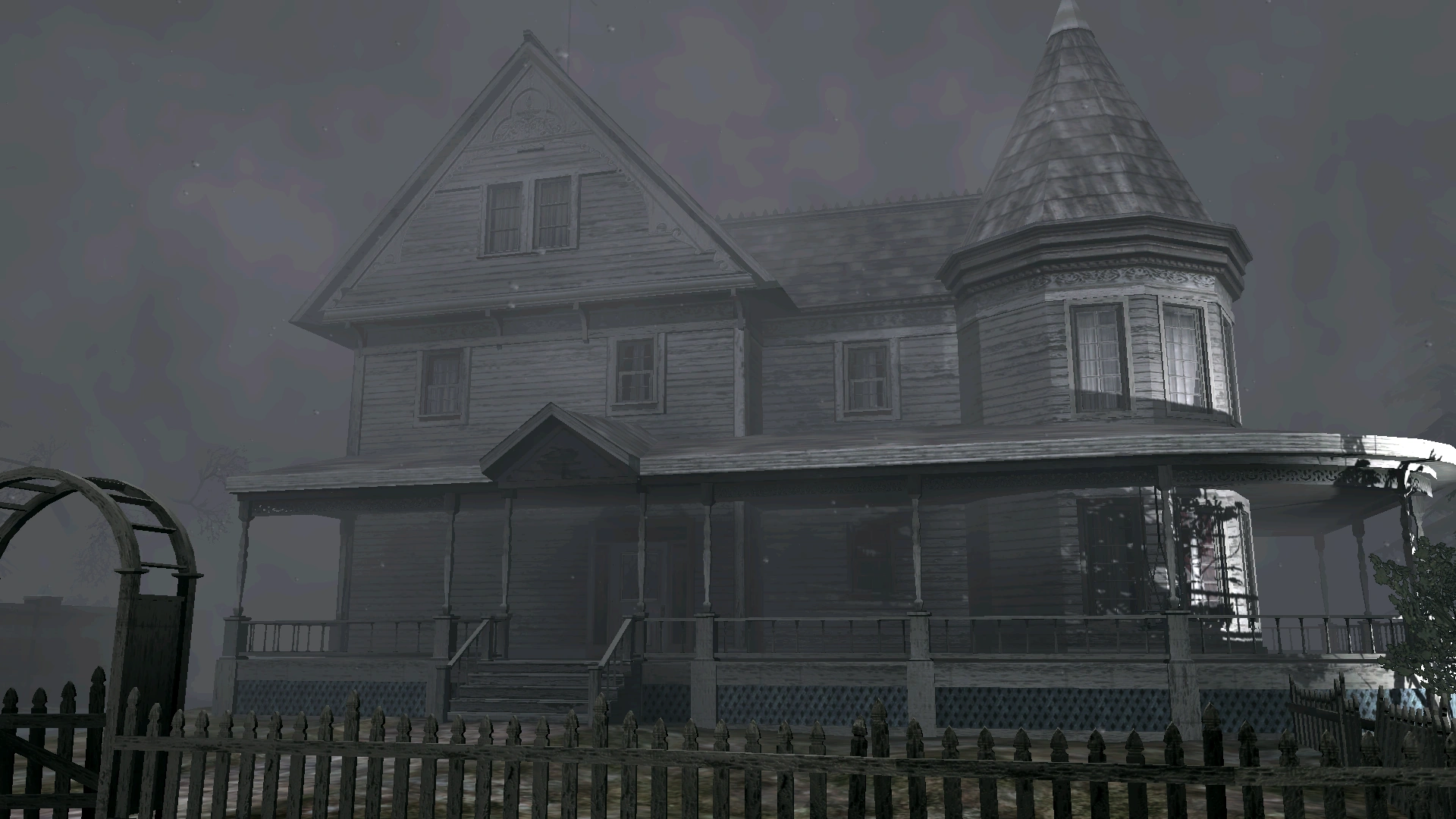
The development of the game is also a mixed bag, but this is its strength, at least on an aesthetic level. The environmental storytelling does most of the heavy lifting and so does the monster design of the bosses. And by environmental, I mean at a sonic level too, as Akira Yamaoka is thankfully on staff to handle the sound design and soundtrack. At the visceral heart of this haunting game narrative is a cautionary tale of valuing abstract traditional ideals over the corporeal lives impacted by choosing those ideals at all costs. As Alex makes his titular homecoming from active military service which somehow makes him wake up in a hospital in Silent Hill’s Otherworld, he is driven to find his younger brother Joshua. Alex is not actually a soldier, but someone reckoning with a mental crisis. A crisis caused by the ritual killings of the children of his hometown, Shepherd’s Glen.
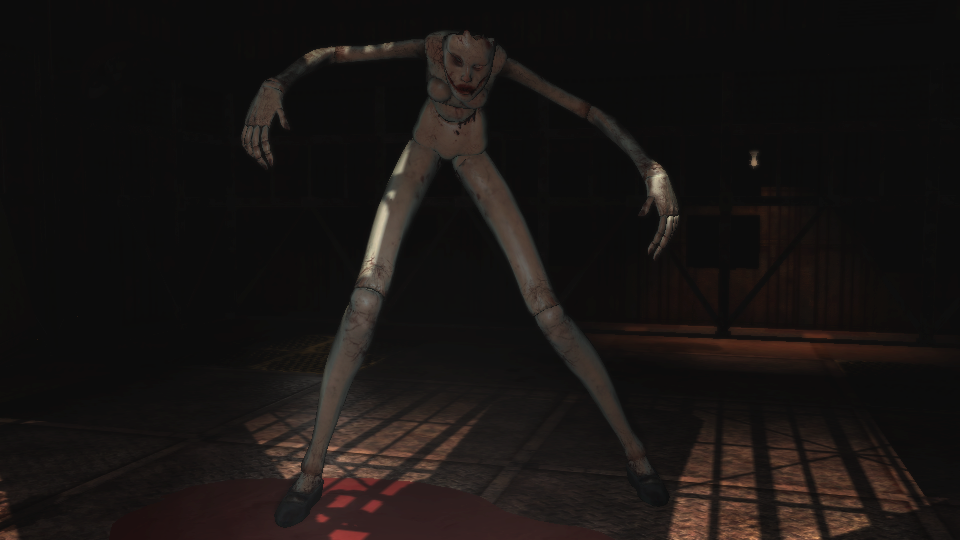
The town neighbors Silent Hill across Toluca Lake and its curse, which its founding families have convinced themselves is a blessing in disguise, is that it must appease the god of The Order to keep their home prospering. Each major boss fight features a horrifying personification of one of the ritual victims, one of the most memorable being Scarlet, who was dismembered by her father and rises once more as a giant yet gauntly proportioned porcelain doll. At first bruise-like blush, this feels cliched in a classically Gothic sense. Haunted dolls? But the game toys with your expectations via the sound design and the different stages of the boss. And the emphasis is not just on the evoking of a precious object, but the recurring brutality of breaking something fragile and reckoning with the intergenerational trauma dismantling Shepherd’s Glen piece by piece.

Porcelain is one of those materials that is more versatile, metaphorically, than its smooth surface lets on. Yes, it can be fragile and so therefore we often think along fracture lines of vulnerability and mortality. One can easily see crackled parallels to roses. Porcelain can also be a weapon, splintering into many thorns. And if its base elements are robust enough, its layers thick enough, porcelain can be a kind of armor or at least an elegant facade as well. I want to get these more hackneyed images out of the way so that I can direct your attention to something more fascinating. Porcelain as a material metaphor is a way to emphasize not just legacy, but the hands-on and time-consuming craft that creates objects of precious worth. Time and relative rarity of the clay base is what makes porcelain goods dearly expensive. There’s also a poetic quality to the alchemy of clay featuring in both mythological and religious stories as one of the chief materials that humans were created from. In fact, clay creation stories spring not just from multiple myths and religions, but multiple cultures as well.
I believe that these qualities of porcelain are what makes it a mainstay of horror and supernatural stories, as well as gothic and dark fantasy narratives where there is a mix of industry and magic in the world-building process. Ranni the Witch (whose body also signifies her demigod nature) and The Doll from Elden Ring and Bloodborne respectively, come to mind, as well as the automatons and crystalline petrification disease of Lies of P. Porcelain and its mastery can be awe-inspiring and esoteric. In terms of literature that subverts the usual tropes of porcelain dolls and the supernatural, a particular favorite of mine is Benjamin Read and Chris Wildgoose’s Porcelain graphic novel series. There automatons are imbued with sentience due to the human bone ash that is incorporated into their manufacture.
But porcelain can also be some of the most mundane material we encounter on a daily basis. For example, tableware. The mingling of mundanity with the profane cult of the founding families of Shepherd’s Glen is one of the most effectively eerie touches. One that keeps Homecoming from straying too far from Silent Hill’s major themes and psychology without being slavish to these aspects. Which brings me to a moment early in Homecoming that spreads a hairline fracture that can be traced thematically up to Scarlet’s revenge on her father and the boss battle that ensues afterward. On the wall of the kitchen in Alex Shepherd’s childhood home, there are three plates hung in the same pattern as the Halo of the Sun symbol that represents the cult of The Order. The player can easily overlook this detail as it’s not lit in any significant way and there are no puzzles or objectives tied to this display. But in the dining room adjacent to the kitchen, which has been left in disarray by Alex’s catatonic mother, is a rotten and fly blown tableau of the family’s Last Supper.
This scene, if discovered by the player early on, will take on a deeper meaning once Alex has his revelation that his accidental drowning of his brother doomed the town. But before you learn of this, it’s already a striking scene for its melancholy; the Shepherd family was so shattered by the death of their youngest son and the mental crisis of their eldest that they’ve attempted to preserve their final moments as a normal if dysfunctional family. Or perhaps the food was left in a hurry as the town fell prey to the Otherworld’s monsters. Either way, it’s worthwhile to note that there are recurring instances throughout the game where Alex communes with an everyday object, like Scarlet’s doll, before he is transported to the Otherworld where one of the sacrificed children’s spirits is residing in purgatory. Later in the game, he also finds a ceremonial dagger, which also functions as a doorknob that reveals familial secrets in his home and throughout Shepherd’s Glen.
With the above in mind, we return once more to the encounter with Scarlet and Dr. Fitch, her father’s, atrocity. When Alex questions Fitch about why he must bleed out his sin every day, Fitch can only tearfully reiterate that he comes to the Otherworld so that he can communicate with Scarlet. The player is given a few different options in this conversation to perhaps persuade Fitch to tell him where Scarlet and Joshua might be found. Whether the player takes a helpful or unforgiving option with Fitch, there is always an instance where the doctor chastises Alex and in the same breath venerates his daughter. “Don’t you mention her name! You’re not as worthy as one hair on her head!” and “I don’t care about them. Or you. My princess is the only thing that matters now. Her little hands, pure as porcelain, her smile like sunshine…” Fitch also regrets that he forgot to bring her a present and that she “loves dollies.” This conversation ends with Alex presenting Fitch with the dilapidated doll that led him to the Otherworld, which then causes Scarlet to bleed him and rise from the blood pooling on the floor as a towering porcelain horror. She then briefly cradles her father’s body, Pieta-like, reducing him to the plaything he likened her to in life and death as he begs her forgiveness. Then she decapitates him. Yamaoka’s soundtrack and sound design here is a spare lo-fi track featuring sonorous solo vocals, allowing for Scarlet’s feral screeches, the reverb of the rusty industrial fans in the background, the pounding of her shambling steps over the metal floor, and the crunching of her porcelain armor to take precedence. As you hack at Scarlet’s limbs in battle (it’s a particularly cruel detail that the axe is the most effective weapon against her) you create striations in the armor, revealing that she is not just porcelain, but blood and tendon beneath as well.
The boss battle and its introductory scene are brutal yet stunning in how it communicates the cycle of intergenerational abuse and trauma that must come to an end. But the way this is communicated through mundane materials and without explicitly moralizing is key. In fact, the way that Dr. Fitch’s idolizing of the daughter he killed terribly shows how hollow such idolizing is when ultimately innocence was sacrificed for a supposed greater good. Some of Jacob Geller’s essay on Pinocchio and the artistry of stories about puppetry and selfhood comes to mind here. Homecoming oftentimes grapples with questions of how agency is constricted by societal notions of obedience. Scarlet’s sequence and the motif of domestic materials, like porcelain, ultimately make the player think about how often such notions of obedience and tradition are hidden in plain sight.
Yes, I know I could’ve written about something much more festive for this time of year. But lately I’ve been thinking a lot about how this time of year stresses a lot of traditions, both religious and secular, that we take for granted. Also, ghost stories are a Christmas tradition in some countries and I think it’s a fun one. Let’s bring haunted wintertime back.
———
Phoenix Simms is an Atlantic Canadian cryptid who is a freelance writer and the co-editor of The Imaginary Engine Review a.k.a. TIER. You can lure her out of hibernation during the winter with rare SFF novels, ergonomic stationery, or if all else fails, gourmet cupcakes. Or you can just geek out with her where skies are blue.