How Art Helped Me in 2025

This column is a reprint from Unwinnable Monthly #194. If you like what you see, grab the magazine for less than ten dollars, or subscribe and get all future magazines for half price.
———
Finding digital grace.
———
Oh, hi there! So… I don’t have a conventional column this month. Yet, as this is likely going to be my concluding piece of op-ed writing for 2025, I wanted to offer something fitting the holiday spirit. This has been a very strange year that had me pondering the question of how to keep one’s hopes up, no matter what life throws at you.
It wasn’t intentional, but some lovely pieces of art helped me figure out the answer to that. So, I’d like to share that journey. Maybe it’ll help someone else out there too. Starting with some quality angst.
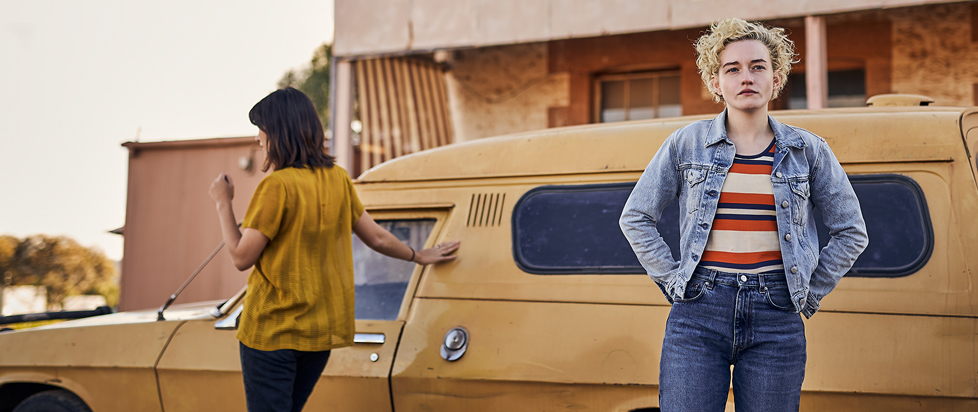
The Royal Hotel – I’m beginning to think everyone has that one movie nobody else really talks much about, but that stuck with them. For me, that might be The Royal Hotel. It’s not groundbreaking in premise, but it is wonderfully executed. Two American backpacker tourists run short on money, taking jobs in a middle of nowhere bar in the Australian Outback. Simmering tensions between them, their rowdy (and misogynistic) customers and the oppressive heat of an Australian summer all keep building. It all explodes into a destructive finale that feels truly cathartic, without relying on anything high concept or supernatural to bring it all together.
It’s like taking the “worldly person forced into small town living” premise of many a Hallmark movie, then squeezing it with the unyielding bitterness of Kubrick’s The Shining. In The Royal Hotel, the greatest horror is other people. Because as hard as you try to be empathetic and understanding, some folks will let you down, even when you try more than once to give them a chance. And though you’ll try to swallow those feelings down, the lingering taste of it all sours your stomach. You have to walk away to clear your head. Sometimes, the only way to heal is to let something end, even if you’re not sure what comes next.

Through the Tears, by Amethyst Michelle – And from obscure critical darling film to even more obscure band, Amethyst Michelle have been one of my most played bands all year round. I even have a physical CD of their debut EP, Through the Tears. Highly recommend their stuff, especially if you’re not in a great place emotionally. Because while I’ve found other bands offer their own brand of earnestness, Amethyst Michelle’s approach is raw and real, yet gentle and almost jovial in the absurdity of it all. It’s a precise mixture that’s rare to find. When I first found their song “Uh Oh,” I instantly knew this was the vibe I needed.
While this was a song seemingly about a breakup rather than just being very done with a lot of things, there’s “Getting There” for the latter, as well as moving past that point. It delves deep into that awkward place where you’re not better, but you finally feel like achieving happiness one day is possible. The whole album is beautifully done across the entire tracklist, and I highly recommend giving them a listen if you need a space to decompress emotionally.
Batman: Arkham Shadow – I really enjoyed Batman: Arkham Shadow. Both it and the next game I’m going to talk about were fundamental in helping me really start to enjoy games again. Yet there’s more to it than that. See, I’ve always been averse to the idea of nostalgia, the ludicrous impossibility of “it was better back in my day,” but Arkham Shadow actually managed this. It’s the kind of game you used to be able to play on anything from a PlayStation 2 to an Xbox 360 – meaty, but bite-sized. Meaningful and risky, yet familiar enough to hook a wider audience. Inventive, while still meeting expectations where it counts. Camoflaj performed nothing short of a miracle. Except it’s exclusive to Quest headsets as of this writing, which is… less than ideal.
But if you can, please watch it in action on YouTube for the story. It’s the healthiest incarnation of Arkham’s caped crusader, so much so that the idea that this is only a few years before the events of Arkham Asylum is truly baffling. It doesn’t really matter, though. What I care about is the message Arkham Shadow insists upon. It’s so fundamentally opposed to the dark edge of the rest of the series that I have to believe it only managed to get away with it all thanks to being a VR exclusive. That however horrible things get, we can still be better. That compassion is one of the most powerful acts of bravery we can make, even if sometimes it doesn’t work out like we’d hoped.
It’s also a reminder that physical exercise, however silly it may be (such as pretending to be Batman) is important for mental health as much as your body’s. Speaking of staying on the move…
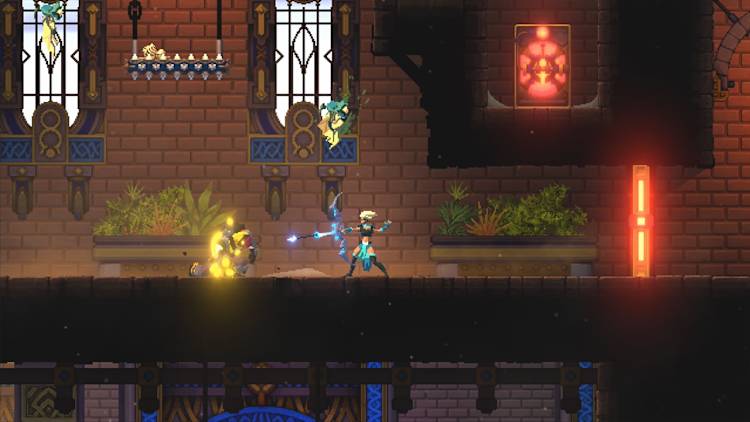
Foregone – Foregone is not a game I expect you’ll have heard of. It launched in Early Access on the Epic Game Store, eventually made its way to Steam, and did… decently, by all appearances. Far too often it’s just compared unfavorably to Dead Cells, but that’s not what it’s about. It’s far more akin to something like Super Metroid or Mega Man crossed with Borderlands and a more linear Souls-like pacing. Which is to say, anyone who knows me understands how utterly ironic and hilarious it is for me to be revisiting the game all these years later.
I am, to put it shortly, tremendously burnt out on all the Souls and Vania wannabe heirs apparent. It’s not impossible for me to see the appeal, but there’s just so many of them. Yet I’ve 100%ed Foregone. Every achievement. I almost never do that with any game. Why? Because despite being precisely the opposite of what I’m typically looking for, it justifies every aspect so well that I had to sit up and pay attention. I’d enjoyed it in Early Access, but it had some rough spots with progression and boss balancing. They’ve fixed practically all of it. I can point to two bonus stages that need a little fine-tuning. That’s it. Otherwise, no notes, it does precisely what it needs to and even has gun-nunchucks as one of its weapon types.
The grind wasn’t an infinite loop but attainable goals I could plan for. The levels are actually very fun to master, and it turns out I still had muscle memory from the first few stages, all these years later. And most importantly? I made a point to absolutely have no intention to write anything about Foregone. It’d just be for fun, and that it was. Because when you’re feeling low, it’s possible to forget what fun feels like. Rediscovering that feeling is so profound, it’s almost magical. It can help you get your head back on straight more than you realize.
Dispatch – Which is the thing. As with Amethyst Michelle, recovering from something unpleasant doesn’t mean your head is instantly out of a bad place. If anything, it’s easier to be snarkily bitter. You become wound up in your disconnect that once was helpful, but isn’t how you want to exist from here on out. So, you have to seize opportunities to rectify that.
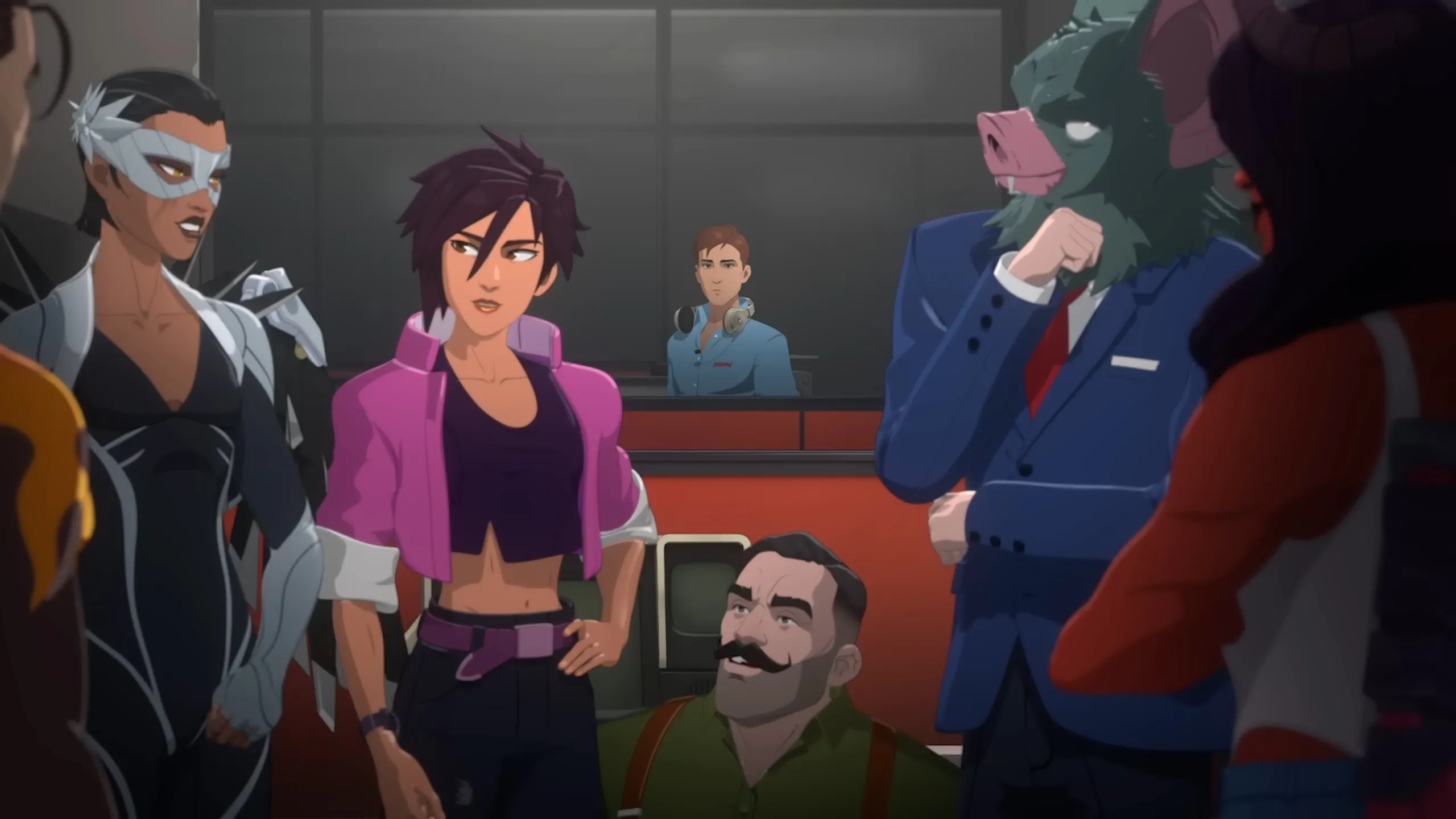
I didn’t plan to play through Dispatch at launch. Buying any game day one, indie or not, is a rare luxury. Yet I’d do it again in a heartbeat, and not because the game itself is a perfect masterpiece. If anything, I have substantial issues with the underlying logic of the finale’s flow of events and narrative priorities. Yet playing it with my friend Fumo (who longtime readers may recall from Exploits) made it feel like I wasn’t an ocean apart from someone I hold in high regard.
After Foregone, I’d already set my intent that I was playing it for fun rather than to find anything to necessarily write about. This would be about appreciating what was there, in a story of a down-and-out superhero working at a call center employing ex-supervillains. Fumo and I would theorize what was coming next, how certain choices could branch into something meaningful, and had ourselves a nice, structured series of hangouts for the first time in… gosh, way too long.
And it had a knock-on effect. It got me hanging out on Discord in general more often. I started engaging with people again. Which sort of perfectly paralleled the protagonist’s journey. Robert starts things out surviving, but not really living. He’s standoffish and doesn’t really want to deal with other people anymore. You can feel the exhaustion in Aaron Paul’s performance, desperate to fight against his instincts to get back in the game. Yet at the end of the day, he finds a new balance and accepts that he’s a different person… but that that doesn’t have to be a bad thing. He can still do good, just not the old way.
There’s been a lot of debate about whether Dispatch is truly a mature story or just a hard R-rated take on superheroes with nudity and more f-bombs per-hour than an HBO miniseries. Sure, it can be juvenile at points, but show me a group of dysfunctional adults trying to survive who aren’t at least a little bit crass. Not easy to find, are they? Plus, beneath it all are human beings becoming vulnerable with one another in a way that’s very well written. Having that kind of authenticity with even close friends can be anxiety inducing, but it’s worth it. Even if it’s just while you’re each surprised so many people didn’t give Coupe a chance — because seriously, she’s so much more useful than Sonar!
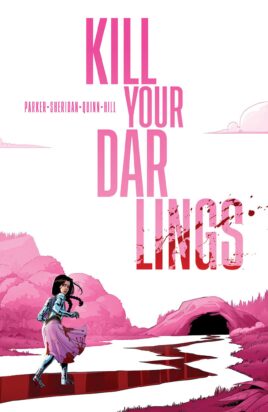
Kill Your Darlings – I wasn’t planning to read Kill Your Darlings this year. A young girl’s make-believe world is invaded by a hostile demonic presence, slaughtering not only her real-life mother but the denizens of her apparently not-so-imaginary world en masse. Years later, her neighbor/best friend breaks her out of juvie, and they team up with her pint-sized imaginary friend to slay the evil and save her world.
What ensues is brilliant. It’s condensed, razor-sharp, brutal, yet simultaneously unabashedly afraid to be itself. Kill Your Darlings is a coming-of-age story that somehow managed to weave everything I’d been exploring into one. It’s a simple tale on paper, yet it finds depth in subversion of fairytale expectations and a realness of adult issues you normally wouldn’t expect. People are often awful, yet at the same time, there are kind and caring beings out there if you don’t lose hope.
The final battle isn’t decided with violence, but instead empathy and justice. The lead heroine and her best friend grow up to become the king and queen of the land, eventually having a daughter of their own in a world that blends the imaginary with ours in harmony. It closes with a message that never denies the horrors. Instead, it assures that no matter what happens, we will carry on.
I often wonder how, whenever I have a kid, that I’ll explain the events of the last few decades to them. This book might just be how. Well, once they’re old enough to handle a story where a baby gets eaten by a demonic witch. Like I said, it gets dark for something with such a constructive message. Yet at the end of the day, that’s the world we’re living in now. Bombarded by awful, horrendous news and images, trying to find something to hold onto.
It’s only with art, made by tireless human beings striving to make meaning out of our existence, that we can start to make sense of it all. We might not even realize it as it happens, but what we engage with shapes us. I’m grateful for the stories I’ve explored this year, and I’m curious what next year will bring. I hope to see you there too.
———
Elijah Beahm is an author for Lost in Cult that Unwinnable graciously lets ramble about progressive religion and obscure media. When not consulting on indie games, he can be found on Bluesky and YouTube. He is still waiting for Dead Space 4.