Too Big to Succeed: Warhammer Quest and the Imposing Scope of Blackstone Fortress
Visit the MIT Press shop
I see board games in the store and they always look so cool and then I buy them and bring them home, I’m so excited to open them, and then I play them, like, twice… This column is dedicated to the love of games for those of us whose eyes may be bigger than our stomachs when it comes to playing, and the joy that we can all take from games, even if we don’t play them very often.
———
Games Workshop is coming out with a new edition of Warhammer Quest. Given that games from that series number among the ones I have discussed the most on this column, you may be expecting to read about this new installment here – but you’re probably not going to.
Changes in interests and, more importantly, changes in my financial situation mean that I can no longer really afford to appreciate Games Workshop products except from afar. And the fact that Warhammer Quest: Darkwater boasts a price tag of over $250 doesn’t help.
Which is not to say that there aren’t aspects of Darkwater that still sound appealing. The lay-flat book in place of traditional dungeon tiles hearkens to some other games we’ve talked about here, while the variations in the way the campaign plays out seem like they might at least help to alleviate some of the complaints I’ve had about other installments.
And, of course, the miniatures look good, even if the focus on the servants of Grandfather Nurgle maybe makes them a little grosser than is my wont. In fact, one of the strongest aspects of almost every iteration of Warhammer Quest so far are the unique and characterful miniatures that come along with it – Lost Relics being the notable exception – and that’s certainly true in the version that we’re actually here to discuss today.
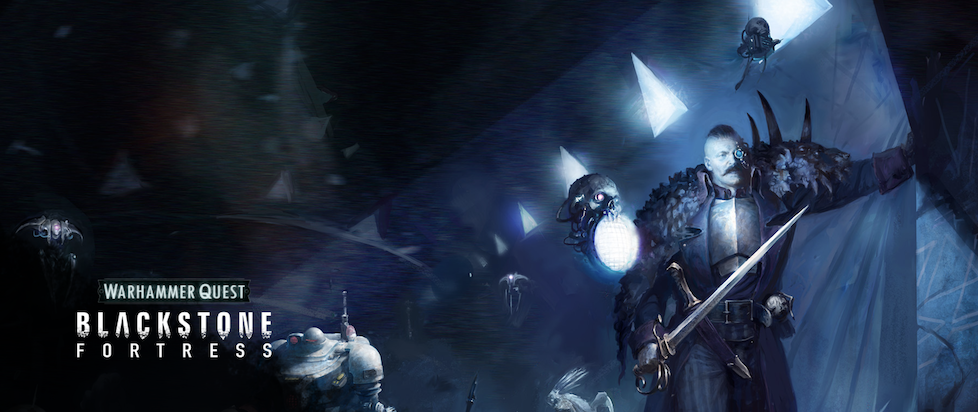
Of all the various iterations of Warhammer Quest that have been released over the years, Blackstone Fortress is the only one that’s set in the war-torn, far future universe of Warhammer 40,000. This makes it something of a standout from the crowd for a number of reasons.
Because Warhammer Quest is a dungeon crawl game, it is capable of exploring corners of the larger Warhammer universe that are more seldom represented in the wider games, while also providing models with a whole lot of personality.
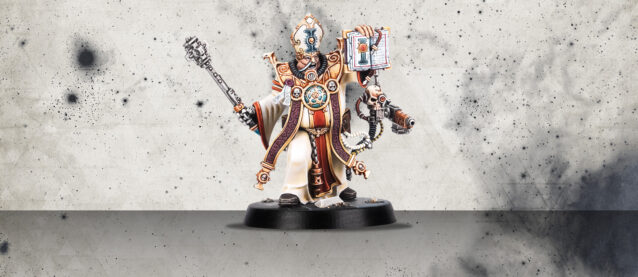
While I had my individual problems with Cursed City, it was a real exemplar in this category, and the miniatures that accompanied it remain high points in Games Workshop’s line. They weren’t the first, however. Blackstone Fortress, with its host of oddball heroes including rogue traders, machine men, psychic navigators, religious firebrands, alien hunters, ratling twins (who essentially function as one character), and more, is maybe the best example there is of Warhammer Quest plumbing the weirder edges of the setting for some of its most striking models.
The premise of Blackstone Fortress sees you docking with one of the eponymous planet-size space stations, which has fallen into ruin and become overrun with the servants of Chaos – as such things tend to do, in the grim darkness of the far future.
As Warhammer Quest’s only foray into the 40k setting, Blackstone Fortress also rolled out more expansions than probably any other iteration of the game since maybe the first. There are expansions that add more heroes; expansions that add more enemies – including the “dreaded ambull,” a big alien monster that resembles the classic D&D umber hulk; and expansions that extend the game’s storyline. In fact, to complete the proposed campaign at the heart of Blackstone Fortress, you will need at least two of them, if I’m doing my math correctly.
I’ve never completed that campaign, and I probably never will. Here’s the thing: Blackstone Fortress is an elaborate, ambitious, impressive game, but it was also the first of the Warhammer Quest installments to become too intimidating for me.
The rules here have variations that are partly made to take into account the dramatic difference in combat between the high-fantasy Age of Sigmar and the science fictional Warhammer 40k. The prevalence of firearms changes things a lot, it would seem. And Blackstone Fortress is played not via a single delve into the “dungeon” of the eponymous spaceship, but through repeated excursions and returns to your own ships to resupply.

It is, as I said, ambitious, and one could play Blackstone Fortress for a very long time without seeing it all, even within the contents of just the core box, to say nothing of any of the added expansions. Unfortunately, everything I previously said about the ambitious approach and sprawling campaigns of Cursed City goes double here.
The idea of playing Blackstone Fortress just feels too much like an undertaking. It has no fewer than four different rulebooks, covering everything from basic rules, to combat, to exploration, to returning to your ship. There’s a lot of appeal to that for many players, especially given how much boxed games from Games Workshop cost.
Blackstone Fortress is currently out of print, but when it was originally released back in 2018, it had an MSRP of $150. That’s considerably less than the $255 price tag on Darkwater, but it’s enough that if you’re going to put down that kind of moolah, it makes sense to want to get your money’s worth out of the deal. And the promise of playing game after game, campaign after campaign, and still having new material to explore is a good way to make people feel that they’re getting that added value. (Blackstone Fortress even does the thing where it includes information in sealed envelopes that you only access when you’ve advanced to a certain point in the campaign.)
For those of us who are only ever going to play our games, like, twice, however, that impenetrable quality means that there is a lot of the game we will simply never get to experience. But at least the miniatures are cool.
———
Orrin Grey is a writer, editor, game designer, and amateur film scholar who loves to write about monsters, movies, and monster movies. He’s the author of several spooky books, including How to See Ghosts & Other Figments. You can find him online at orringrey.com.