Preparing for the Rain, Living Past the Rain
You feel compelled to support great writing…

It’s hard to go a day without thinking about the apocalypse.
There’s a certain comfort in understanding that despite my current paranoia, mankind has been dreaming of the End since we could conceive of our own Genesis. Part of our existence is buoyed by awareness of our own finitude. To exist in a society is to also envision its collapse – for better or for worse. So what does it mean to dream of apocalypse? In a strange way, I think, it defaults to thoughts of survival.
Nuclear annihilation has been dwarfed in our culture by lesser ends. When I was younger, I was very much into The Walking Dead and its depictions of a society forcibly regressed to an uncertain agrarianism, a world where fledgling societies had to reconsider their preexisting notions on violence, belonging, carceralism, and survival as a whole. In service of this fixation, I’d spend more than a few summer days alone in the country by stuffing a backpack with a couple of cans of beans or vegetables, a knife, a book, and then wandering into the woods to role-play what it would mean to be a survivor.
I was not the type to make a go of it long term. Really, I’d go inside after a couple of hours, unable to handle the silence out there, unable to handle the broad emptiness that came with being under-stimulated by nature.
This activity was grounded by a simultaneous (and recurrent) fixation with a far-more grounded series: Les Stroud’s Survivorman. Even today, when I fall ill, I cope with long marathons of watching Stroud rough it out in the wilds of places I can only hope to visit.
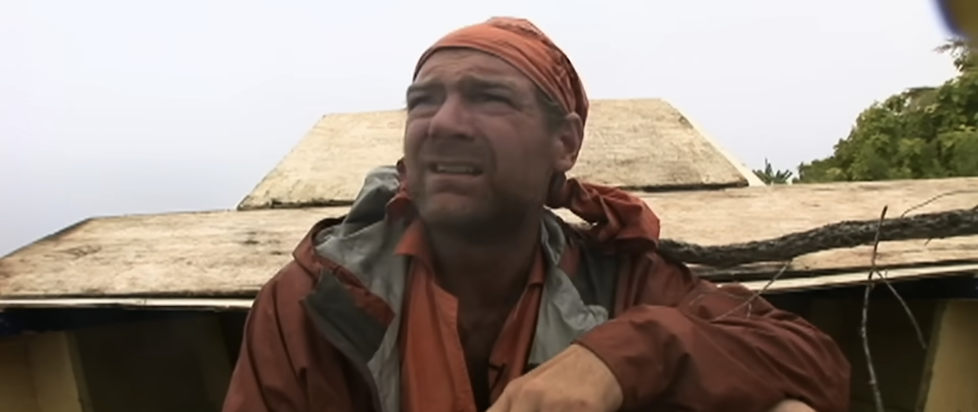
In case you’re unfamiliar, Survivorman is a docuseries created by and starring Canadian survivalist Les Stroud, who strands himself in unfamiliar areas, connected to nebulous safety only by a walkie-talkie and a few miles of separation, and attempts to endure a week on his lonesome in some isolated part of the world. Unlike many of its contemporaries, Survivorman was grounded in an earnest attempt at survival – Stroud was not retreating to a four-star hotel to sleep and shower after filming himself rappelling down a waterfall like an action-movie hero.
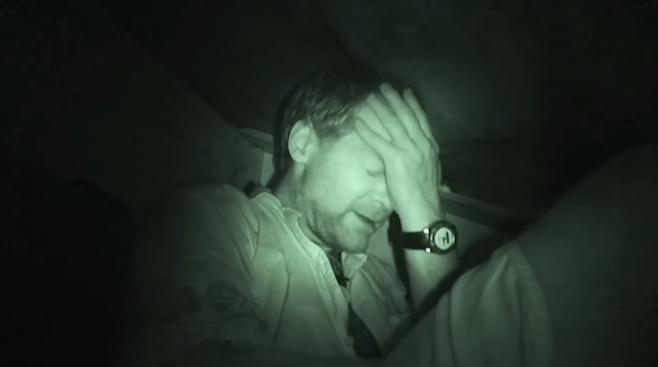
I’ve spent more than a decade fascinated by Stroud because of the ways he seems to find a counter-intuitive peace out there in the wilds, surrounded by the same loneliness that I found so untenable. Despite the fact that Stroud places himself in some degree of real danger, the show is grounded by his meditativeness. He is as much a professional as one could hope to be in simulated “worst-case scenarios.”
Like Stroud, I think, I’m the type who finds the most clarity when it hits the fan. Adrenaline is a hell of a drug when properly directed – and it is only when things are bad that my anxiety recedes fully. “You’re either preparing for rain,” he says, a mantra that I have kept close to my heart since I first heard it, “or you’re in it.”
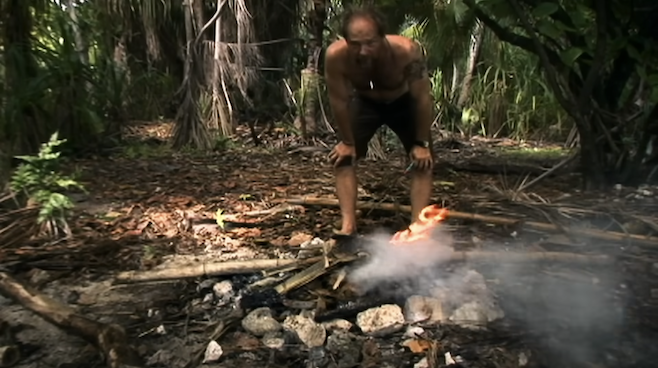
Stroud’s portrayal of survival is not glamorous. Sure, there are moments of euphoria – his feast at the end of “Cook Islands” makes it my go-to episode when sharing the show with others – but the banality of survivalism isn’t shied away from. He spends hours building shelter, collecting water, eating small fruits whose benefits are more psychological than nutritional. On top of this, he lugs around his own camera equipment, often necessitating that he double back after getting a shot where he walks off into the distance.
Survivorman teaches us that Survival (with a capital-S) is possible for a time, but it is incredibly difficult to sustain. On his own, Stroud is wholly vulnerable to things far beyond his control. The hyper-masculine ideal of life in the wilds is a brittle one, constructed entirely on the privilege of having a safe shelter to return to when the fantasy becomes too much to endure.
I’m reminded of Henry David Thoreau’s Walden; or, Life in the Woods. Thoreau indulges the fantasy of his cabin near Walden Pond, indulges a similar solitude, but there’s a caveat. His time there is made possible only by the communities that surround him: the patronage of Ralph Waldo Emerson (who also owned the land) and the assistance of the citizens of nearby Concord – some of whom actively helped him build his cabin and taught him techniques to make that life possible. Thoreau was not alone in true wilderness with naught but his wits and his manhood to claw sustenance – he was connected to civilization, still, and able to benefit from it whilst indulging a fantasy of separation.
At the start of this year I read Eduardo Velasquez’s A Consumer’s Guide to the Apocalypse, a text fixated on our society’s obsession with its own dissolution. At the heart of this, suggests Velasquez, is the hunger to return to a place in which “the individual [can] become the locus of transcendental experience,” wherein the meditative mindset one cultivates while in a survival situation can flourish and overcome our ingrained anxiety towards it (xvii). I’m thinking of the end times during chaos because, in some fatalistic way, they suggest that at least we will be freed from the ills that our current systems has brought with them. If I have to be focused on my immediate survival, it is far easier to get along without losing hair to fantasies of how things can go wrong weeks or months from now.
Is Stroud a real survivalist? Of course he is – but even an expert’s survival is grounded on a presupposition of luck. He cannot step strangely and sprain his ankle, cannot misread the depth of water and slip, cannot scrape himself on a piece of wood and get an infection, cannot contract giardia from a water source or get dysentery, cannot fail to find enough food to power his brain. One mistake – even something as mindless as working up a sweat on a cold day – can start an inevitable cascade towards death.
My interest in Survivorman has waxed and waned over the years, but I’m now able to identify a correlation between my own feelings of fragility in the world around me and wondering just how long I’d make it out there on my maddening lonesome. I must not be ashamed to say that it would not be long at all. When we look towards a life outside of community, survivalism’s long-term realities remind us of just why we abandoned that lifestyle millennia ago. It’s hard to think about the future when you’re laser-focused on today. There’s a certain peace in that, particularly when so much of our modern life is consuming the lead-up to the fall.
Velasquez says that we are defined by an “inescapable tension to achieve technological mastery of chaos and our desire to surrender mindlessly to that same chaos” (90). I love my computer and my phone and my heater and my electric kettle, but I also am caught in an inescapable feeling of folly being bound to it all. When I go out for a walk on the nearby trail, or even just through my neighborhood, I have learned to find a hint of euphoric oblivion in a silence only broken by the wind or the crackle of leaves. I long for it, but before long, I long for the warmth of my space and the blue light of my computer screens.
The follies of man-made society imbue in us the longing to depart from it, but it is so easy to forget just why civilization is so necessary. The anti-social urge for total independence cannot stand up to the banality of the wilderness. I think of the people in the early part of the pandemic who refused to inoculate only to beg for the vaccine when they were being intubated to die. There are no atheists in a foxhole, but there are equally few survivalists in a world of creature comforts.
———
J.M. Henson is a freelance critic/author who haunts the Blue Ridge Mountains and is in turn haunted by most things out of their control. Follow on Bluesky.