Does This Dress Make Me Look Straight

This column is a reprint from Unwinnable Monthly #193. If you like what you see, grab the magazine for less than ten dollars, or subscribe and get all future magazines for half price.
———
Interfacing in the millennium.
———
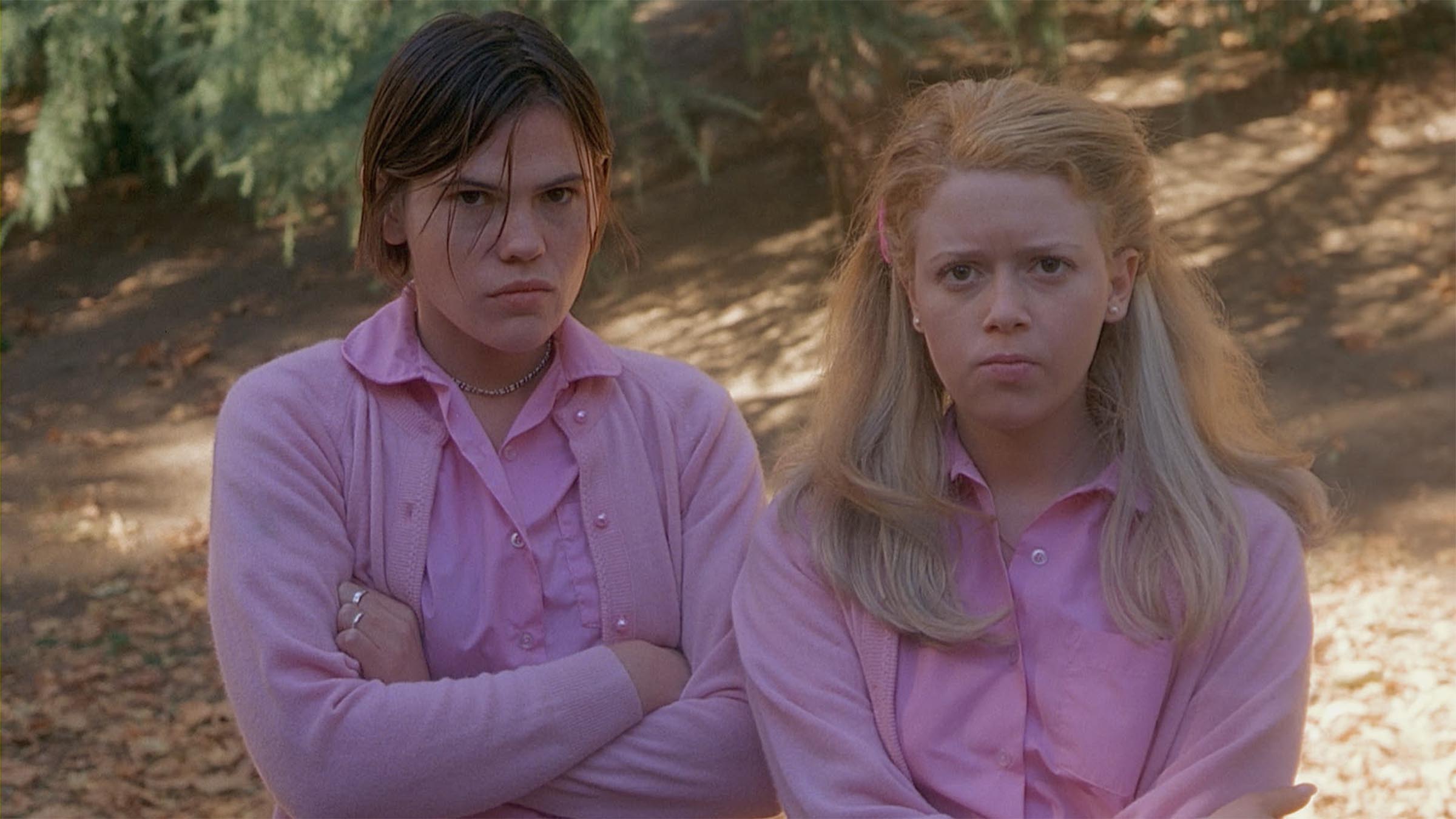
When Megan Bloomfield arrives at True Directions in the conversion-therapy comedy But I’m a Cheerleader, you register immediately that fellow gay-in-recovery Graham, as played by Clea DuVall, is the hottest girl poor little Megan has ever seen in her life. You register immediately that she is about to cause a psycho-emotional lesbian trainwreck the likes of which the domineering homophobes at True Directions could never even dream. You register immediately that she is mulishly, furiously uncomfortable with the clothes she is wearing, the space she is in and the roles she is expected to play.
It’s a stark picture: Graham with her short, blunt hair, her dark eyebrows, her long fingers and her masculine posture, pushing ungently against the pink uniform and childish mary-janes they’ve got her dressed in. She never looks like the program is going to work on her. Part of the genius comedy of But I’m A Cheerleader is how transparently it is presented that this conversion-therapy farce would ever make a dent in the helpless teenage homosexuals caught up in it, and part of the genius of Megan as a protagonist is she’s both the one with the greatest case for graduation from the program – she’s straight-passing, traditionally feminine, and, crucially, deeply in denial – and the one who becomes the transgressive, escaping heroine. It’s Graham, whose case for straightness is as convincing as RuPaul’s, who remains at the camp until the end, forced into an amazingly ugly pink dress and a hairstyle that wouldn’t work for anyone, straight or gay, until she is busted out by her girlfriend in a pickup truck and a cheerleader outfit.
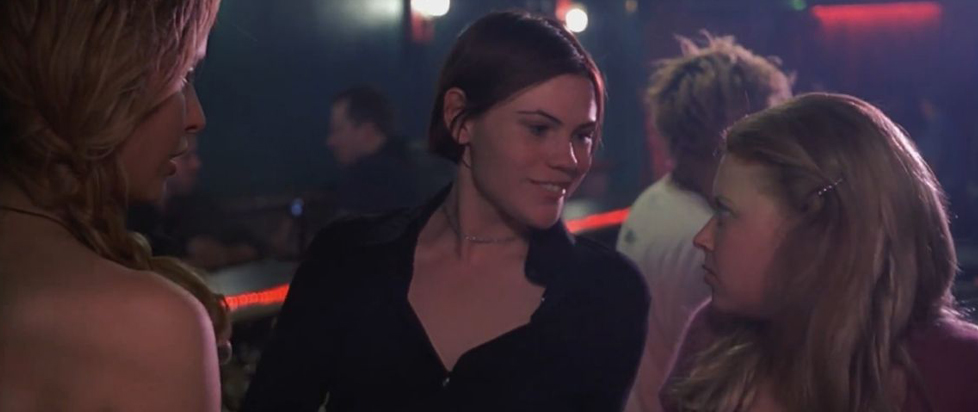
To Megan, though – and to the viewer, if the viewer is any sort of self-respecting sapphic – it’s Graham’s visible and stubborn discomfort that marks her, ironically, as attractive and confident. True Directions is all about learning to crush your true self until you fit into a box someone else created for you: Graham is incapable of that level of self-delusion, unable to pretend to be someone she isn’t for the two months needed to get through the camp and get back home. Only the astronomical incompetence of the True Directions bureaucratic hierarchy allows her to make it to graduation. Otherwise, the one time we see her truly comfortable is at the gay club they sneak out to, where she’s out of her straight-girl drag and, in a black button-up, choker, and jeans, comfortable enough to be vulnerable with Megan, whose tortured, teary confusion and denial is both sympathetic and frustrating (we’ve all been there.)
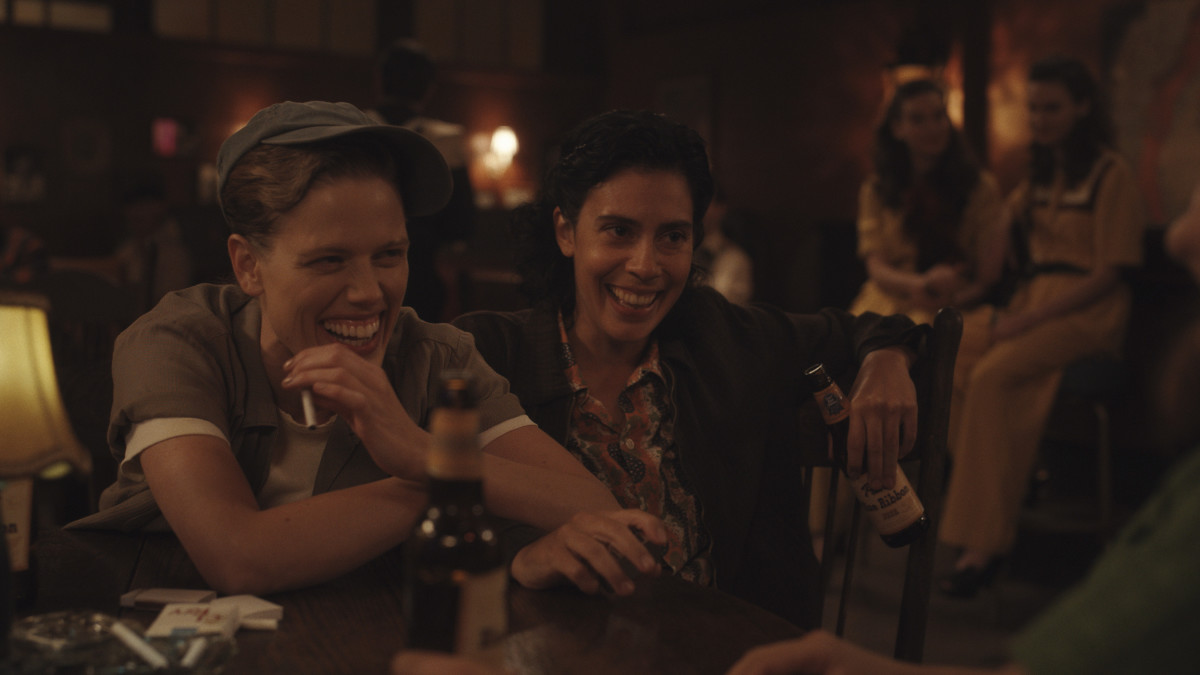
Graham’s character exploration through the mode of dress reminds me of nothing as much as A League of Their Own, the short-lived TV reboot of the classic movie that figured out that as long as they’re going to get away with an entirely-women sports show they may as well go ahead and make everyone gay. A recurring plot point in A League of Their Own is the All-American Girls Professional Baseball League’s determination that being professional athletes should not impede the appealing femininity of their players, and the league’s subsequent insistence on the players wearing uniforms with skirts and makeup. This is annoying and impractical for all the players, but especially for two of the more butch characters, Lupe García and Jess McCready, for whom this heightened femininity is not just uncomfortable but dysphoric and agitating. It’s the price they pay to play the sport they love on a professional level, and to be marketable to their traditional audience, but the sacrifice complicates their personal identity and their day-to-day life. However, in the heavily-queer space of the team itself, they are protected by the femmes of the team, who use the language of womanly camaraderie to persuade suspicious higher-ups that the butches’ unconvincing heterosexual costumes are a one-off incident and not a core part of their identity.
It seems odd to talk about discomfort as validating, but there’s something to be said for the level of confidence and self-knowledge it takes to be so disturbed by that kind of superficial dishonesty. Graham, Lupe and Jess have an understanding of themselves despite the societal pressures of the world around them that is attractive and magnetic, even when it’s only legible as a lack of confidence in an inauthentic role they’re playing. The less confident queer women in the show, who are earlier in their journeys of self-discovery, aren’t less attracted to them because they look awkward or out of place in the clothes they’ve been given, and the direction of liberation in these narratives is not to train any of these women to be more comfortable in heterosexual society, but to teach the other characters, more traditionally feminine women, that walking away from the practice of homogenous heterosexual cohesion is just as legitimate as walking towards it. It’s just a bonus that it might make you hotter.
———
Maddi Chilton is an internet artifact from St. Louis, Missouri. Follow her on Bluesky.