Violet Shift, Silver Lining
You feel compelled to support great writing…

The majority of the cast of Tekken knows which side they’re on. Most of the good (stalwart paragons and comedic relief) and the bad (the corporate overlords, the punch-clock assassins & violent warriors) have stuck to their sides. Only two characters change alignment in meaningful way. One is Jin Kazama, the protagonist introduced in Tekken 3, whose dark turn in Tekken 6 and its consequences have driven the story since.
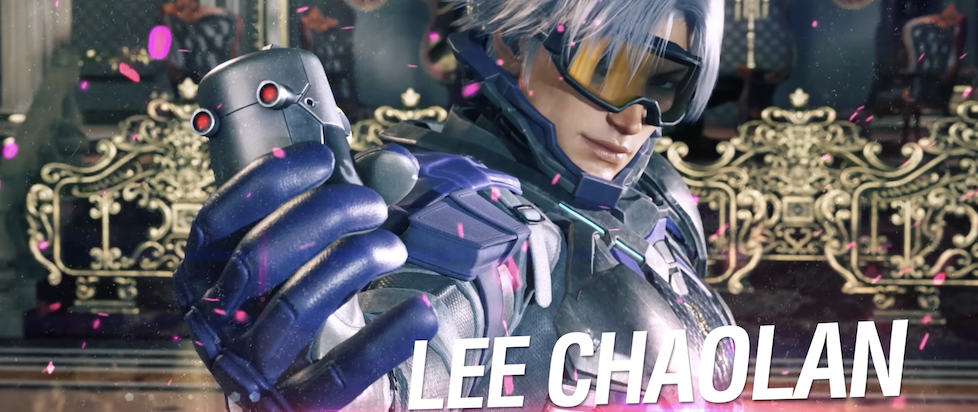
Yet, I think a more fascinating character exists just to the side: Jin’s “uncle,” Lee Chaolan. In a world of iron fists, where corporate takeovers evolved into world domination and it’s not clear if it’s worse to have the devil gene or simply be a Mishima, it’s easy to see how one could be morally corrupted. However, I think a more interesting question to ask is how and why does someone decide to be and do good?
Lee is introduced in Tekken as Kazuya’s rival. Heihachi, Kazuya’s father, adopted the orphan solely to annoy his son by giving someone else attention. This being Heihachi, both brothers received a harsh upbringing. Kuma (and, later Kuma II), the pet bear, gets more affection than either of them.
Years later, at the first King of Iron Fist tournament, Lee loses to his brother. Once Kazuya wins and takes over the Mishima Zaibatsu, the biggest arms developer in the world, he demotes Lee to a personal secretary role. Lee trains to defeat Kazuya, only to lose to Heihachi during the second tournament (Tekken 2). Because he knew too much about Kazuya’s devil form or because Heihachi deemed working with Kazuya as a betrayal, he is ousted from the Zaibatsu.
Two decades later, the third tournament (Tekken 3) goes on without Lee participating. His absence is explained the following year (Tekken 4), with presence of Violet, who is Lee in disguise. During the gap between tournaments, he became CEO of Violet Systems, a robotics company, and was enjoying life in the Bahamas. It is only after learning of some suspicious corporate warfare between the Zaibatsu and G Corp, he returns for revenge and to enter his Combot project into the tournament. He loses again to Kazuya after being surprised to learn that he was alive.
He returns next year (Tekken 5) to enact revenge and takeover of the Zaibatsu. However, learning that tournament was being hosted by the demonically possessed father of Heihachi, Jinpachi, and not Kazuya, he withdraws due to lack of interest.
At this point in the story, I would hesitate to consider Lee actively good. At best, he’s a neutral/morally grey figure amongst the cast. He only seems good in comparison to other villains and due to his failure to take over an immoral organization. He could’ve remained the perpetual 2nd-in-command, waiting for chances to strike. However, the time jump adds an interesting new layer to his character: someone who is successful on his own terms but still compelled to return to conflict by the mere presence of Kazuya.
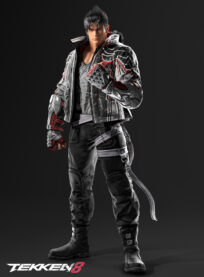
To talk about Lee’s face-turn you must talk about Jin’s brief heel-turn. Jin defeated his ancestor, making him the winner of the fifth tournament and the head of the Mishima Zaibatsu. With this newfound status, Jin starts a world war to awaken the demon Azazel, the source of the devil gene, so that he can defeat it.
Jin’s turn doesn’t use prior story beats (Jin’s heroism being fueled by self-hatred and the corrupting nature of power) in any compelling way, it instead indulges on the spectacle of villainy without committing to it. The mechanism Azazel’s awakening creates an escape route back to hero status, relying heavily on the audience forgiving Jin for having a ‘good’ reason. The most interesting part of the story mode is a post-credit stinger which hints that Jin’s success was temporary.
But the story is not told from Jin’s perspective, but from the view of a new protagonist: Lars Alexandersson. Lars, once a well-respected member of the Tekken Force (and an illegitimate child of Heihachi), led a defection of half the force’s soldiers, rebelling against Jin. Lars meets Lee in search of information and as Lee says himself, he has “plenty of friends on both sides.” Even at this point he’s yet to involve himself directly in any conflict. Their initial connection is one of mutual benefit: Lars, and his robot companion Alisa, saves Lee’s spy (regular of the series, Julia Chang). In turn, Lee repairs Alisa after the events of the game.
After Tekken 6, Lee could more be more plausibly considered on the side of good, even though it starts self-interest. With Jin comatose for most of Tekken 7, the ongoing war becomes a proxy battle between Heihachi and Kazuya. Because of this, Lee is probably motivated by his ever-present reason: revenge (perhaps to a lesser degree, since his endings are no longer revenge fantasies). It is also self-preservation: with circumstances getting far worse and being a potential target of either or both relatives, it makes sense to financially and technologically to back the rebel forces.
However, I think Lee’s heroism doesn’t just come from practicality, but also from a comradery having a Captain America & Iron Man-like dynamic with Lars. Their bonding started with Alisa, going from helping her to recuperate to helping move her and Lars’ romance along (Lars’ Tekken 8 ending). The other part is brotherhood: In a series where bloodline is often destiny, Lee has found a brother who has also escaped the black hole that is the Mishima family. For someone who grew up surrounded by cruelty, Lars – who leads through respect instead of fear and sees humanity in beings not always granted it – provides both relief and a positive example of family.
It could be easily argued that the series, especially as of late, prioritizes spectacle and slapstick over coherent storytelling and often forgets non-Mishima related characters exist beyond their most basic traits. It’s hard to disagree. The shape of Lee’s personality and story emerges from looking into the general storyline but also bits of conjecture formed from non-canonical endings and games, presuming they gleaned insight into how the Tekken team views the character.
However, it also made me appreciate both the tender and silly moments of romance, camaraderie and friendship, from old friends commiserating to new connections being made around the globe, that are highlighted. The brief glimpses into people eking out some joy in a world that seems overwhelmingly harsh, make the importance of these moments even more notable.
Lee’s transformation from corporate conniver to intrepid Casanova and occasional tech wiz happens gradually in the background of larger events. Yet, in a world of angels, demons, animals and robots – some literal and some figurative – who can’t or won’t change their nature, his deliberate choice forge deeper connections and to change for the better should be considered nearly as impressive as other characters’ supernatural feats.
———
Alex J. Tunney is from Long Island, which may explain all the writing about videogames, food and reality TV. You can find all of his writing collected at alexjtunney.com.