Ryuichi Sakamoto and the Heart and Soul of Lack of Love
This is a feature excerpt from Unwinnable Monthly #193. If you like what you see, grab the magazine for less than ten dollars, or subscribe and get all future magazines for half price.
———
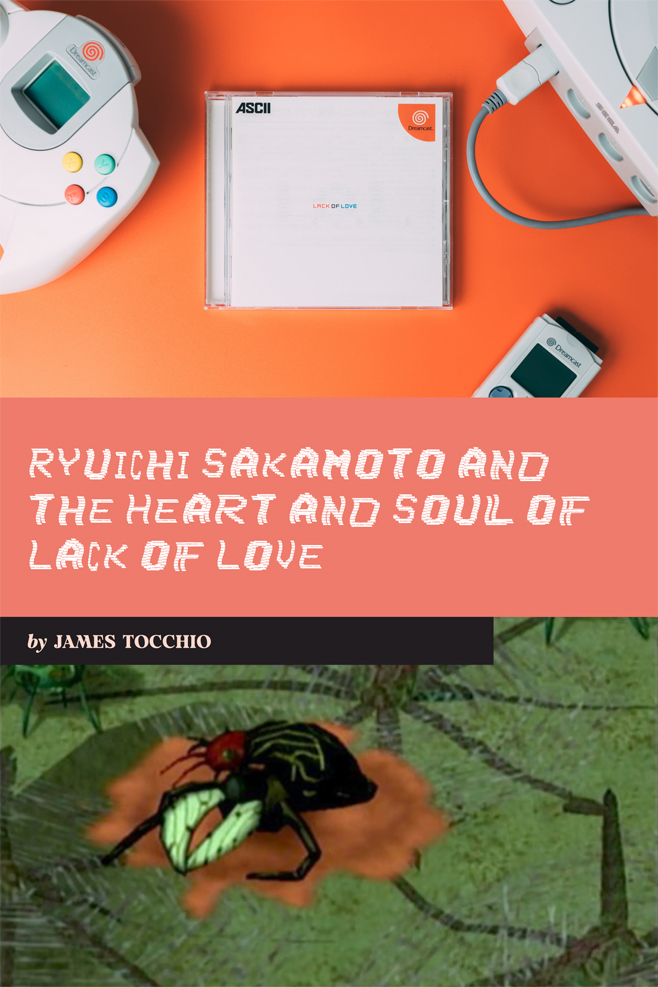
On a cold morning in April 2023, an obituary in The New York Times catches my eye. Ryuichi Sakamoto has died. A Japanese musician and composer known worldwide for creating musical scores for films such as The Revenant and The Last Emperor, the latter of which netted him an Oscar, my familiarity with Sakamoto instead comes from a nebulous piece of work lasting just nine seconds.
Sakamoto composed, performed and recorded the startup sound for the Sega Dreamcast.
His work in the gaming space didn’t end there. He was also instrumental in the creation of one of the Dreamcast’s most unique games, an evolutionary life-sim called L.O.L.: Lack of Love. Working closely with game director Kenichi Nishi (Chrono Trigger, Moon: Remix RPG Adventure, Chibi Robo), Sakamoto invented Lack of Love’s title and wrote the game’s scenario. This characteristically explores many of the themes that occupied the composer throughout his life. Most notably, the game is concerned with humanity’s mistreatment of nature and our tendency to destroy our environment in the name of progress (a way of existing which he considered to be “lacking in love”).
I’ve known about Lack of Love ever since reading Anoop Gantayat’s somewhat off-putting preview published on IGN in the year 2000. Gantayat couldn’t seem to make head or tails of the game, its packaging, nor its companion website’s “Japanese babble.” He wrote his lukewarm preview and left it at that. Most everyone else did too. The game sold poorly in Japan and was never released anywhere else.
Twenty-two years later, I click the disc into my Dreamcast, press the power button, hear the console’s startup song with renewed appreciation, and settle in for a rare experience – a Sega Dreamcast game that I’ve never played.
I’m not sure what I expect from Lack of Love, but what I find is a videogame with an earnest message and uniqueness oozing from every pore. But loving Lack of Love doesn’t come easy. Just one hour into my playthrough, I hate it.
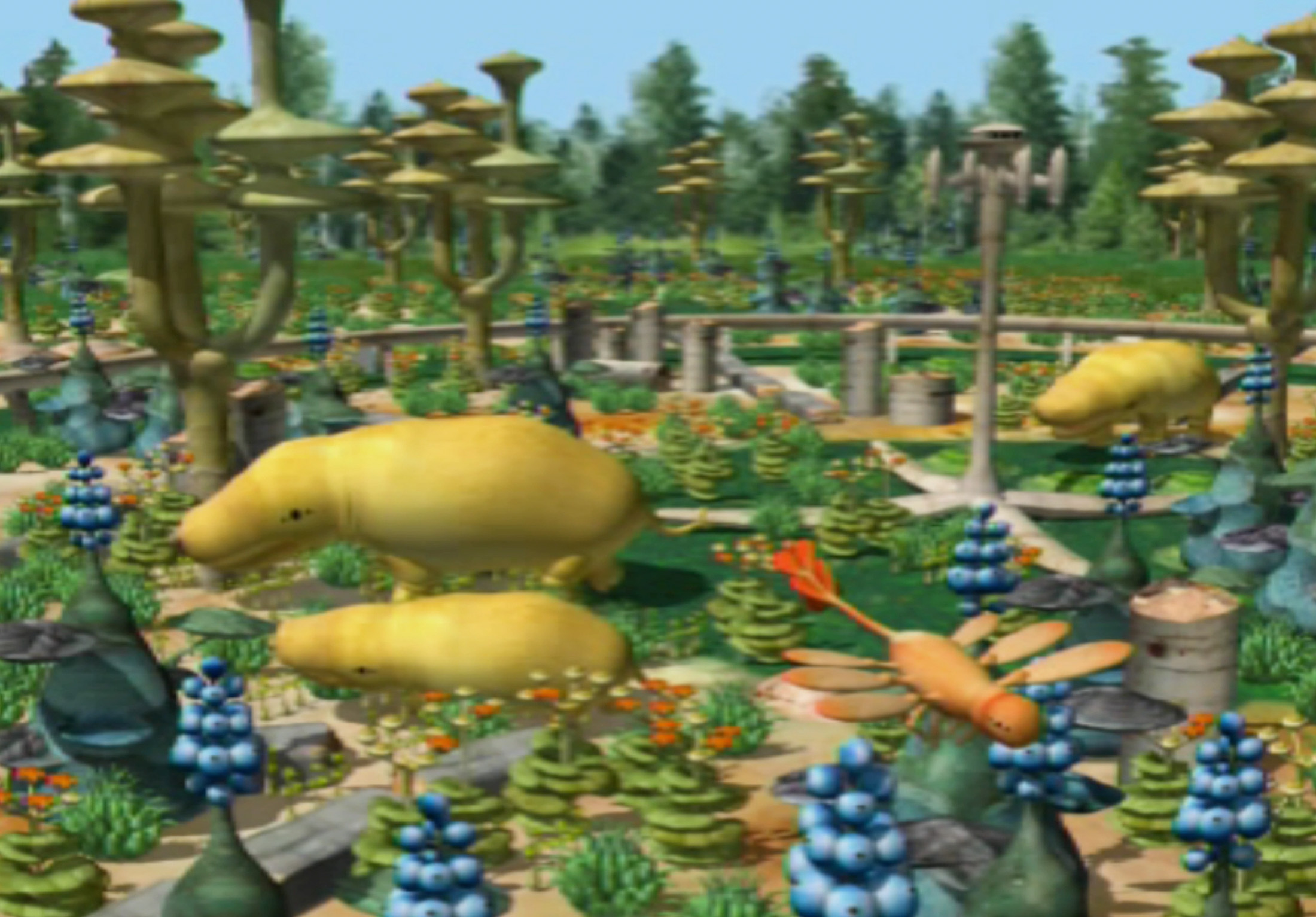
L.O.L. is an opaque and confusing game. There’s no tutorial, no onboarding, no explanation of the game’s mechanics, its goals, or its win-condition; there’s no text, no narrator, no dialogue, virtually no user interface and, for the fourth time in the game’s first twenty minutes, my cute newborn gastropod has been killed and eaten by another of the game’s many grotesque antagonists.
The screen fades to black. Life Over. And though I struggle to find the will to reload my saved game and try again, I do it, because there’s something honest and captivating that keeps me coming back. The sparse soundtrack, the alien environments, the drip-fed discoveries, the moments of genuine surprise, and soon I realize that more than anything else, it is the game’s very opacity and resistance to tropes that spur me on to continue playing what is surely one of the weirdest videogames I’ve ever played.
Five hours later, me and the creature I control have been through a lot. Sakamoto’s orchestral score rises out of silence to propel my much-evolved friend through a sandstorm, over a barbed-wire fence, and away, to escape the human-made cataclysm clawing at its heels. It’s at this moment that I realize there’s a tightness in my throat. And as Sakamoto’s name scrolls by shimmering at the credits, are those tears in my eyes?
No. Couldn’t be. Not me. Not over this ridiculous videogame.
///
Lack of Love’s opening cinematic establishes its premise and theme.
Set to a haunting song by Sakamoto, we watch a starship explore the galaxy in search of a planet suitable for human habitation. Locating such a world, a robot awakens to pilot the ship through the atmosphere to drill itself into the crust of the virgin world. The robot stamps the first of many footprints into the unspoiled land, and an army of autonomous excavators follow.
The player’s journey begins underwater. An aquatic egg rests amongst its siblings, which begin to ascend. I don’t want to be left behind, but the game has given me no hint of what to do. (In fact, there’s little indication the game has even begun.) I randomly press buttons and my egg begins to wriggle and then rise.
On the way up, some of the other eggs are eaten by passing fish. Now frantic to reach the surface, I press buttons faster in the hope that I’ll escape, or hatch, or somehow survive. The egg bursts and I see my creature for the first time, a strange thing somewhat like a starfish and a snail. It breaches the water’s surface and crawls onto land. It’s time to learn how to play Lack of Love or die trying.
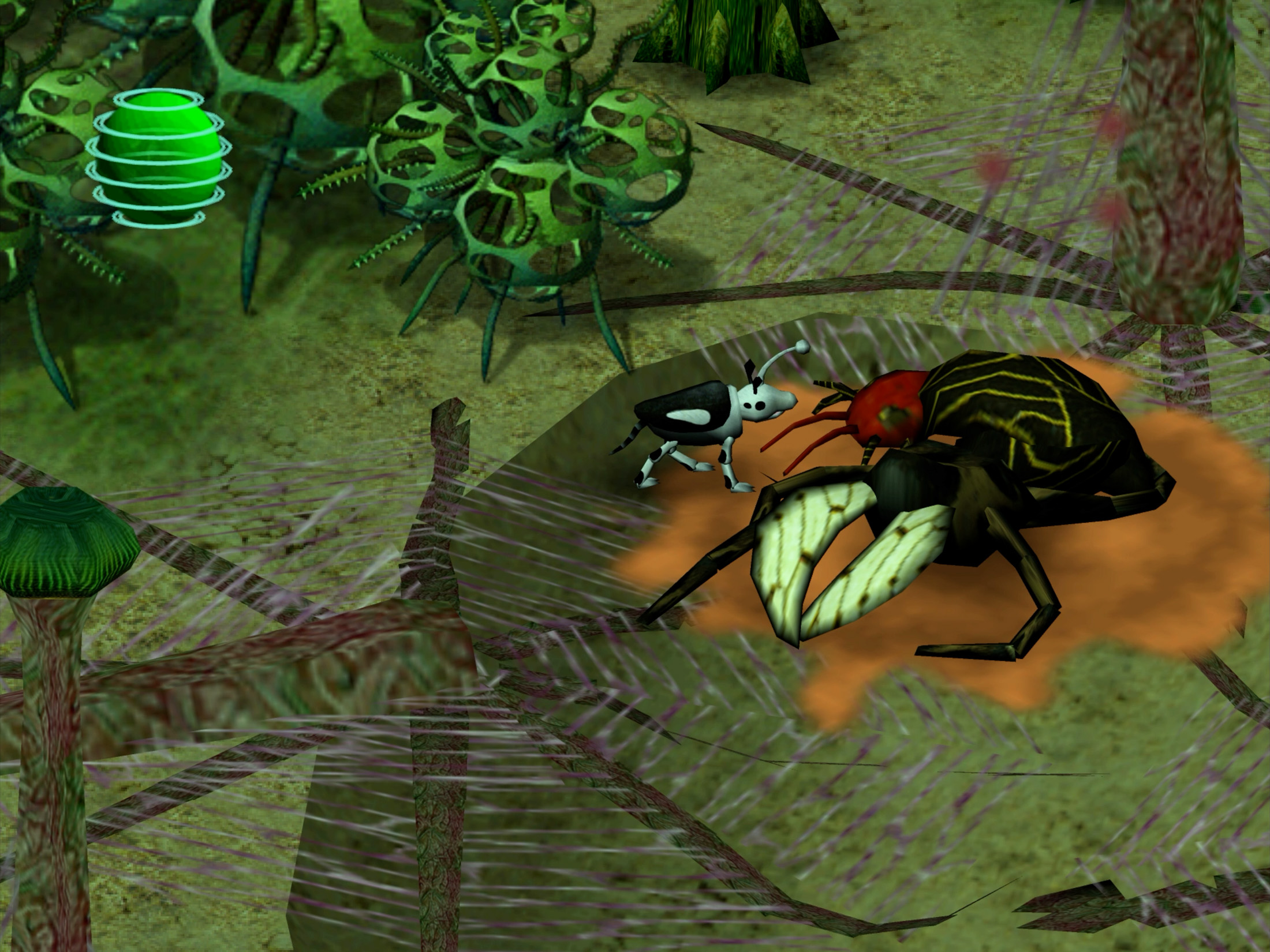
I press buttons and learn that my little buddy can sleep, communicate, attack, eat and excrete (read: pee). What these actions do within the context of the game is, at this point, still a mystery.
Over time I learn that the goal of the game is to survive, to eat and communicate and evolve, to live in natural harmony with our environment and the other creatures that inhabit it. As I help my creature to grow into ever more complex organisms, an ambiguous story unfolds, and it’s within this story that I first begin to feel the heart and soul of Ryuichi Sakamoto.
One third of the way through the game, the space-faring robot from the opening cinematic makes its first real-time appearance. It arrives to plant some sort of beacon into the ground. It’s a timer, counting down to something. But what, I don’t yet know. Sakamoto’s lonesome, rhythmic music underscores the slow inevitability of the countdown. When the timer runs to zero, all hell breaks loose.
The music changes to terrible fury. Violins scream. The ground is shaking as bulldozers churn a roiling cloud of dirt and debris. A lifetime of gaming and survival instinct tells me to run. I spur my creature on, but it’s no use. It’s caught and churned in the maelstrom of ruined flora and fauna, and the screen fades to black.
———
James Tocchio is a writer, editor, and photographer covering the culture of games and the people who make them. His work can be read in Game Informer, Retro Gamer Magazine, UploadVR, Debug, and in books by Lost in Cult, Harper Collins, and Ninty Media. He dreams of interviewing Yu Suzuki.
You’ve been reading an excerpt from Unwinnable Monthly Issue 193.
To read the article in its entirety, please purchase the issue from the shop or sign up for a subscription to Unwinnable Monthly!