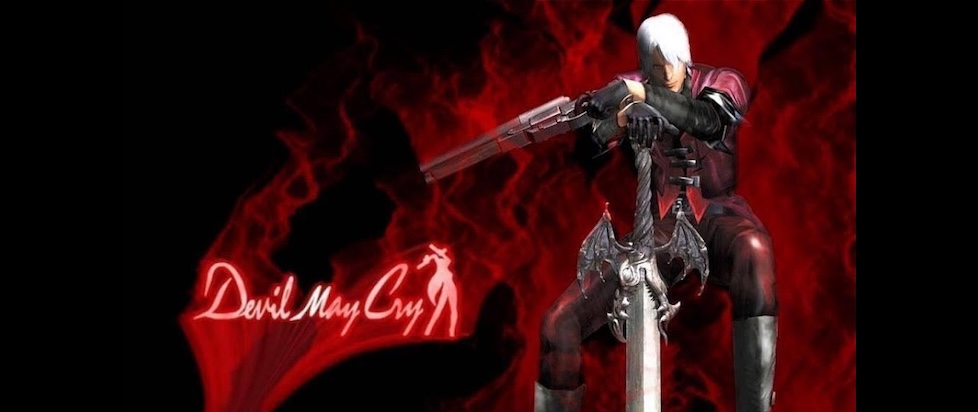
Cool As Hell: The Excellence of The Original Devil May Cry
Pledge!


“Let’s rock, baby.”
After the success of Resident Evil 2 in 1998, that game’s director, Hideki Kamiya, started developing a game in the same vein as the seminal horror franchise but with many deviations that made it stand out. Set within a world of demons, it puts players in control of Dante Sparda, a half-human, half-demon private investigator whose skills and badassery would be reinforced by the player through challenging yet engaging combat, setting a genre-defining precedent in the process. Released in 2001 for the PS2, that game would come to be known as Devil May Cry.
Devil May Cry’s excellence is defined by its ingeniously designed world and flawless usage of ludonarrative harmony. The setting of Mallet Island serves as the domain of the game’s antagonist and houses fearsome demons who will oppose the player. Its foreboding camera placements within its areas, ominous atmospherics such as moving walls and alternating stages and effective enemy sound design, such as the mocking laughter of the Death Scissors, hissing of the Shadows or hoots and hollers of the Nobodies, contribute to a game world that immerses the player into a dark and threatening world filled with labyrinthine areas and unpredictable enemy encounters.
This is where the ludonarrative harmony, which is when gameplay and story work together to create a meaningful and immersive experience, comes into effect in the form of Dante – a cool, calm and collected, red-coat-wearing badass who executes demons on behalf of his slain mother and brother. It’s up to the player to utilize his skills and weaponry to exercise stylish vengeance upon his enemies, with a grading system going from D-Dull to S-Stylish meant to emphasize that the player isn’t merely playing as Dante, they ARE Dante.
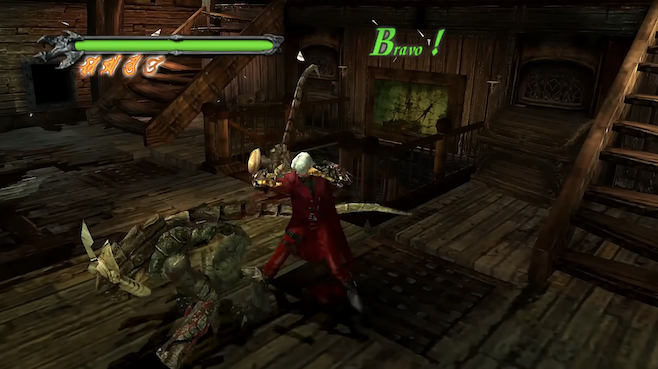
Rightly hailed as one of the greatest games of all time back in 2001, Devil May Cry’s game design and gameplay mechanics established the conventions of a new era of action games that would be classified as character action games, involving aesthetically evocative settings, high difficulty/challenging enemies and a badass main character whose skills are reinforced through the player’s own. This includes the Ninja Gaiden revival series which features punishing enemy designs meant to force the player to step up their skills as the ninja protagonist, God of War’s use of ludonarrative harmony in translating Kratos’s brutality and bloodlust into highly enjoyable combat mechanics (such as quick-time event finishers) and Dante’s Inferno’s immaculately designed game worlds, which successfully immerses the player the story each level tells.
The excellence of Devil May Cry is that it invites the player into a dark, immersive world filled with demonic creatures and unpredictable danger, yet puts you in the shoes of a character whose prestige makes light work of all who oppose him. Its gameplay is empowering and accessible, and its challenges are designed to test and strengthen, not impose or deter with a narrative that prioritizes action as a form of characterization and immersion. This in turn sums up Devil May Cry’s legacy as an action game benchmark whose masterfully designed foundation and effectively implemented mechanics are what defines any game within its genre as either a success or failure.
———
Vincent Dante Dilworth is a Chicago-born writer with a love of cinema and videogames and Hollywood aspirations.