Strangers on the Road

This column is a reprint from Unwinnable Monthly #192. If you like what you see, grab the magazine for less than ten dollars, or subscribe and get all future magazines for half price.
———
Architecture and games.
———
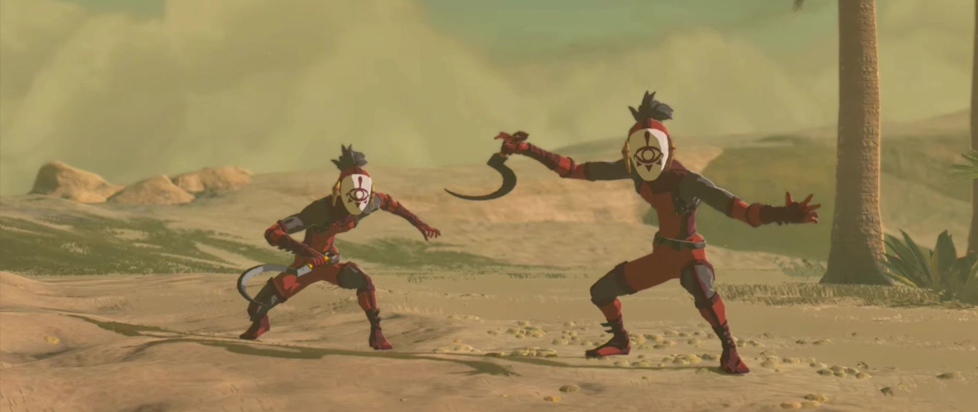
Spend enough time playing The Legend of Zelda: Breath of the Wild or its relatively recent sequel, Tears of the Kingdom, and you’ll come across the devious Yiga Clan, probably on a trail or perhaps a path, or some other effectively random part of the game world. The wind moves through the grass. The conversation seems harmless.
They’ll suddenly turn on you mid-conversation, revealing themselves to be a secret assassin in disguise, dedicated to your demise. With a burst of red smoke and a loud cackle, you’ll be holding your ground, or taking flight. This use of the unknown, a quiet manipulation of your expectations and routines, would be what mechanically defines the Yiga Clan, as well as the horror genre.
The members of the Yiga Clan operate through cunning and deception, unlike a large number of antagonists in the genre, but similar to some of the absolute best, along the lines of Hannibal Lector in The Silence of the Lambs or Pazuzu in The Exorcist. You never know exactly what they’ll do, or when they’ll make a move. They hide in plain sight, acting unpredictably and running rampant when you’d least expect. The deepest form of fear comes not from disgust but the unknown.
Pretty much any encounter can turn violent on the open fields of Hyrule. These games are definitely not attempting to recreate the horror experience, but the general technique mirrors the approach taken in thrillers, where tension doesn’t build from a clear and present danger but the risks and possibilities of a given situation, typically an existential threat. The greatest weapon of the Yiga Clan isn’t their eightfold blades or their deceptive disguises but the potential of an abrupt betrayal of confidence. The feeling that someone, perhaps anyone, could become your attacker.
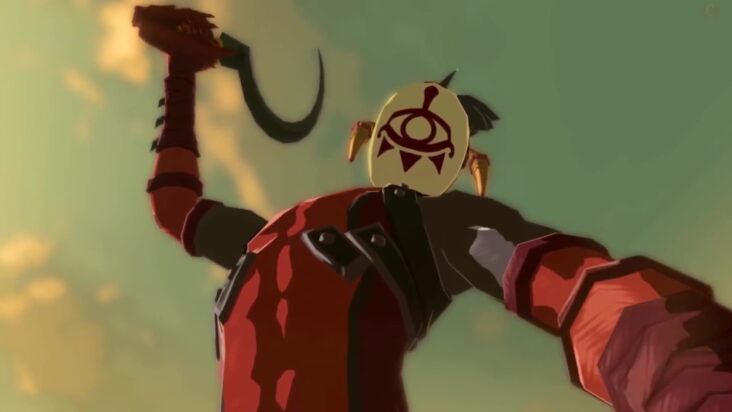
The horror genre was built on psychological manipulation, something best described as emotional architecture, if you’ll grant me some creative license. The experience depends less on blood and gore than simple anticipation, by which I mean the unseen, unheard or unexpected moments preceding the violence, truly a moment of pure potential. The fear comes from directing your attention towards an absence, whether it be the door slightly ajar, the silence before the scream or the flicker of light from the window. This type of tension and release forms the extremely satisfying peaks and valleys of the narrative structure.
The genre thrives on ambiguity, drawing strength from those things which can’t be entirely explained or categorized, resisting resolution. When the monster is finally slain, the serial killer is ultimately apprehended or the demon exorcised, the overall sense of unease nonetheless remains, a facet of the horror genre which may help to explain the proliferation of sequels. This residue of emotion is essential to the appeal, providing a reminder that we live in a world which is fundamentally unpredictable, filled with terrors that could take place at any time. The persistence of the genre reflects our unconscious understanding that existential dread isn’t an exception or an aberration but a condition of our own existence, and that perhaps through fiction, we find a way to safely explore the phenomenon.
Horror leans heavily on suspense, often stretching moments well beyond the point of comfort, forcing you to exist within its unsettling framework of uncertainty. The almost obligatory presence of silence and shadow creates narrative cues that guide your attention to absence, rather than presence. The alien, the stalker and the spirit are only observed in fleeting flashes. Horror is less about story than experience, constructing a choreography of tension and release, training the body as much as the mind to anticipate danger. You become complicit in the development of your own dread.
Beyond the basics of the narrative structure, the genre serves a philosophical and social function, testing the boundaries of what could be considered acceptable, dramatizing the fragility of the different structures which hold society together. The derelict space station, the southern manor and the forgotten tomb expose the fundamental instability which underpins the impression of order, exposing the chaos that we repress but can’t eliminate. The masked assassins in Breath of the Wild and Tears of the Kingdom are in fact bringers of a realistic message.
Horror is a genre which is all about return, whether we’re talking about a return of the repressed, a return of the lost or perhaps most frequently a return of the dead. The genre makes visible the various anxieties that our society would never otherwise articulate, revealing that safety is nothing more than illusion. You don’t feel safe because you probably aren’t safe.
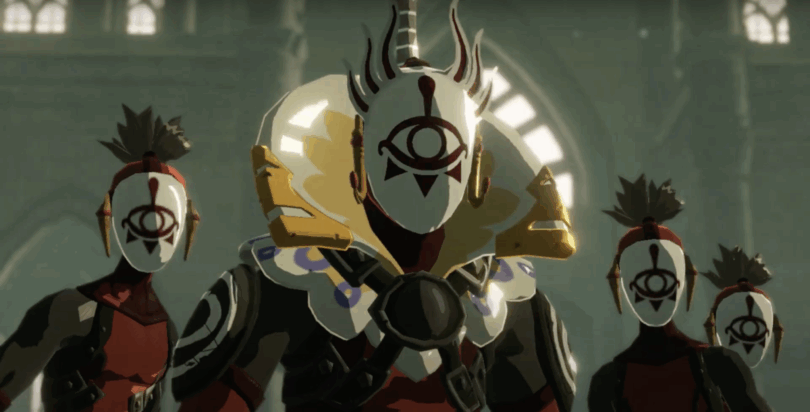
When it comes to the Yiga Clan, even their habitations mirror the emotional architecture of the genre, best described as dark, dank and claustrophobic. Their hideouts are carved into the earth or hidden behind facades that frequently blend into the background. They seem less built by human hands than grown from shadow, similar to the haunted houses of the horror genre. These are places of confinement where every twist or turn could result in a violent confrontation, or a sudden surprise.
They’ll turn the familiar into the unusual, the invulnerable into the compromised and the typical into the terrifying, at least insofar as The Legend of Zelda is concerned. We’ve come a long way from Twilight Princess, after all. We’re talking about a franchise which has always been marketed to the broadest possible audience, when push comes to shove.
I can’t help but recognize this particular parallel, on the other hand. The broader takeaway proves that horror as a genre is not only more influential as a form of artistic representation than you might otherwise believe, but in fact also provides profound insight into the nature of our own psychology. This could very well be the truest type of terror.
———
Justin Reeve is an archaeologist specializing in architecture, urbanism and spatial theory, but he can frequently be found writing about videogames, too.