The Absurdity of Proving You’re Not a Robot
You feel compelled to support great writing…
The Internet is a hostile place. Every precious second of your time online is viciously wrestled over by a pack of algorithmic feeds snapping their jaws at one another. Platforms designed to foster human connection are teeming with bots. The hyper-inflated rise of generative AI means every day it becomes harder and harder to distinguish between media made by real human beings and content inducibly vomited by a large language model. Everything is a product – especially you.
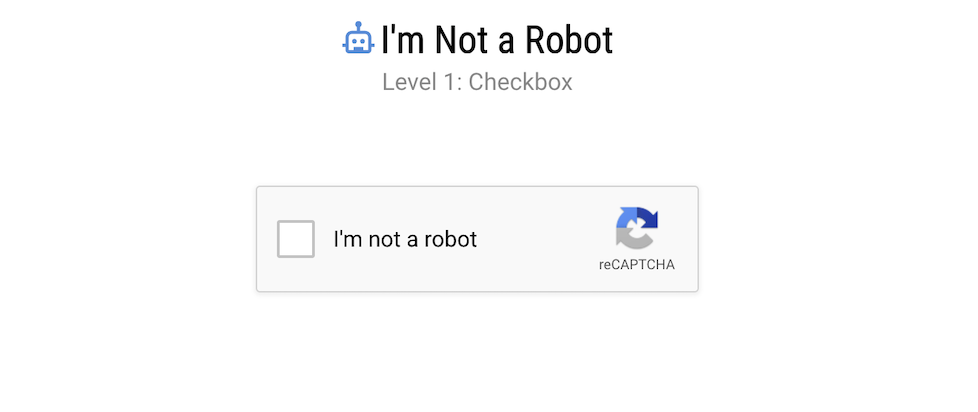
Something as innocuous as a Google search will prompt you to verify your humanity (before machine-generating a hallucinated answer to your query). In order to examine the contents of your soul, websites use CAPTCHAs, or Completely Automated Public Turing tests to tell Computers and Humans Apart, a technology that has been around since the turn of the century. This test encapsulates the fundamental disconnect between humans and artificial intelligence, despite how desperately big tech wants to suture language models into our daily lives.
Neal Agarwal’s latest game I’m Not a Robot is a gauntlet of increasingly difficult and absurd CAPTCHAs. I’m Not a Robot tasks you with selecting all the images that contain a fire hydrant, identifying a perpetrator’s license plate, parking a Waymo, breaking up with your AI girlfriend, and even more ridiculous duties. The CAPTCHAs will test your dexterity, mathematical abilities, and logical thinking. I’m not exaggerating – one of the tests demands you beat a famous chess supercomputer at the game it was designed to dominate. On its face, I’m Not a Robot blatantly and hilariously satirizes the tedium of CAPTCHAs. But as the player progresses the game evolves into a layered meditation on the artificial blur between man and machine.
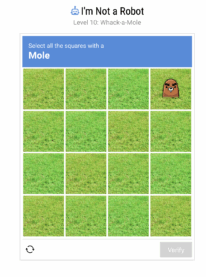
The absurd challenges of I’m Not a Robot are rooted in our absurd reality. You’re tasked with navigating a Waymo through a nostalgic parking minigame because Google, which acquired reCAPTCHA in 2009, uses your data to train their driverless cars. One of the most effective levels forces you to convince an AI chatbot that you’re a human being within a set number of messages, as a Human Confidence Level percentage monitors your humanlikeness. The easiest way to do so is to contrast yourself against the chatbot.
Humans are desperately social creatures, and we live in a severely isolating society. Computers mimicking humans’ capacity for emotion is not just strange and sad, but genuinely dangerous. Despite the real harm already caused by machines masquerading as humans, including people suffering from AI psychosis and teenagers being pushed to suicide, big tech is shoving the technology into every corner of our lives, including classrooms.
I’m Not a Robot explores the manipulative nature of our relationship with generative artificial intelligence. When tasked with breaking up with your AI girlfriend, the chatbot repeatedly gaslights you. In order to successfully dump her, I told her that I needed to focus on taking care of my father as he recovered from heart surgery (this is true, just a year out of date). She insisted I was making weak excuses and that she was the most important thing in my life.
Big tech wants you to think AI is the most important thing in your life. Every online interaction is obfuscated by flimsy machines begging you to let them poorly attempt to complete basic or, more offensively, meaningful tasks on your behalf. The state of modern technology is overwhelmingly miserable, and I’m Not a Robot works so well because it laughs with you about it.
By the way, ChatGPT can solve CAPTCHAs now.
———
Bee Wertheimer is a games writer based in New York City. You can find them on Bluesky or visit their site beewertheimer.com.