War & Warmongers in Hell is Us
Visit the MIT Press shop
In the early months of the COVID-19 pandemic, nature flourished in the absence of normal human life. Parks overgrew, water pollution dissipated, people could view the full range of the night sky that hadn’t been seen in decades.
What followed were chants on social media of how much humanity has failed the planet. #WeAreTheVirus flooded every app, Instagram story post, and tweet with an accompanying photo of how beautiful the earth actually is without the presence of humanity’s polluting nature.
As with most global crises, society enjoys putting more onus on the individual than anything else. Individual consumption undoubtedly makes an impact on our environment. But a life’s output of trash is a joke compared to what corporations dump in an hour. Hashtags like #WeAreTheVirus often shifts the blame away from the actual polluters and puts it on humanity at large.
Sure, corporations are run by people, but all of humanity isn’t running the business strategy of ExxonMobil or Lockheed Martin.
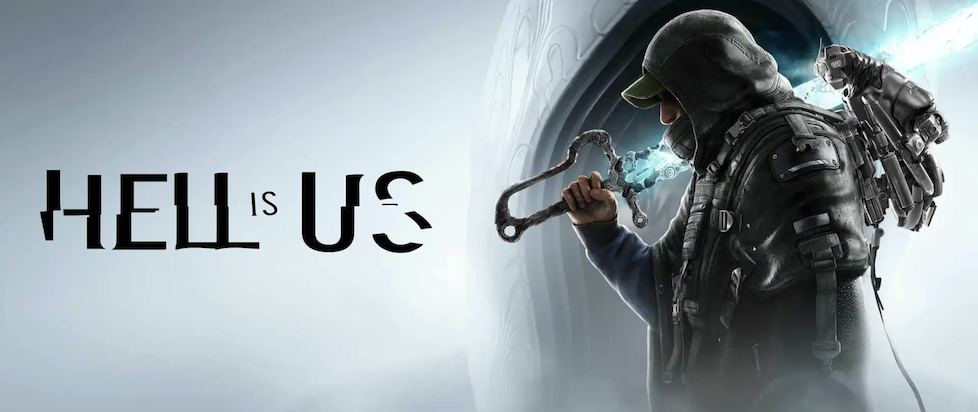
Rogue Factor’s Hell is Us tries to tackle that same issue – pinning an existential problem on the entirety of humanity – through the lighthearted example of a religiously motivated civil war. The game takes place in the fictional country of Hadea, where protagonist Remi, a native Hadean, is on a quest to find his parents who shipped him out of the war-torn country at just five years old. Remi’s journey takes him through one bloody battle scene after another, encountering zealots and innocent bystanders alike between hordes of these pale, faceless, alien beings that roam the lands of Hadea.
Hell is Us’ title is the question posed to the player – who is the real villain in a civil war? Is it the alien creatures that roam the fields and towns of Hadea? Or is it the people that massacred each other in the name of diverging religious beliefs?
It’s quite easy to answer this question, and it’s not the aliens. These creatures are the main combat encounters that Remi has to face down, but as far as we know, they aren’t violently killing anyone for any moral reason. They’re so inhuman, so abstractly pale and different from the grey, murky region around them, that they’re almost too easy of an answer to be the true villain of Hell is Us.
But it’s also not the common people of Hadea. Sure, some of the Hadeans are certainly responsible for horrible atrocities committed against their fellow countrymen – bodies hanging from trees, staircases pooling over with blood from bodies discarded like rotten carrion, entire buildings leveled in an instant. But these actions aren’t inciting the conflict itself, not keeping it going to an insane degree. The violence isn’t asymmetric at face value.
The most shocking scene in all of Hell is Us starts in a museum. Its antechamber is a pseudo-shrine to the longstanding Hadean Palomist (religious traditionalist) regime dating back 800 years, and looks like a simple altar that venerates an old king. Until I pulled a lever, and opened a secret door behind a statue.
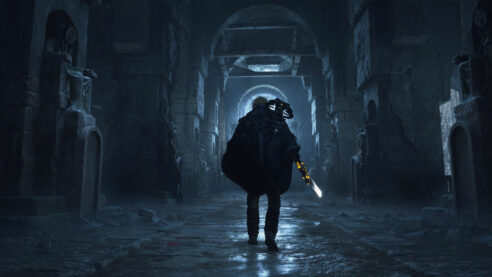
Behind it was a massive underground bunker run by the game’s secretive military organization, OMSIF. Clearly inspired by the Resident Evil franchise, this monument to “scientific innovation” built into the rock face of an ancient museum is extremely apt for the situation that follows. It’s here where OMSIF experiments on the aliens of the world and “timeloops” they created, physical manifestations of cycles of suffering that happen during the civil war, keeping people trapped in endless trauma like a mass shooting or a suicide.
It’s here where I found OMSIF scientists were manipulating these aliens for the worse: keeping them in cages and experimenting on them, and creating new timeloops to keep more civilians in endless suffering.
I should not have been that surprised. Games about war nearly always have some kind of antagonist that directly benefits from continued cycles of violence, whether in the form of an arms dealer, a larger government organization, or just a hungry capitalist. But I never expected this blatant literalism. We are going to make new ways to literally keep more people trapped in endless violence, yeah, sure buddy, go ahead.
OMSIF are the true villains of Hell is Us. If that initial assessment isn’t enough to prove it – Remi’s mother, who was an OMSIF operative throughout the game, reveals herself to be a double agent and makes a grand gesture of defecting at the very end of the story. The organization even attempts to control the very birthplace of the aliens, a massive creature known only as the “Eye of God”, that Remi eventually destroys.
Games about war often make you think of the conflicts of a game’s heyday, like more than a few Call of Duty entries and Afghanistan, and Six Days in Fallujah and Iraq. Truly good versions of these games make you think about why the conflict is persisting in the first place, like Spec Ops: The Line.
But few make you think about the true “third parties” of war like Hell is Us. In the modern conflicts of the 2020s, we’re often one to point out the aggressors like Israel or Russia. Yet real critics are equally laser-focused on the warmongers, the profiteering entities making a quick buck off of human suffering.
Military contractors make a killing: Colt makes $25 million here for delivering guns to Israeli troops, Lockheed Martin and General Dynamics notch multi-billion dollar contracts there for Patriot missiles and other defense tech. But it’s not just defense – Google wins a $1.2 billion contract from Israel to develop an AI system to “generate targets for the military based on a person’s AI-assessed receptivity to militancy.”
These war-machines aren’t in the conflict to support one side over another, they’re there to see how well their technology, their next war-making device, can work – and see how much money it generates. Trying to blame who is prolonging a conflict on one side or another is easy, and it’s even correct in some cases. But it’s much harder to call out those profiteering off the conflict, and reject their place in society altogether.
Conflating war as a problem with humanity isn’t just misguided, it’s inaccurate. Hell is Us shows us that. We are not the virus, we are not hell. Mistaking the trees for the forest is exactly what the true virus – and true hell – wants.
———
Jack Dunn is a writer who focuses on videogames, history, and other made-up things. You can follow him on BlueSky @dackjunn.bsky.social.