Turning Time

This column is a reprint from Unwinnable Monthly #191. If you like what you see, grab the magazine for less than ten dollars, or subscribe and get all future magazines for half price.
———
Now this.
———
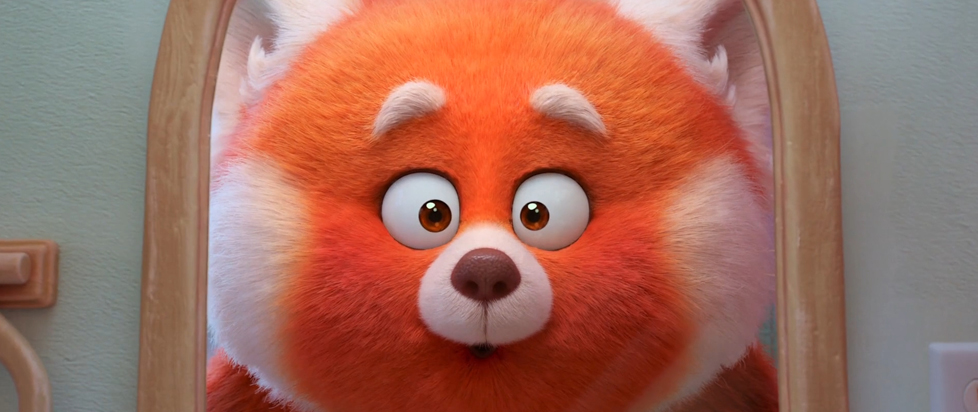
My son has really gotten into Disney/Pixar’s Turning Red. Now you may ask yourself: Noah, is your son really the target demographic for a movie about a 13-year-old Canadian girl set in 2002? Maybe not. He’s three, and it’s 2025, but he likes the red panda. But, in watching Turning Red, I realized it reminded me of one of my favorite shows from the last decade: Undone. In case you don’t remember it (no one does), Undone was Raphael Bob-Waksburg’s follow up to Bojack Horseman alongside cocreator Katy Purdy. The show is animated with rotoscoping, and follows the story of Alma Winograd-Diaz (Rosa Salazar) as she deals with the aftermath of her father’s (Bob Odenkirk) death in a car accident. At the same time, she starts to wonder if she’s suffering from the same schizophrenia that plagued her grandmother. With an average Rotten Tomato score of 97% between the two seasons, it was obviously critically beloved, but I have yet to meet anyone who has seen it. Like Turning Red, our protagonist suffers from a genetic condition that makes her question her sanity during a period of trauma.
When I realized that connection, I nearly immediately started rewatching Undone. It’s been a few years since it ended, and I remember loving it, but the details were hazy. My son and wife were asleep, so I connected my headphones and clocked in. Suddenly, I looked up from my phone, and I wasn’t on my bed, in my house, but instead, I was in a hotel, somewhere near the beach in Santa Monica. Maybe it was those Santa Ana winds driving me insane, or maybe it was the hefty dose of edibles I just scarfed down, but I swore I was back in St. Louis just seconds ago. I needed to slow down on my brownies, but the damage was done. The only thing I could do was sink into the bed, eat the tacos I ordered, and dive deeper into Undone.
By episode seven of the first season, I was more than locked in again. Was Alma losing her entire mind, or could she, actually, travel back through time? Could she essentially manipulate reality, or had she just lost her goddamn mind? As they start dancing at her sister’s wedding, I realize I’m in LA watching another movie, but it had all gotten much more terrifying. Alma’s dance sequence with her ancestors blends seamlessly with Sammie’s blues guitar, and the tribal masks line up perfectly in rhythm with the African dancers. Once the high hats start clapping and the bass starts shaking, I’m just enraptured. How did Coogler envision this blend, this collision of times, linked through time and culture?

Sammie’s deep call to his ancestors felt like a call through time, drawing me into 2025 like no movie had before. Somehow though, Miles Caton’s should be star-making turn drew on all of his musical skills. Bringing that Robert Johnson, “I sold my soul to the devil for these amazing guitar skills” vibe has only been matched once before. But somehow, in Sinners, it’s still overshadowed by Michal B. Jordan’s dual performance: Smoke and Stack. I’ll let the academy off the hook if he doesn’t win. But if he isn’t nominated? Well, words will be had – probably in this column. Stay tuned, I guess.
Walking out of the theater into the surprisingly cool California evening, I only really had two complaints about it. First of all, our favorite Native American vampire hunters never came back. There has to be a scene on the cutting room floor for that, right? But secondly, as I walked to my car, I couldn’t help but wonder if Dan Stevens could have outperformed Jack O’Connell’s dastardly performance as the head vampire. Maybe it was how naturally Stevens would have slipped into the Irish dance sequence, or maybe it was that something about Ryan Coogler’s seamless blending of time felt familiar.
I mean, was anybody surprised that I was hot about this brilliant new show from Fargo’s Noah Hawley? Legion wasn’t your traditional Marvel product. No, this felt brand new. This was 2017, and overproduced worlds of X-Men and Spiderman were washed – Legion was the avant garde, and David Haller was the new high priest. I immediately felt like Legion was telling new stories, leaning into the dynamics between mental illness and talent, supernatural or otherwise. Plus, the psychedelic vibes and Aubrey Plaza felt perfectly ripe for those edibles I crushed back in California a few years from now.
But as the seasons dragged on, 2017 slipped into 2019, and suddenly, David’s problems were bigger than the yellow demon living in his head. Now, he was in charge of saving the world. There’s one last mission, and only he can save it. By this time, Marvel had finished its endgame only a couple months before, but suddenly, the universe was once again at the brink. But Tony Stark was nowhere to be seen. Just a young, troubled man and his weird powers.

But isn’t that the problem when your superpowers can inadvertently alter your reality? One day you’re saving the world, and the next you’re in a sitcom from the ’50s. As Wanda struggles to contain her powers, setting up barriers to make sure she doesn’t over extend herself, she only wants to save her own life, and her own family. She knows how to set boundaries. She is the selfish superhero of her own story and her weird powers. She doesn’t have to save the world, just bring her past life back into reality. Wandavision honestly couldn’t have spoken to its own moment of reality more, when nearly all of us wanted to figure a way out of Covid and a way to escape reality. If we could just fast forward time, moving past this tragic reality, past the fundamental truths most of us would prefer to ignore, back into the past.
At least that’s what Alma hopes at the beginning of season two. In the first episode, she quickly realizes that she did, in fact, save her dad. She is a shaman, and she traveled through time, and brought her dad back from the dead. But is that what she really needs for herself? This quest isn’t a world-defining question. This is personal, deeply rooted in her own heritage. Once you’ve gotten everything you’ve wanted, is that it? Couldn’t you do more? When Alma decides to go back to her original timeline, the question remains: was that the right decision?
But isn’t that the problem when your superpowers can inadvertently alter reality? One day you’re in an 1980s sitcom, and the next you’re singing into a tin can in 1930s Mississippi, and the cops are on your tail. At least that’s how it felt in the theater, watching the most-handsome George Clooney croon into a microphone alongside John Turturro and Tim Blake Nelson. Next to me, my mom was clearly transporting back in her own timeline, back to Ancient Greece, where Homer was telling a similar story, one where another stranger in a strange land, wandered the landscape, trying to find his way home.
Watching O, Brother Where Art Thou in the theater with my mom was also my introduction to one of the defining American filmmakers of their generation: The Coen Brothers. For a long time, if you asked me my favorite movie, The Big Lebowski was my go-to answer. I knew though, even when I said that, it wasn’t necessarily true. I mean, I have a top four on Letterboxd, but who can really say their favorite movie of all time without at least some reservation. But Lebowski was an easy answer, a movie that I do truly love, and fits well when I want people to understand my ideas of film and comedy, and a bit of my own personal approach to life.

But it’s possible that O, Brother speaks even more to my life than Lebowski. My parents are both classicists, and I grew up with the story of the Odyssey embedded through bedtime stories. And while I wasn’t raised on early 20th century bluegrass, I was raised in the old-timey stylings of Bach and Beethoven. So, when Clooney and Co. are seduced by the sirens singing “Go To Sleep You Little Baby,” I felt ready to be enveloped, and maybe a bit seduced as well. I mean, I was a 14-year-old boy after all.
I was almost seduced enough to fall asleep. I mean, such beautiful harmonies and melodies and ladies. Maybe I need to go outside. After all, they’re calling me, beautifully, blending all those beautiful eras of music so perfectly. Not blues, hip hop, jazz, and African folk dances this time though. No, now it’s classic Irish dancing, blue grass, folk, blues, and soul, blending together, begging me to join them.
As I exit the theater into the surprisingly cool California evening, I’m still stunned by the poignant reminiscence of the Black experience in the South in the Jim Crow. Sinners sings volumes, but at the same point is genuinely horrifying and touching and engaging and exciting. When Smoke busts out his army experience against Pappy O’Daniel, everything feels like it’s in its proper place. But when Stack slinks in after Sammie’s set in Chicago in the early ’90s, looking just like he did in the ’30s, we know that he and Mary are anything but natural. Like Wanda and Vision, Stack and Mary are figures extended through time, moving through decades in a single experience. Instead of being trapped in a single time-space, David can pierce the veil between life and death, conjuring spirits from the past and future. If he can control himself, and his abilities, he can save the world – and maybe himself. As Sammie’s blues guitar blends with The Soggy Bottom Boys and the masked tribal dancers at Alma’s sister’s wedding, suddenly a different beat comes in. Rhythmic chanting, but from a yet different ancient culture, this one filled with the depth of Mei’s Chinese ancestors, blending with the pop, boy band stylings of 4-Town.
And that’s when I remember why I’m happy for my three-year-old to be watching Turning Red. I don’t think he’s curious about what life as a 13-year-old girl in 2002 was like, or what boy bands are, or about genetic trauma that trickles down through generations, or about the power of storytelling and singing and their endless iterations through televisual and cinematographic media, or about humanities history of reiterating stories over and over and over again, breathing new life into them in each incarnation.
No, I’m just happy that he likes red pandas. And that he likes movies. They’re both pretty cool.
———
Noah Springer is a writer and editor based in St. Louis. You can follow him on Bluesky @noahspringer.com.