High School Musical and the Gaslighting of America’s Youth

This column is a reprint from Unwinnable Monthly #191. If you like what you see, grab the magazine for less than ten dollars, or subscribe and get all future magazines for half price.
———
Elsewhere, here.
———
I swear this is true. I watched High School Musical the night it premiered on the Disney Channel. My sister and my best friend watched with me. They are my witnesses.
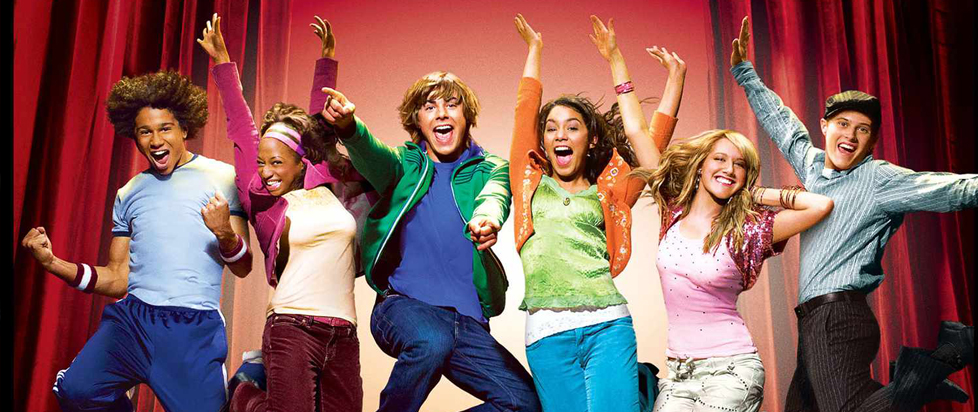
For those who haven’t seen it: a minor subplot involves a character on the basketball team revealing in the movie’s best musical number that definitely sounds nothing like “You Can’t Stop the Beat,” that he loves baking, to everyone’s shock and disgust. Showing male nipple was still new and exciting on Disney Channel so none of the revelations in this musical number can be really salacious. The “shock” of them depends on the character breaking a social taboo we are hermetically informed of by the placement of the revelation in this number. The song implicitly tells us these things are not done. Jocks don’t bake. Nerds don’t breakdance. Stoner coded skateboarders don’t play the cello.
Unspoken assumptions – racial, gendered, classed – are doing the rather labored work to make this shock make any kind of sense. They all follow a logic like… baking is feminine, and basketball is not, so, jocks don’t bake, but this one does and the whole school is going to be rattled by this. The assumption that the prejudice is obvious is more bigoted than the singing teens themselves.
At the end of the movie that I watched that night, the baking jock offers some cookies to the villainous diva in an attempt to woo her. He is rebuffed! If you watch the movie, you will still see all of this. But that first night it aired something else happened afterwards. That first night, after the baking jock is rebuffed by the villainous diva, her queer coded twin brother takes the baked goods and says seductively: “I like cookies.”

You will have to take my word on it because there is no evidence. Not anywhere on the internet that I can find it. The only reason I’m sure I didn’t make it up is because my sister, my best friend, and myself were all so tickled at that line and the sudden injection of sex, and surprise, and queerness into a movie where the romantic leads don’t even kiss at the end. We repeated it for weeks afterwards. It was a game. Do you like cookies? I like cookies. Until we watched it again and our favorite part of the movie was gone.
The shift from physical media to streaming didn’t create the phenomenon of retroactively editing a piece after airing. It’s a favorite hobby of George Lucas. Nor is it limited to film and television; The Nancy Drew novels were revised in the late ’50s to remove racist caricatures. This is a well-intentioned, if ahistorical version of this. I also have trouble faulting the creative team behind Mythic Quest for wanting a more tonally consistent ending to their series once they learned it had been canceled, and to an extent I am happy that they got closer to what they would have wanted. I could empathize with a director who itched to replace a take where the Starbucks cup made it into the shot, as easy as editing a sent text. But other uses are queasy, and even the benign emphasize the idea that art should be perfect and exist in a vacuum away from human error or commerce, something that has never been true. I would have loved to see Little Women the way Alcott wanted to end it, but that is not the book that exists, and when we consider that text we should discuss what is written and not only what might have been. That desire – understandable as it is – leads to unethical censorship, whether the intention is to avoid parent complaints on a family friendly platform, to avoid difficult or unsavory legacies, or to avoid criticism from an angry and increasingly entitled audience.
What makes streaming different than past revised mediums is that when these changes are made, there may be no older physical model to compare it to, and so it becomes very easy for movie studios to gaslight us. A movie like High School Musical was never really intended to be watched or studied closely, or even watched on demand. It was made to entice tweens to keep watching TV on rainy afternoons.

In a 2021 interview for Business Insider, Lucas Grabeel, the actor who plays the gay twin, says that while Disney was, “not on board” with having openly gay characters, “he worked with director Kenny Ortega to include nuances. “[…] A lot of them got cut,” Grabeel says, “but a lot of them are still in of me wanting the creme brûlée or the cookies or whatever.”
Wanting the cookies! This is likely the closest I’ll ever get to an apology from Disney for gaslighting me for nineteen years. I knew he wanted the fucking cookies! Anyone watching the film can see that he wants the cookies. I have thought of this lost queer moment every time someone crowed triumphantly that Disney had its first queer character, before Trump II allowed them to stop pretending. Remember sad widow in support group? Remember lesbian fighter pilots kissing in background? None of these lame-ass attempts at inclusion have anywhere near the desire, the gayness, the CAMP of that deleted line. As a moment, it was delicious.
———
Natasha Ochshorn is a PhD Candidate in English at CUNY, writing on fantasy texts and environmental grief. She’s lived in Brooklyn her whole life and makes music as Bunny Petite. Follow her on Instagram and Bluesky.