Co-opting Co-op

This column is a reprint from Unwinnable Monthly #190. If you like what you see, grab the magazine for less than ten dollars, or subscribe and get all future magazines for half price.
———
Analyzing the digital and analog feedback loop.
———
Care, like play, is at times a fraught term. There’s a sense in our turbulent present that pauses or diversions are selfish and indulgent. But caring and playing, for your own sake and with others, can be about something bigger than ourselves. I don’t mean this in a virtuous sense either. I mean that accessing a sense of wonder via mundane pleasures is something we often underestimate in our increasingly frantic lives. That state of wonder is so vital to imagining possible futures, for sure. But it’s also a state that we should preserve for the sake of our communities and the steady decay of its interconnectivity.
I’ll try not to get too personal or sentimental about this, but lately, I’ve been putting in the work to learn about what keeps me regulated. Especially with regard to mindfulness and the sensorial. Some consistent tools of mine I’ve discovered and relied on since high school or perhaps, unknowingly, even earlier. They’re nothing entirely unique either—journaling/thought-dumping tasks and worries, specifically with pencil or pen to paper. Exercise, specifically improving cardiovascular health in various ways (one personal favorite was dancing by myself; something I didn’t realize was a form of stimming for my neurodivergent mind) and stretching deeply and regularly. Yoga had the added bonus of learning how to meditate and be silently mindful, teaching me to cherish stillness and quiet environments just as much as environments that brought the right amount of stimuli to the fragile balance of my nervous system. But one of the most reliable forms of self-care that I did not recognize wholly as such back then was playing certain games alongside or with my friends and family.
Those “certain games” varied a lot in genre, they were not strictly PG nor were they exclusively narrative-driven. Sometimes it was Diddy Kong Racing sometimes it was solving puzzles in Zelda: Ocarina of Time’s dungeons. Sometimes it was table, or perhaps I should say couch, reading RPGs in an era when fully-voiced games were not as common. This last one I absolutely loved, because it would involve everyone in the room, regardless of whether they were the one holding the controller or not. Each of us choosing and connecting with whichever character we most identified as and immersing ourselves in the energy of the scenes as we acted out their lines with each other. Couch reading added an extra dimension of emergent play to the already engaging narratives of the latest Tales or Final Fantasy title. This mode of play has even contributed in a beneficial way to my reading skills, as evidenced by accredited studies published or reported on in recent years. I strongly associate the RPGs of my childhood with acts of care. For even as I was just hanging out while a friend replayed Grandia or Chrono Trigger, them letting me be an enthusiastic observer, an occasional collaborator when getting mired in a difficult fight or lost in a convoluted territory, and sometimes engage in another hobby like reading, that gave me an early intuition about how parallel play could soothe my anxieties and allow me to connect to others via my special interests.
But it’s important for us to remind ourselves that care has multiple, often conflicting or divergent dimensions. And these dimensions, whether speculative or material, affect our existence with regard to both care giving and receiving. Especially in this state of late imperial-capitalist accelerated climate change. Extractive, exploitative industrial production and generative AI’s extreme environmental costs (in addition with its creative-theft based technology) are just a couple examples of the ways that our everyday stressors are increasing. These stressors lead us to often seek ways to care for ourselves, both mentally and physically, but often in conjunction with consumption of imperial-capitalist goods.
Games are certainly classified as this, especially considering recent BDS Palestine demands and the furor it caused amongst players and games media online. As well, we often don’t think about how our modes of play might be perpetuating our more toxic perceptions of escapism. I am still a firm believer that there need to be even more games that are anti-colonialist and that complicate or comment on the colonialist legacies inherent in lone savior narratives of games. More and more I’m drawn to narratives that emphasize communal concerns as well as agents and agencies that are interdependent. A discussion I recently watched uploaded to independent journalist collective, The Breach’s YouTube channel, between activist-reporter Desmond Cole and Michi Saagig Nishnaabeg musician, writer and academic Leanne Betasamosake Simpson, has key insights for how we should remain aware of imperial-capitalist formations that seek to de-emphasize interconnections. Not just between humans, but between humans and the more-than-human world we live in.
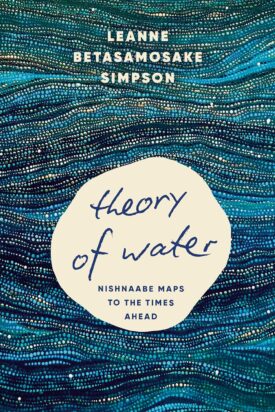
The discussion centered on Simpson’s latest book, Theory of Water: Nishnaabe Maps to the Times Ahead, which had the Indigenous writer reflecting on how western industrial capitalism thrives on disconnection. She found, while volunteering to help with a local skiing course and engaging with activist-art installations that involved water, that the scientific concept of sintering was a vital one to communicate to people (read: every one of us) who are struggling with the often isolating overwhelm of climate change. Sintering is the process by which snowflakes, when they land, slowly form bonds, which results in the hard-packed snow drifts that are difficult to plough if left for a day or two. Sintering gets at the nuances of how becoming more aware of how we are all constantly connected, both locally in neighborhoods and to the larger eco-system that interweaves us all, implicates us all in an ethics of care. Cole and Simpson’s discussion didn’t shy away from how it can be difficult for those brought up in an individualist western society and culture to adopt a more fluid, transformative and collective sense of interconnectivity. Simpson emphasized here that it’s essential for everyone to become adept at managing boundaries in a healthy way without excluding interconnection. Staying with the trouble, as it were, in order to puzzle a way forward to living in a less competitive and a more cooperative paradigm.
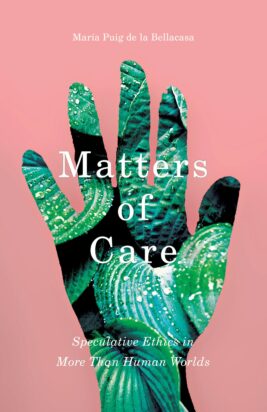
Maria Puig de La Bellacasa’s feminist work in Matters of Care: Speculative Ethics in More than Human Worlds delves deeper into the multifariousness of care by adopting a re-imagined posthumanist and ecological perspective. This perspective takes into consideration the fact that care can be material, affective, political, and involve not just anthropocentric entities. The book reorients readers’ towards a generic definition of care referenced from Joan C. Tronto’s influential Moral Boundaries: A Political Argument for an Ethic of Care, where she and Berenice Fisher write of caring as: “everything that we do to maintain, continue and repair ‘our world’ so that we can live in it as well as possible. That world includes our bodies, our selves, and our environment, all of which we seek to interweave in a complex life-sustaining web” (emphasis added by de La Bellacasa). The importance of this definition cannot be understated, as it allows de La Bellacasa to analyze how care is “much more than a moral stance” and gets at how interconnection and interdependence is part of the hands-on agencies of care, “in spite of the aversion to ‘dependency’ in modern industrialized societies that still give prime value to individual agency.” This is just from the introduction to Matters of Care, but it strikes me deep because this preoccupation with individual agency over interdependent, communal agency is pervasive in a popular genre of games that often claims to center the latter: Wholesome or Cozy games.
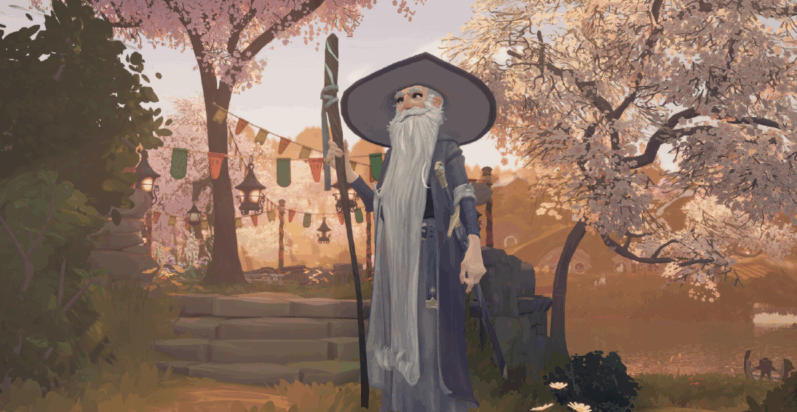
A recent case in point being the disappointing release for Tales of the Shire. Gamespot’s Lucy James and The Verge’s Jackson Ryan both have very valid observations about how the failure to realize a cozy farming sim based in the iconic Lord of the Rings setting of Hobbiton, is one of mismanagement. James speaks in her take of the “human cost” of this mismanagement, with long periods of crunch and high turnover, detailed by Ryan, painting yet another picture of a game studio lacking in care for its developers. James noted that there’s a trend with games attached to the LotR franchise to be “lore-accurate” above all else, with little thought given to whether the end product yielded a fun and unique game system that reflected the series’ worldbuilding. Ryan’s interviews with several of Weta Workshop’s anonymous former employees revealed as well that the game studio was unprepared for development on a commercial console title. The team, after all, consisted of former devs who had survived the redundancies from the studio’s former projects Magic Leap, which focused on the augmented reality headset fad in 2016 gaming.
I believe there’s another issue with Tales of the Shire that stems back to care on the representational front, however. Hobbiton, ironically, even at the level of its lore has never been as cozy as its general rural aesthetic lets on. In the Lord of the Rings books, Hobbiton resembles a stratified society of landed gentry of sorts. There’s class snobbery between the families illustrated in the history of the Baggins family and other aristocratic families of The Shire shared in The Hobbit. And although Hobbits don’t care as much for treasures as other races of Middle Earth, they do have generational wealth, and therefore are not necessarily living as an interdependent collective. Though they do live in a close community, they are more individualistic in their pursuits.
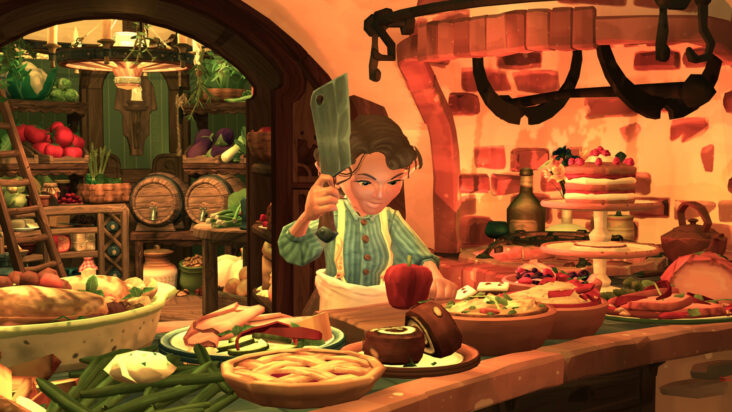
This is an ongoing representational issue with cozy games, I’ve noticed and many have been discussing the political structures of Animal Crossing and other such games for years. But I think we should start discussing, adjacent to the economics and class divides portrayed in cozy games, the depictions of individual tasking and relations in cozy gameplay as well. With regard to what I’ve shared above, I’m not surprised that games like Wanderstop that tackle themes of burnout even whilst pursuing cozy activities, have stirred up a lot of commentary.
I find lately, the narratives of care that feel the most impactful to me are happening in game genres that aren’t explicitly labelling themselves as being “wholesome,” “cozy,” “lo-fi” or “chill.” Citizen Sleeper, South of Midnight and Mutazione – despite often depicting collective suffering – are also adept at depicting collective, interdependent care. I might return to this notion in the near future, as speculation towards better systems of care is something I think games have major yet often fumbled potential for. Similar to Fariha Roisin’s interrogations of the privileged co-optations of other cultures’ wellness products and practices in the Global North, I wonder if there’s a similar pattern of co-optation occurring within the concept of cozy gaming and game design. Perhaps we should ask who cozy games are for.
———
Phoenix Simms is an Atlantic Canadian cryptid who is a freelance writer and the co-editor of The Imaginary Engine Review a.k.a. TIER. You can lure her out of hibernation during the winter with rare SFF novels, ergonomic stationery, or if all else fails, gourmet cupcakes. Or you can just geek out with her where skies are blue.