Orpheus in Lumon: The Act of Looking Back in Severance
You feel compelled to support great writing…

The gesture of turning to look back is ambiguous. It’s held as both vice and virtue. On an emotional level, we recognize melancholy and nostalgia, and turning back is a fleeting moment where we let it take hold. To move forward, we must literally put the past behind us, to our backs. And to turn around, our vision is fixed squarely on what we have left behind.
When we talk about looking back, two stories come to mind: Lot’s wife in the book of Genesis, and the myth of Orpheus and Eurydice. In the Biblical story, Lot’s wife turning back to look at Sodom burning is categorically condemned as sinful, and she’s punished by being turned into a pillar of salt. But the other is more ambiguous. Orpheus ventures into the Underworld in order to save his wife, Eurydice, but he must never look back at her until they pass the threshold into the land of the living. Only steps away, his faith wavers, and he turns back. In an instant, Eurydice is pulled back into the depths of Tartarus for good.
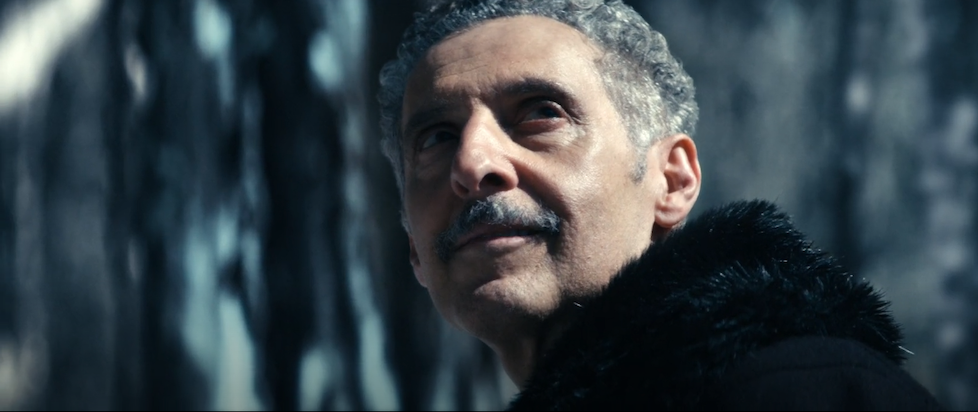
If you’ve seen the second season of Severance, you might have already noticed the similarity. Mark has to save his wife, Gemma, from the depths of Lumon, and lead her by the hand back into the light, the land of the living. Mark, as his innie, stands at the threshold of the stairway, and looks back. However, in a reversal, it’s not Eurydice who is sent back to the Underworld, but Orpheus. He sees Helly at the end of the hallway draped in red, and it becomes inevitable. In looking back, Mark cannot bring himself to leave the severed floor, no matter how much Gemma pleads, and he returns to wander the stygian hallways of Lumon.
Mark is an Orphean figure in this finale. But is he a tragic hero, too? Unlike Lot’s wife, Orpheus is a tragic hero. We sympathize with him, because we understand why he was so tempted to look back. The catharsis comes from the recognition of both his failure and his desires. But you have to ask: why is it that Orpheus is punished for looking back in the first place?
It seems, at first, an arbitrary condition that Hades throws on top of the bargain. But in both this and the story of Lot’s wife, looking back is a failure of faith in the divine. There should be no reason to look back, even for sorrow or uncertainty. Looking back shows a lack of commitment. When innie Mark looks back, this is a sign that he is not committed to the whims of his outie, but to his own world, with his own friends and own love. His faith in the outside world wavers, and he recommits to his past.
Other characters in Severance do and don’t look back, and these are also shows of faith. The most notable one, though, is when Irving is terminated (effectively death) in the episode “Woe’s Hollow.” After attacking Helena Eagan disguised as Helly, their co-worker, he is immediately fired. He looks back, briefly, at his friends, sharing one last look of recognition with them. He then faces stalwartly forward and walks straight into the future. He is completely committed to this choice he has made.
The world of Lumon, however, complicates this parallel to Orpheus. Because the severed have no memory of their life outside of the severed floor (and vice versa), their identity is contained, as if crossing through the river Lethe and back again. Their memories are amputated from each other, and what is left is a bifurcated person. Instead of leaving Tartarus, they would be turning back towards what is their land of the living.

Media scholar Alison Landsberg compares how memory is treated in sci-fi films like Total Recall and Blade Runner to prosthesis, which she calls prosthetic memory. Total Recall features a company who provides memories of fantasies and vacations. When Douglas Quaid tries it, he learns his memory has already been altered, and begins an action movie adventure to liberate the oppressed mutants on Mars. However, in another twist, we learn that Quaid was actually an unwitting double-agent, and that his original identity, Carl Hauser, is going to take over and destroy the mutants. However, Quaid triumphs, and succeeds in liberating them.
Landsberg argues that this parallels prosthesis, as memory is grafted onto a person, replacing or supplementing their own, as “an allegory for for the power of mass media to create experiences and implant memories.” Severance has shades of that throughout, like when the outies communicate with the innies through cameras, much like Hauser to Quaid. This is all an acutely postmodern condition and puts memory in an uneasy, ambiguous place, one Landsberg is cautiously optimistic about as a platform for sympathy. In Total Recall, these prosthetic memories provide a reversal of authenticity, as Quaid overtakes Hauser, and the original is replaced by the artificial, “the fragmentary, the hybrid, the different.” The artificial man is valorized.
The innies on the severed floor are also artificial yet valorized. Innie Mark’s embrace and commitment to the severed floor can be read as the embrace of the prosthetic, and, by extension, a rejection of that traditional authenticity in favor of something new. But the complication is that the severed are, by definition, not prosthetized. They are totally alienated from the outside world and their outer selves. In fact, Lumon takes great care to manage what memories are and are not appended to their workers. Mark isn’t rejecting his past, because it was never his to begin with. Instead, it’s precisely the amputation of memory that replaces the role of prosthesis in the creation of an artificial subject.
Landsberg writes, “Memory emerges as a generative force, a force which propels us not backwards but forwards.” But can it hold us back? Memory is the crux of the question of identity in Severance. What is a person without their past? Would your body without any memories still be you? Can a person be molded by the memories you do or don’t give them? Can your identity be affected by something you can’t even remember? Identity in Severance is not strictly memory. Temperament, quirks, interests, these are also part of who we are, and some of this passes down to the severed floor. And most prominently, desires.
The second season of Severance has an almost single-minded interest in the sexual and romantic complications of the severed. This does come up in the first season (where Burt and Irving fall in love, and this spurs Irving’s class consciousness to emerge) but it’s constant in this season. Romantic relations are framed as a uniquely humanizing experience. The severed, who are constantly denied their humanity, are able to discover and rediscover it through the erotic experience.

In this way, sex and romance are treated as a kind of emancipation. The innies are by all meaningful definitions enslaved, and their humanity is denied because they are treated as a supplement to their outies through the amputation of memory. It’s through love, not Platonic love, but romantic love, that the innies are able to access their humanity. Since they have no memories of romance outside the severed floor, it must be reclaimed there. A major side plot is Innie Dylan meeting his outie’s wife, and feeling strong romantic affection for her. When he fears he will never see her again, he tries to resign, but is persuaded to stay by a letter from his outie. In “Woe’s Hollow”, Helena Eagan has sex with Mark, who believes she is Helly. This rape scene (which the show never truly contends with as rape) seems framed as important not because it’s treated as sexual abuse, but because it robs Helly and Mark of their chance at real human connection. And when Mark and Helly reclaim that connection, it’s through erotic love again.
This emphasis is new; the first season saw numerous ways for the severed to form connection: romance, yes, but also friendship, empathy, solidarity, parenthood, even crappy self-help literature. These other elements appear, sure, but the bias towards erotic love is massive in this second season. Orpehus must save his wife, after all.
This is why when Mark looks back, he has to see Helly, not Dylan or Irving or anyone else. He is caught between two wives: Helly, his “work-wife”, and Gemma, the wife of his outie. Caught between the original and the artificial, the Eurydice in name and the Eurydice in effect. The choice is obvious.
When Irving does not look back, his unwavering commitment is to his choice for his friends, and bringing Helly back, sacrificing himself. When Mark does look back, what commitment wavers? What does he look away from? He looks away from the world amputated from him towards the world he has. He looks away from a woman he does not know and a world he does not know, to a woman he loves and a world he lives in. Eros resides in the Underworld.
As Mark looks back, there’s no tragedy. There’s no drama, no tension, and no catharsis. There is no question of why he turned back. There’s no world for him to return to. Any attachment to the outside world is a phantom pain. All he knows is Tartarus as Lumon, and to face forward and leave is to turn into a pillar of salt, so why wouldn’t you look back? As he turns to look back and returns to the abyss, we know there was never any other choice.
———
vehemently is a pseudonymous writer in the Pacific Northwest, writing on games, culture, and philosophy.