Duck, Duck, Goose
This is a feature excerpt from Unwinnable Monthly #190. If you like what you see, grab the magazine for less than ten dollars, or subscribe and get all future magazines for half price.
———
The rampant success of Untitled Goose Game following its initial release has led to an influx in fowl-themed videogames in which the player assumes the role of a chaotic or otherwise unhinged bird. The release of subsequent games like Mighty Goose, Duckside, Duck Detective: The Secret Salami and Duck Detective: The Ghost of Glamping attest to this widespread fascination with feathered friends. Untitled Goose Game has most certainly had an impact on the gaming community throughout the past six years, with many of these subsequent releases paying homage to their predecessor – whether explicitly or not. As such, Untitled Goose Game has become a touchstone work, leaving a lasting legacy on videogame culture.
The goose has become a ubiquitous figure in pop culture, appearing on shirts, sweaters, mugs, bumper stickers – and, yes, even in videogames. Countless new doorsteps feature a goose statue that dons various outfits according to the season. The presence of such décor could be nothing more than a source of nostalgia – a throwback to the 1950s garden geese that rocked America. What about other goose-themed items, though, like bumper stickers that flaunt, “Silly goose on the loose,” and sweaters featuring white-feathered geese? Are these, too, nostalgic, or is there something new to them that can be attributed to Untitled Goose Game’s success? “All hail the goose,” we say, to which the goose simply replies, “Honk.”
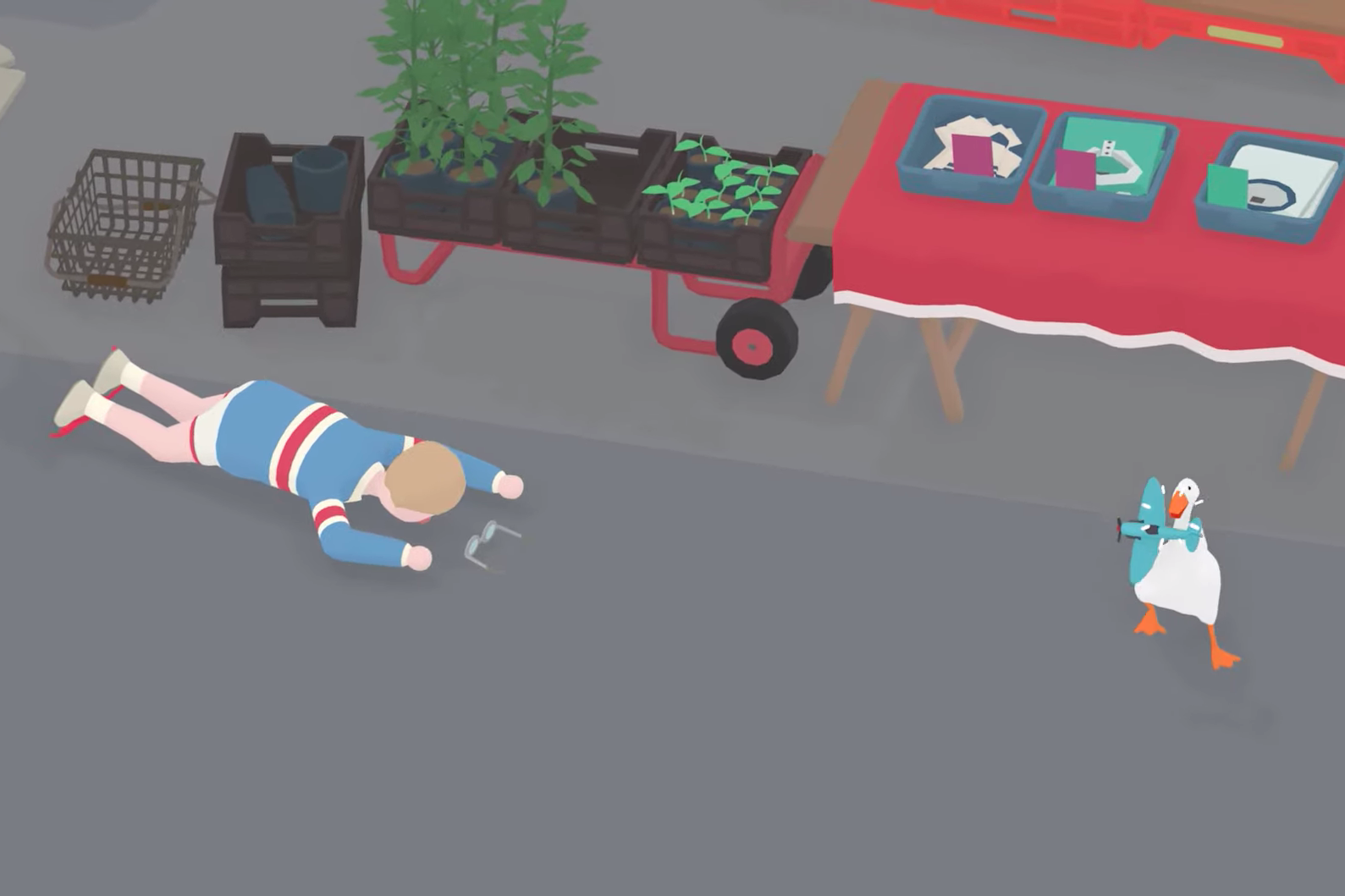
House House’s release of Untitled Goose Game took the gaming world by storm in 2019. In this slapstick-stealth-sandbox game, the player assumes the role of a goose who seeks to annoy the inhabitants of a quaint English village. As the game states upon its start, “It’s a lovely morning in the village, and you are a horrible goose.” Armed with this brief exposition, the player then is granted control over a white-feathered goose who can do all that might be expected – waddle, honk and flap its wings. The player must then wreak havoc on the village by stealing items, scaring its inhabitants and otherwise misbehaving in a way unbecoming to a bird. You certainly are a horrible goose.
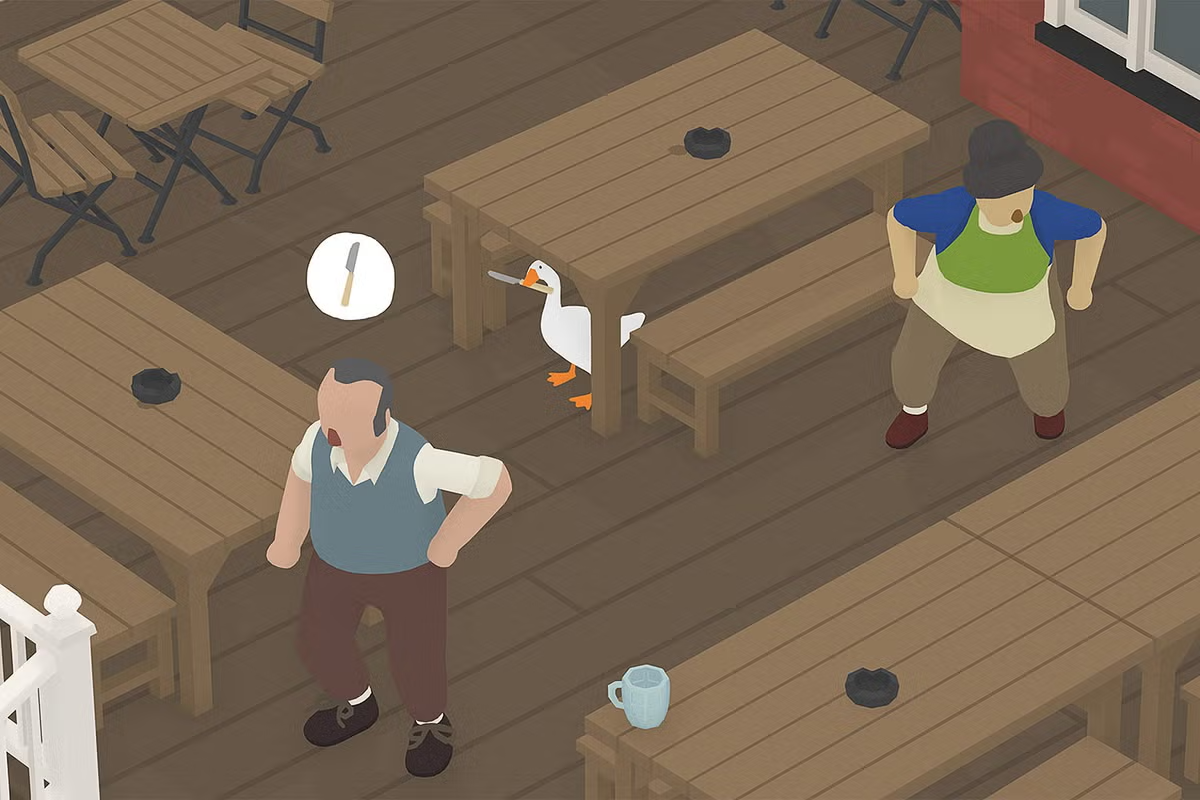
This game reached success upon its initial release because of its bizarre-yet-original premise, minimalist art style and calming piano soundtrack composed by Dan Golding. Though the titular goose acts terribly, the game affords an altogether cozy and relaxing experience for players. The game functions as an adorable version of the Hitman videogame series. Much like how Agent 47 throughout the Hitman series must assassinate targets in sometimes bizarre or overly specific manners, so, too, must the goose commit acts of terror (thankfully ones that fall just short of murder) and abide by the rules that appear on a notepad for the player. Some of these fowl – sorry, foul – deeds include stealing food for a picnic, hiding the groundskeeper’s rake in a lake, and making someone buy back their own belongings at a local store. The player faces various puzzles such as these ones that they must solve throughout the game to guide the goose to its ultimate end goal: stealing yet another bell to add to its hoard. The reason for this goal is unclear, but its lack of rationale fits squarely into the unhinged gameplay.
In the years since Untitled Goose Game’s release, birds have become increasingly more common in home decór and on clothing. Whether this game directly contributed to the recent cultural fascination with geese and other fowl or if its creation is simply a result of an underlying such fascination remains unclear. What remains clear, though, is that Untitled Goose Game has directly impacted the videogame landscape. Since its release, there has been a consistent uptick in the number of games that feature feathery fowl friends as their protagonists. Games like Mighty Goose from 2021 similarly center around a morally questionable goose. In this run-and-gun shooter, the player assumes the role of a bounty hunter goose with a penchant for firearms and exercising his right to bear wings. Though less relaxing than its predecessor, this game still features an iconic, white-feathered goose that intends to cause chaos and destruction, this time in a more violent manner.
More recent games have shifted away from geese in favor of a different semi-aquatic fowl – the simple duck. In 2024’s Duckside, players act as, well, violent ducks, much along the lines of Mighty Goose’s protagonist. This player-versus-player game makes everyone into a duck with intent to kill. Like the titular fowl of Untitled Goose Game, players in Duckside can have their mallards arm themselves with weapons like guns and bats. Rather than use these weapons merely for intimidation (as is the case with most items in Untitled Goose Game), though, players in Duckside use them to commit acts of violence with lethal outcomes.
These examples of fowl-based games feature the necessary feathered friend to be placed alongside Untitled Goose Game, but they diverge from what made this game such a rampant success – its peacefulness. Certainly, Untitled Goose Game centers around a goose’s inherent need for violence, chaos and mischief, but these aspects are notably set against the happy and calm backdrop of a quiet English village and correspondingly gentle piano music. Throughout the game, the goose travels through distinct locations, including its home, which functions as the tutorial, the garden, and then major parts of the village, such as High Street, the Back Gardens and a Pub. The village is small, but it feels real – it is full of interesting and unique individuals who all seem shocked when a goose starts bothering them.
Our goose is disrupting what would otherwise be a quintessentially peaceful day. The background music that appears throughout the game also adds a sense of serenity to what would otherwise be a game solely about terrorizing, and this music fades in and out in correspondence with the action on screen. When music is not playing, the game provides sound effects like the goose’s honk and the pitter-patter of its webbed feet hitting the ground. The balance of typical goose sounds and a gentle piano score make the game, ultimately, cozy, and the inability to reach “Game Over” further contributes to the game’s relaxing nature. There is no punishment for failing a mission. The goose just tries again – it certainly is relentless.
———
Samantha Trzinski holds a PhD in English from The Ohio State University with specializations in nineteenth-century British literature, children’s books, and educational theory. She has a penchant for bird-themed games and indie horror, and she serves as a contributing editor for Gamers with Glasses. Follow her on Bluesky.
You’ve been reading an excerpt from Unwinnable Monthly Issue 190.
To read the article in its entirety, please purchase the issue from the shop or sign up for a subscription to Unwinnable Monthly!