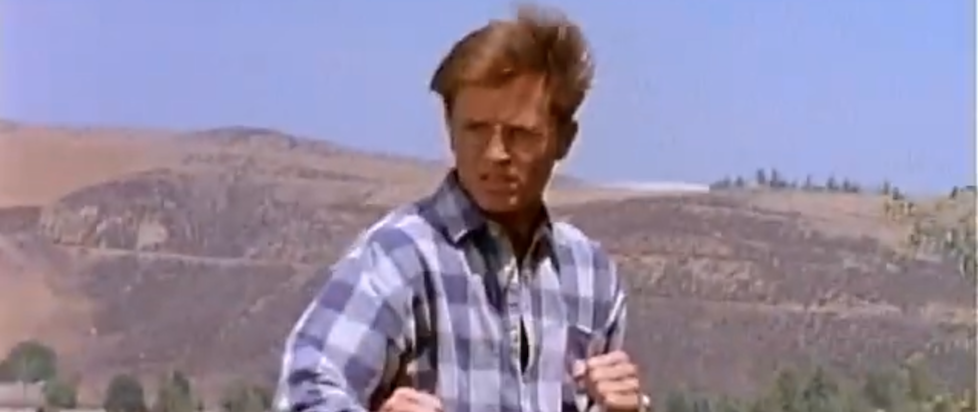
Shades of Blue (Ranger)
You feel compelled to support great writing…
Horoscopes. Myers-Briggs. The utter glut of Buzzfeed quizzes. Perhaps there is a collective yearning for categories to identify with. Not because we necessarily want to be contained by these categories, but because categories provide us with a name to attach to the aspects of who we are. When something can be known and named, that is the beginning of being seen.
For me, this started on the playground during recess. When my classmates and I didn’t want to tap into our imagination for ideas, we turned to one of the various TV shows we tuned into. They provided archetypal characters with easily identifiable attributes and personality traits for us to wear. This is a long way to say: I was a Tails Sun, Donatello Moon and Blue Ranger Rising.
It is three decades away from that time, and I could not tell you definitively if these nerd/sidekick roles were chosen by me, chosen for me, or some mix of both as I’ve identified with them for too long. I can trace the sidekick part from being a younger brother. The nerd part is less clear. Did my classmates see me as smart or was I not believable in a leader role? This is the negative part of being categorized—being seen by others in an unflattering light or simply not in the way you see yourself.
Mind you, I have enough perspective to see this as a relatively minor complaint. With the taxonomy of the original Mighty Morphin’ Power Rangers, I got lucky that there was even a potential choice between Red or Blue Ranger. I didn’t have to worry about fitting into the only role available, if there were even any roles available, with constraints and limits of 1990’s media diversity.
———
As a teenager, somebody or something is always keeping something from you. I don’t mean realizing that the actors playing teenagers are somewhere in between their late-twenties and early thirties, that’s just suspension of disbelief. (Was putting David Yost in overalls while playing Billy just a 90’s fashion choice or an attempt to age him down?) It’s more along the lines of finding secret characters in videogames or learning that Sailor Neptune and Sailor Uranus were not oddly close cousins in the original airing of Sailor Moon.
The big secret of the Power Rangers was that the fight scene footage was repurposed from the Super Sentai series (specifically Ky?ry? Sentai Zyuranger, Gosei Sentai Dairanger and Ninja Sentai Kakuranger for Billy’s run as an active Ranger). Where the American show attempted to create connective tissue across its first six seasons, the Japanese show changes the theming and cast each season and has been airing since the mid-70’s. This would explain why Billy went from a Triceratops Zord to the Unicorn one and then the Wolf.

The irony of being in the closet while wanting to have secrets revealed is not lost on me. Nor is the fact that the series often revolves around secret identities. But the metaphor falls apart here. Being a Power Ranger is – well – empowering. The secrecy of the helmet and suit is for the protection of the wearer and their loved ones. (That and because suit actors are the ones in costume during most of the fights.) My secrecy was for emotional and social survival. Besides, the metaphor would have been useful for me anyways, I had already decided that I had aged out of the series.
———
The interview where Yost comes out publicly and describes the homophobia he dealt with on set from the behind-the-scenes crew took place either in 2010 or 2011. Learning this information a few years later came with a complication of emotions for me.
Any time a public figure comes out, I feel the sensation of some conceptual wall being slowly chipped away at. Someone has become comfortable to be more fully themselves in public and some new corner, no matter how niche, has now been provided representation for someone else to be inspired by. Yost’s coming out recontextualizes the character of Billy Cranston just a little bit for me, despite the layers of fiction, the TV screen and time passed between him and I.
But there is also the bitter aftertaste that this positive thing had to be paired with something negative. I didn’t even question the homophobia aspect; I probably even expected it. There’s the frustrated anger and sadness that this is still part of the texture of gay life. I also return to my elementary school mindset where I’m on the cusp learning that sometimes being seen can come with a cost, especially when people see what they don’t like.
I hold both these ideas in my head. I do it the same way I understand sky blue and dark blue to be very different colors, but both still blue.
———
In the depths of a wiki deep dive, past the obstructive design elements and obstructive ads, I was finding a lot of interesting things, everything except for the specific information I was looking for. Navigating both the site and the American series’ continuity (where does the show end and the Boom! comic book run begin?) is enough of a challenge that I don’t think I’ll be fully jumping back into the series anytime soon.
While searching, I learned about Mighty Morphin Power Rangers: Once & Always. The movie, I gleam, seems to be a labor of love that Yost had been working on and a tribute to the late Thuy Trang. From the outside, it seems like a solid reconciliation between him and the brand, especially since the series has recently begun to nod towards LGBTQ+ representation. This would be a great place for a neat end to this essay, but this was not the information I was looking for.

While David Yost is the most significant part of my connection to Power Rangers and the Blue Ranger specifically, he is not the only part. Talking about shades of blue and being seen, I didn’t feel right to just end there. I want to honor, in some small way, the names of the people whose faces I haven’t seen but still were a part of my experience of the Blue Ranger. Specifically, the suit actors: Shoji Hachisuka, Yasuhiro Takeuchi, Takeshi Miyazaki, David Wald, Hien Nguyen, Keiya Tabuchi, Danny Wayne Stallcup, Hiroki Takano, Keiya Tabuchi and Atsushi Okuma.
———
During my search, I thought about how the series has changed over the years: from the colors and number of rangers each season, to the American show hewing closer to Japanese series and how the storylines have become slightly more mature. The show is no longer just the solely toyetic monster-of-the-week fluff of my youth.
Not that there is something inherently wrong with simplicity. I think back to my playground days when we used those simple stories, characters and categories to play. We had only so much time during recess and we were just starting to learn how to really see ourselves and others. Simple is a great starting point, a good shortcut.
The problems occur when you make a deliberate choice to remain in simplicity and never move, change or complicate. When you can’t see yourself or anyone else outside these constructed categories. These identifiers and categories shouldn’t be limitations, but ways to begin communicating about everything else.
———
Alex J. Tunney is from Long Island, which may explain all the writing about videogames, food and reality TV. You can find all of his writing collected at alexjtunney.com.