Selective Attention

This column is a reprint from Unwinnable Monthly #189. If you like what you see, grab the magazine for less than ten dollars, or subscribe and get all future magazines for half price.
———
Analyzing the digital and analog feedback loop.
———
There are a handful of recent incidents and events that have been cycling constantly in my head, with regard to voiceover work in games. Two of these have been classified as voice actors “crashing out” (as the lingo goes these days). The others have to do with creative theft via generative AI, which I believe is also (by extension of the nature of voiceover work) body theft and/or exploitation.
First off, there is the current state of the strike action taken by voice actors’ in the SAG-AFTRA union. Since last year it has become increasingly apparent that the conditions for voice actors being, as GamesIndustry.biz writer Rob Fahey aptly put it, strip-mined for generative AI replicators, were not improving. The ongoing strike has resulted in Genshin Impact releasing a major patch with several characters lacking English-dubbed dialogue. The French Apex Legends actors have protested the use of AI extraction of their creative talent as well and have refused to sign what they rightfully view as exploitative contracts. SAG-AFTRA has since published public counter proposals to an April 30th offer made by video game companies, allegedly making more concessions for voice actor contracts. The strike has been dissolved during the drafting of this piece, but the industry shakeup and related lawsuits are far from over. Think of the current SAG-AFTRA filing against LLama Productions, a subsidiary of Fortnite’s parent company Epic Games regarding the AI replication of James Earl Jones’ voice for the game’s version of Darth Vader.

It’s a lot to take in – and I’m aware just how much of a gross understatement that is for me to make. But this understatement needs to be repeated like a mantra in matters like these, because often information overload is a strategy. There’s a concerted effort to present the SAG-AFTRA negotiations as fair and transparent. And let me be clear, my neurodivergent brain is overloaded, but I also am aware that the voice actors’ strike and the current stance SAG-AFTRA takes on generative AI is also a thorny and murky mess. There’s a lot to parse and unpack. But what is clear to me in spite of all this is that the current technosolutionist paradigm of AI and the toxically positive rhetoric it proliferates is what continues to make me, the voice actors and many others leery of attempts to present “best of all worlds” scenarios. Emily Price contributed an excellent take on the toxic positivity and passive acceptance of gen AI in Unwinnable’s April 2025 issue, that I personally think everyone (especially those of us in games media) needs to read and self-reflect on.
To keep things simple, we must remember that an industry’s-worth of people have their livelihoods and the future of their creative craft at stake. That’s enough to make people susceptible to “crashing out” and prone to showing their vulnerabilities online. This doesn’t excuse responsibility for voice actors’ more problematic reactionary behavior on social media platforms like Twitter or TikTok, of course. But we should keep in mind where this reactionary behavior is coming from. I’m hoping to let people have a contextual reference point for the two incidents I want to briefly discuss here. I want to emphasize that this is not a piece seeking to be the last word on whether or not the two individuals I mention are problematic or not. None of us should be acting like a judge, jury or expert on matters that we’re still only just becoming more educated on in recent years. We should, however, be willing to always learn more about the nuances of incidents like these. Those who hold most of the power in these industry situations want to control the narrative and your perception of said narrative. Especially with regards to generative AI and vulnerability. Don’t give them that advantage.
With the above in mind, I’d like to point out first a small yet significant incident involving Sean Schemmel a.k.a. The English dub actor for Goku in Dragon Ball Z and a voice impressionist on YouTube by the name of GamerGoku. The YouTuber’s shtick is streaming games whilst doing a pretty convincing impression of Schemmel’s dubbing for Dragon Ball Z. Unfortunately, due to most of this incident taking place on social media, there aren’t many credible or comprehensive sources outside of GamerGoku’s recap of the situation on his channel. And although the YouTuber seems to be presenting the events in an impartial manner, I think it’s important to note that this is a biased recounting of what happened. So, take this source with a grain of salt.

The long and short of it is that Sean Schemmel allegedly accused GamerGoku of using AI to replicate Schemmel’s voice. The call-out took place publicly on Twitter via Schemmel’s official account following him direct messaging GamerGoku on Instagram, which predictably stirred up drama amongst fans of the voice actor and the streamer alike. Once made aware of the call-out via another Twitter user who screenshot the relevant call-out posts (as Damon Mills the current actor for DBZ villain Frieza chimed in too), the streamer eventually replied to Schemmel’s Instagram DMs with a voice message apologizing for raising the performer’s suspicions. The same message also assured Schemmel that he’s just a fan that studied his vocal techniques closely and that he’s against the use of AI in place of human voice acting. What happened next was interesting – Schemmel (and Mills) retracted their alleged accusations on social media but never replied to GamerGoku or cleared the air with a follow up public statement on the matter.
I believe there’s a lot of shame in this reaction, especially on Schemmel’s part. Voice actors these days are consistently being given less and less fair options for contract negotiations and the future of their creative craft is at stake here. As well, this is happening in the social media era of excessive and pervasive public discourse. Everyone has an opinion, informed or otherwise, to share about the trajectory of AI and voice acting. These opinions are often shared in a bad faith fashion as well, seeing as measured posting on social media doesn’t garner as much attention and therefore validation. Then there’s content creators who have a vested interest in sharing sensational takes on the current events to contend with (though granted there are also content creators that seek to share a more measured and critical discussion).
While it was not the best impression to leave on observers of this incident to go silent and not address the matter (at least at the time that the incident was still generating discourse), can we not agree that there must be a fair amount of anxiety involved in such PR debacles? I don’t personally think it was a responsible way to handle the social media gaffe. And according to GamerGoku’s video, more than a few fans have had similar experiences with Schemmel’s knee-jerking. At once, I can admit that I don’t know exactly the ideal steps to take in an incident like this, beyond offering an honest and constructive response to help mitigate further dramatic discourse involving the main players and the attendant fandoms. Or perhaps have your professional accounts handled by a seasoned community manager or management team?
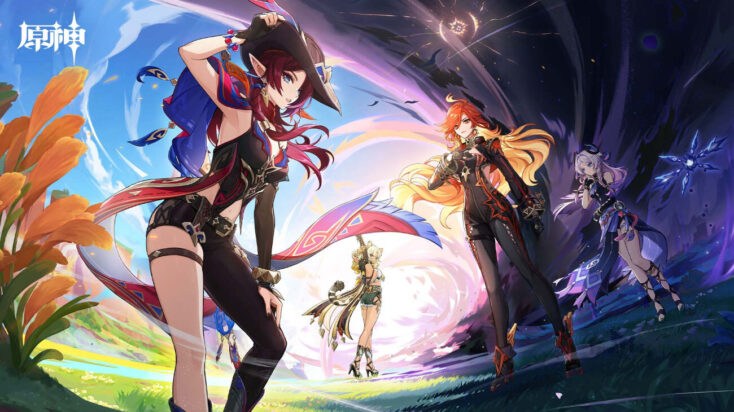
Which leads me to the second so-called “crashing out” incident involving Corina Boetger (known best as the previous voice of Paimon in Genshin Impact). Fandom culture is still largely toxic online and Boetger has been receiving a lot of hate for current commentary and behavior on YouTube Shorts and TikTok. Boetger is staunchly pro-union in spite of the messiness of SAG-AFTRA’s treatment of voice actors as it continues to push for AI replication, explaining in various videos that videogame productions more than ever need to become fairer in their treatment of voice over artists. This is understandable, as they were subject (along with several fellow Genshin performers) to four months of withheld payments in 2023 from Formosa Studios, who was handling the voice acting productions for the HoYoverse game, for instance. Some actors stated this impacted their ability to pay rent, rates of pay being another major contention for many game studio employees.
Boetger as well has been at the forefront of the controversy over voice actor Jacob Takanashi taking a job during SAG-AFTRA’s strike. They called Takanashi out for actions that amount to crossing the picket line and undermining the strike. Predictable clashes between fans of Takanashi and others who already generally resent Boetger’s commentary ensued and continue to fester over this issue with Boetger having drawn the ire of an interviewer who they seem to have had a falling out with. Despite Boetger being far from the only HoYo performer to speak out about the casting of Takanashi during the strike, it’s important to add. The voice actor’s online presence has been mostly contentious in recent months, with some speculating that it led to HoYo letting the actor go from the Genshin project, although Boetger alleges it was their personal choice to resign due to striking concerns for unionizing the project.
Boetger is neurodivergent and disabled. While this is not an excuse for constantly clashing with fandom culture online it bears mentioning because a lot of the more toxic commenters on social media platforms are disregarding (or in some instances I would assume counting on) how the stress is impacting the voice actor’s health and reactionary behavior. Commenters are also consistently misgendering Boetger, the disrespect of which probably only adds that much more stress to a bad faith pressure cooker. I can’t believe this has to be said, but just as with the Karla Sofía Gascón discourse this past film year, it’s never okay to misgender someone. No, not even if they are “problematic” or “cringe.” We can both respect someone’s humanity whilst disagreeing with their beliefs or actions.
I don’t have a resolution for the above two incidents and their major players. The games industry and its attendant media industries are a damn mess due to greed and rampant reliance on gen-AI. I do have a couple of reminders for us though and I don’t think it’s a huge ask: get comfortable with being uncomfortable regarding the nuance of our current mess. And please, if you are in a position of any influence in games production or games media stop looking for opportunities to dunk and dogpile. More than ever, we need to foster empathy and learn how to evolve as a community. We’re only going to get to a better place if we process everything that’s going on with great consideration.
———
Phoenix Simms is an Atlantic Canadian cryptid who is a freelance writer and the co-editor of The Imaginary Engine Review a.k.a. TIER. You can lure her out of hibernation during the winter with rare SFF novels, ergonomic stationery, or if all else fails, gourmet cupcakes. Or you can just geek out with her where skies are blue.