The Global Haunted House: Horror and Communal Experience

This column is a reprint from Unwinnable Monthly #189. If you like what you see, grab the magazine for less than ten dollars, or subscribe and get all future magazines for half price.
———
We are what we’re afraid of.
———
So, if the past several years of this column have not been evidence enough, let me reaffirm that I do, in fact, love horror games. But what might not be as immediately apparent is that I don’t actually always love playing them. It’s not that I don’t or won’t, if the situation necessitates – in fact, I’ve laid hands on a controller for every game I’ve written about here. But the thing that I love, far more than playing solo, is sitting on a couch next to someone else while we trade the controller back and forth, or simply watching someone else pilot the game while I snack, scream and offer potential puzzle solutions. And while I think this approach could work for essentially any game, I find it particularly effective and meaningful when horror is the order of the day. While some might say that this is because it lets you squeal and give up the wheel when the tension gets too high, I posit that the communal benefits of a horror co-playing experience go beyond simply wimping out. In fact, horror experiences can be some of the moments when we feel the most in community with the people around us, and it can often serve as a vehicle for prosocial behaviors.
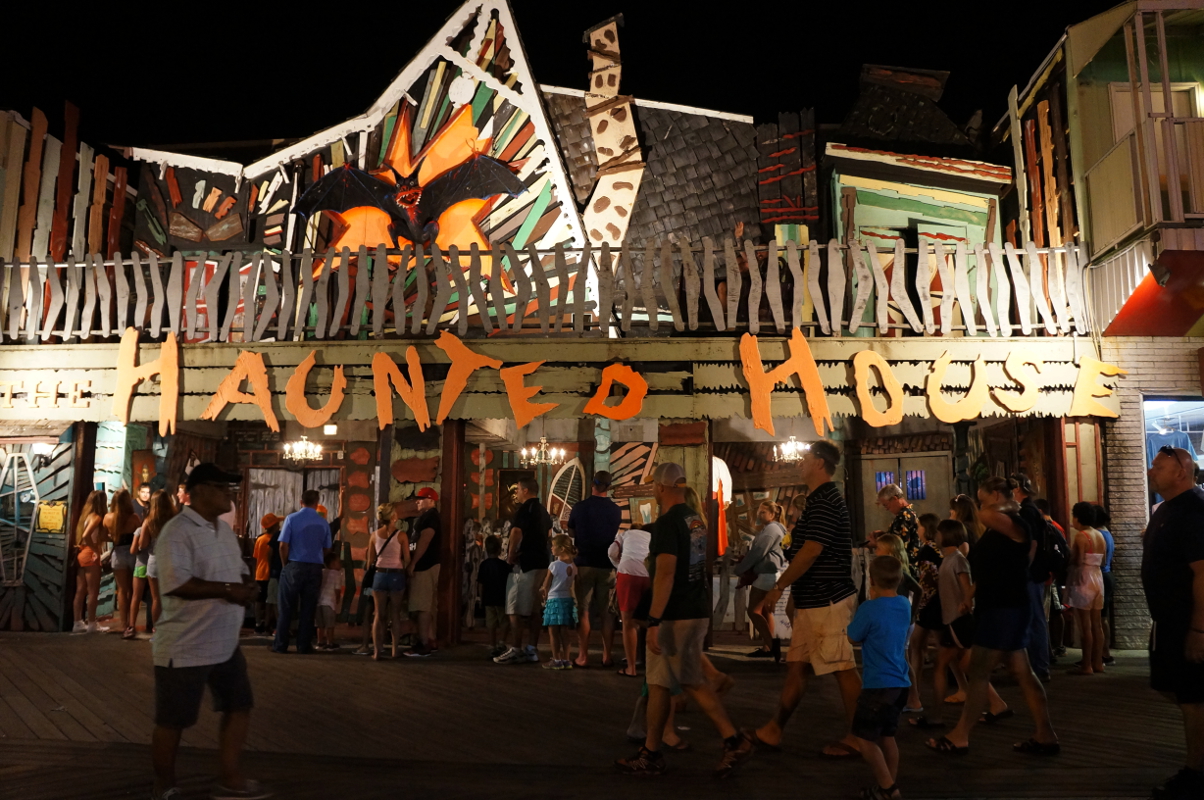
Before I dig into the specific affordances of games, consider this thesis in terms of two other honored group pastimes: scary movies in a cinema and haunted house attractions. Both experiences are expressly communal in nature – rarely are we the only person sitting in a movie theater, and you move through haunted houses in carefully controlled packs. Following from this, it is a fairly obvious proposition that how much we enjoy these experiences hinges in a pretty big way on how our companions behave. Nobody in the history of entertainment has liked it when someone starts loudly pointing out that the actors are wearing rubber masks, or when someone two rows in front spends the whole movie on their cell phone. But the interesting thing about horror is that the reverse is also true – when everyone is bought in, on the edges of their seat, holding their breath and covering their eyes . . . the experience is better, magnified by the collective tension and release of the audience as a whole. In the same way that someone pulling the tough-guy act destroys the mood, other people being noticeably afraid alongside you amplifies your personal heebie-jeebies. Because if everyone else is afraid, surely there must be reason to be . . . right?
In gaming spaces, we see similar phenomena occurring with the popularity of streamers and YouTubers who specialize in horror games – Markiplier is the house that Five Nights at Freddy’s built, after all. While we aren’t physically in the room with these people, and thus cannot affectively sense their tension in the same way as a movie theater, the emotional impact lives in the same realm; we are scared because we are all scared. When the jump scare turns out to be nothing, we all laugh together to release the tension. And the same rules about killjoys tend to apply, even though they are now limited to annoying messages in chat. If you aren’t bought into having this experience and feeling these feelings, please exit the stream stage left.
Thus, horror games have a unique potential in digital gaming spaces to act as explicit prosocial constructs – in order for the experience to be positive, everyone has to abide by the rules of suspension of disbelief and engagement. If people opt out of doing so, the experience becomes immediately more negative for all involved. And, separately from multiplayer environments where bad-faith actors can see distinct personal gains from misbehavior, there’s absolutely zero benefit to being a jerk in horror game co-play. In opposition to the stereotypical notion of horror as being for misanthropes and weirdos, being collectively scared silly is one of the most effective ways of teaching ourselves how to tune into the people around us and act in ways that make life better for everyone. While fear can certainly bond us in negative ways (see: xenophobia and bigotry based in ignorance), I posit that horror media can serve as a great equalizer, showing us that we’re all ultimately afraid of the same things, whether that be death, clowns, or death specifically by clowns. We’re all in this together, and nothing shows us that more clearly than a shared horror experience.
———
Emma Kostopolus loves all things that go bump in the night. When not playing scary games, you can find her in the kitchen, scientifically perfecting the recipe for fudge brownies. She has an Instagram where she logs the food and art she makes, along with her many cats.